
Workplace elbow injuries can sideline you fast, whether from a sudden fall or the wear and tear of daily job tasks. At Robin J Peterson Company, LLC, we help injured workers understand their rights under Ohio’s workers’ compensation system.
This guide walks you through elbow injury compensation in Ohio, from filing your claim to appealing if needed. You’ll learn what the state requires and how to protect yourself every step of the way.
What Kinds of Elbow Injuries Happen at Work
Acute Traumatic Injuries from Impact
Elbow injuries at work fall into two distinct categories, and how you treat your claim depends entirely on which type you’ve experienced. Acute traumatic injuries happen suddenly, usually from falls, direct impacts, or being struck by equipment. Healthcare workers and manufacturing employees face the highest risk for these sudden injuries according to industry safety data.
When you suffer a fracture or dislocation from impact, documentation moves faster because the connection to a specific work incident is obvious and immediate medical treatment typically strengthens your claim. The Ohio Bureau of Workers’ Compensation processes these claims more smoothly because the cause-and-effect relationship is clear and verifiable.
Occupational Elbow Conditions from Job Tasks
Occupational elbow conditions develop differently. These injuries stem from the specific demands of your job tasks rather than a single traumatic event. Plumbers, electricians, mechanics, assembly line workers, painters, and retail cashiers frequently experience these conditions because their daily work places particular stress on elbow structures.
The challenge here is that initial claim denials happen more often unless your medical records clearly tie your symptoms to specific job duties you perform regularly. You need to document exactly which tasks aggravate your elbow and when the symptoms started. This means working closely with your doctor to establish the connection between your job and your condition.
Building Your Medical Evidence
Workers who provide detailed information about their daily tasks and how their elbow problems developed have significantly better outcomes when the BWC evaluates their claims. The key is showing the BWC that your condition is a direct result of how you work, not something caused by outside activities or hobbies. Your medical records must connect your symptoms to identifiable workplace activities-this distinction determines whether your claim succeeds or faces denial.
Understanding which category your injury falls into shapes your entire compensation strategy and the evidence you’ll need to present to the BWC.
Understanding Ohio Workers’ Compensation for Elbow Injuries
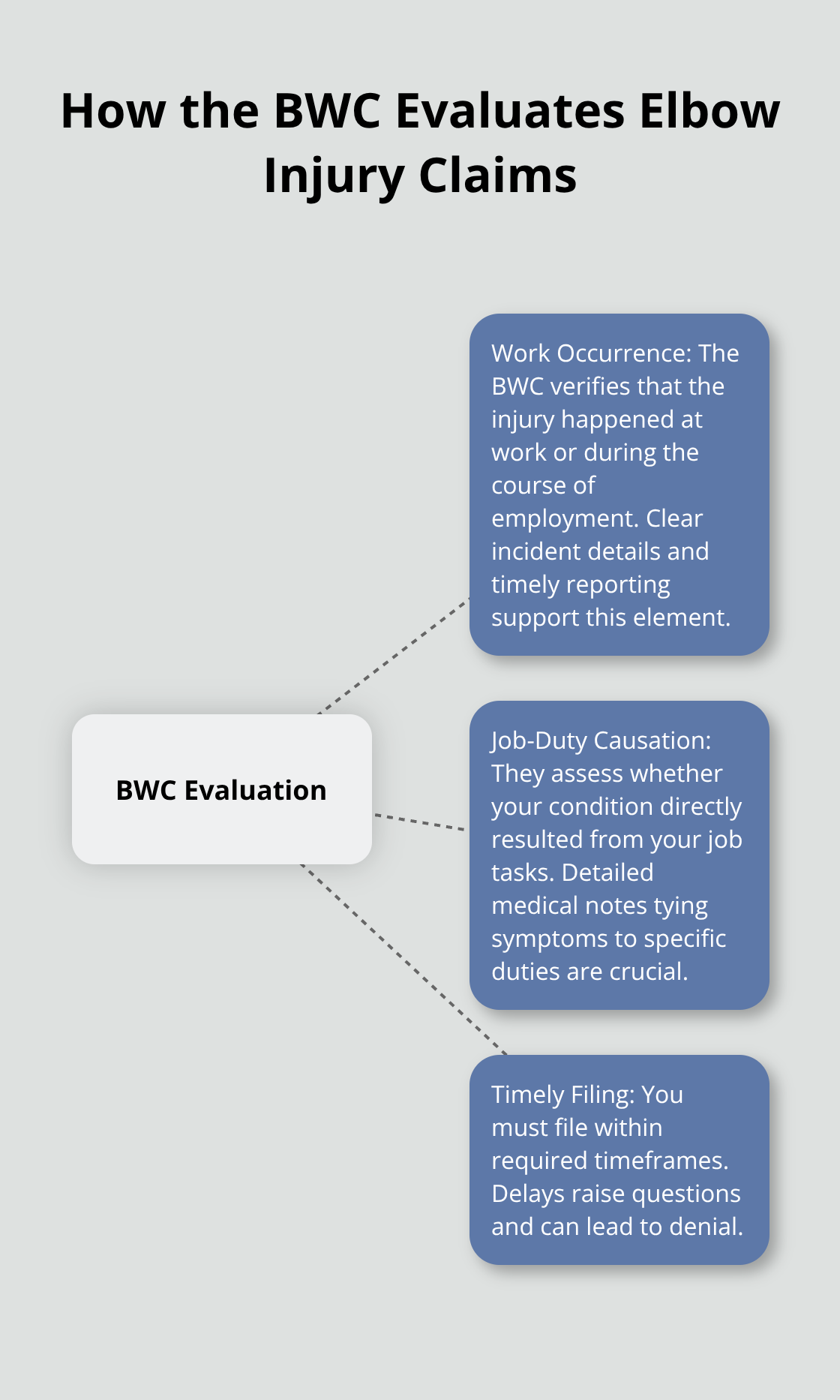
The Ohio Bureau of Workers’ Compensation investigates every elbow injury claim submitted, and understanding how they evaluate yours determines whether you receive benefits or face denial. The BWC examines three critical elements: whether the injury occurred at work, whether it resulted directly from your job duties, and whether you filed your claim within the required timeframe. For acute injuries like fractures from falls or equipment strikes, the investigation moves faster because the workplace connection is undeniable. For occupational conditions that developed gradually, the BWC scrutinizes your medical records to confirm your symptoms stem from work tasks, not outside activities or pre-existing conditions. This investigation typically takes weeks to months, and during this period, you hear nothing unless the BWC requests additional documentation.
Medical Records That Prove Your Claim
Your medical documentation is the foundation of your entire claim. The BWC requires records that explicitly connect your elbow symptoms to specific workplace activities you perform regularly. Generic statements from your doctor that say you have an elbow condition are insufficient-the records must detail which job tasks aggravate your symptoms, when pain started, and how your work environment contributes to your condition. If your doctor documents that you perform assembly work eight hours daily and your condition developed within three months of starting that position, the BWC has concrete evidence linking your injury to work. Conversely, if your medical file lacks this specificity, the BWC assumes your condition comes from outside sources.
You strengthen your claim significantly when you meet with your physician before any appointment and provide a detailed job description. Healthcare professionals, electricians, and manufacturing workers should bring written descriptions of their daily tasks to medical appointments so doctors can document the exact connection between work and your symptoms. Weak medical records increase claim denials dramatically, which is why establishing this link from your first medical visit matters.
Filing Deadlines That Protect Your Benefits
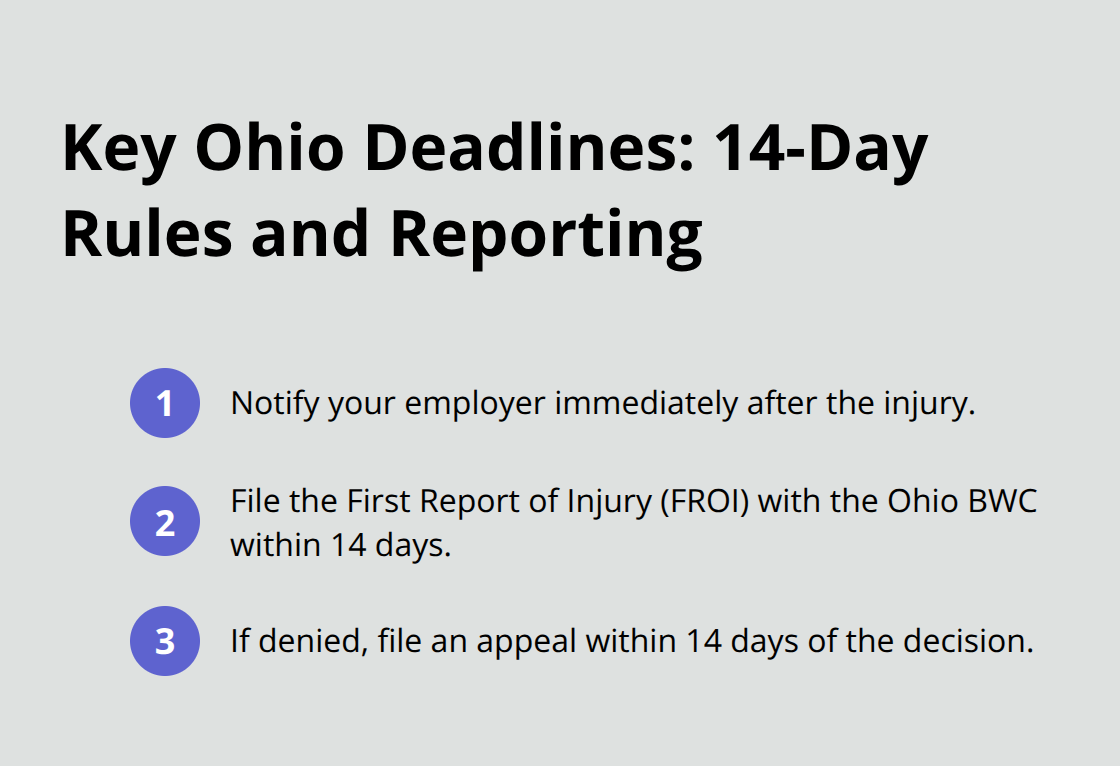
Ohio law imposes strict timelines for reporting your injury and filing your claim with the BWC. You must notify your employer immediately after your elbow injury occurs-delays in reporting can jeopardize your eligibility for benefits. After reporting to your employer, you have 14 days to file the First Report of Injury with the Ohio Bureau of Workers’ Compensation at 1-800-644-6292 or through their online application at the BWC website. Missing this 14-day window creates significant obstacles to recovering benefits, even if your injury is legitimate and work-related.
The BWC begins its investigation only after receiving your formal claim, so prompt filing determines when your medical coverage and wage replacement can start. If you wait weeks or months to file, the BWC questions why you delayed and may deny your claim based on the gap in reporting. For occupational conditions that developed gradually, document the exact date you first experienced symptoms and report that date to your employer immediately, even if symptoms are mild. This establishes a clear timeline that strengthens your position when the BWC reviews your claim.
What Happens During the BWC Investigation
The agency’s medical experts review your case file, and if they question the work-relatedness of your injury, your claim enters a denial track that requires aggressive appeal strategies to overturn. The investigation process itself takes weeks to months, and during this period, you hear nothing unless the BWC requests additional documentation from you or your employer. Understanding this timeline helps you prepare for what comes next-whether approval moves forward or you must challenge a denial through the appeals process.
Your Rights and Next Steps After an Elbow Injury
Report your injury to your employer immediately, not tomorrow or next week. The Ohio Bureau of Workers’ Compensation has strict deadlines, and delays create problems that become nearly impossible to fix later. When you report, provide your supervisor or HR department with specific details about what happened, when it happened, and which body part was injured. Request written confirmation of your report and keep a copy for your records.
Within 14 days of your injury, file the First Report of Injury with the Ohio BWC by calling 1-800-644-6292 or submitting the online application on their website. This 14-day window is not flexible. Missing it means the BWC can deny your claim outright, regardless of whether your injury is legitimate and work-related.
Document Everything From Day One
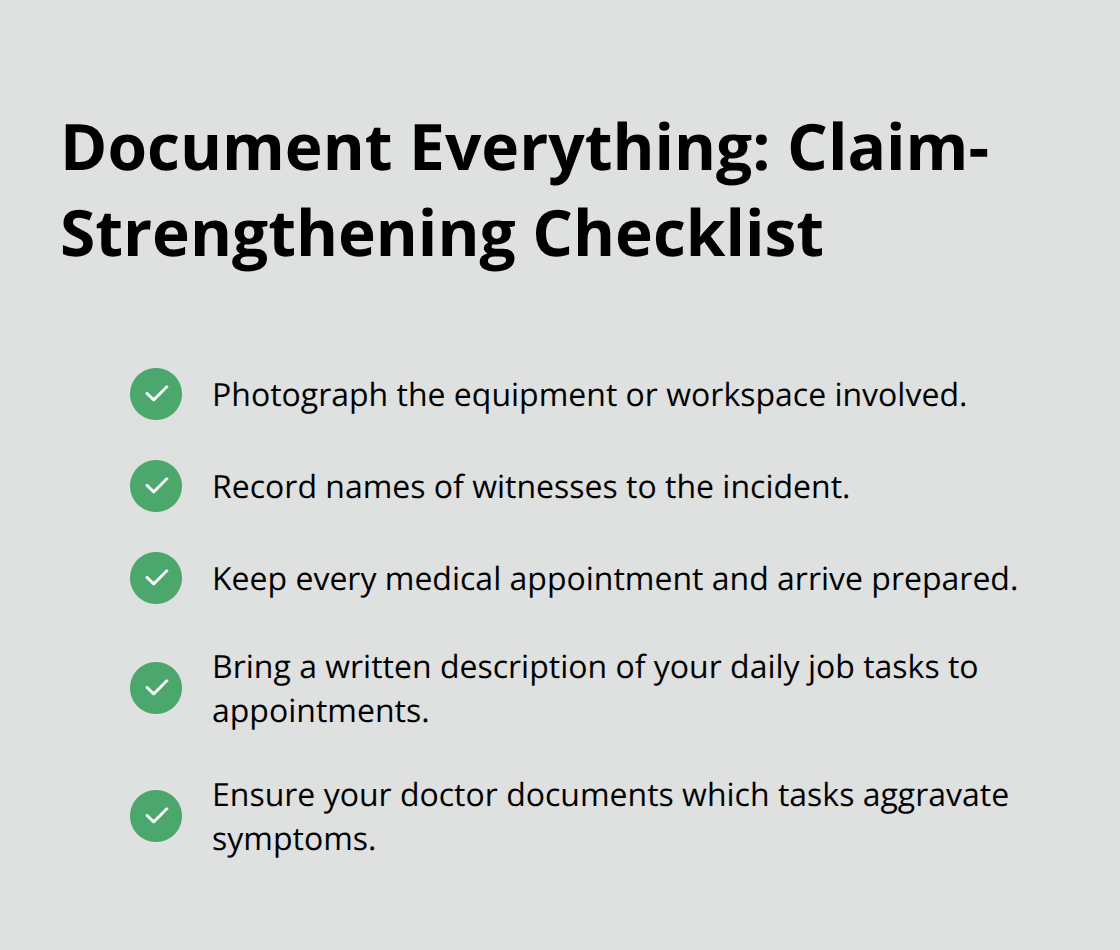
Take photos of the equipment or workspace involved in your injury. Write down the names of witnesses who saw what happened. Keep all medical appointments scheduled and arrive prepared to discuss your job tasks in detail. Your medical records during these early days become the foundation of your claim, so ensure your doctor understands exactly which job tasks caused your injury and how your daily work aggravates your symptoms.
When You Need a Workers’ Compensation Attorney
Most workers’ compensation attorneys in Ohio operate on a contingency basis, meaning you pay nothing upfront and only pay if you prevail in securing benefits. This eliminates the financial barrier to getting experienced representation from the start. Robin J Peterson Company, LLC serves injured workers throughout the Cleveland, Akron, and Canton areas and offers a complimentary case evaluation to assess your claim.
An attorney from the beginning prevents the documentation mistakes that lead to initial denials. Attorneys ensure your First Report of Injury is filed correctly, your medical records establish the work connection clearly, and your claim follows the proper procedures throughout the investigation phase.
Fighting a Claim Denial
If the BWC denies your claim, you have exactly 14 days to file an appeal with a district hearing officer. Missing this deadline eliminates your right to challenge the denial. An experienced attorney navigates this appeal process aggressively, presenting evidence that contradicts the BWC’s findings and cross-examining the agency’s medical experts to expose flawed reasoning.
The appeal process moves through multiple levels within the Ohio Industrial Commission system. A district hearing officer reviews your case first, then if needed, you can appeal to a staff hearing officer and finally to the Industrial Commission of Ohio itself. Each stage requires submitting evidence that challenges the BWC’s decision, including independent medical testimony and documentation that proves your injury arose directly from your job duties.
The BWC often denies claims based on incomplete documentation or weak medical records that fail to connect your symptoms to specific workplace tasks. An appeal succeeds when you present stronger evidence than what the BWC considered initially. This means obtaining a medical expert who can testify that your condition resulted from work, not outside activities or hobbies (such as sports or hobbies unrelated to your job). Without representation during appeals, most workers struggle to overturn denials because the process requires understanding complex workers’ compensation law and presenting medical evidence effectively against the state’s resources. Workers who pursue denials aggressively with proper documentation and legal support overturn them far more often than those who give up after the initial denial.
Final Thoughts
Your elbow injury at work demands immediate action and proper documentation from day one. The steps you take in the first 14 days determine whether you receive benefits or face denial, which is why reporting to your employer and filing with the Ohio Bureau of Workers’ Compensation cannot wait. Elbow injury compensation Ohio flows through a system that rewards workers who understand their rights and act decisively.
The Ohio Bureau of Workers’ Compensation provides the framework for your claim, but you control the outcome through the evidence you gather and the medical records you establish. Workers who document their job tasks clearly, meet medical appointments prepared to discuss workplace connections, and file within required deadlines succeed far more often than those who delay or provide incomplete information. Your medical records must explicitly tie your symptoms to specific work activities, not vague descriptions of general discomfort.
If the BWC denies your claim, the appeal process offers a genuine path to overturn that decision when you present stronger evidence and challenge the agency’s findings. District hearing officers, staff hearing officers, and the Industrial Commission of Ohio all review cases where workers provide compelling documentation and expert testimony. Contact Robin J Peterson Company, LLC for a complimentary case evaluation to protect your workplace rights.