
Elbow injuries at work happen more often than you might think, and they can disrupt your career and income. If you’ve suffered an elbow injury in Ohio, understanding your rights to compensation is the first step toward recovery.
We at Robin J Peterson Company, LLC help injured workers navigate the workers’ compensation system and fight for the benefits they deserve. This guide walks you through what you need to know about elbow injury Ohio compensation and how to protect yourself.
Types of Elbow Injuries at Work
Acute Traumatic Injuries from Accidents
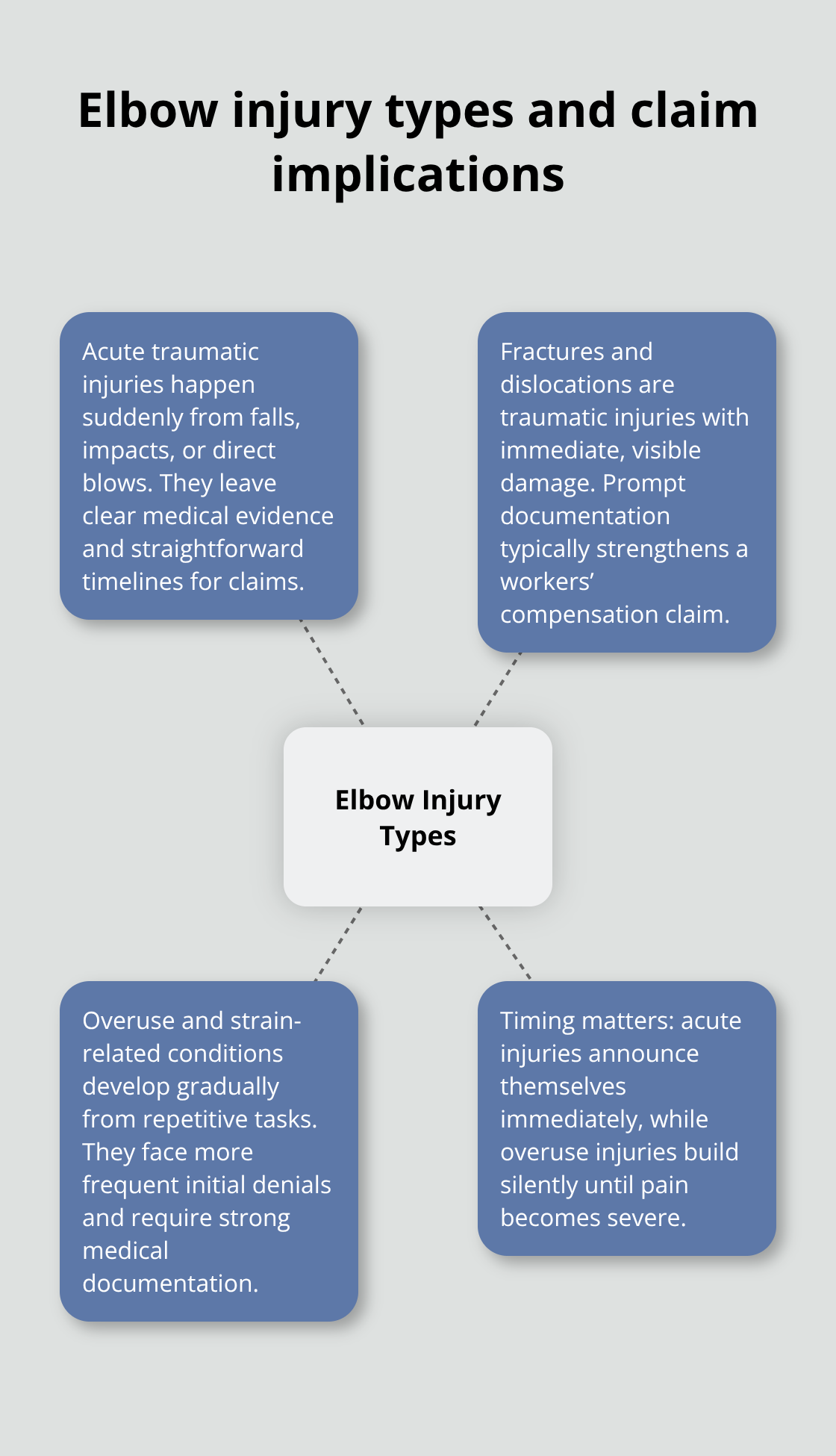
Elbow injuries at work fall into distinct categories, and understanding which type you’ve suffered matters for your claim. Acute traumatic injuries occur suddenly from falls, impacts, or direct blows to the elbow. A warehouse worker falls from a ladder and lands on their elbow, or a construction worker gets struck by equipment-these accidents create immediate injury. These accidents leave clear medical evidence and establish straightforward timelines, making them easier to document for workers’ compensation purposes. The Ohio Bureau of Workers’ Compensation recognizes acute injuries quickly because the connection between the work activity and the injury is obvious.
Fractures and Dislocations
Fractures and dislocations also fall into the traumatic injury category. A broken elbow from a slip-and-fall accident at work or a dislocated joint from machinery contact creates immediate, visible damage that requires urgent medical attention. Healthcare workers and manufacturing employees face higher risks for these injuries according to industry safety data. The visible nature of these injuries means medical professionals can document them immediately, which strengthens your workers’ compensation claim.
Overuse and Strain-Related Conditions
Overuse and strain-related conditions develop gradually through repetitive workplace activities and present a different challenge for your claim. Plumbers, mechanics, cashiers, and electricians commonly develop these conditions from constant gripping, twisting, and forceful hand movements over months or years. The Ohio Bureau of Workers’ Compensation recognizes these injuries as compensable when you document how specific job duties caused the condition, but initial claim denials happen more frequently with gradual-onset injuries because the connection to work feels less obvious.
Medical documentation that ties your symptoms to particular workplace tasks becomes essential for overuse injuries. If your job involves repetitive gripping, twisting motions, or static wrist positions during computer work, you face higher risk. The key difference between these injury types is timing: acute injuries announce themselves immediately, while overuse injuries develop silently until pain becomes unbearable. Both deserve compensation under Ohio law, but overuse injuries require more careful medical documentation and often benefit from legal representation to overcome initial skepticism from insurers.
Understanding which category your injury falls into helps you prepare the right documentation and evidence for your claim. The next section explains what rights and benefits the state of Ohio actually provides to workers who suffer elbow injuries on the job.
What Compensation Can You Actually Receive?
Medical Treatment Coverage
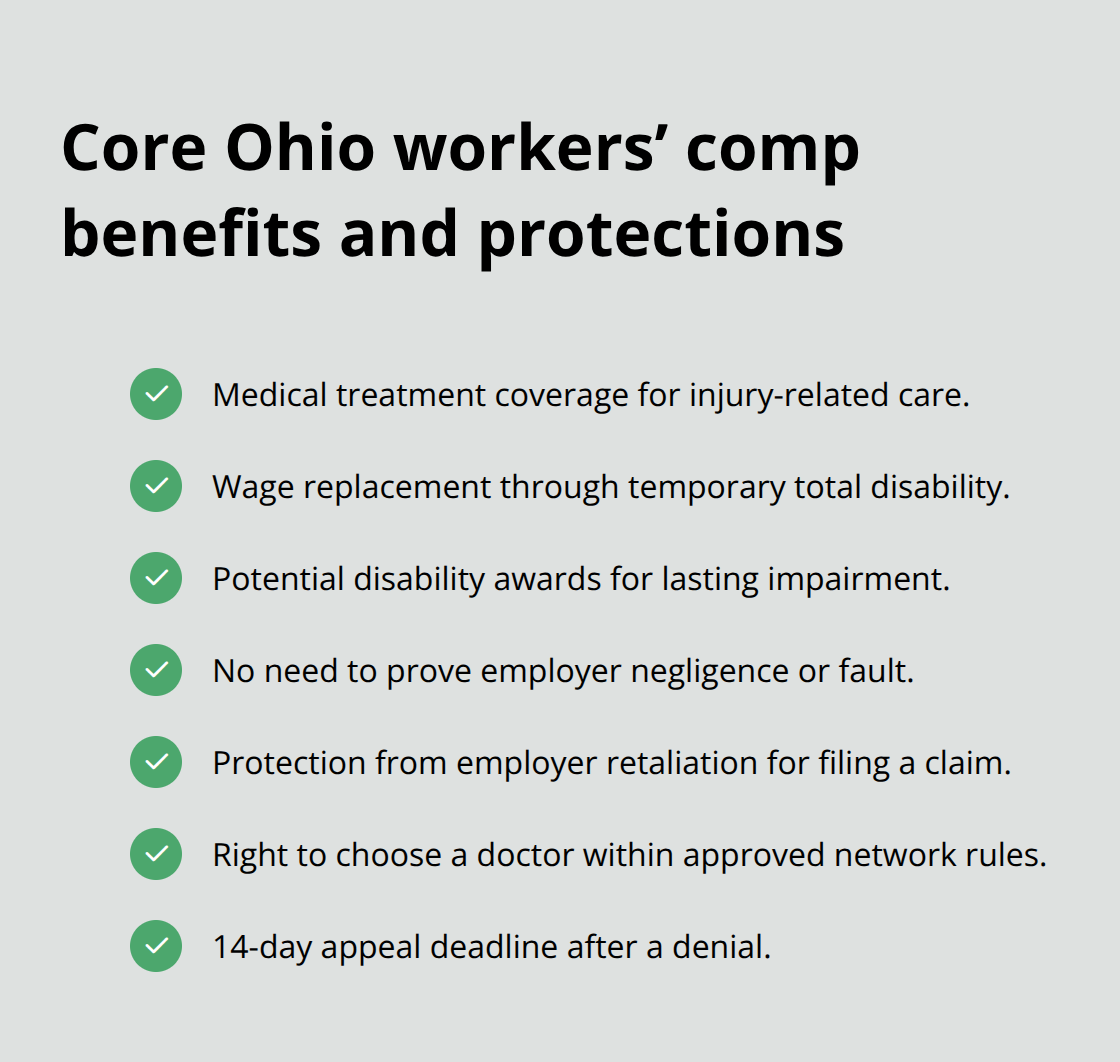
Ohio workers’ compensation provides three main forms of support when you suffer an elbow injury at work: medical treatment coverage, wage replacement benefits, and disability payments. The Ohio Bureau of Workers’ Compensation covers all reasonable and necessary medical care directly related to your injury, including emergency treatment, ongoing therapy, imaging, surgical procedures, and prescription medications. This coverage applies regardless of whether you caused the accident through your own actions, which distinguishes workers’ compensation from personal injury lawsuits that require proof of negligence.
Wage Replacement and Disability Benefits
If your elbow injury prevents you from working during recovery, you qualify for temporary total disability benefits that replace a portion of your lost wages (the exact amount depends on your average weekly wage before the injury). The state does not require you to prove negligence or fault on your employer’s part to receive these benefits, which represents a significant advantage over filing a personal injury lawsuit. Your employer cannot retaliate against you for filing a claim or cooperating with the investigation, and Ohio law explicitly protects workers who report injuries or participate in the compensation process.
Filing Your Claim Immediately
Contact the Ohio Bureau of Workers’ Compensation immediately at 1-800-644-6292 or file online through their portal, which typically processes faster than phone or mail submissions. You must provide the First Report of Injury, which includes the date and time of the accident, a detailed description of how the injury occurred, any medical care you received, and your employer and employee information. Delays in filing can jeopardize your eligibility for benefits, so act without hesitation.
The Investigation and Approval Process
The employer’s insurer then investigates and decides whether to approve your claim, a process that can take weeks or months. If approved, benefits begin flowing for medical expenses and lost wages. If denied, you have the right to appeal through district hearing officers, staff hearing officers, and ultimately the Industrial Commission of Ohio, but you must file your appeal within 14 days of the denial. This tight timeline makes prompt action essential.
Choosing Your Doctor and Building Your Medical Record
In Ohio, you generally have the right to choose your own doctor for workers’ compensation treatment unless your employer uses a managed care organization network, in which case you may need to see a doctor within that approved network. Thorough medical records that document your injury and connect your condition to specific workplace activities strengthen your position throughout the claims process and any potential appeals. The stronger your medical documentation, the better your chances of approval and the more effectively you can challenge any denials that arise.
How We Help You Win Your Claim
Building Your Case From Day One
The 14-day appeal window after a claim denial closes fast, and most injured workers miss it without realizing what they’ve lost. We at Robin J Peterson Company, LLC focus on preventing denials in the first place by constructing solid medical documentation from the start. When you contact us immediately after your elbow injury, we work with your medical team to confirm every report connects your symptoms to specific workplace activities. The Ohio Bureau of Workers’ Compensation denies gradual-onset elbow injuries at higher rates than acute injuries because the connection to work feels less obvious to claims adjusters. We know exactly what documentation the BWC requires to approve overuse injuries, and we submit it correctly the first time.
Most injured workers file claims alone and face initial denials. We’ve observed this pattern repeatedly across Cleveland, Akron, and Canton. Our approach differs because we treat your claim as a legal case from the moment you’re injured, not as a simple paperwork submission.
Fighting Denials at Every Level
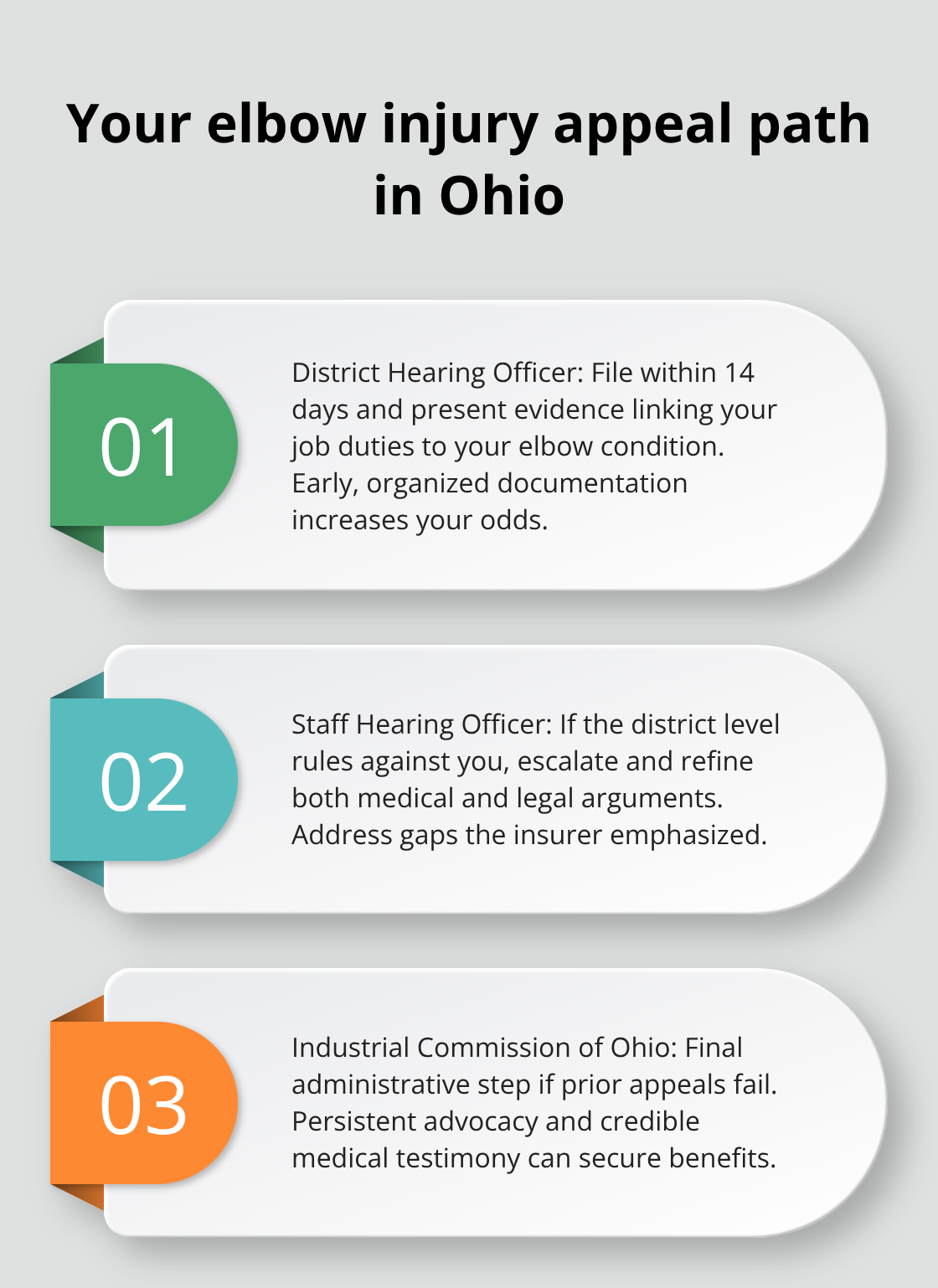
When the BWC or your employer’s insurer denies your claim, the 14-day appeal deadline becomes your only lifeline. We file district hearing officer appeals within this window and present evidence that connects your job duties to your elbow condition. If the district hearing officer rules against you, we appeal to the staff hearing officer, and if necessary, we take your case before the Industrial Commission of Ohio.
Each level of appeal requires different evidence strategies and legal arguments, and most injured workers cannot navigate these proceedings alone. We represent you at every stage, cross-examining the BWC’s medical experts and presenting independent medical testimony that supports your injury claim. The difference between winning and losing your appeal often comes down to how effectively your attorney challenges the insurer’s evidence.
Maximizing Your Available Benefits
We maximize your compensation by confirming you receive all available benefits: medical treatment coverage without restriction, temporary total disability payments during recovery, and any permanent disability awards if your injury causes lasting impairment. Your medical records and the strength of your legal representation (both factors within your control) determine whether you walk away with full compensation or settle for less. We work without charging upfront fees because we only succeed when you receive your benefits.
Final Thoughts
Elbow injury Ohio compensation protects workers who suffer on the job, whether from sudden accidents or gradual overuse conditions. Ohio law guarantees you medical coverage, wage replacement during recovery, and disability benefits without requiring you to prove your employer’s negligence. Report your injury to your employer immediately, file your First Report of Injury with the Ohio Bureau of Workers’ Compensation at 1-800-644-6292 or online, and gather detailed medical records that connect your symptoms to specific workplace tasks.
If your claim faces denial, you have only 14 days to appeal-a window that closes quickly for workers navigating the process alone. Insurers count on injured workers filing incomplete claims or missing appeal deadlines, and they succeed far too often. An experienced workers’ compensation attorney prevents denials by building solid documentation from the start and fights denials at every appeal level.
We at Robin J Peterson Company, LLC represent injured workers across Cleveland, Akron, and Canton who have suffered elbow injuries at work. We understand how the Ohio Bureau of Workers’ Compensation operates and what evidence wins appeals before the Industrial Commission of Ohio. Contact Robin J Peterson Company, LLC today to discuss your elbow injury claim and protect your rights to compensation.