
Workers’ compensation claims in Ohio involve navigating a system with multiple agencies and decision-making bodies. The Industrial Commission of Ohio plays a specific role in this process, and understanding Industrial Commission guidance Ohio is essential if your claim has been disputed or denied.
At Robin J Peterson Company, LLC, we help workers understand what happens when their cases reach the ICO and what those decisions mean for their benefits. This guide walks you through the ICO’s function, how to interpret their rulings, and the practical steps to move your claim forward.
What the Industrial Commission of Ohio Actually Does
The Commission’s Core Function
The Industrial Commission of Ohio exists for one reason: to resolve disputes that the Bureau of Workers’ Compensation cannot settle on its own. When the BWC denies your claim, approves it but later disputes benefits, or disagrees about your injury classification, your case moves to the Industrial Commission. This is not a rubber stamp process. The Commission operates as an independent adjudicating body with the power to overturn BWC decisions, order immediate payment with interest for unreasonable delays, and modify awards within five years from your injury date.
How the Commission Differs from the BWC
The Industrial Commission differs fundamentally from the BWC in structure and authority. The BWC processes initial claims and makes the first determination within 28 days of filing. The Commission steps in only when that initial decision is contested. The BWC operates as an administrative agency managing claims and setting policy, while the Commission functions as a quasi-judicial body that holds hearings, reviews evidence, and issues binding orders. This distinction matters because it means the Commission can examine your case with fresh eyes and consider evidence that was not available during the BWC’s tight 28-day window. You can submit additional medical records, wage documents, and witness testimony on appeal that strengthen your position.
Where Most Disputes Land
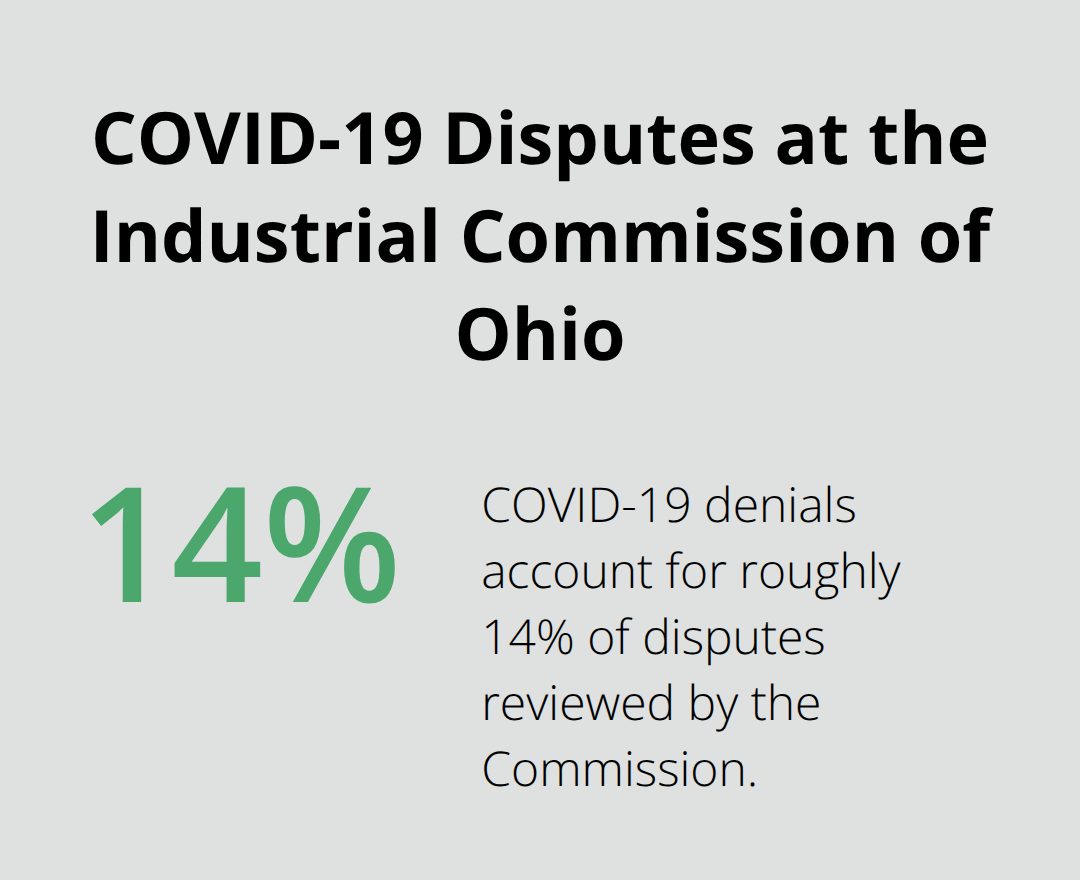
The types of cases reaching the Commission reveal patterns in how claims get denied or misclassified. Permanent partial disability rating disputes dominate the Commission’s docket because the statutory schedule requires precise medical documentation. If your medical report fails to match the exact schedule category with specific findings like range of motion loss or nerve damage, the Commission will likely reduce or deny your rating. Vocational rehabilitation disputes emerge when you disagree about whether suitable work exists in your local labor market or whether it matches your physical restrictions and wage history. The Commission requires concrete evidence about available jobs and your ability to perform them. COVID-19 denials have created a growing category of disputes (roughly 14% of cases), with workers challenging the BWC’s determination that their illness lacks sufficient work connection. The Commission’s review focuses on whether medical evidence clearly establishes the occupational origin of the condition.
These disputes succeed or fail based on documentation quality and strategic evidence presentation, not on hope or time passing.
What Happens Next in Your Case
When the Commission accepts your appeal, the process moves beyond the initial claim review. You now have the opportunity to present your full case with all available evidence, and the Commission will examine it with authority the BWC did not possess. Understanding how the Commission interprets its own rulings and applies them to your specific situation becomes your next priority.
How Industrial Commission Orders Shape Your Benefits
What an Industrial Commission Order Actually Controls
Industrial Commission orders are not advisory opinions or suggestions. They are binding decisions that directly control what benefits you receive, when you receive them, and for how long. When the Commission rules on your case, that order becomes the governing document for your claim unless you successfully appeal to the Ohio Supreme Court. The practical impact is immediate: if the Commission approves your claim after the BWC denied it, the Commission can order the BWC to pay all benefits retroactively with interest for the delay. If the Commission reduces your permanent partial disability rating, your future benefits drop accordingly.
Reading the Three Sections of a Commission Order
Most workers misread Commission orders because they focus on the wrong sections. The Commission’s order contains findings of fact, conclusions of law, and the final order itself. The findings describe what the Commission believes happened based on the evidence presented. The conclusions explain how Ohio law applies to those facts. The final order states what the Commission is actually directing the BWC to do.
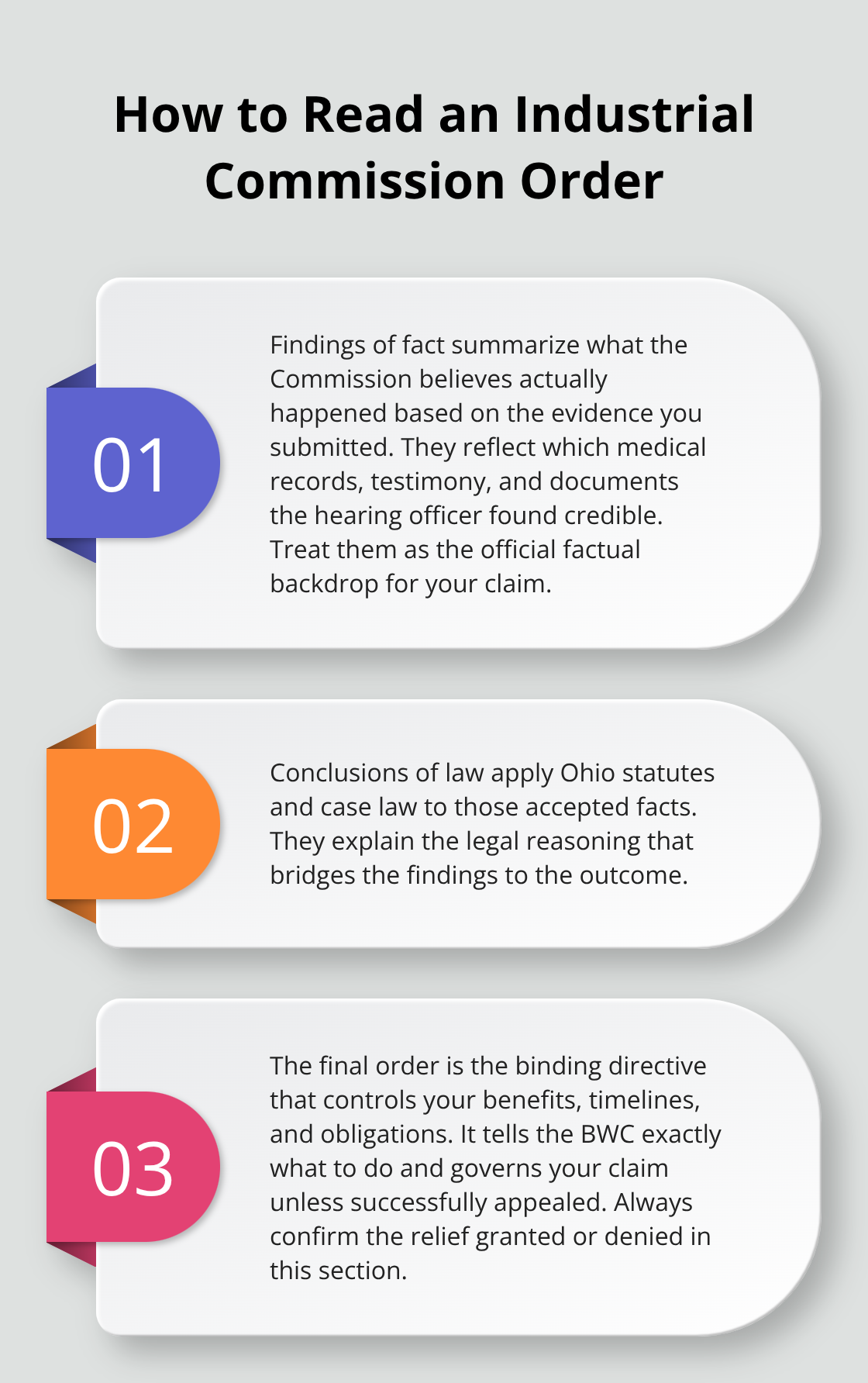
Many workers read the findings and assume they lost when the findings were actually unfavorable but the final order still granted relief. You must read all three sections together because the order is only as good as the final directive.
Where Permanent Partial Disability Claims Succeed or Fail
Permanent partial disability disputes hinge on whether medical documentation precisely matches the statutory schedule categories. A physician’s report stating you have limited shoulder motion is not enough; the Commission needs exact measurements and documentation of specific functional loss. The Commission examines whether your medical records contain the exact findings required by the schedule. If your records lack these specifics, the Commission will reduce or deny your rating based on what the evidence actually shows.
How Vocational Rehabilitation and COVID-19 Disputes Play Out
Vocational rehabilitation disputes require evidence about real jobs available in your actual labor market, not hypothetical positions or jobs that disappeared during the pandemic. The Commission examines whether the proposed work actually matches your restrictions and whether it pays reasonably close to your pre-injury wage. COVID-19 denials succeed when workers provide medical evidence establishing occupational origin, meaning the work itself created the conditions for infection or the illness manifested due to workplace exposure. The Commission has reviewed these cases and knows what evidence works. When you prepare for a Commission hearing, focus your evidence on the specific issue the Commission will decide, not on general sympathy for your situation or anger at the BWC’s initial denial. This strategic approach to evidence presentation determines whether the Commission’s order works in your favor or against you.
How to Navigate the Industrial Commission Process for Your Claim
File Your Appeal Within the 14-Day Window
The Industrial Commission accepts no late appeals. Missing the 14-day deadline after a BWC denial eliminates your right to challenge the decision entirely, and the Commission has no authority to extend this timeframe. File Form IC-12 with your local Industrial Commission office or submit your appeal through the ICON online portal, which processes submissions immediately and images documents within 24 hours. Place your claim number in the upper right corner of every page. The Commission reviews your complete file, so every document you submit shapes the outcome.
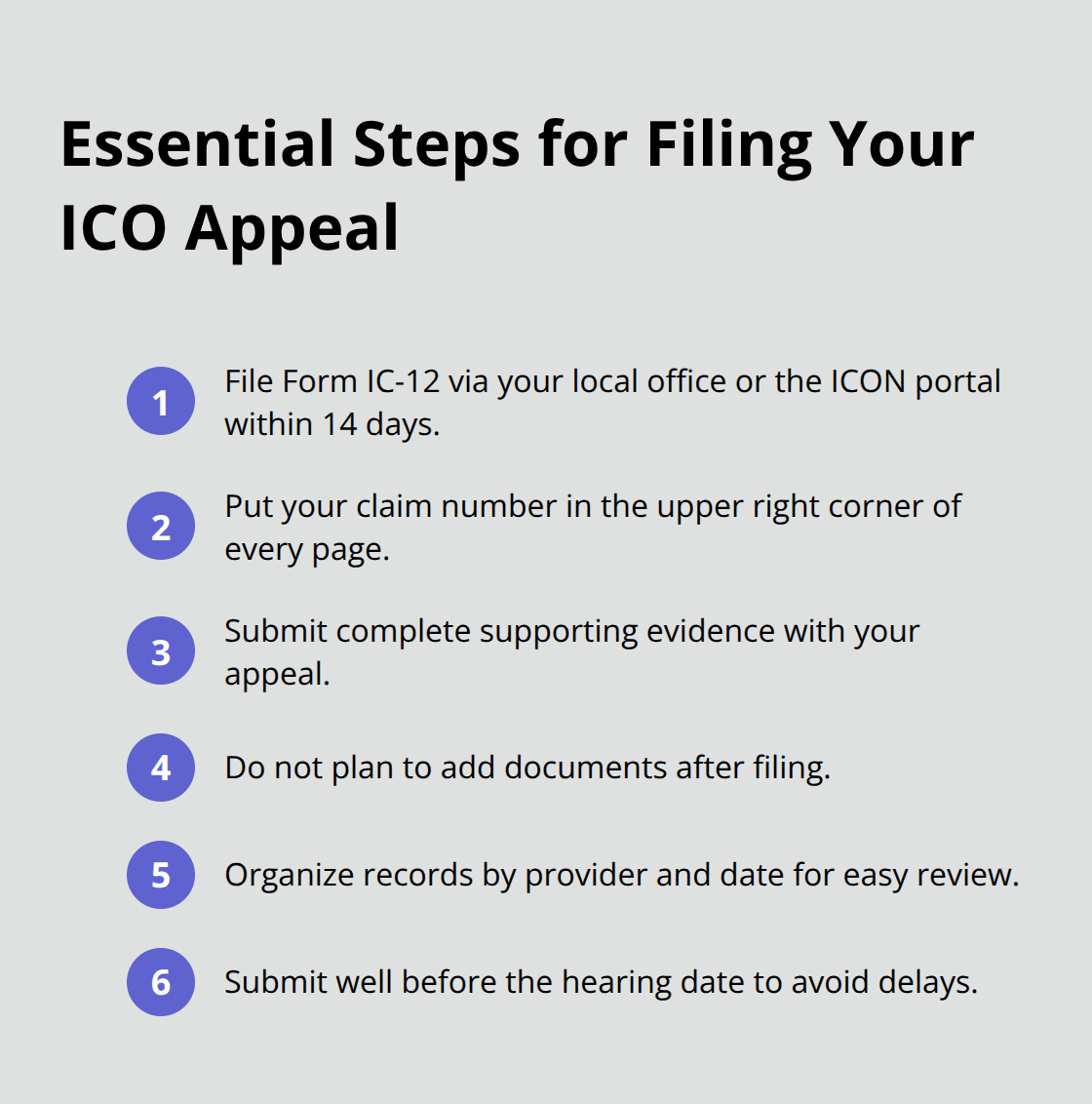
Most workers fail at this stage by filing the appeal but submitting incomplete evidence, assuming they can add documents later. You cannot add evidence after the initial filing. Submit everything that matters before your hearing date.
Organize Medical Records and Wage Documentation Strategically
Medical records must contain specific findings that match the exact categories in Ohio’s statutory schedule. Vague descriptions like shoulder pain do not work. The Commission needs measurements, range of motion data, imaging results, and functional limitations documented with precision. Organize your medical records by provider and date of service so the Commission locates information easily. If your initial medical records lack these specifics, obtain updated evaluations before the hearing. Wage documents are equally critical because they directly determine benefit calculations, and the Commission cannot award benefits based on incomplete financial information. Include employment records that prove the work connection and witness statements from coworkers who observed your injury. Submit documents well before your hearing date, not one day prior, because the Commission reviews documents submitted immediately before or on the hearing day after the hearing concludes, potentially delaying the decision.
Understand How Legal Representation Changes Your Case
Legal representation transforms how cases proceed through the Commission. You have the absolute right to hire an attorney for the full appeal, and representation typically improves outcomes because attorneys understand which evidence matters, how to organize complex medical records for maximum impact, and how to present testimony that focuses the Commission’s attention on winning issues rather than emotional appeals. The Commission’s quasi-judicial hearings are informal compared to traditional courts, but they still require strategic evidence presentation. An attorney ensures deadlines are met, medical evidence is properly formatted on official IC forms rather than your own versions (which delay automated recognition), and testimony stays focused on the specific disputed issue. You can appear without an attorney if you choose, but understand that the BWC will likely have legal representation, and the Commission will apply the same procedural rules and evidentiary standards regardless of whether you have counsel. Many workers representing themselves miss opportunities to strengthen their case because they do not understand which evidence the Commission actually considers decisive.
Know What the Commission Actually Decides
The Commission’s quasi-judicial process means you present your case to a hearing officer who examines the evidence and issues a written decision. The hearing officer does not make recommendations; the officer makes binding determinations that control your benefits. You can present testimony, submit medical records, introduce wage documents, and call witnesses to support your position. The Commission examines whether your evidence meets the legal standard for your specific dispute. For permanent partial disability claims, the Commission verifies that medical documentation precisely matches the statutory schedule. For vocational rehabilitation disputes, the Commission evaluates whether proposed work actually matches your restrictions and pays reasonably close to your pre-injury wage. For COVID-19 denials, the Commission assesses whether medical evidence establishes occupational origin. The Commission’s decision rests on the evidence you present and how strategically you organize it to address the specific issue in dispute.
Final Thoughts
The Industrial Commission of Ohio makes binding decisions that control your benefits unless you pursue the narrow Ohio Supreme Court pathway. This means every document you submit, every medical record you organize, and every piece of evidence you present must be precise and purposeful. Vague medical findings, incomplete wage documentation, and disorganized submissions guarantee unfavorable outcomes because the Commission reviews your complete file and makes decisions based on what you actually present.
If the BWC has denied your claim or disputed your benefits, file your appeal within the 14-day window using Form IC-12 or the ICON portal immediately. Simultaneously, gather all medical records, wage documents, and witness statements that support your position, organizing these materials by provider and date so the Commission locates information easily. If your medical records lack the specific findings required by Ohio’s statutory schedule, obtain updated evaluations before your hearing and submit everything well before your hearing date.
Legal representation from a firm experienced in Industrial Commission cases significantly improves your chances of success. We at Robin J Peterson Company, LLC represent injured workers throughout Ohio’s workers’ compensation system and understand how the Commission evaluates evidence and which arguments succeed. If you need guidance on Industrial Commission guidance Ohio or face a Commission hearing, contact us for a consultation to learn how we can help you recover the benefits you deserve.