
A denied BWC claim appeal can feel like a dead end, but it’s actually the beginning of a process where you can fight back and potentially reopen your case.
At Robin J Peterson Company, LLC, we’ve helped workers navigate this exact situation. The steps you take now-from understanding why your claim was denied to presenting evidence to the Industrial Commission of Ohio-can make the difference between acceptance and rejection.
Understanding Why Your BWC Claim Was Denied
Common Reasons for Claim Denials
The Ohio Bureau of Workers’ Compensation denies thousands of claims each year, and most denials stem from preventable mistakes rather than legitimate ineligibility. The most common reason is untimely filing-you have one year from the date of injury to report it to the BWC, and missing this deadline typically results in an automatic denial with few exceptions.
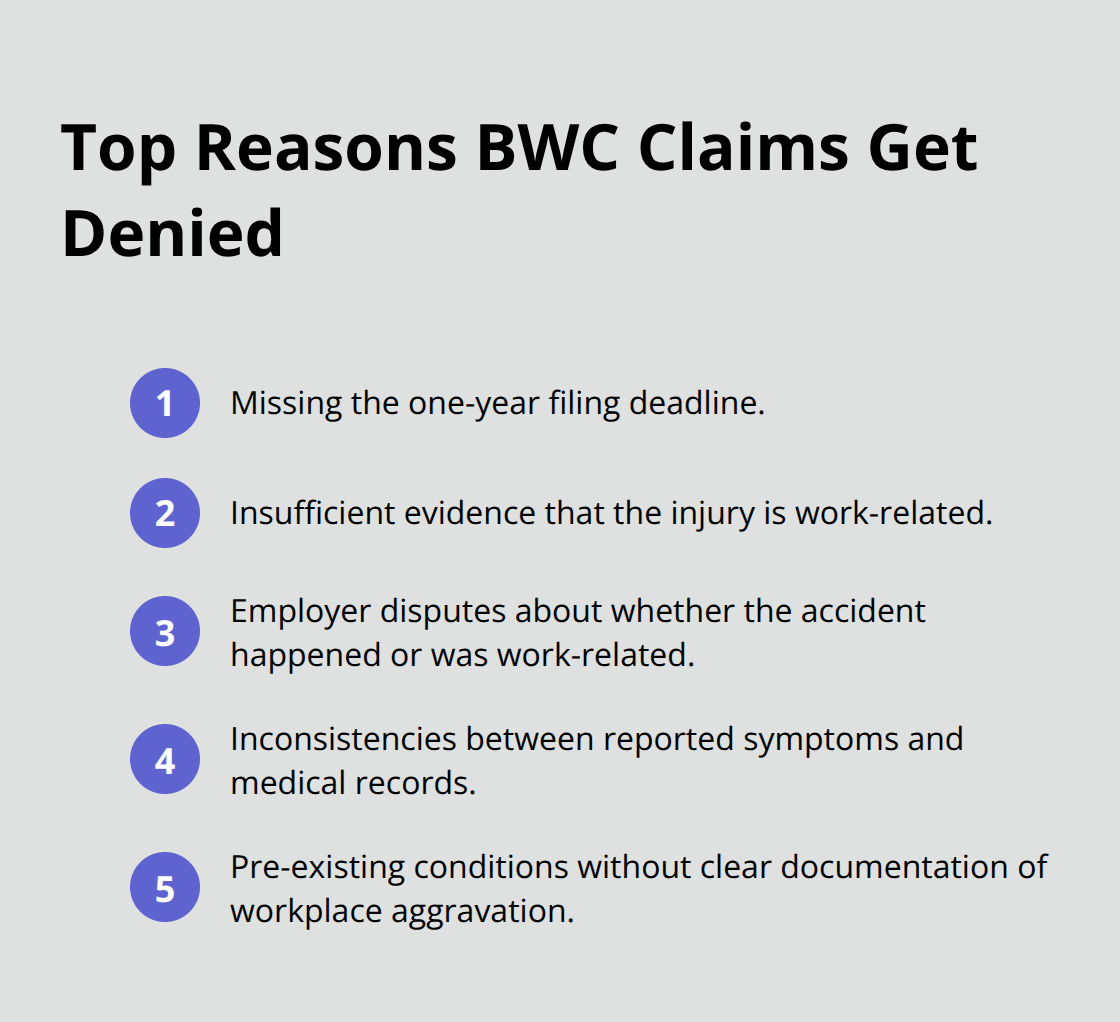
A second major culprit is insufficient work-relatedness evidence. The BWC requires you to prove your injury arose out of and occurred in the course of employment, which sounds straightforward until you realize that off-site injuries, gradual-onset conditions, or injuries during non-standard work activities create skepticism.
Employer disputes also trigger denials frequently, especially when your employer argues the accident never happened or wasn’t work-related. Medical record inconsistencies rank high as well-if your reported symptoms don’t align with what your doctor documented, or if you ignored medical restrictions, the BWC views this as grounds for denial. A pre-existing condition that was aggravated by work can also result in denial if you lack clear medical documentation showing the workplace incident made things worse.
The Difference Between Denial and Closure
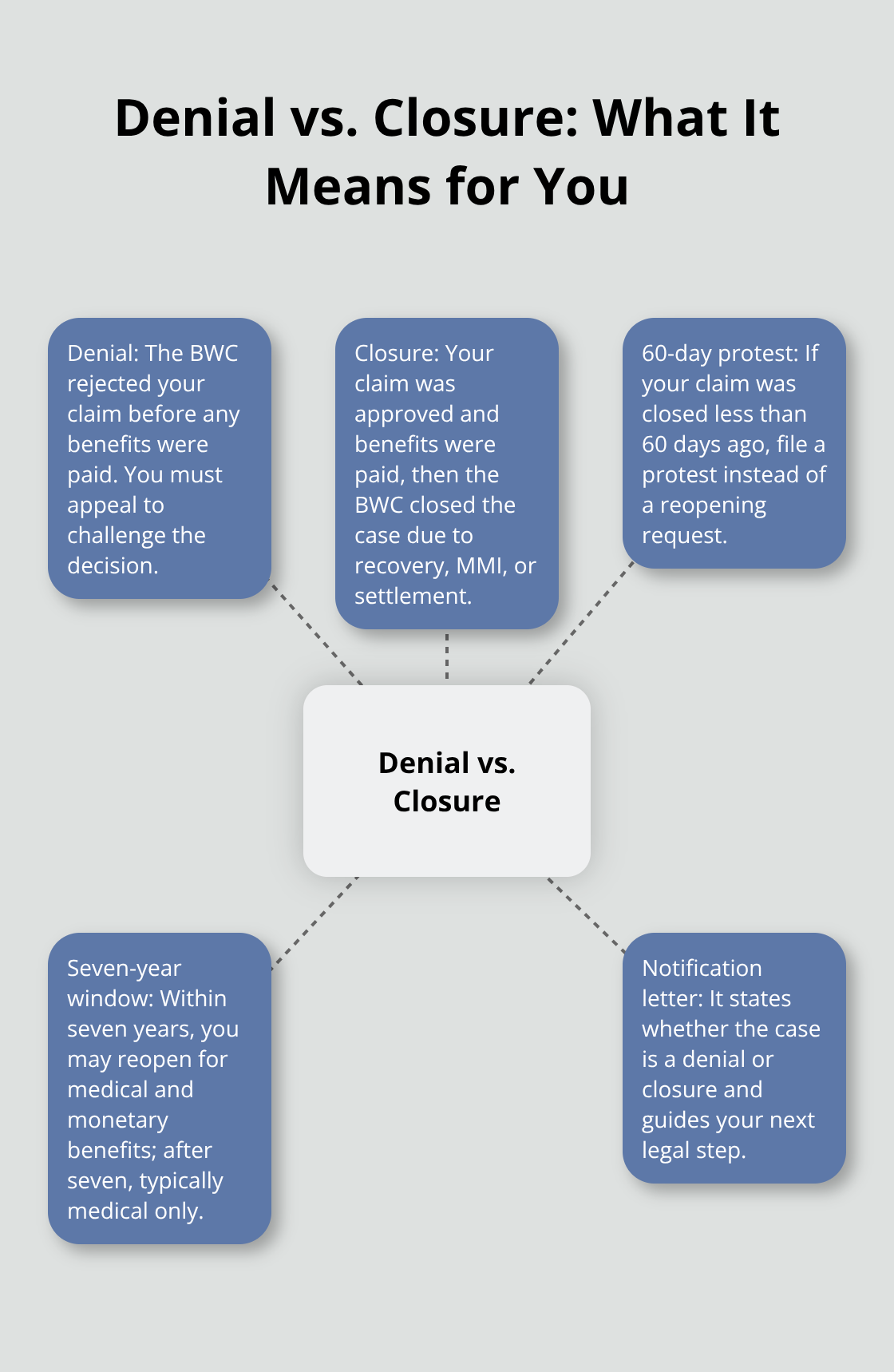
The distinction between denial and closure matters because they represent fundamentally different legal situations. A denial means the BWC rejected your claim outright before benefits were ever paid. A closure, by contrast, occurs after your claim was approved and you received benefits, but the BWC then closed the case-either because you recovered, reached maximum medical improvement, or settled the claim.
If your claim was closed less than 60 days ago, you must file a protest rather than attempt reopening. If it was closed within the last seven years, you can potentially reopen for both medical and monetary benefits, though after seven years reopenings typically cover medical treatment only. The BWC notification letter should specify whether you received a denial or a closure order, and this distinction determines your next legal move.
Your Rights After a Denial Decision
You have 14 days from the denial date to file an appeal with the Industrial Commission of Ohio-this is a hard deadline, and missing it usually locks you out of the system. After a denial, you retain the right to appeal, request a hearing before an administrative judge, present medical evidence, and challenge the BWC’s decision.
If your case involves a Claim Resolution Structured Settlement Agreement, your available benefits during reopening become limited to medical treatment, so verify this status before proceeding. The appeal process itself requires you to act quickly and strategically, which is why understanding the specific reasons the BWC cited in your denial letter becomes your first critical step toward fighting back.
How to File Your Appeal and Present Evidence
Act Within the 14-Day Window
The 14-day window after your denial letter arrives is where most workers lose their cases. You must file your appeal with the Industrial Commission of Ohio within this timeframe, and waiting until day 13 creates unnecessary risk if paperwork gets delayed. The appeal form itself is straightforward, but the supporting documentation you attach determines whether an administrative judge takes your case seriously.
Collect Medical Records That Show Objective Findings
Start collecting medical records immediately after you receive your denial letter. Request complete records from every healthcare provider who treated you since the injury date, including imaging results, test findings, and physician notes. Medical records with specific measurements and objective findings carry far more weight than subjective complaints.
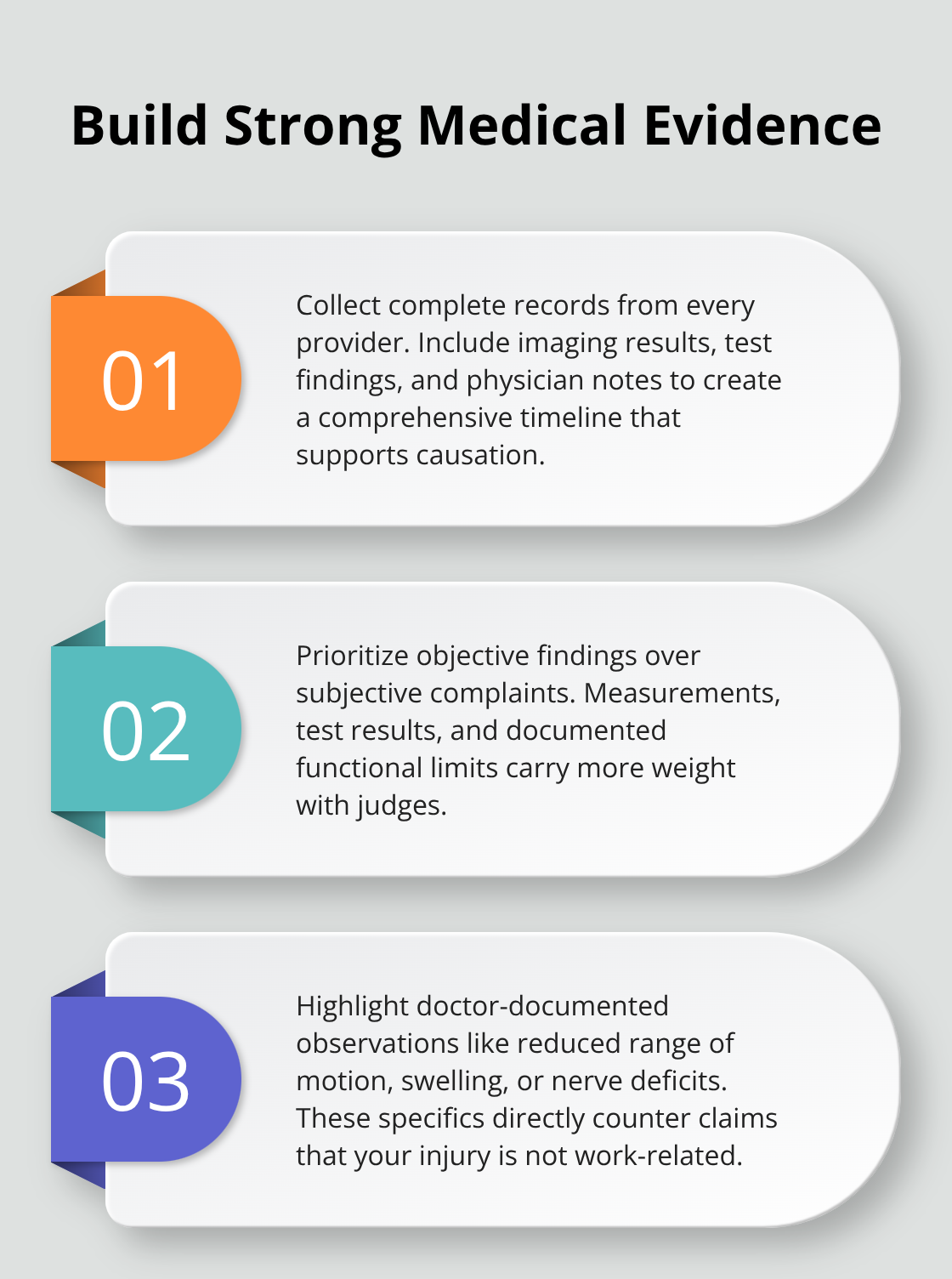
If your doctor noted reduced range of motion, documented swelling, or recorded nerve damage, these concrete observations directly counter claims that your injury isn’t work-related.
Build Evidence Against Employer Disputes
Employer disputes often drive denials, so you should collect witness statements from coworkers who saw the incident occur. Written statements work better than verbal promises because they create a permanent record. You must document the exact conditions of your workplace on the injury date, including hazards, equipment involved, and your job duties. If you followed medical restrictions but your employer pressured you to return early, you should gather that correspondence.
Ensure Medical Documentation Matches Your Reported Symptoms
The BWC frequently denies claims when medical records show inconsistency with your reported symptoms, so you must ensure your doctor documents everything you report during appointments and never minimize symptoms to appear tougher. Inconsistencies between what you told your physician and what appears in the medical record (or gaps in documentation) give the BWC ammunition to reject your appeal. Your medical file becomes the foundation of your case, so accuracy matters more than stoicism.
Present Your Case at the Industrial Commission Hearing
At the hearing before the Industrial Commission, you should bring the denial letter, all medical documentation, witness statements, and any employer communications. An administrative judge reviews the evidence and decides whether the BWC’s denial was justified. If the judge finds the BWC acted unreasonably, your claim gets reopened and you move forward with benefits. Having legal representation at this hearing strengthens your position significantly because the employer will have counsel present, and presenting your case effectively requires understanding how judges interpret evidence in workers’ compensation cases. The next chapter covers how to work with an attorney and obtain expert medical testimony to address the specific reasons the BWC cited in your initial denial.
Building a Strong Case for Your Appeal
How Legal Representation Strengthens Your Appeal
An attorney who specializes in Ohio workers’ compensation law transforms your appeal from a solo effort into a strategic challenge backed by legal expertise. The Industrial Commission of Ohio handles thousands of appeals annually, and judges see a clear pattern: workers without representation present weaker cases and lose more often. When your employer shows up with counsel at the hearing, you face someone trained in cross-examination and evidence presentation. An experienced attorney immediately identifies which specific reasons in your denial letter are most vulnerable to challenge, then builds evidence directly against those points rather than presenting a scattered defense. Your lawyer also knows the procedural rules that trip up unrepresented workers-filing deadlines, evidence admissibility standards, and how judges interpret medical causation in Ohio cases. More importantly, an attorney negotiates with the BWC before trial; many denials get overturned through settlement discussions once the BWC realizes your case has legal backing and solid evidence. The cost of legal representation typically operates through a contingency fee structure, meaning you pay nothing upfront and your attorney’s fee comes from recovered benefits, so financial barriers should not prevent you from having professional advocacy.
Expert Medical Testimony and Its Impact
Medical testimony from an occupational health specialist or treating physician carries exponential weight when you present it at an Industrial Commission hearing because judges trust objective clinical expertise over lay testimony. Request that your treating physician prepare a detailed statement addressing the specific denial reasons the BWC cited-if they claimed your injury was not work-related, your doctor should explain the clinical basis for causation; if they questioned severity, your physician should document measurable findings that prove otherwise. Expert testimony works best when the doctor has treated you consistently since the injury date and can reference your medical records directly. If your treating physician cannot attend the hearing, a written report with their professional opinion still influences the judge’s decision, though live testimony is stronger.
Addressing Causation in Gradual-Onset and Off-Site Injuries
The BWC frequently denies claims involving gradual-onset injuries or off-site incidents because causation appears unclear, so expert medical testimony becomes your primary tool to establish the work-related connection that the BWC rejected. Your attorney knows which medical specialists carry the most credibility with Ohio judges and can help identify whether you need an occupational medicine physician, orthopedic surgeon, or another specialist to address the denial’s specific medical claims. Gathering this expert support early-before your hearing date-allows your attorney to reference the medical opinion in written filings and use it strategically at trial rather than scrambling to find a doctor willing to testify on short notice.
Final Thoughts
A denied BWC claim appeal requires speed, evidence, and strategic thinking. The 14-day filing window is real, and missing it closes the door permanently. Your appeal succeeds when you gather objective medical documentation, counter employer disputes with witness statements, and present your case to an administrative judge with clarity and supporting evidence.
Legal representation matters because judges see patterns in how cases are presented, and an attorney who understands Ohio workers’ compensation law identifies which denial reasons are weakest and builds evidence directly against them. Expert medical testimony from your treating physician or an occupational health specialist transforms your appeal from a general challenge into a clinical argument that judges respect. Request your complete medical records today, document any witness accounts while memories are fresh, and file your appeal within the deadline.
We at Robin J Peterson Company, LLC have guided injured workers through this exact process across Cleveland, Akron, and Canton (and surrounding areas). Our focus is straightforward: we fight for workers’ compensation benefits you earned through your injury. Contact Robin J Peterson Company, LLC to discuss your denied BWC claim appeal and take the next step toward reopening your case.