
A workplace injury in Ohio can derail your life, but the system designed to help you often works against injured workers. Insurance companies deny legitimate claims, employers push back on benefits, and navigating Ohio’s workers’ compensation rules alone puts you at a disadvantage.
At Robin J Peterson Company, LLC, we’ve seen how the right workplace injury lawyer Ohio can transform your case from a losing battle into a real fight for what you deserve. This guide shows you what separates effective advocates from attorneys who don’t understand workers’ compensation law.
Why Workers’ Compensation Specialists Beat General Practitioners
The Fundamental Differences in Ohio’s System
Workers’ compensation law in Ohio operates under a completely different framework than standard personal injury or employment law. The Ohio Bureau of Workers’ Compensation administers a no-fault system where fault doesn’t determine eligibility-only that your injury occurred while performing job duties. This distinction matters enormously because general practice attorneys often treat workers’ comp cases like standard lawsuits, which they are not.
The rules, deadlines, and strategic approaches differ fundamentally from what a generalist attorney handles. The BWC publishes specific policy updates and maintains an employer policy library that directly affects how claims proceed. When your attorney doesn’t track these updates regularly, your case gets disadvantaged against insurers who do. A general practitioner handling workers’ comp alongside real estate closings and divorce cases simply cannot compete with an attorney whose entire practice focuses on injured workers navigating the BWC and the Industrial Commission of Ohio.
How Ohio’s No-Fault Structure Changes Everything
Ohio’s workers’ compensation framework requires proof that your injury has a causal link to your job duties, not negligence from your employer. This no-fault structure eliminates the need to prove your employer acted carelessly, but it also eliminates your ability to sue your employer in most situations.
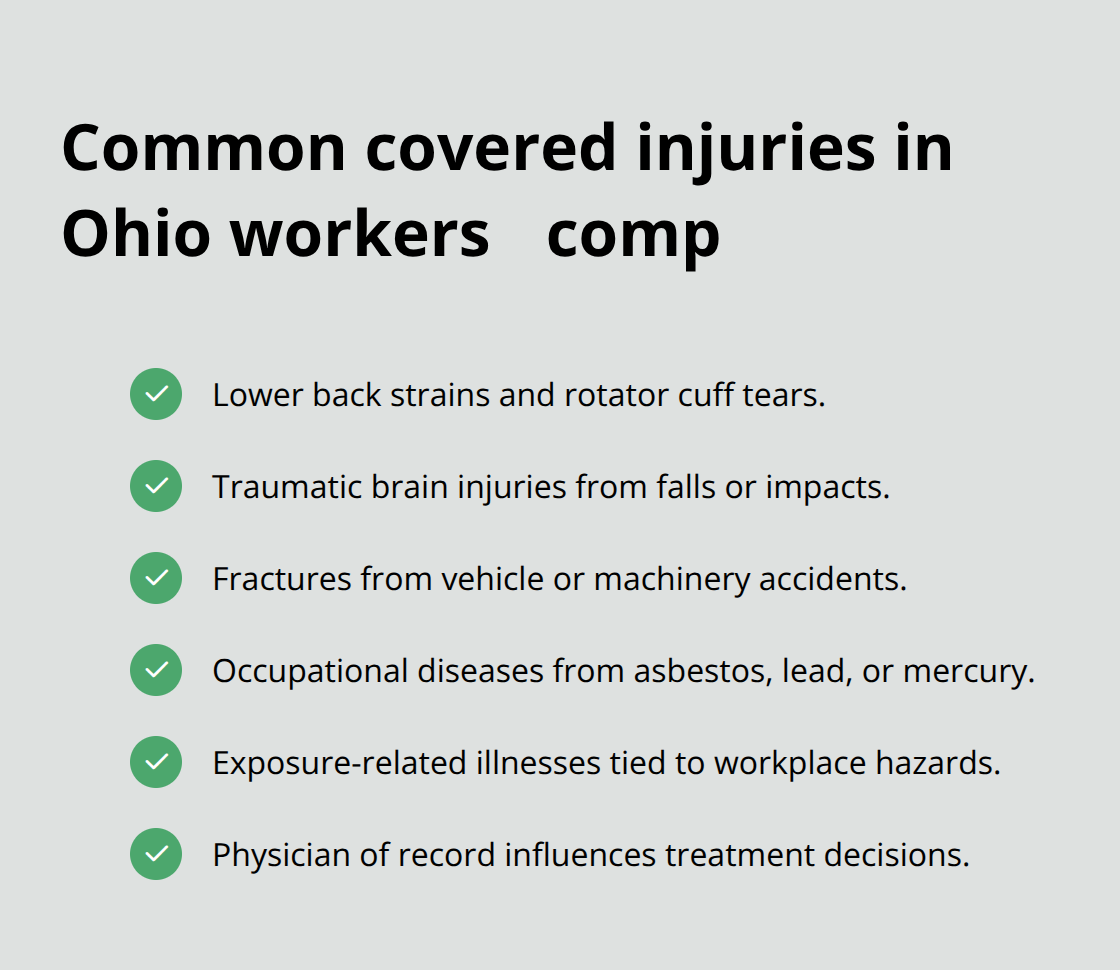
Covered injuries typically fall into specific categories: musculoskeletal damage like lower back strains and rotator cuff tears, traumatic brain injuries from falls or being struck by objects, fractures from vehicle collisions or machinery accidents, and occupational diseases from workplace exposure to asbestos, lead, or mercury. Your physician of record significantly influences medical decisions and documentation throughout your claim.
Why Medical Evidence Matters More Than You Think
An attorney unfamiliar with how the BWC evaluates medical evidence or how to challenge managed care organization decisions will miss opportunities to strengthen your position. The Industrial Commission Ombuds Office offers independent assistance for disputes, but most general attorneys don’t know this resource exists or how to leverage it effectively.
Specialists understand these nuances because they work within this system constantly. They know which medical documentation the BWC accepts, how to present evidence that resonates with the Industrial Commission, and when to escalate disputes through the Ombuds Office. This expertise directly impacts whether your claim moves forward or stalls. The difference between a specialist and a generalist often determines whether you receive the benefits you’ve earned.
When Your Claim Stalls or the System Works Against You
Denied Claims and How to Challenge Them
The Ohio Bureau of Workers’ Compensation denies a significant portion of initial claims, forcing workers to appeal or hire representation to fight back. If your claim was denied, the BWC provided a reason, but that reason often reflects an insurer’s interpretation rather than the actual facts of your injury. A workplace injury lawyer in Ohio evaluates whether the denial holds up under scrutiny or whether the insurer misapplied Ohio’s workers’ compensation rules.
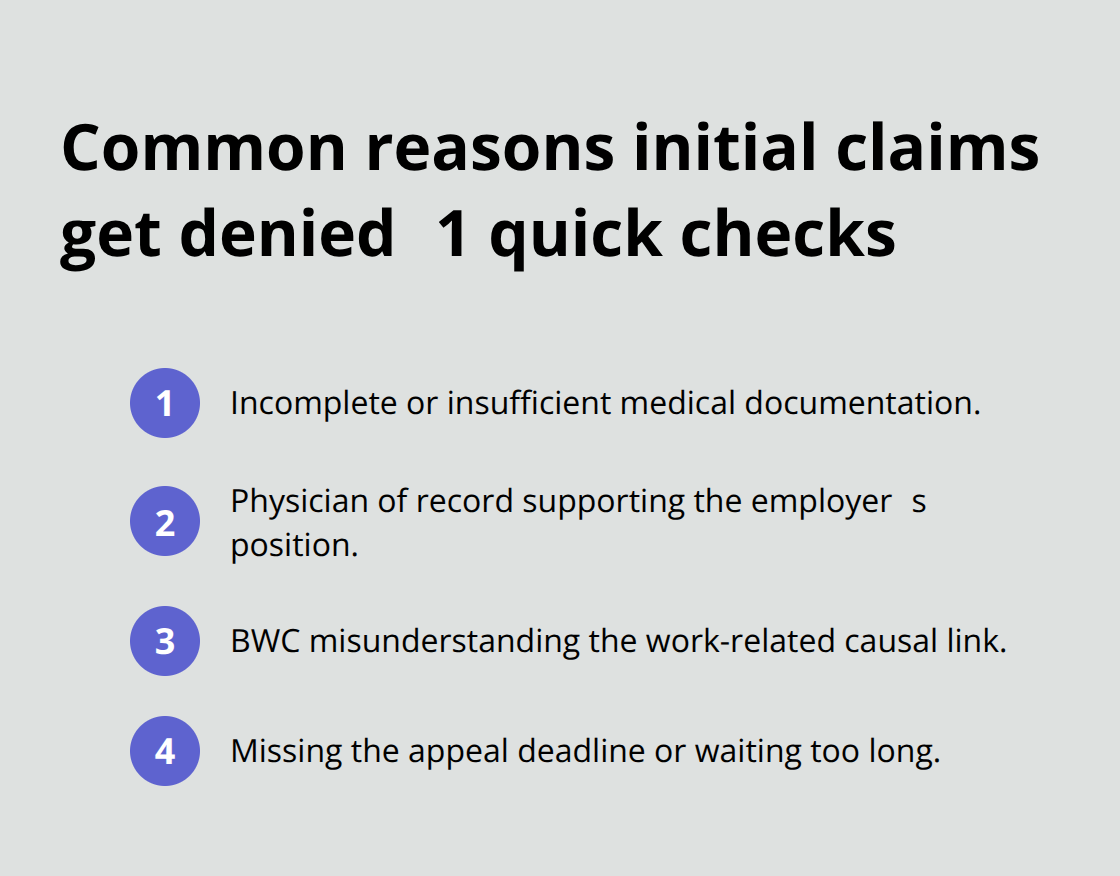
Sometimes the denial stems from incomplete medical documentation, a physician of record who sided with the employer, or the BWC misunderstanding how your job duties connect to your injury. These are fixable problems, but only if someone with expertise challenges the decision promptly. The statute of limitations for filing an appeal exists, and waiting too long eliminates your right to contest the denial entirely.
Recognizing Bad Faith Conduct from Employers and the BWC
Bad faith conduct from your employer or the BWC takes multiple forms, and recognizing it matters because it changes your legal strategy. An employer that fails to report your injury to the BWC, retaliates against you for filing a claim, or pressures you to accept a settlement you don’t understand is acting against your interests.
The BWC itself can act in bad faith when it ignores medical evidence, fails to investigate your claim properly, or allows a managed care organization to deny necessary treatment without legitimate justification. Insurers deny physical therapy for a rotator cuff tear or refuse imaging studies that would confirm a spinal injury, forcing workers to fight for basic medical care. When your employer or the BWC blocks access to medical treatment or denies benefits without reasonable justification, you need aggressive representation immediately. The Industrial Commission Ombuds Office can help, but an attorney who knows how to escalate disputes through formal appeals or challenge managed care denials in writing strengthens your position substantially.
Why Serious Injuries Require Specialized Legal Representation
Serious or catastrophic injuries demand specialized representation from the moment they occur. A spinal cord injury, traumatic brain injury, severe fracture requiring multiple surgeries, or permanent disability changes everything about your claim’s complexity and value. These cases involve extensive medical records, expert testimony, vocational rehabilitation assessments, and long-term benefit calculations that general attorneys simply cannot handle competently.
The medical timeline stretches months or years, requiring constant coordination between your physicians, the managed care organization, and the BWC. Missing deadlines for medical reviews or failing to present evidence at the right time costs you benefits. Serious injury cases demand the full weight of specialized knowledge and resources-which is why finding an attorney with proven experience in these specific injury types matters more than general experience alone.
Finding the Right Attorney for Your Injury Claim
What Separates a True Specialist from a Part-Time Practitioner
The attorney you hire determines whether you fight this battle alone or with someone who knows Ohio’s workers’ compensation system inside and out. Most injured workers make the mistake of hiring the first attorney who answers the phone or the one their coworker recommended without understanding what actually separates a competent workers’ comp specialist from someone dabbling in the field. You need an attorney whose entire practice revolves around workplace injuries in Ohio, not someone who handles workers’ comp as a side practice alongside other legal areas.
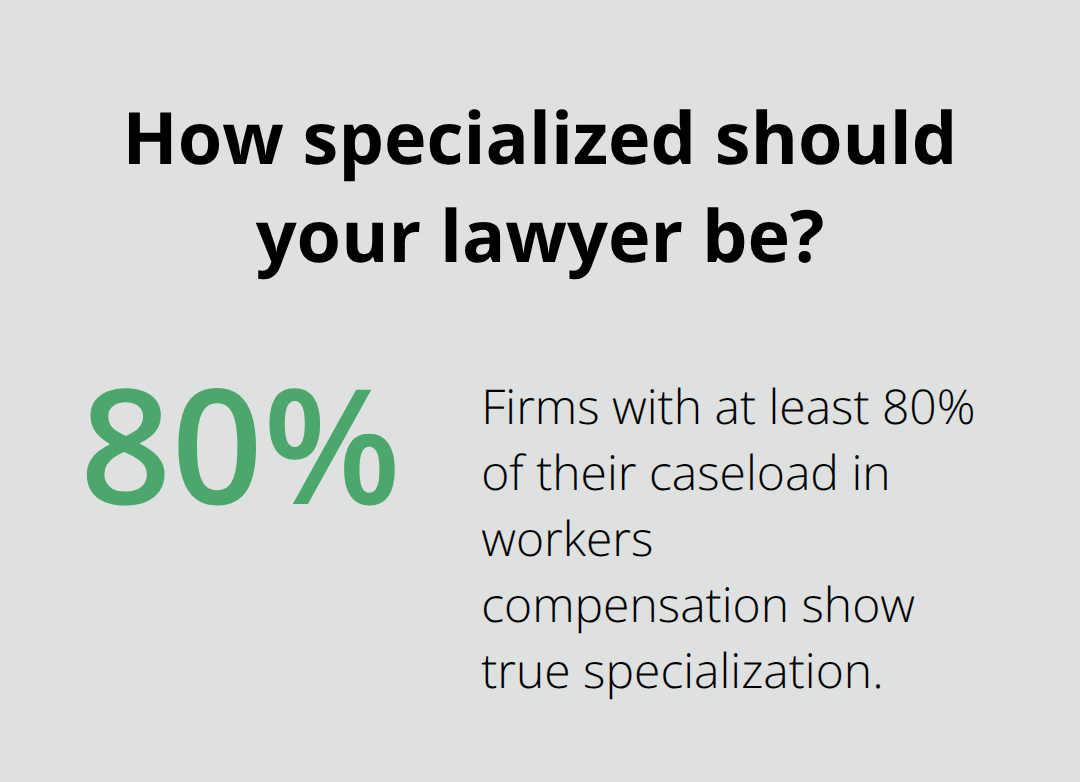
When you call a firm, ask directly what percentage of their caseload involves workers’ compensation claims. If the answer is anything less than 80 percent, that firm lacks the daily immersion in Ohio’s BWC procedures, deadlines, and strategic nuances that your case demands.
An experienced workers’ compensation attorney understands the specific managed care organizations operating in Ohio, knows which physicians of record tend to side with injured workers versus insurers, and recognizes when the BWC applies policy inconsistently across similar claims. This depth matters because your opponent-the insurance company-has the same advantage. They handle hundreds of Ohio workers’ comp claims annually and exploit any weakness in an attorney’s knowledge. A part-time workers’ comp attorney becomes that weakness.
Track Record with Your Specific Injury Type
Beyond practice focus, evaluate what the firm has actually accomplished with injuries similar to yours. Ask for specific examples of cases involving your injury type-whether that’s a traumatic brain injury, spinal fracture, or occupational disease-and what benefits those clients received. A firm that handled five spinal cord injury cases and recovered compensation for all five demonstrates competence in your specific injury category. A firm that cannot articulate their track record with your injury type has not built the specialized expertise you need.
Request to speak with former clients if possible, though understand confidentiality limits this option. Instead, ask about the firm’s average time to resolve similar cases, whether they’ve successfully challenged managed care denials in your injury category, and how they coordinate with medical experts during the claims process. These questions reveal whether the firm has truly mastered your injury type or simply claims general experience.
Communication and Realistic Expectations
Assess how the firm communicates with clients throughout the process. You should expect regular updates without needing to chase your attorney for information, clear explanations of what happens next, and honest assessments of your claim’s strengths and weaknesses. An attorney who sets realistic expectations upfront and delivers on those promises builds the trust necessary for a stressful, lengthy injury claim.
Robin J Peterson Company, LLC represents injured workers throughout the Cleveland, Akron, and Canton areas with a practice entirely focused on workers’ compensation law. The firm’s commitment to fighting for clients’ rights against employers and the BWC reflects the specialized advocacy your serious injury demands. When you contact any firm, listen carefully to how they explain your situation and whether they answer your questions directly or deflect with vague promises.
Final Thoughts
A workplace injury in Ohio leaves you vulnerable to decisions made by people who profit from denying your claim. Insurance companies field teams of adjusters, lawyers, and medical reviewers who work to minimize what you receive, while your employer contests your benefits and the BWC processes thousands of claims with limited staff. Without aggressive representation, you face these forces alone and outmatched.
The right workplace injury lawyer Ohio balances aggression with compassion, understanding your injury’s impact on your life while pushing hard against insurers and the BWC when they resist fair treatment. Aggression without compassion becomes recklessness, but compassion without aggression leaves you accepting settlements far below what you deserve. Contact a firm that specializes entirely in workers’ compensation law, ask about their track record with injuries like yours, and evaluate their willingness to challenge managed care denials or appeal denied claims.
Robin J Peterson Company, LLC represents injured workers throughout the Cleveland, Akron, and Canton areas with a practice entirely dedicated to workers’ compensation law. The firm fights for your rights against employers and the BWC, bringing the specialized knowledge and aggressive advocacy your serious injury demands. Contact the firm today to discuss your claim and understand what you’re entitled to receive.