
Getting a workers’ compensation claim denied in Ohio can feel like a dead end. The good news is that denied comp claims in Ohio aren’t final-you have real options to fight back.
At Robin J Peterson Company, LLC, we’ve helped workers navigate the appeals process and challenge denials successfully. This guide walks you through why claims get rejected, what rights you have, and the concrete steps to reclaim what you’re owed.
Why the BWC Denies Claims
The Ohio Bureau of Workers’ Compensation processes over 95,000 claims annually, and a significant portion face denial or dispute. Understanding exactly why the BWC rejects claims gives you a roadmap to avoid these pitfalls or correct them on appeal. Insufficient medical evidence linking your injury to work stands as the primary culprit, according to the BWC itself. This doesn’t mean you need a perfect medical record-it means your doctor’s notes must explicitly connect your job duties to your condition. Vague statements like general back pain without reference to your workplace activities give the BWC justification to deny.
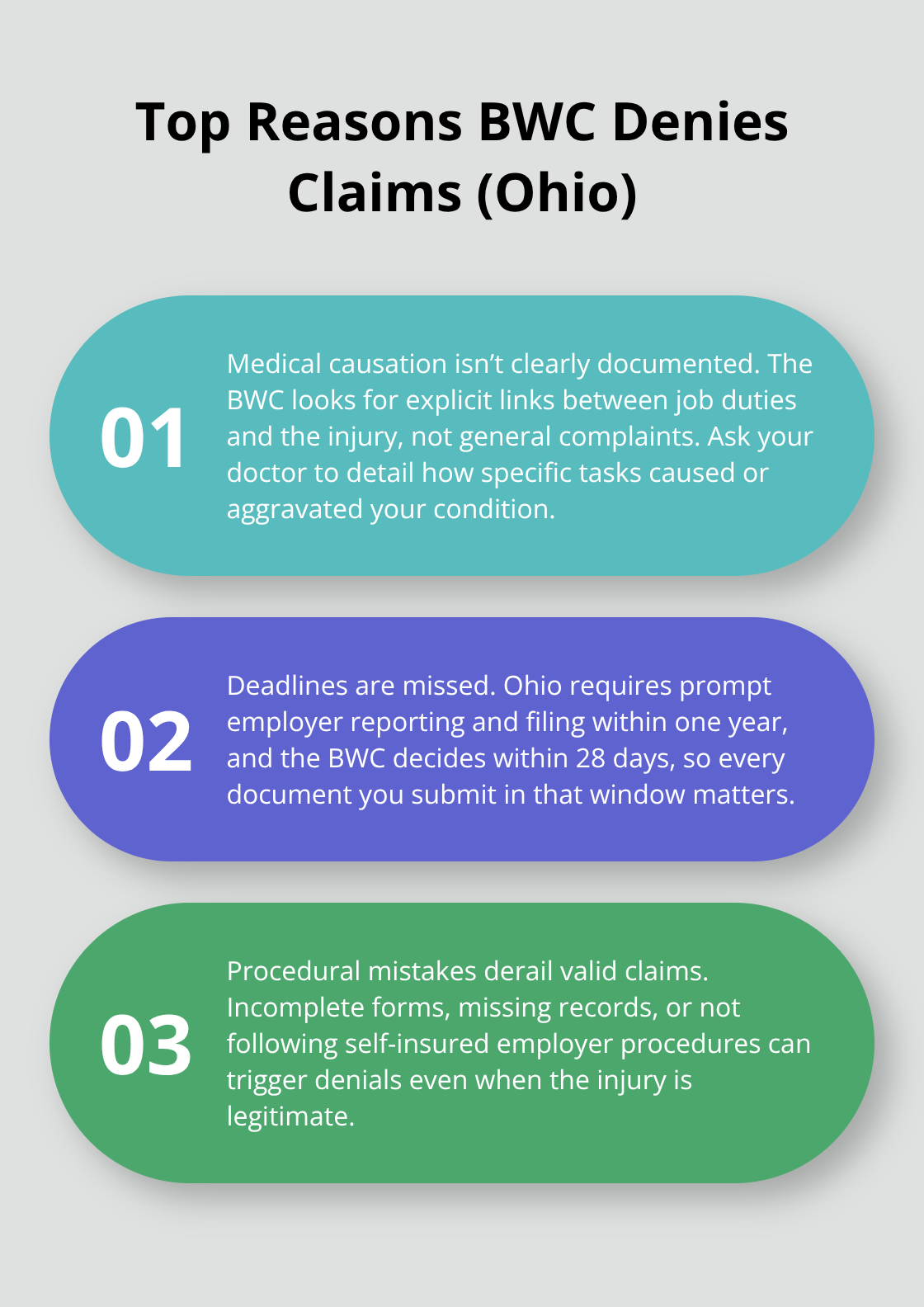
Missing the one-year filing deadline is another common fatal error that leads to automatic rejection. You must report the injury to your employer in writing immediately and file with the BWC within one year, or your claim is essentially dead. Procedural mistakes compound these issues: incomplete applications, missing documentation, or failure to follow self-insured employer procedures can trigger denials even when your injury is legitimate. The BWC has 28 days to decide whether to approve or deny your claim after you file, so every document you submit during that window matters.
Medical Evidence Is Non-Negotiable
The single most important factor in avoiding denial is securing medical records that explicitly state your injury arose from and occurred during your employment. Generic treatment notes that fail to address causation hand the BWC an easy out. You need your physician to document the specific job duties that caused or aggravated your condition, the timeline of symptom onset, and any workplace hazards involved. If your initial medical provider doesn’t establish this connection clearly, obtain a second opinion from another physician who will. Delayed or missed medical treatment also signals weakness to the BWC-they interpret gaps as evidence you weren’t seriously injured. Seek treatment promptly after the injury occurs and maintain consistent follow-up appointments. Pre-existing conditions present a particular challenge, but Ohio law recognizes compensability when employment substantially contributes to or aggravates an existing condition under Ohio Revised Code Section 4123.01. Your medical records must show how your job duties worsened what was already there.
Timing and Documentation Are Everything
The 14-day window to appeal a denial is strict and unforgiving. Once the BWC denies your claim, you have exactly 14 days to file an appeal with the Industrial Commission of Ohio using the IC-12 Notice of Appeal form. Missing this deadline bars you from recovery in nearly all circumstances. Documentation throughout the claims process determines your success.
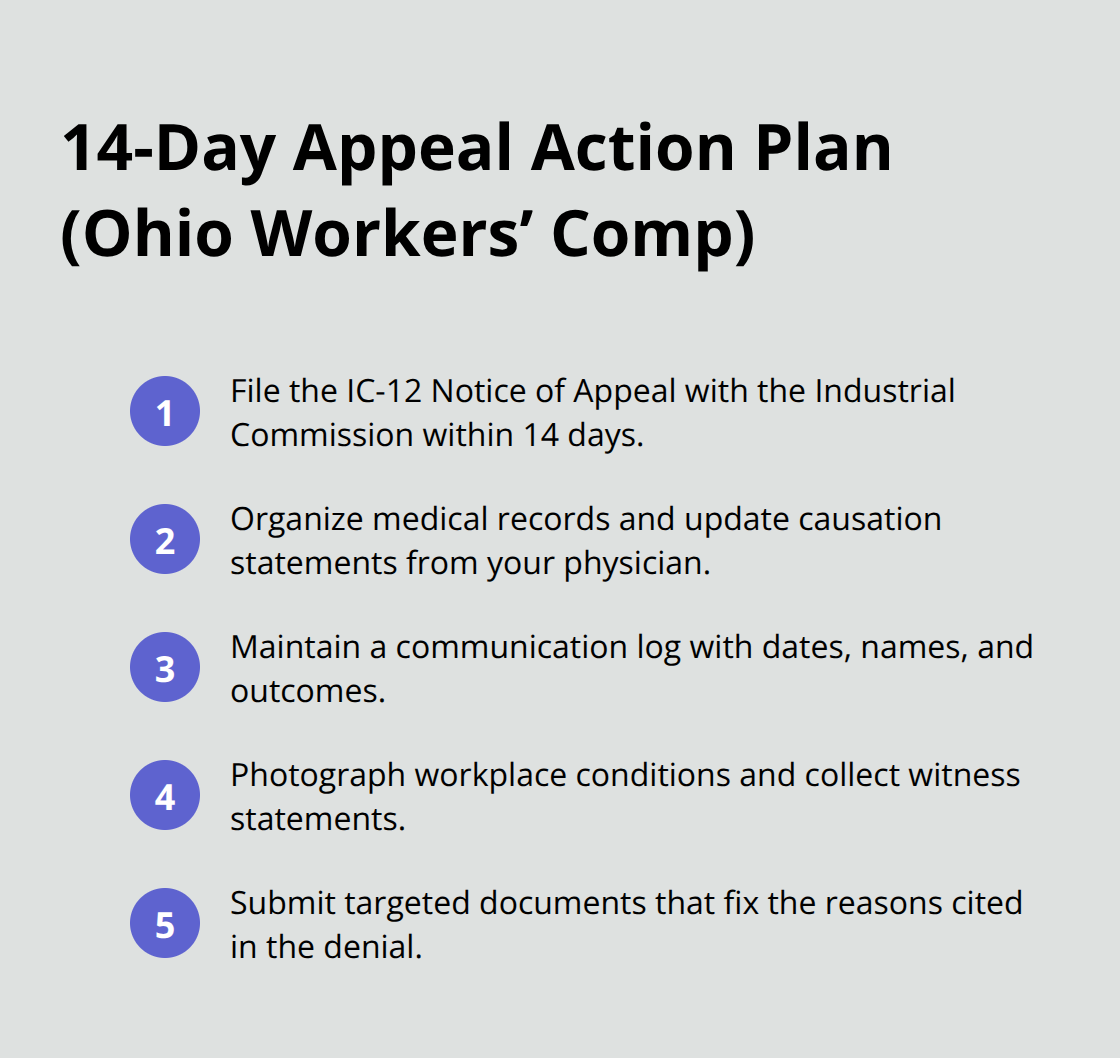
Create a detailed log of every communication with the BWC, your employer, and your healthcare providers, including dates, names, and outcomes. Photograph or record workplace conditions that contributed to your injury. Gather witness statements from coworkers who saw what happened. This documentation becomes your evidence foundation if the claim is denied and you must appeal. The stronger your paper trail, the more compelling your case becomes when you challenge the denial before the Industrial Commission.
What Happens After the BWC Says No
The moment you receive a denial letter from the Ohio Bureau of Workers’ Compensation, your 14-day window to act begins. You must file an IC-12 Notice of Appeal form with the Industrial Commission of Ohio within those 14 days or lose your right to challenge the decision almost entirely. This deadline is enforced without exception, and missing it closes the door permanently in the vast majority of situations. The appeal moves your case from the BWC to the Industrial Commission, where a District Hearing Officer reviews the evidence and arguments from both sides. Unlike the initial claim process, the hearing gives you a chance to present your case directly and respond to the insurer’s defenses with updated or additional medical records that strengthen your position.
How the Industrial Commission Reviews Your Case
The Industrial Commission operates under Ohio law that favors injured workers, treating the workers’ compensation statute as remedial and interpreting it broadly in your favor. This legal framework means denials are frequently overturned on appeal when you present solid medical evidence and a clear causation narrative connecting your injury to your job duties. The District Hearing Officer evaluates whether the BWC properly applied the law to your facts and whether sufficient evidence supports the denial. You have the opportunity to testify, present witnesses, and submit new documentation that addresses the specific reasons the BWC rejected your claim.
Strengthening Your Medical Evidence
Your appeal requires you to gather medical records that explicitly address what the BWC claimed was missing or inadequate. If the initial denial cited insufficient medical evidence linking your injury to work, obtain a physician’s statement that directly connects your job duties to your condition, specifying how your workplace activities caused or aggravated your injury. Request copies of all treatment notes, diagnostic imaging results, and test results from your healthcare providers and organize them chronologically. Your doctor must document the specific job duties that caused or worsened your condition, the timeline of symptom onset, and any workplace hazards involved.
Building Your Factual Record
Document your specific job responsibilities, the workplace hazards you encountered, and the exact sequence of events that led to your injury. Witness statements from coworkers carry significant weight, especially if they describe the incident or your working conditions firsthand. Photographs or recordings of workplace conditions that contributed to your injury strengthen your narrative considerably. This documentation becomes your evidence foundation when you challenge the denial before the Industrial Commission.
The Value of Legal Representation
Experienced legal representation dramatically improves appeal outcomes because insurers deploy their own legal teams to defend denials. An attorney who understands Ohio workers’ compensation statutes and case precedent can identify weaknesses in the BWC’s reasoning, coordinate with your medical providers to strengthen causation evidence, prepare you for the hearing before the District Hearing Officer, and anticipate the insurer’s counterarguments. Many workers attempt appeals alone and lose simply because they lack knowledge of what evidence the Industrial Commission actually needs or how to present it effectively. The difference between a successful and unsuccessful appeal often comes down to whether you have professional guidance navigating the procedural and evidentiary requirements that the hearing officer expects. With the right preparation and evidence, your case moves forward to the next critical phase of the appeal process.
How to Build a Winning Appeal Strategy
Your appeal strategy must attack the specific reason the BWC cited for denial, not just submit more of the same documents that failed the first time. If the denial letter states insufficient medical evidence, obtain a detailed physician’s statement that explicitly connects your job duties to your injury-not a generic letter but a comprehensive medical narrative addressing causation directly. If the denial hinges on missing documentation, identify exactly what paperwork the BWC claims you failed to provide and submit it now with a cover letter explaining why it strengthens your case.
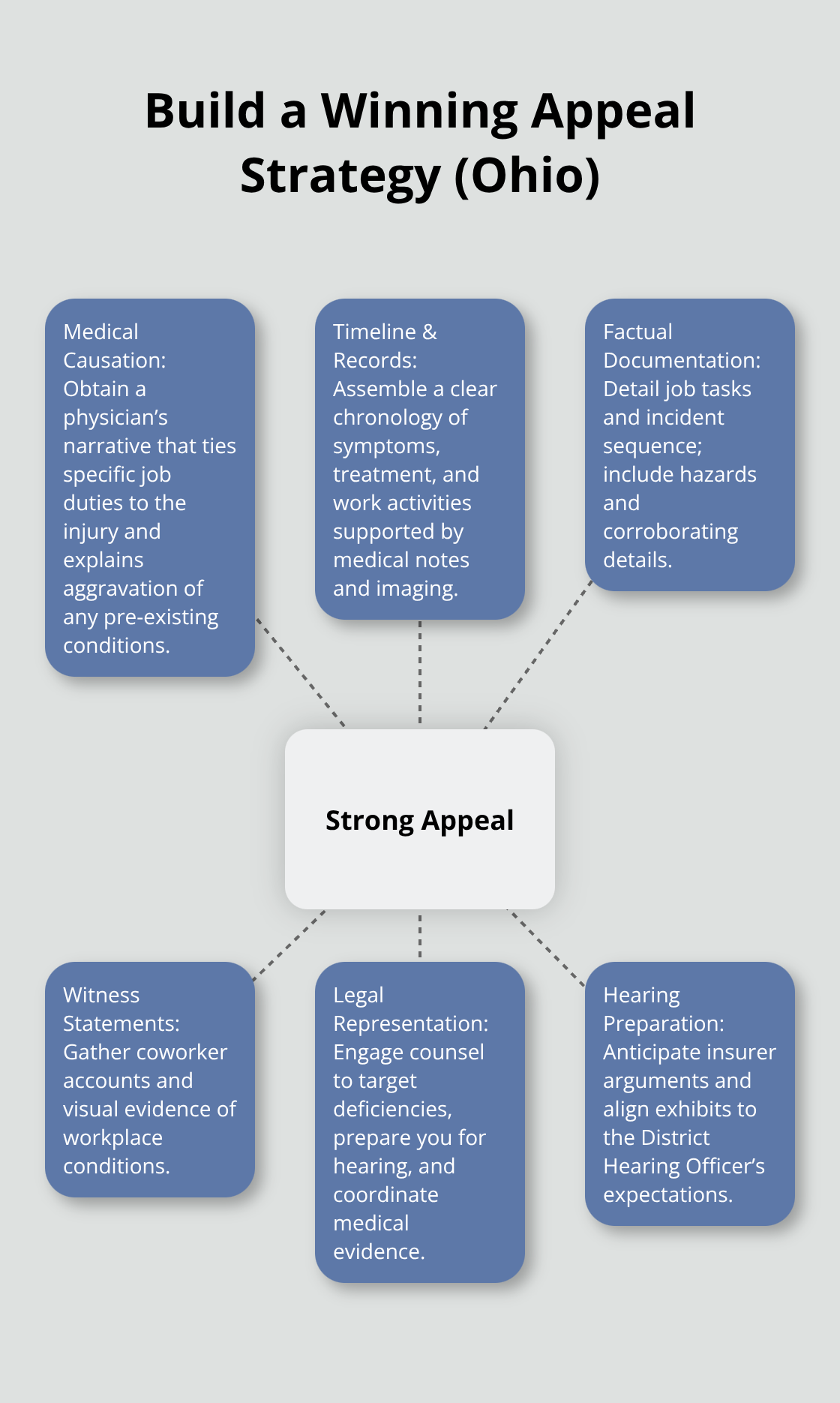
The Industrial Commission hears thousands of appeals annually, and District Hearing Officers recognize when workers submit thoughtful, targeted responses versus scattered documents hoping something sticks.
Medical Records and Timeline Documentation
Your medical records must show a clear timeline: when symptoms started, what job duties triggered them, and how treatment has progressed. Request that your healthcare provider document workplace hazards specifically, not just your medical condition. If your initial doctor won’t provide this level of detail, find one who will-a second opinion from a physician willing to connect your injury explicitly to your work environment transforms your appeal from weak to compelling. Gather supporting medical records, witness statements, and a clear timeline of injury and treatment before the appeal deadline to strengthen your case.
Organizing Your Medical Evidence
Organize your medical records chronologically and highlight passages where your doctor explicitly mentions work-relatedness. When you request records from your healthcare provider, ask specifically for notes addressing how your job duties caused or aggravated your condition. Many providers focus on treatment and miss the causation element entirely unless you prompt them. If gaps exist in your treatment timeline, address them directly in a statement to the Industrial Commission explaining why those gaps occurred and why they don’t undermine your injury claim.
Handling Pre-Existing Conditions
Pre-existing conditions require particular attention: gather any medical records documenting your condition before the workplace incident, then obtain a physician’s statement explaining how employment substantially contributed to worsening that condition under Ohio Revised Code Section 4123.01. This medical documentation proves that your job duties aggravated what was already there, satisfying Ohio’s legal standard for compensability.
Workplace Documentation and Witness Statements
Workplace documentation carries equal weight to medical evidence. Photograph or video the specific area where your injury occurred, capturing hazards and working conditions. Obtain written statements from coworkers who witnessed the incident or can testify about your job duties and workplace environment. Create a detailed written account of exactly what happened, when it happened, and which job duties you performed. At the Industrial Commission hearing, the District Hearing Officer evaluates whether your medical evidence and factual account support compensability. An experienced workers’ compensation attorney can help coordinate these elements into a coherent narrative that addresses each reason the BWC provided for denial, significantly improving your chances of overturning the initial decision and securing the benefits you deserve.
Final Thoughts
A denied comp claim in Ohio is not the end of your fight. The 14-day window to file your IC-12 Notice of Appeal gives you a real opportunity to overturn the BWC’s decision, and acting within that deadline transforms a rejection into a genuine chance at recovery. You must gather medical records that explicitly connect your injury to your job duties, document your workplace conditions with photographs or witness statements, and organize everything chronologically before your hearing with the District Hearing Officer.
Insurers deploy experienced legal teams to defend denials, and they understand exactly which arguments persuade the Industrial Commission. An attorney who knows Ohio workers’ compensation statutes and case precedent identifies weaknesses in the BWC’s reasoning, coordinates with your medical providers to strengthen causation evidence, and prepares you for the hearing itself. The difference between overturning a denial and losing your appeal often comes down to whether you have professional guidance navigating the procedural and evidentiary requirements that hearing officers expect.
We at Robin J Peterson Company, LLC help workers challenge denied comp claims Ohio and reclaim benefits they earned. If your claim was denied, contact us for a consultation to discuss your specific situation and whether an appeal makes sense for your case. Thousands of Ohio workers have successfully overturned denials with the right evidence and professional representation, and your case can be one of them.