
An injury at work changes everything. You face medical decisions, financial uncertainty, and questions about your job security-all while recovering.
At Robin J Peterson Company, LLC, we help injured workers understand their Ohio workers injury rights and navigate the system that’s supposed to protect them. This guide walks you through your benefits, the mistakes that cost workers thousands, and how to return to work on your terms.
What the Ohio System Actually Covers
Ohio’s workers’ compensation system operates through the Ohio Bureau of Workers’ Compensation, which administers benefits to injured workers across the state. The system isn’t optional for employers-it’s mandatory. Most employers in Ohio must carry workers’ compensation coverage, which means if you’re injured on the job, you have a direct path to file a claim and receive benefits. The Ohio Industrial Commission oversees claims decisions and disputes, ensuring that workers receive the protections they’re legally entitled to under state law. This three-part structure (the BWC administers benefits, the Industrial Commission reviews decisions, and the Ombuds Office provides independent assistance) creates accountability at each stage of your claim.
What benefits actually reach injured workers
You receive medical treatment related to your work injury, paid through your Medical Care Organization or Certified Specialty Service provider. The BWC covers approved medical care without requiring you to pay out of pocket, which is a significant advantage over private health insurance. You also receive temporary total disability benefits if your injury prevents you from working while you recover. These benefits replace a portion of your lost wages during the healing period. If your injury results in permanent partial disability, you receive compensation based on the specific body part affected and the degree of impairment.
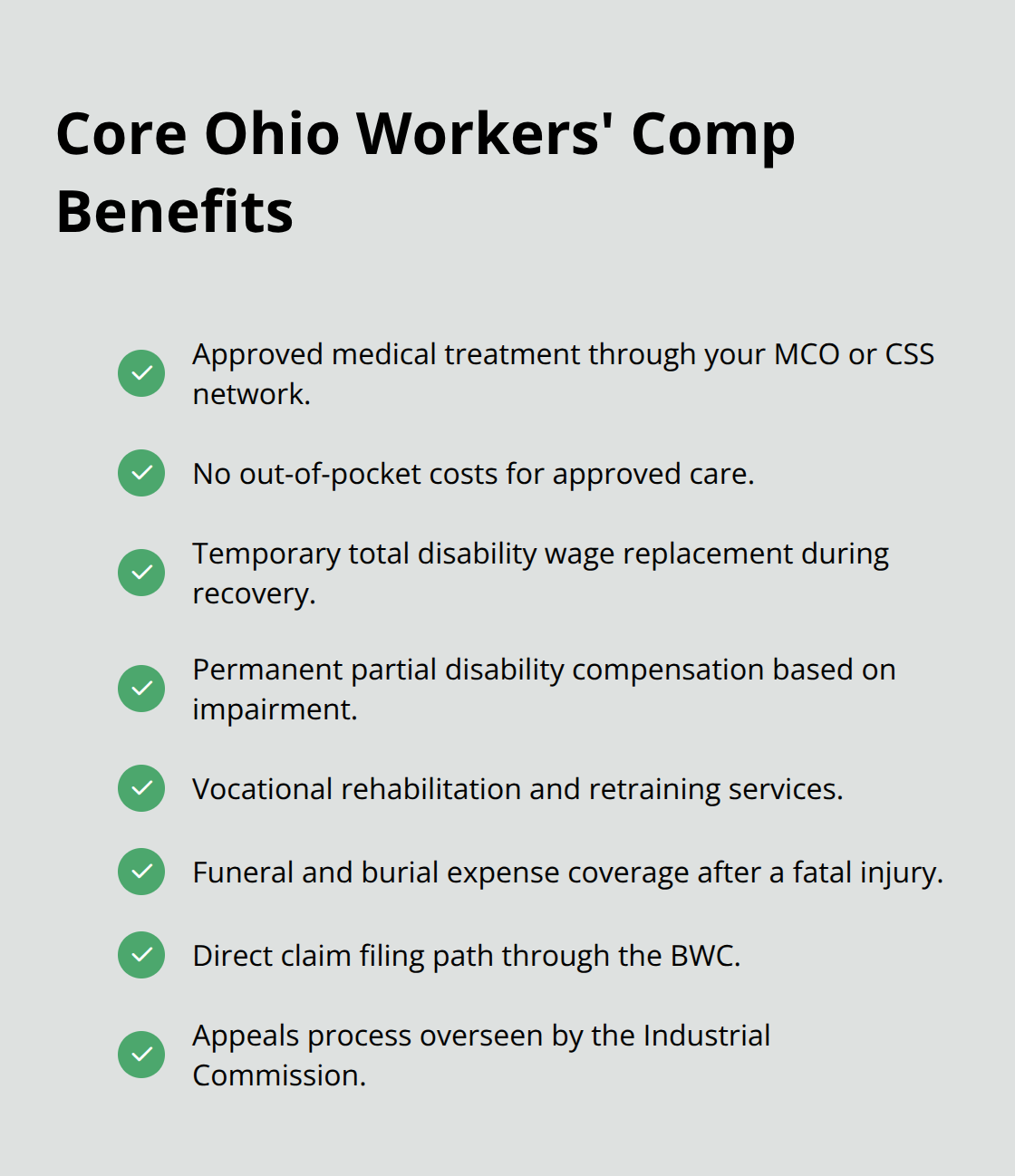
Vocational rehabilitation services become available if you cannot return to your previous job, helping you retrain for different work. The system also covers funeral and burial expenses if a work injury results in death, protecting your family’s financial security.
How to actually protect your claim
File your injury report with your employer immediately-waiting weeks or months weakens your claim and creates documentation gaps that the system uses against you. Your employer must report the injury to the BWC within fourteen days, but reporting directly to both your employer and the BWC gives you a paper trail. Seek treatment only from providers approved by your MCO or CSS, as treatment from unauthorized providers may not be covered and could jeopardize your benefits. Keep detailed records of all medical appointments, prescriptions, and communications with your employer about your injury and recovery. If the BWC denies your claim or reduces your benefits, you have the right to appeal through the Industrial Commission. The Ombuds Office, part of the Ohio Industrial Commission, provides free independent assistance to workers navigating disputes-contact them at 1-800-644-6292 if you face resistance or confusion about your benefits. Missing appeal deadlines eliminates your right to challenge decisions, so treat timelines as non-negotiable.
What happens when disputes arise
The Industrial Commission handles appeals when you and the BWC disagree about your benefits or work capacity. You can challenge a denial, a reduction in benefits, or a decision about your medical treatment through this formal process. The Ombuds Office steps in to help you navigate these disputes without cost, offering guidance on documentation, deadlines, and your legal options. Many workers find that having clear records and understanding the appeal process makes the difference between losing benefits and protecting them. The system requires you to act within specific timeframes, so delays in responding to BWC decisions can permanently harm your claim.
Your next move depends on where you stand in your recovery and what obstacles you face with the system.
How Injured Workers Lose Benefits Without Realizing It
The gap between filing a claim and protecting it is where most injured workers fail. You can have a legitimate injury and still lose your benefits through avoidable mistakes that the system exploits. The Ohio Bureau of Workers’ Compensation processes thousands of claims annually, and workers who don’t follow specific procedures find their benefits denied or reduced regardless of the severity of their injury. The Industrial Commission reviews appeals from workers who made these errors, but by then the damage is done. Understanding where workers stumble gives you the advantage to avoid their fate.
Speed matters more than you think
You must report your injury within days, not weeks, if you want your claim treated seriously. When you wait to report an injury to your employer, the BWC questions the connection between your work and your condition. An injury reported three months after it occurred looks suspicious to claims reviewers, even if the injury is genuine. Your employer must report the injury to the BWC within fourteen days of learning about it, but that timeline starts from when they know about it. If you delay telling your employer, that fourteen-day clock starts late, and you’ve already weakened your position. Workers who report injuries immediately create a contemporaneous record that’s harder to challenge. Tell your supervisor or HR department about your injury first, then follow up with written confirmation to the same people. This dual notification creates documentation that protects you if the BWC later questions the injury’s legitimacy or timing.
Medical providers determine your entire claim’s fate
You lose coverage fast when you seek treatment from an unapproved provider. The BWC only covers medical care from providers within your Medical Care Organization or Certified Specialty Service network. If you see a doctor outside this network without prior authorization, that bill falls on you, not the BWC. Workers sometimes don’t know who their MCO or CSS is and see the first available doctor, only to discover months later that the treatment wasn’t covered. You can find your MCO or CSS through the BWC lookup tool, or call 1-800-644-6292 for immediate assistance. Once you know your approved providers, stick to them exclusively for work-related treatment. Even if your personal doctor offers to treat your work injury, that treatment won’t be covered unless they’re part of your approved network. The cost difference between approved and unapproved care is substantial, and workers who ignore this rule end up paying thousands out of pocket for injuries their employer caused.
Deadlines are absolute and unforgiving
You lose your right to challenge a BWC decision permanently when you miss a single appeal deadline. The Industrial Commission enforces strict timelines for responding to benefit denials and reductions. If the BWC denies your claim and you don’t file an appeal within the required timeframe, you lose the ability to challenge that decision forever. Workers often assume they have more time than they actually do or believe they can appeal informally. The system doesn’t work that way.
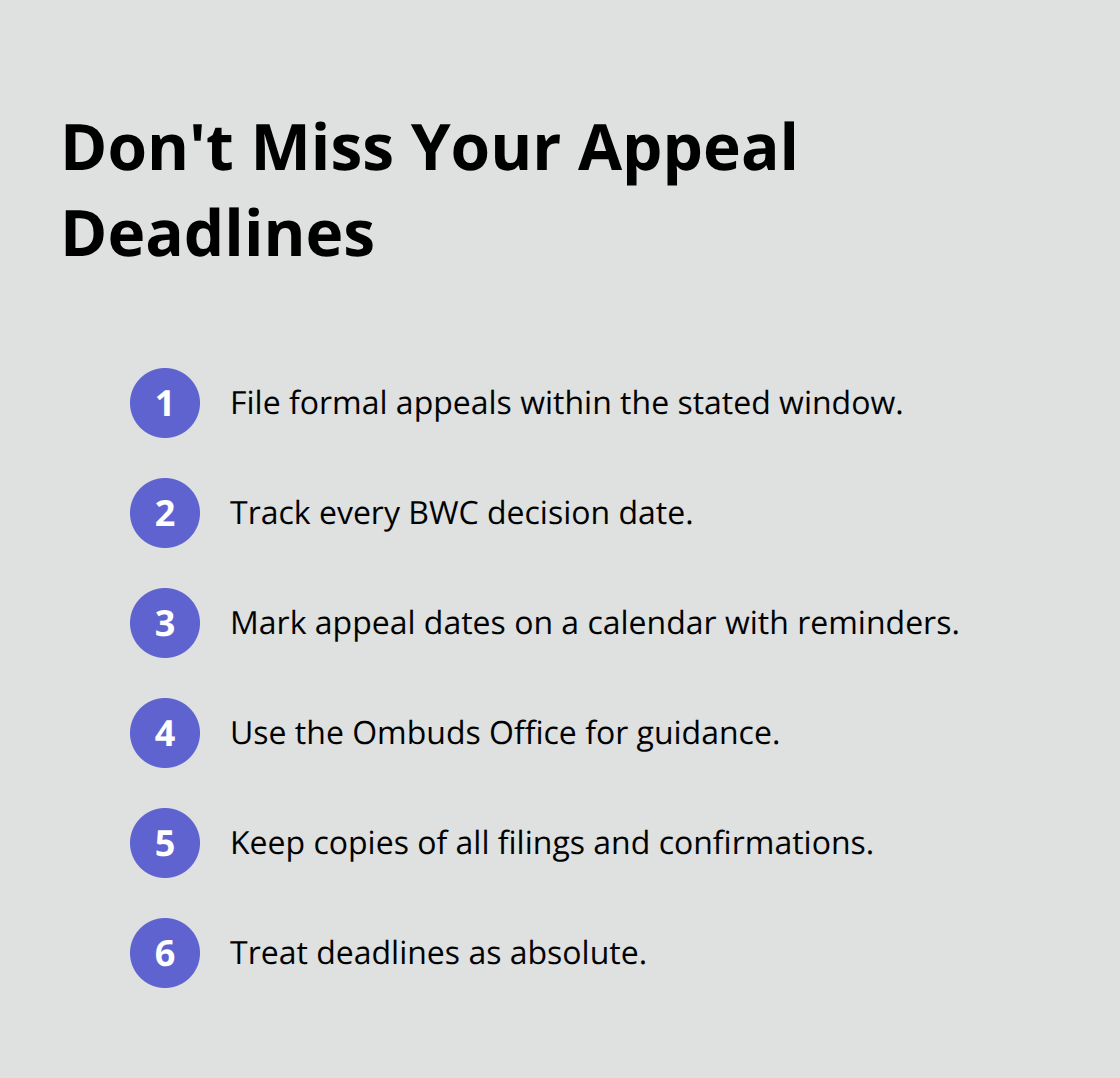
You must file formal appeals through the Industrial Commission within specific windows, and missing those windows closes your case. Mark appeal deadlines on a calendar and set reminders weeks in advance. The Ombuds Office can help you understand these timelines, but they cannot extend deadlines that have already passed. Treating deadlines as non-negotiable is the difference between protecting your benefits and losing them permanently.
What happens when you need help navigating these rules
The mistakes outlined above happen to workers across Ohio every year, and many of them could have been prevented with proper guidance. The Ombuds Office provides free independent assistance to help you avoid these pitfalls, and they understand the system’s complexities better than most. If you face resistance from the BWC or confusion about your obligations, contact them at 1-800-644-6292. Workers in the Cleveland, Akron, and Canton areas who need legal representation to fight for their benefits have options available to them as well. The right support at the right time can mean the difference between losing everything and protecting what you’ve earned.
Your next step depends on where you stand in your recovery and what specific obstacles you face with the system.
Getting Back to Work Without Losing Your Benefits
Returning to work after an injury isn’t about rushing back to your old job. It’s about moving forward on a timeline that protects your recovery and your benefits. The Ohio Bureau of Workers’ Compensation recognizes that most injured workers do return to work, and the system includes protections for how that transition happens. Your employer cannot simply tell you to return to full duty and expect you to manage it alone. The Industrial Commission enforces rules about what your employer can require during recovery, and understanding these rules prevents you from being pressured into situations that harm your healing or your claim.
How Transitional Duty Actually Works
Transitional duty is the mechanism your employer uses to bring you back gradually, and it works best when you know what to demand from the arrangement. Your employer can offer modified work that accommodates your injury limitations, but this work must be available, reasonable, and actually suited to your current physical capacity. If your injury prevents you from lifting more than ten pounds, your employer cannot assign you to a warehouse position that requires heavy lifting and call it transitional duty. The work must match the restrictions your doctor provides, and those restrictions come from your approved medical provider within your MCO or CSS network. Document every conversation about transitional duty in writing, whether through email or a written note to your supervisor. State clearly what restrictions your doctor imposed and what tasks you can and cannot perform.
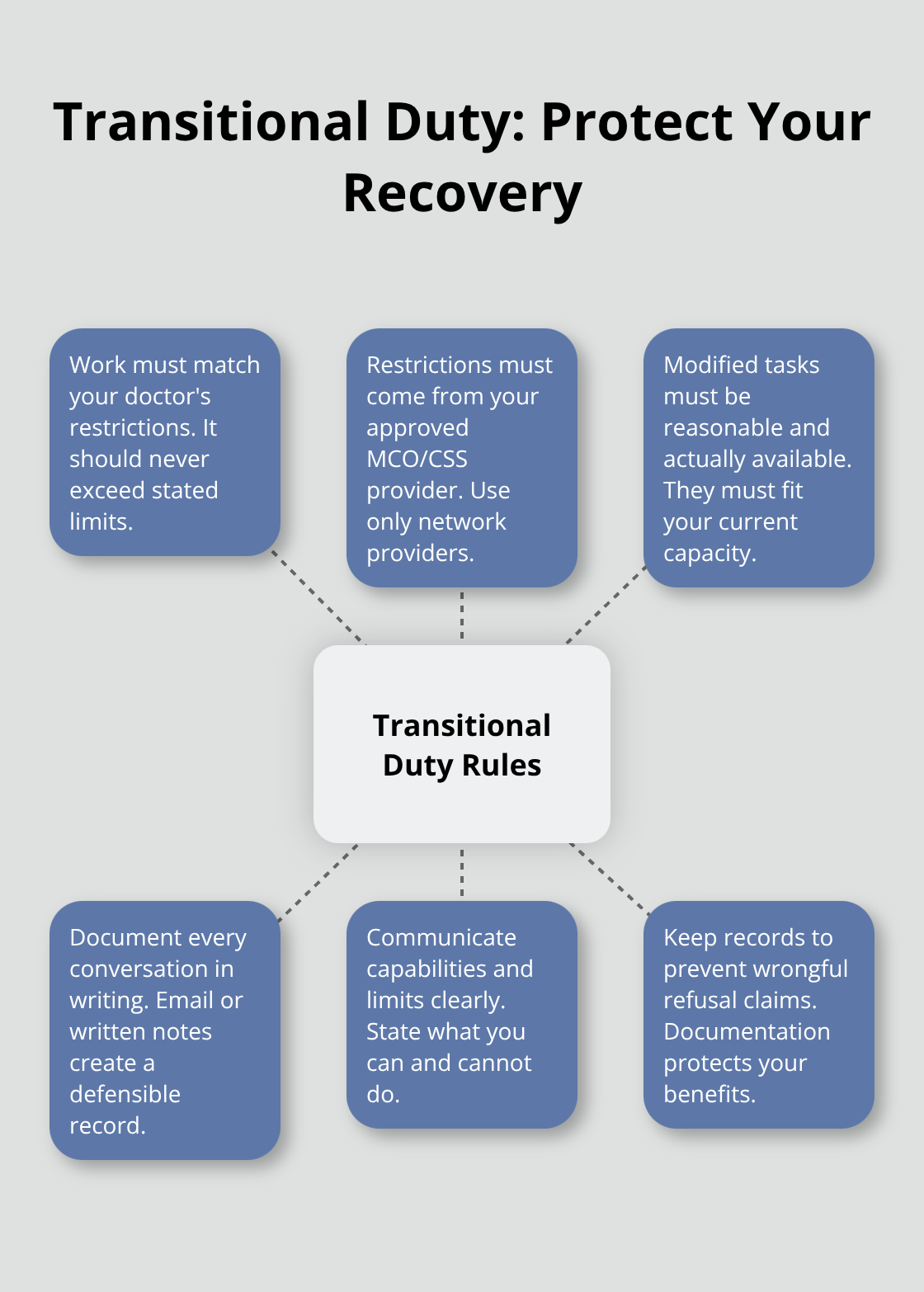
This documentation protects you if your employer later claims you refused work or if the BWC questions why you weren’t working during your recovery period.
When Your Employer’s Offer Isn’t Actually Transitional Duty
Many employers offer work that appears transitional but violates your medical restrictions or creates new injury risks. If you recover from a back injury and your employer offers a position that requires standing for eight hours daily despite your doctor restricting you to four hours of standing, that’s not transitional duty. Rejecting unsuitable work doesn’t harm your benefits, but you must communicate the rejection properly. Tell your employer and your MCO provider in writing why the work doesn’t match your restrictions. Have your doctor document that the offered position violates the treatment plan. The BWC needs this record if your employer later claims you refused available work. Workers who reject unsuitable work without documentation sometimes face benefit reductions, so the paper trail matters enormously. The Ombuds Office can help you understand whether an offered position qualifies as legitimate transitional duty if you’re uncertain about your employer’s offer.
Your Rights During the Recovery Period
You cannot be fired or punished for being injured, and Ohio law prohibits retaliation against workers who file claims or participate in the workers’ compensation process. Some employers attempt to terminate injured workers during recovery by claiming performance issues unrelated to the injury. If you were a solid performer before your injury and suddenly face discipline or termination during your claim, document everything. Keep records of your work performance reviews, any communications about your job status, and the timeline of your injury claim. The Industrial Commission takes retaliation seriously, and workers who can show a direct connection between filing a claim and adverse employment action have legal protections. You also have the right to remain on your employer’s health insurance during temporary total disability, and your employer cannot use your injury as grounds to drop you from their plan. Verify this coverage with your HR department in writing and keep confirmation that you remain insured.
Disputes Over Work Capacity Decisions
The BWC sometimes decides your work capacity based on limited information, and they may conclude you can do more work than your medical condition allows. If the BWC offers you a job you genuinely cannot perform due to your injury, you have grounds to appeal that determination. Your approved medical provider’s documentation becomes critical here. If your doctor states in writing that you cannot perform the work the BWC assigned you, that medical evidence supports your appeal to the Industrial Commission. Many workers accept unsuitable work assignments from the BWC rather than appealing, which causes re-injury and prolongs recovery. The Ombuds Office provides free guidance on appealing work capacity decisions, and you should contact them at 1-800-644-6292 if the BWC’s assignment contradicts your doctor’s restrictions. Workers in the Cleveland, Akron, and Canton areas who face persistent disputes over work capacity have legal representation available through firms that specialize in fighting these determinations on behalf of injured workers.
Final Thoughts
Your Ohio workers’ injury rights protect you only when you act on them. Report your injury immediately to your employer and the BWC, stick exclusively to approved medical providers within your MCO or CSS network, and treat appeal deadlines as absolute. These actions prevent most workers from losing their benefits to avoidable mistakes.
The Ombuds Office at 1-800-644-6292 offers free independent assistance whenever the BWC creates confusion or resistance. The Industrial Commission enforces your rights during disputes, and understanding how to appeal a denial keeps your claim alive. Your employer cannot retaliate against you for filing a claim, and Ohio law backs this protection.
When the system becomes overwhelming or when the BWC denies benefits you believe you deserve, legal representation becomes necessary. Workers in the Cleveland, Akron, and Canton areas facing persistent disputes have access to firms that specialize in fighting for injured workers’ rights and can help you secure the benefits you’re entitled to.