
The Ohio Bureau of Workers’ Compensation denies thousands of claims every year. If your claim was rejected, you have legal options to fight back.
At Robin J Peterson Company, LLC, we help workers appeal Ohio BWC denials and recover the benefits they deserve. This guide walks you through the entire appeal process, from filing deadlines to hearing strategies.
Why the Ohio BWC Denies Claims and What You Can Do About It
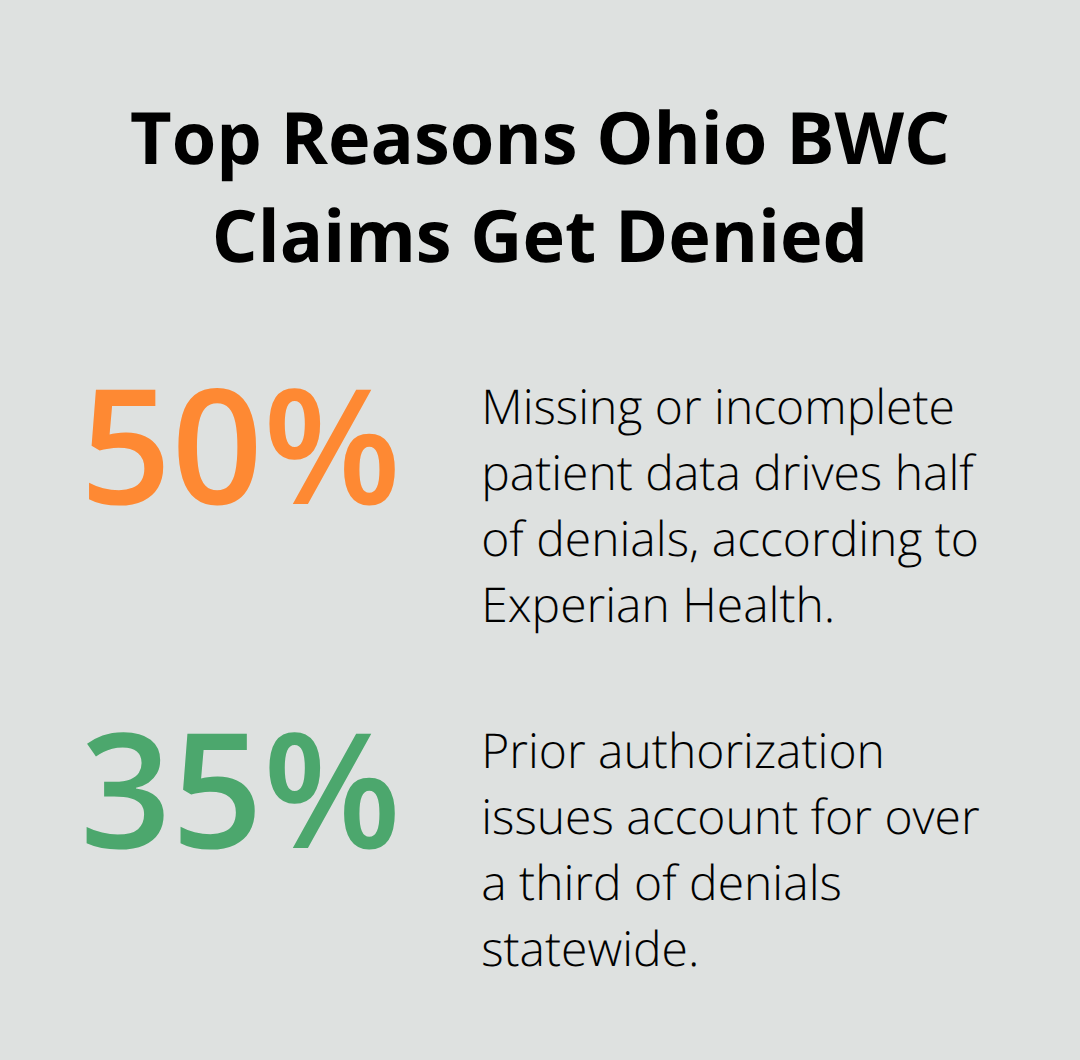
The Ohio Bureau of Workers’ Compensation denies approximately 50% of claims due to missing or incomplete patient data, according to Experian Health’s State of Claims 2025 report. Another 35% face denial because of prior authorization issues. These numbers reveal something important: most denials are preventable. The denial you received likely stems from a specific, fixable problem, not an impossible situation.
Common Denial Reasons You Can Address
Work-relatedness disputes rank among the most common denial reasons, followed by insufficient medical evidence linking your injury to your job duties. Employers frequently disagree about whether the injury actually happened at work or relates to job tasks, creating friction in roughly one-third of denied cases. Administrative errors, incomplete forms, and missed deadlines trigger automatic rejections. The good news is that each of these problems has a solution, and the Industrial Commission of Ohio exists specifically to review these denials.
Your Legal Right to Appeal
You have a legal right to appeal any Ohio BWC denial to the Industrial Commission of Ohio. This independent body operates separately from the BWC, meaning your appeal goes to a neutral reviewer with authority to overturn the original decision. Ohio law grants you this right because denials frequently contain errors or incomplete information that a second review can correct.
The 20-Day Deadline You Cannot Miss
The deadline is strict: you have 20 days from the date the denial letter was mailed to file your appeal. Count carefully, because if day 20 falls on a weekend or holiday, you may file the next business day, but no extensions exist beyond this rule. File by mail with certified return receipt at least five days before the deadline, or use the Industrial Commission online portal for an exact timestamp. This window closes fast, and missing it means losing your right to appeal.
What Your Appeal Package Must Contain
Your appeal package must include the original denial letter, copies of everything you submitted initially, the specific evidence addressing the denial reason, and a clear written explanation of why the denial is wrong. If the denial cites missing medical records, attach those records with a cover letter explaining what each document proves. If it disputes work-relatedness, include coworker statements, medical records linking the injury to your job, and the accident report. Disorganized submissions undermine credibility and reduce attention from the commission, so label and number documents clearly and arrange materials chronologically.
The strength of your appeal depends on how well you address the specific reason the BWC rejected your claim. Gathering the right evidence and presenting it clearly transforms your appeal from a routine resubmission into a compelling case for reversal. The next section walks you through exactly how to build that evidence and prepare your materials for the Industrial Commission.
How to File Your Appeal and Build a Winning Case
Filing your appeal with the Industrial Commission of Ohio requires precision and speed. You must submit the IC-12 Notice of Appeal form, available as a PDF from the Industrial Commission website, along with your complete evidence package. Mail it certified with return receipt at least five days before your 20-day deadline expires, or file through the Industrial Commission Online Network (I.C.O.N) portal to get an exact timestamp. The address for mailed submissions is 30 W. Spring St., Columbus, OH 43215-2256. Your package must contain the original denial letter, copies of your initial submission, and new evidence that directly addresses why the denial was wrong.
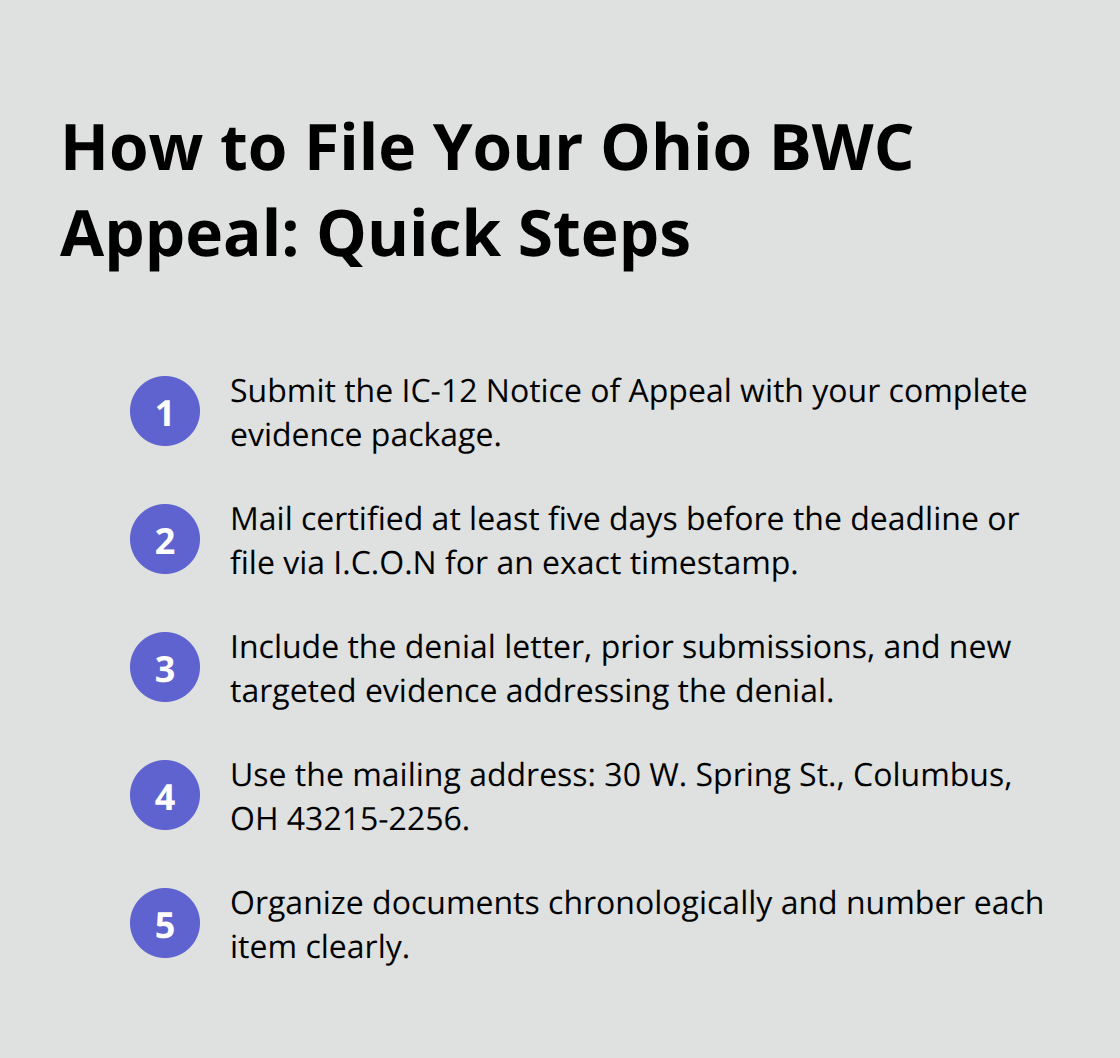
If the BWC cited missing medical records, include those records with a cover letter explaining what each document proves and how it contradicts the denial. If work-relatedness was disputed, attach coworker statements with specific details about the incident, medical records that explicitly link your injury to work duties, and the accident report from your employer. Organize everything chronologically and number each document clearly, because disorganized submissions reduce credibility with the commission reviewers.
Medical Evidence Determines Your Appeal Outcome
Medical documentation serves as your strongest weapon in overturning a denial. Your treating physician must state in writing that your injury arose from work or that work aggravated a pre-existing condition. Vague medical language like “possibly related” or “could be work-related” fails in appeals; demand that your doctor write explicitly that the injury is work-caused. If your current provider won’t commit to this statement, obtain a second opinion from another BWC-certified medical provider, since the commission weighs opinions from certified providers more heavily than non-certified ones. Include all medical bills, imaging reports, treatment notes, and specialist opinions in your appeal package. The stronger your medical evidence linking injury to work, the harder it becomes for the BWC to defend the denial.
Anticipate the BWC’s Arguments and Respond
The Industrial Commission may schedule a hearing where you present your case in person or by phone. Before the hearing, anticipate what the BWC will argue based on the denial letter and prepare your response. If the denial mentions your credibility or questions whether the incident happened, gather written statements from coworkers who witnessed the injury. If the denial disputes severity, document how the injury affects your daily activities and work restrictions. Write down key facts about the incident, your treatment timeline, and how the injury changed your life, then practice explaining these points clearly and concisely.
Present Your Case Effectively at the Hearing
Bring the original documents to the hearing, not copies, and arrive early. Speak directly and avoid emotional language; commissioners respond to organized, factual presentations backed by evidence. If you have an attorney representing you (they will handle questioning and argument), your testimony still matters greatly when commissioners assess your credibility and the strength of your claim. The way you present yourself and your evidence can shift the outcome significantly. With your appeal package filed and your hearing strategy prepared, the next phase involves understanding what happens during the commission’s review and how to respond if additional information is requested.
How an Attorney Transforms Your Appeal Odds
Hiring an experienced workers’ compensation attorney fundamentally changes the outcome of your appeal. Studies consistently show that claimants represented by attorneys are several times more likely to secure benefits than those without representation. An attorney identifies gaps in your evidence package before submission, gathers additional documentation you may have overlooked, and frames your case in legal language the Industrial Commission understands. They handle procedural deadlines, file forms correctly, and present your evidence at hearings with the credibility that comes from courtroom experience. We at Robin J Peterson Company, LLC serve injured workers across Cleveland, Akron, and Canton, fighting denials with the strategic preparation that reverses decisions. Most Ohio workers’ compensation attorneys work on contingency, meaning you pay nothing unless you win, so cost should not prevent you from getting legal help when the denial is complex or the stakes are high.
Medical Records Must State Work Causation Explicitly
Your treating physician’s statement determines whether your appeal succeeds or fails. Generic language like “possibly related” or “could be work-related” fails in appeals because the Industrial Commission requires explicit causation. Your doctor must write that the injury arose from work or that work aggravated a pre-existing condition, with specific details about how job duties caused or worsened the condition. If your current provider hesitates to commit to this statement in writing, obtain a second opinion from another BWC-certified medical provider, since the commission weighs certified providers more heavily than non-certified ones. Include all medical bills, imaging reports, treatment notes, and specialist opinions in your appeal package. Demand clarity from your healthcare providers now, before your hearing, because vague medical documentation presented to the commission will not overturn the BWC’s position. When you submit your appeal, attach a cover letter beside each medical record that explains specifically what that document proves about work causation, forcing the commission to confront the evidence directly.
Organize Evidence Chronologically and Label Everything
Disorganized appeals signal weakness to commission reviewers and reduce the likelihood of a favorable decision. Number each document in your appeal package sequentially, arrange materials chronologically from the date of injury forward, and create a simple index listing what each numbered document contains. If the BWC denied your claim for missing medical records, organize those records by date of treatment and include a cover letter stating exactly which records were missing from your original submission and why they matter.
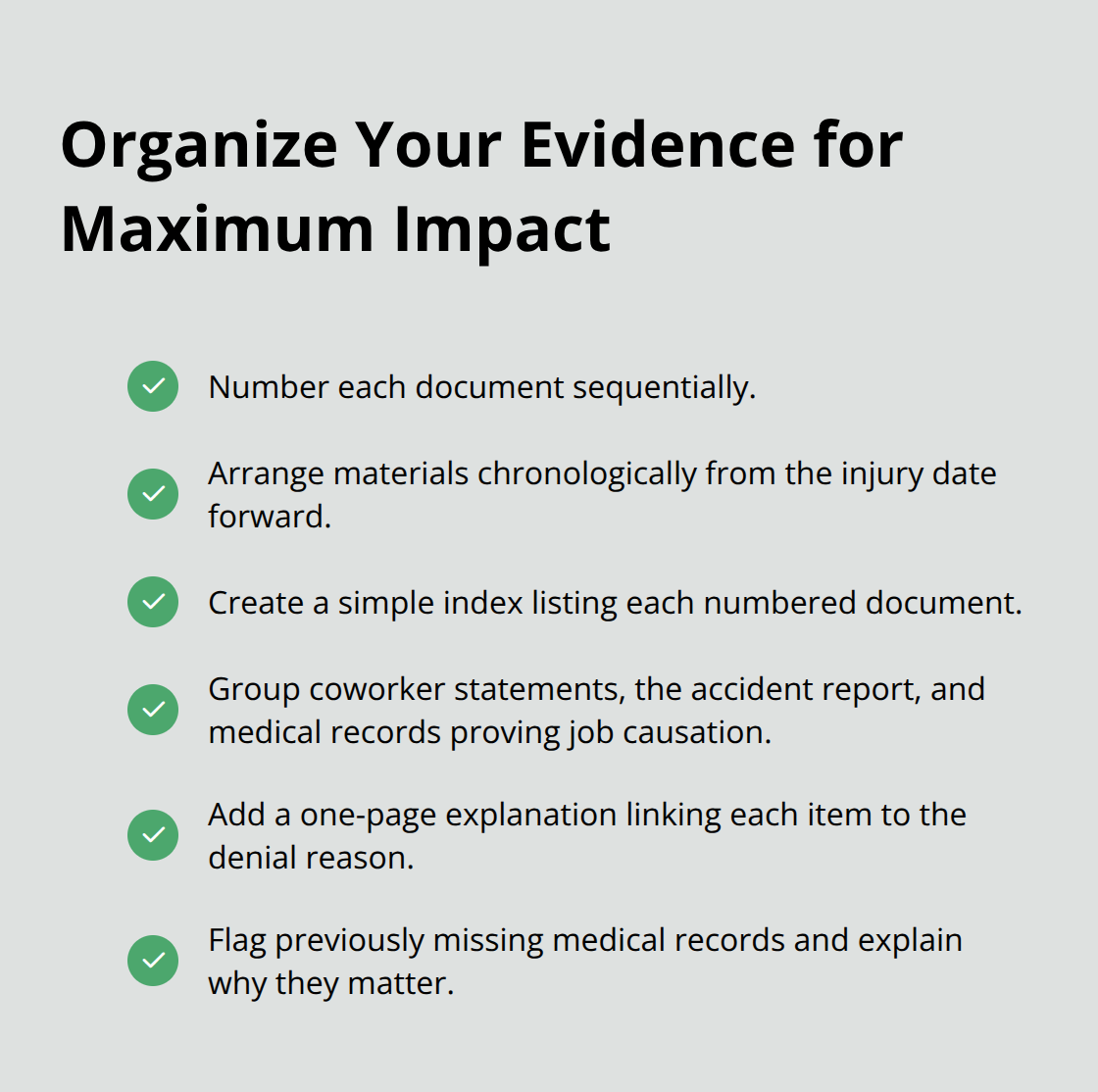
If work-relatedness was disputed, group coworker statements, the accident report, and medical records proving job causation together, then write a one-page explanation connecting each piece of evidence to the specific denial reason. Successful appeals require organizing your evidence strategically and presenting it in ways that directly counter the insurer’s arguments. Take the time to create a logical presentation that walks the reviewer through your evidence step by step, because a well-organized appeal demonstrates that you take your case seriously and have thoroughly addressed the denial.
Final Thoughts
Appealing an Ohio BWC denial requires immediate action and strategic evidence gathering. You control the outcome by collecting strong medical documentation, organizing your materials chronologically, and meeting the 20-day deadline the Industrial Commission sets. Medical records that state explicit work causation, coworker statements, and accident reports transform a weak appeal into a compelling case for reversal, and disorganized submissions signal weakness to commission reviewers while numbered, clearly labeled documents demonstrate that you take your case seriously.
An attorney fundamentally improves your odds of success. Claimants represented by lawyers are several times more likely to secure benefits than those filing alone, and we at Robin J Peterson Company, LLC represent injured workers across Cleveland, Akron, and Canton with the strategic preparation that reverses denials. Most workers’ compensation attorneys work on contingency, meaning you pay nothing unless you win, so cost should not prevent you from getting legal help when your appeal to overturn an Ohio BWC denial is complex or the stakes are high.
Contact Robin J Peterson Company, LLC for a free consultation to review your denial and appeal strategy. The Industrial Commission Ombuds Office also provides free guidance on the appeal process, and the IC Help Center answers common questions about deadlines and procedures.