
Knee injuries at work can derail your career and finances fast. At Robin J Peterson Company, LLC, we help injured workers understand their knee injury workplace rights and navigate Ohio’s workers’ compensation system.
You shouldn’t have to fight alone for the benefits you’ve earned. This guide walks you through filing claims, protecting your compensation, and avoiding the mistakes that get claims denied.
What Causes Knee Injuries at Work and How Ohio Protects You
Common Workplace Knee Injuries
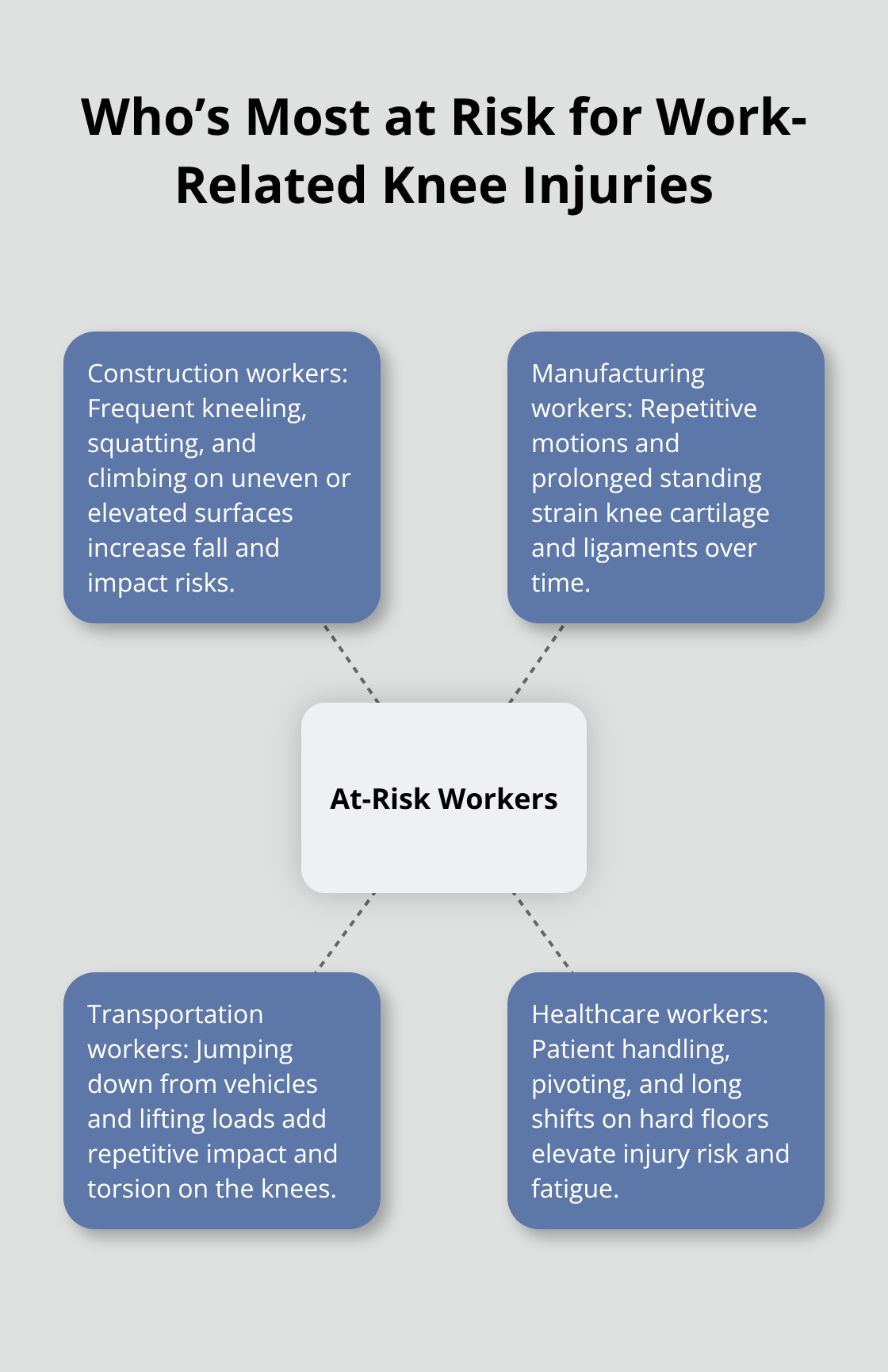
Knee injuries account for about 12.5% of all workplace injuries, making them far more common than most workers realize. Construction, manufacturing, transportation, and healthcare workers face the highest risk because their jobs demand constant kneeling, squatting, climbing, or standing on uneven surfaces. A single slip on a wet floor, a fall from a ladder, or sudden trauma from equipment can tear your meniscus, damage cartilage, or injure ligaments like your ACL. These injuries strike without warning and can sideline you for weeks or months.
Ohio’s Workers’ Compensation Protection
The moment an injury happens, you need to understand that Ohio’s workers’ compensation system exists specifically to cover work-related knee injuries. The Ohio Bureau of Workers’ Compensation (the BWC) provides medical care, wage replacement during recovery, and rehabilitation services when your knee injury meets the legal definition of a compensable workplace injury. This means the injury must have occurred during employment and arise out of your job duties. Ohio law is clear: if your knee gave out while you performed your work responsibilities, you have rights to benefits regardless of whether your employer was negligent.
Your Right to Medical Treatment
Your right to medical treatment starts the moment you report the injury to your employer. Ohio requires you to seek prompt medical evaluation from a clinician to establish a formal diagnosis and treatment plan, which becomes critical documentation for your claim. The BWC covers all medically necessary treatment, including doctor visits, imaging like MRI scans, physical therapy, and in some cases surgery. Workers typically lose an average of about two weeks from work after a knee injury, and during that time you receive wage replacement benefits if you cannot perform your regular duties.
Protection Against Retaliation
Ohio protects you from retaliation under OSHA whistleblower protections and state law, meaning your employer cannot punish you for reporting the injury or filing a claim. This legal shield safeguards your job security while you recover. However, the protection of these benefits depends entirely on how you handle the claims process-which is why the next steps you take matter significantly.
Filing Your Claim and Building Your Case
Report Your Injury Immediately
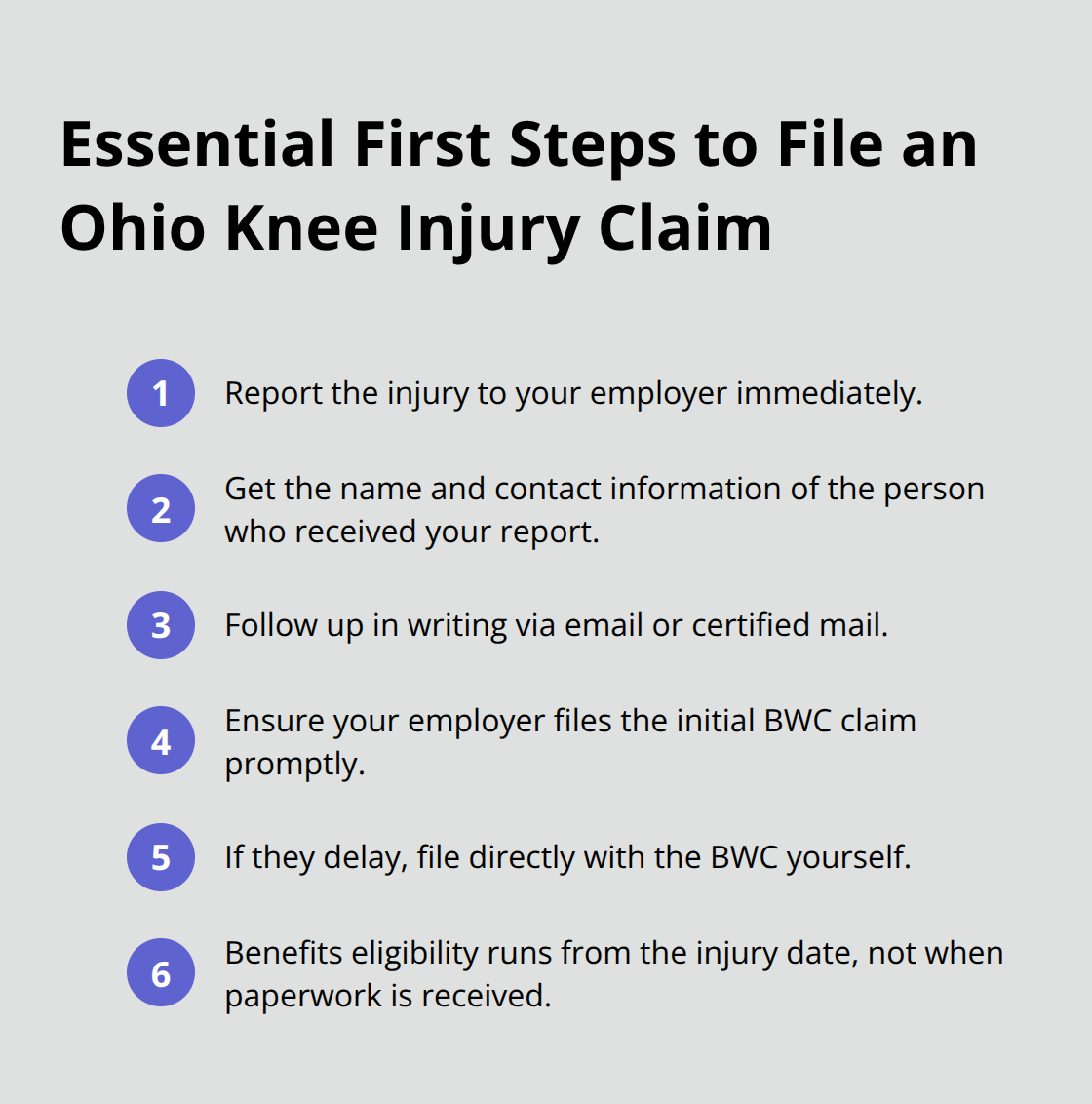
The window for filing a knee injury claim in Ohio is narrow, and delays cost you money. You must report the injury to your employer immediately-not tomorrow, not next week. The Ohio Bureau of Workers’ Compensation requires timely reporting because delays create gaps in documentation and give insurers ammunition to deny your claim. When you report the injury, obtain the name and contact information of the person who receives the report, and follow up with written confirmation via email or certified mail. Your employer then has specific timeframes to file the initial claim form with the BWC. If your employer drags their feet, you can file directly with the BWC yourself, which protects your rights and prevents the insurer from claiming they never received notice. This proactive step matters because the clock on your benefits eligibility starts from the date of injury, not the date the BWC receives paperwork.
Collect Medical Records and Documentation
Documentation separates approved claims from denied ones. Collect your medical records immediately-imaging results like MRI or X-ray reports, physician notes from every visit, and any work restrictions your doctor issued. The BWC assigns a treating physician or allows you to choose your own doctor depending on Ohio’s rules, so clarify this early and ensure all records flow directly to the BWC. Maintain a detailed record of every healthcare visit, including dates, providers, treatments, and diagnostic codes. Keep a separate file that documents your work restrictions and job duties at the time of injury, because the BWC uses this information to calculate wage replacement benefits. Additionally, preserve your wage history and tax records for the 52 weeks before your injury, as this establishes your average weekly wage for benefits calculation.
Navigate the BWC Review Process
During the review process, the BWC examines whether your injury truly arose from employment and whether your treatment is medically necessary. Expect the insurer to request additional information, sometimes repeatedly. Respond promptly to every request because missing deadlines or incomplete submissions trigger denials. The BWC will scrutinize your medical evidence and cross-reference it with your employment records to verify the injury connection. This examination phase determines whether you move forward with approved benefits or face a denial that requires appeal.
Handle Denials and Appeals
If the BWC denies your claim, you have 90 days to appeal through the Industrial Commission of Ohio, so mark this deadline on your calendar. An experienced workers’ compensation attorney can guide you through appeals and challenge denials effectively, protecting benefits you’ve already earned. The appeal process demands strong documentation and legal strategy-this is where many injured workers lose ground without proper representation. When you face a denial, the stakes shift from simply proving your injury to proving it convincingly enough to overturn an official decision.
Protecting Your Benefits and Avoiding Common Pitfalls
Why Insurance Companies Deny Claims
Insurance companies reject knee injury claims for specific, preventable reasons. The BWC denies claims when medical evidence fails to establish a clear connection between your injury and work duties, when documentation gaps exist in your medical records, or when you miss reporting deadlines. Insurers scrutinize whether your treatment aligns with your diagnosis and whether your physician’s notes support continued care.
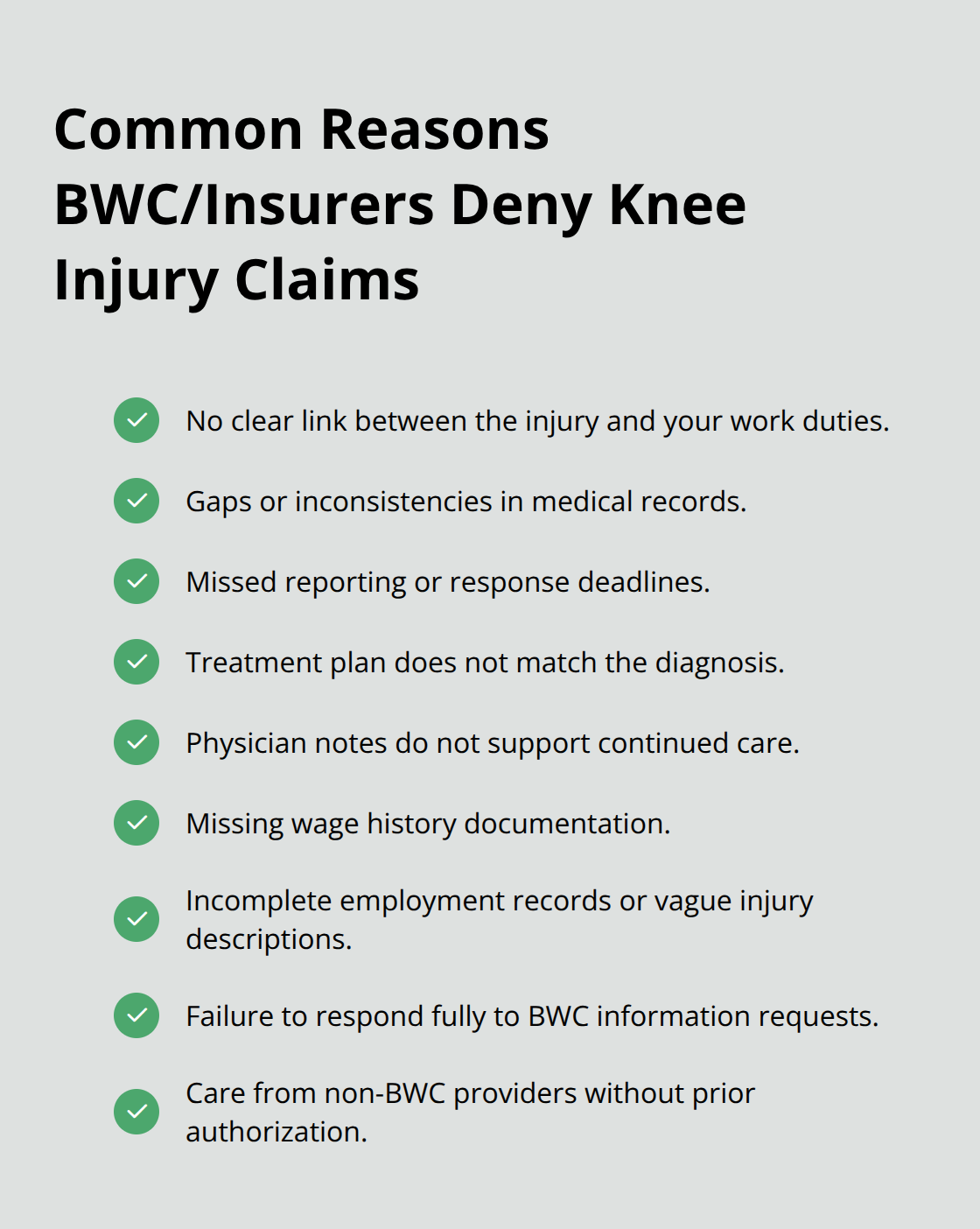
Missing wage history documentation, incomplete employment records, or vague descriptions of how the injury occurred give the BWC legitimate grounds to deny your claim. The insurer also rejects claims when workers fail to respond to information requests within required timeframes or when they seek treatment from providers outside the BWC network without authorization.
How to Strengthen Your Claim
These denials rarely stem from judgment calls or gray areas-they stem from missing pieces that you control. Treat documentation as your primary responsibility. Obtain written confirmation from your employer that they received your injury report, including the date and time. Request that your treating physician submit detailed notes to the BWC after every visit, explicitly linking your symptoms to the work incident and explaining why continued treatment is medically necessary.
Maintain a personal log separate from medical records that tracks your daily condition, work restrictions, and how the injury affects your ability to perform job duties. This contemporaneous record becomes powerful evidence because it shows your injury’s progression in real time. Preserve all wage documentation from the 52 weeks before your injury, including pay stubs, tax returns, and employment contracts, because the BWC calculates wage replacement benefits using this information.
When the BWC requests additional information, respond within five business days maximum, not the full timeframe allowed. Answer completely to every question asked, never partially or vaguely. Submit documents in the exact format requested and include a cover letter summarizing what you are submitting and why it supports your claim.
When to Seek Legal Representation
Knowing when to seek legal representation separates workers who recover full benefits from those who accept inadequate settlements or face denials. Hire an attorney immediately if the BWC denies your claim, because you have only 90 days to file an appeal and an experienced workers’ compensation attorney can challenge the denial effectively. An attorney also becomes essential if your employer or the insurer pressures you to accept a settlement that waives future medical care, because future treatment for knee injuries can extend years beyond initial recovery and cost substantially more than most workers anticipate.
Seek legal representation if an independent medical examination ordered by the insurer seems biased or if the examiner’s findings contradict your treating physician’s assessment, because these conflicting opinions require skilled advocacy to resolve in your favor. An attorney protects you when your employer or insurer suggests modified duties that conflict with your doctor’s work restrictions or when return-to-work timelines seem premature given your medical condition.
Consult an attorney before accepting any settlement offer, because settlement negotiations demand understanding of long-term medical costs, permanent disability ratings, and how Ohio’s wage replacement formulas apply to your specific earnings history. Many injured workers accept initial offers without realizing they’ve waived thousands in future benefits.
Final Thoughts
Your knee injury workplace rights in Ohio depend on the actions you take immediately after your injury occurs. Report the injury to your employer without delay, collect comprehensive medical documentation, and respond promptly to every BWC request-these steps separate workers who receive full benefits from those who face unnecessary delays or rejections. The BWC system works when you provide clear evidence that your injury arose from work duties and that your treatment is medically necessary, so treat paperwork with the same seriousness you treat your physical recovery.
Recovery from a knee injury extends far beyond the initial weeks of treatment. Rehabilitation restores both your physical function and your ability to return to work safely, whether in your original role or modified duties that accommodate your doctor’s restrictions. Plan your return-to-work carefully with your medical team and employer to prevent re-injury, and maintain ongoing strength and flexibility work to protect your long-term knee health.
If you face a claim denial, an appeal deadline, or pressure to accept a settlement that doesn’t reflect your actual losses, contact Robin J Peterson Company, LLC for guidance on protecting your knee injury workplace rights. Your benefits are protected by law, but only when you understand them and act decisively to defend them.