
Workplace injuries in Ohio can leave you confused about your rights and next steps. The workers’ compensation system has strict rules, tight deadlines, and complex paperwork that trips up many injured workers.
At Robin J Peterson Company, LLC, we help injured workers in the Cleveland area navigate this system and fight for the benefits they deserve. A Cleveland area workplace lawyer can make the difference between a denied claim and full compensation.
How Ohio’s Workers’ Compensation System Actually Works
The BWC Claims Process and Critical Deadlines
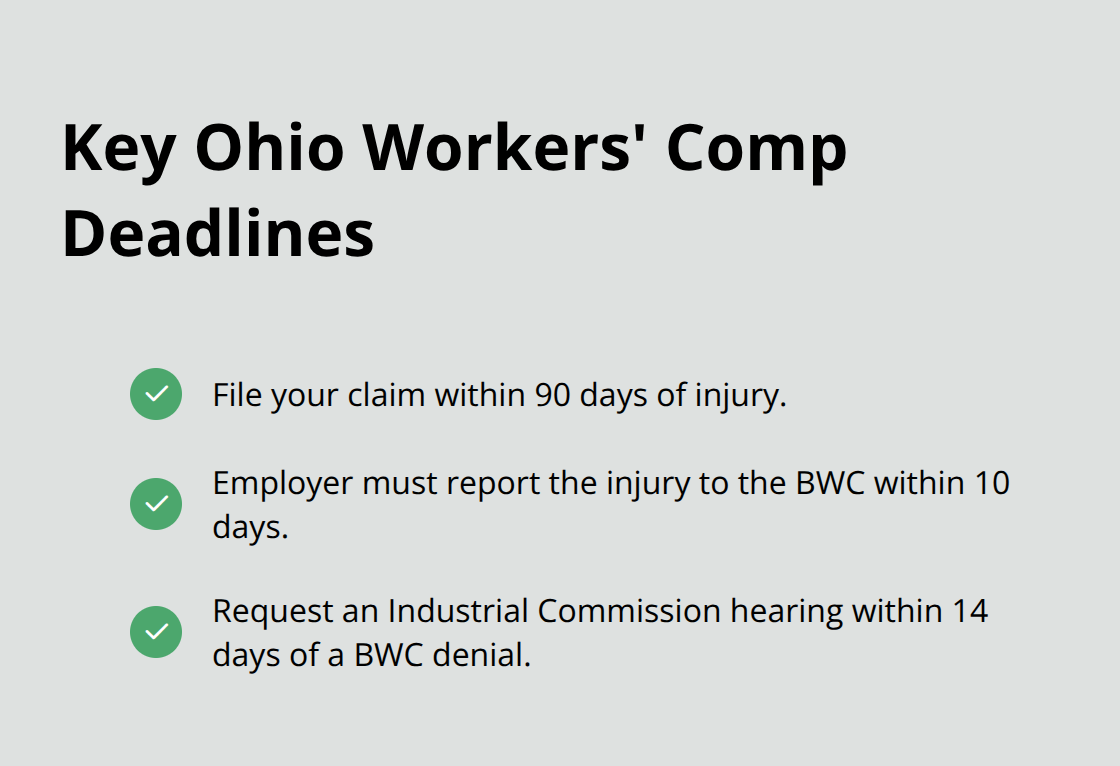
The Ohio Bureau of Workers’ Compensation handles all workplace injury claims in the state, and the process moves fast. You have 90 days from the date of injury to file a claim, according to Ohio workers’ compensation law. Missing this deadline means losing your right to benefits entirely. Your employer must report the injury to the BWC within 10 days of learning about it. If your employer drags their feet, file the claim yourself at the BWC office in Columbus or at a local service office in the Cleveland area.
How the BWC Approves Treatment and Wage Replacement
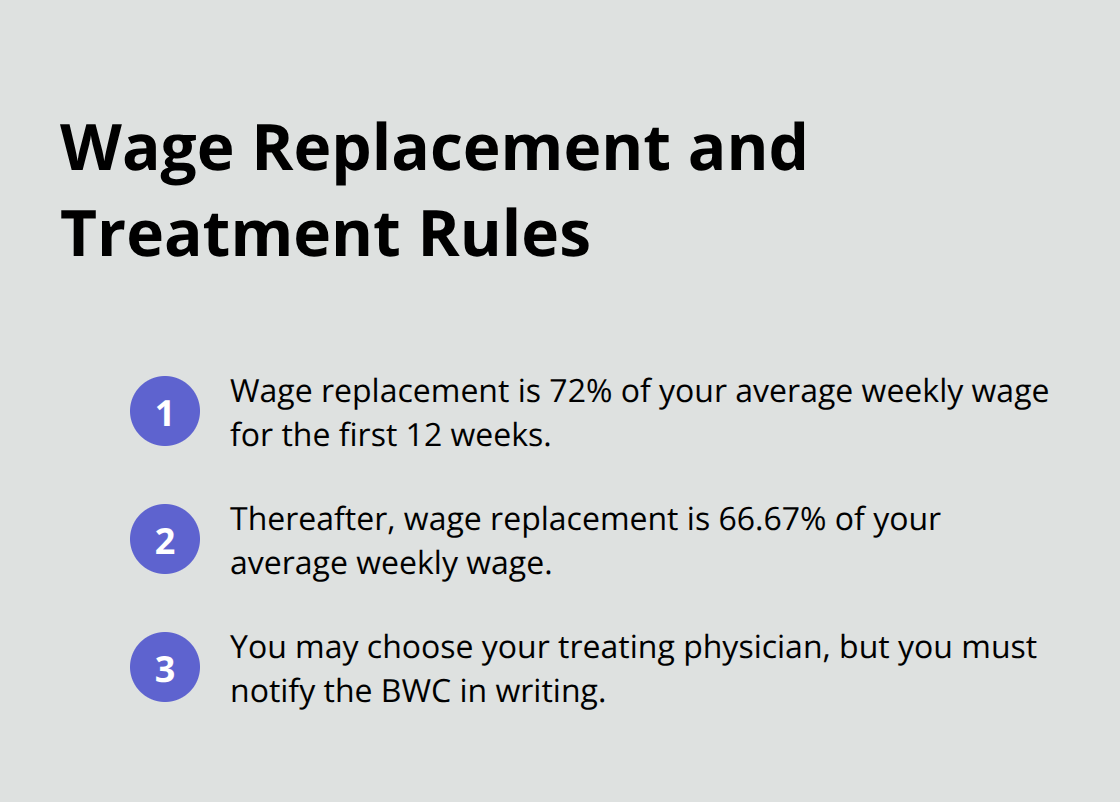
The BWC assigns a claims administrator who handles approvals for medical treatment, wage replacement, and other benefits. Wage replacement starts at 72 percent of your average weekly wage for the first 12 weeks, then drops to 66.67 percent thereafter, according to Ohio BWC guidelines. Medical care requires authorization by the BWC or your employer’s managed care organization before treatment begins. Many injured workers make the mistake of treating with unauthorized providers and then discover the BWC won’t cover those bills. You have the right to choose your own treating physician, but you must notify the BWC of that choice in writing.
When Claims Get Disputed
Disputes happen constantly in Ohio workers’ compensation claims. The Industrial Commission of Ohio resolves disagreements between injured workers and employers or insurers about whether treatment should be covered, whether your injury occurred at work, or whether you qualify for permanent disability benefits. You can request a hearing before the Industrial Commission if the BWC denies your claim or refuses to authorize necessary medical care.
Common Reasons the BWC Denies Claims
The employer may claim the injury didn’t happen at work, argue you were intoxicated or engaged in horseplay, or dispute that your condition qualifies for benefits under Ohio law. Pre-existing conditions sometimes trigger denials, though Ohio law protects workers whose existing conditions were aggravated by work. If the BWC denies your claim, you have 14 days to request a hearing. The Industrial Commission’s Ombuds Office explains your rights in plain language and helps resolve disputes without formal hearings.
Why Legal Representation Matters at This Stage
When denials occur, the stakes become real. A Cleveland area workplace lawyer understands the Industrial Commission process and knows how to present evidence that overturns wrongful denials. The difference between representing yourself and having an attorney handle your appeal often determines whether you secure the benefits you actually deserve.
Why You Need a Local Workplace Injury Lawyer
The Ohio workers’ compensation system punishes mistakes. A single missed deadline, one unsigned form, or a poorly documented claim results in denied benefits that you’ve earned through your injury. Injured workers lose thousands in wage replacement and medical coverage when they try to navigate the system alone. The BWC doesn’t make the process easy-it’s a bureaucracy designed to move fast and often favors employers who know how to work it. The Industrial Commission’s Ombuds Office handles hundreds of disputes annually in Ohio, many stemming from workers who filed claims without understanding strict procedural requirements. Your employer has handled workers’ comp claims before. The insurance carrier employs experienced adjusters. You have a one-time injury and no institutional knowledge of how Ohio’s system operates. That imbalance matters enormously when your paycheck and medical care hang in the balance.
The Paperwork Problem Nobody Warns You About
After an injury, you must notify your employer, file with the BWC within 90 days, select a treating physician, obtain authorization for treatment, track wage replacement payments, and respond to requests from the claims administrator-all while recovering from an injury. One administrative error cascades into problems. If you list the wrong date of injury on your initial claim, the BWC may reject treatment requests months later because the dates don’t align with their records. If you fail to notify the BWC in writing about your choice of physician, the system assigns one for you, and switching providers later requires another formal request. The BWC’s forms are intentionally dense, and missing a single required field gives them grounds to delay processing. A workplace lawyer handles all this paperwork, meets every deadline, and prevents the BWC from denying your claim on technical grounds. When the claims administrator requests medical records or wage information, your attorney responds correctly and completely, preventing the delays that injured workers experience when they manage their own correspondence.
Fighting Denials That Should Never Happen
The BWC denies valid claims regularly. An employer claims you engaged in horseplay, even though you performed your job duties. The insurance carrier argues a pre-existing back condition wasn’t aggravated by your workplace injury, ignoring medical evidence showing the work incident made it worse. The claims administrator refuses to authorize surgery your doctor recommends, claiming it’s not reasonable and necessary. At this point, representing yourself means fighting an experienced insurance adjuster and potentially facing the Industrial Commission without understanding the hearing process or how to present medical evidence effectively. An attorney who handles workers’ compensation knows which denials are wrongful and how to overturn them. Experienced counsel understands what evidence persuades the hearing officer to rule in your favor. The Industrial Commission resolved thousands of disputed claims across Ohio last year, and workers represented by counsel achieved better outcomes than those who appeared alone.
Maximizing What You Actually Qualify For
Many injured workers accept the first wage replacement calculation the BWC provides without questioning whether it’s accurate. If your employer reported your average weekly wage incorrectly, you receive underpayment for the entire duration of your claim-potentially costing you thousands over weeks or months. Some workers qualify for working wage loss benefits when they return to a modified job at reduced hours, but they never request it because they don’t know the benefit exists. Others settle their claims far too early, accepting a lump sum that seems adequate today but fails to cover ongoing medical needs or permanent impairment compensation they’ll need later. A workplace injury lawyer reviews your wage records, identifies all benefits you qualify for under Ohio law, and verifies that the BWC calculates them correctly. An attorney with experience in the Cleveland, Akron, and Canton areas understands the full scope of benefits available to you and fights to secure every dollar you deserve.
What Happens When You Work With Legal Counsel
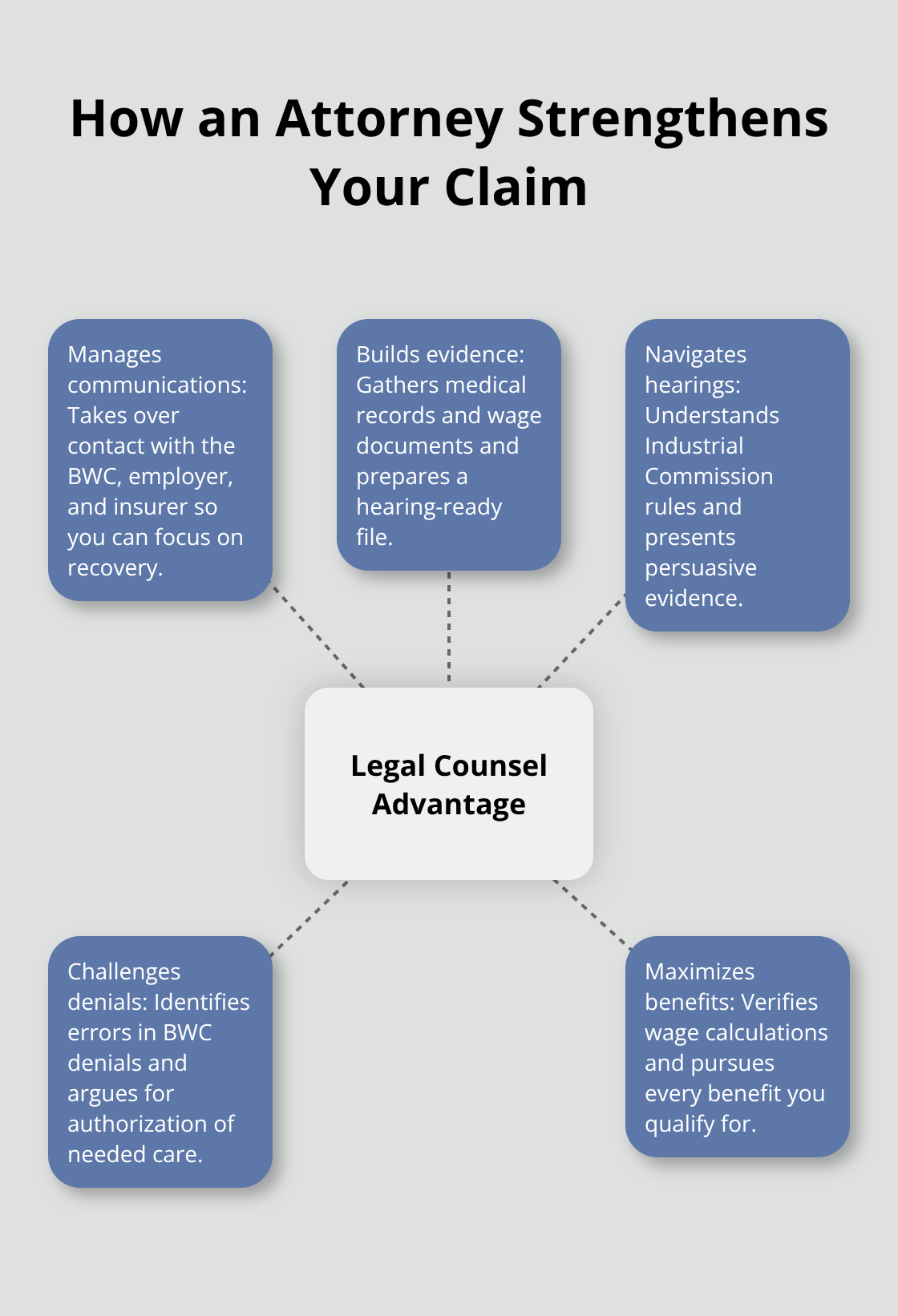
When you hire a workers’ compensation attorney, that professional takes control of your case and handles communication with the BWC, your employer, and the insurance carrier. Your attorney gathers medical evidence, obtains wage records, and prepares your case for hearing if the BWC continues to deny benefits. The Industrial Commission process becomes manageable when someone who understands the rules and procedures represents you.
This is where the real work begins-and where having an experienced advocate makes the difference between walking away with partial benefits and securing the full compensation you’re entitled to receive.
What to Expect When Working With a Cleveland Area Workers’ Compensation Attorney
Initial Consultation and Case Evaluation
Your first meeting with a Cleveland area workers’ compensation attorney should feel like a conversation, not an interrogation. A competent attorney asks detailed questions about when and how your injury occurred, what body parts were affected, which medical providers treated you, and what the BWC has approved or denied so far. This initial consultation typically takes 30 to 60 minutes, and the attorney reviews your claim documents, medical records, and correspondence from the BWC to identify problems immediately. Many injured workers discover during this meeting that their claim contains errors-incorrect wage calculations, missing medical authorizations, or procedural mistakes that explain why the BWC delayed or denied benefits. The attorney explains exactly how Ohio’s workers’ compensation process works, what benefits you qualify for based on your specific injury, and what the next steps look like if the claim is contested. This clarity alone changes everything for workers who’ve been confused about whether they’re entitled to ongoing medical care, wage replacement, or permanent disability compensation.
Building Your Case and Gathering Evidence
After the initial evaluation, your attorney begins to gather evidence that supports your claim. This means obtaining complete medical records from every provider who treated you, requesting wage documentation from your employer to verify your average weekly wage, and securing any witness statements from coworkers who saw the injury occur. The Industrial Commission relies heavily on medical evidence when deciding disputed claims, so your attorney organizes all relevant treatment records chronologically and ensures they are on file. If the BWC denies your claim or refuses to authorize recommended treatment, your attorney identifies the specific reason for the denial and prepares a response that directly addresses the insurance carrier’s argument. Medical testimony carries significant weight in hearings, and your attorney knows how to present this evidence effectively to persuade the hearing officer.
Representation Through Settlement or Hearing
When the claim moves to a hearing before the Industrial Commission, your attorney presents evidence, questions witnesses, and argues why the hearing officer should rule in your favor. The Industrial Commission held thousands of hearings across Ohio last year, and workers with legal representation achieved significantly better outcomes than those who appeared without counsel. Your attorney knows which evidence persuades hearing officers and which procedural rules protect your rights during the hearing process. If the BWC offers a settlement, your attorney evaluates whether the amount covers your ongoing medical needs and permanent impairment, then negotiates a better settlement if the initial offer is inadequate. At Robin J Peterson Company, LLC, we handle all communication with the BWC and insurance carriers so you can focus entirely on recovery rather than managing paperwork and deadlines. Your attorney takes control of your case and manages every interaction with the system, allowing you to concentrate on healing while experienced counsel fights for the benefits you deserve.
Final Thoughts
The Ohio workers’ compensation system protects injured workers, but only if you navigate it correctly. Missing a deadline, filing incomplete paperwork, or accepting a wrongful denial costs you benefits you’ve earned through your injury. A Cleveland area workplace lawyer levels the playing field against experienced insurance adjusters and employers who understand how to work the system.
Local legal representation protects your rights in several concrete ways. Your attorney meets every deadline, completes every form correctly, and sends every required notification to the BWC on time. When the insurance carrier denies your claim without valid reason, your lawyer identifies the specific legal error and presents evidence to overturn the denial at the Industrial Commission. Your attorney verifies that wage replacement calculations are accurate, identifies all benefits you qualify for under Ohio law, and fights for the full compensation you deserve rather than accepting underpayment.
If you’ve been injured at work in Ohio, contact Robin J Peterson Company, LLC for a free initial consultation. We represent injured workers throughout the Cleveland, Akron, and Canton areas and have extensive experience navigating the Ohio Bureau of Workers’ Compensation and the Industrial Commission. Our firm fights to secure the benefits and compensation you’re entitled to receive.