
Work injuries happen fast, but your response doesn’t have to be complicated. Understanding your work injury rights in Ohio means knowing exactly what steps to take and when to take them.
At Robin J Peterson Company, LLC, we’ve helped injured workers navigate claims, appeals, and returns to work across Ohio. This guide walks you through your options and protections under Ohio’s workers’ compensation system.
What Ohio’s Workers’ Compensation System Actually Covers
How Ohio’s Workers’ Compensation System Works
Ohio’s workers’ compensation system operates through the Bureau of Workers’ Compensation, a state fund that handles most workplace injury claims. Unlike some states that allow private insurance, Ohio maintains a unified system where employers pay into the state fund, and injured workers file claims through this centralized process. The system covers medical treatment, wage replacement, and rehabilitation services for employees who suffer work-related injuries or occupational diseases.
However, the system has strict eligibility requirements and filing deadlines that catch many workers off guard. You must report your injury to your employer within 30 days to preserve your claim, though reporting immediately is far better since delays create documentation problems and give employers time to dispute your account of what happened.
Medical Coverage and Wage Replacement Benefits
The Bureau of Workers’ Compensation covers all reasonable and necessary medical expenses related to your injury, including doctor visits, surgery, physical therapy, and medications prescribed by your treating physician. Wage loss benefits replace two-thirds of your average weekly wage while you’re unable to work, though this benefit has a state-set maximum that adjusts annually.
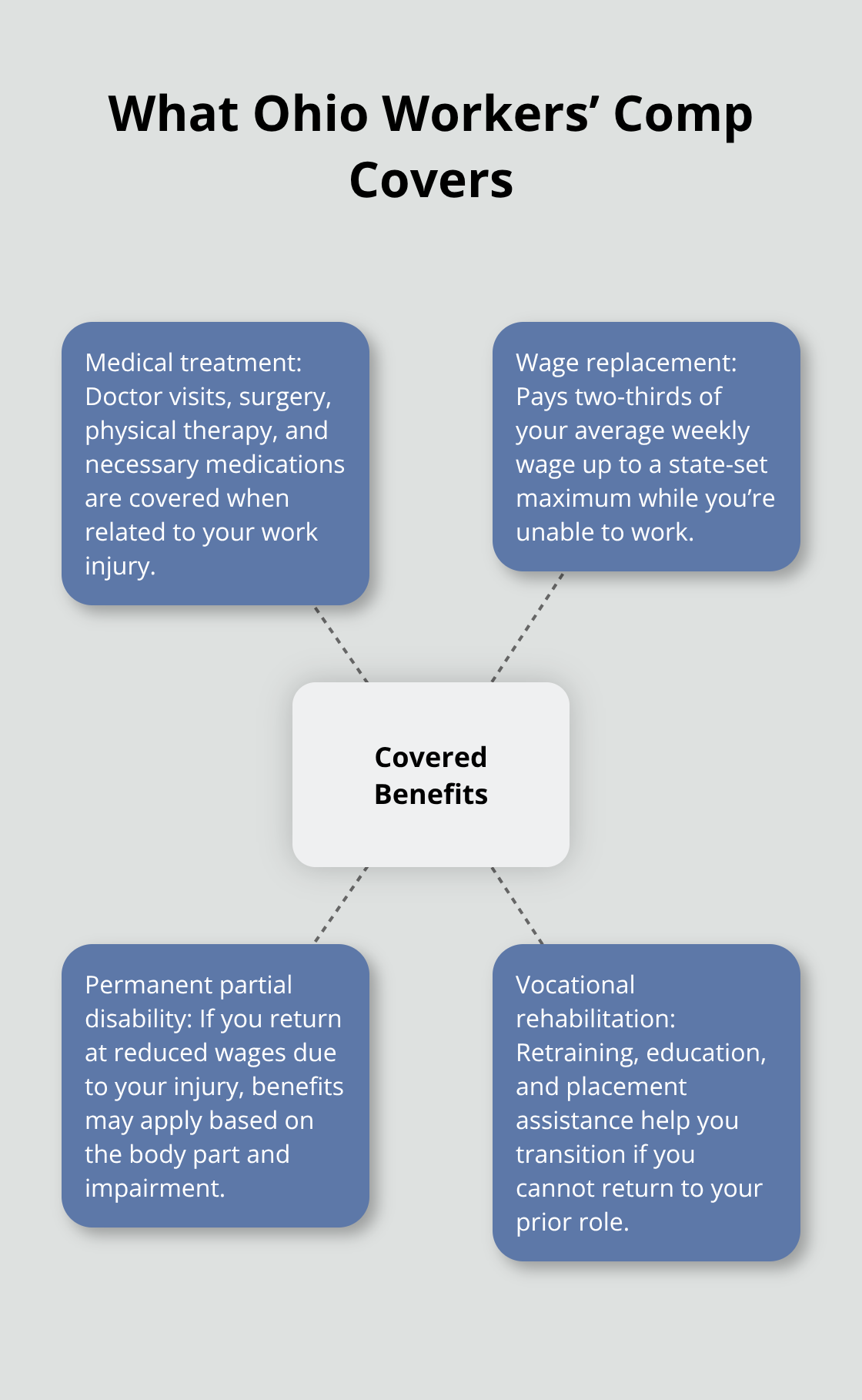
If you can return to work but at reduced wages due to your injury, you may qualify for permanent partial disability benefits based on the type of injury and your body part affected. Vocational rehabilitation services help workers retrain for different jobs if they cannot return to their previous position.
Building a Strong Claim From Day One
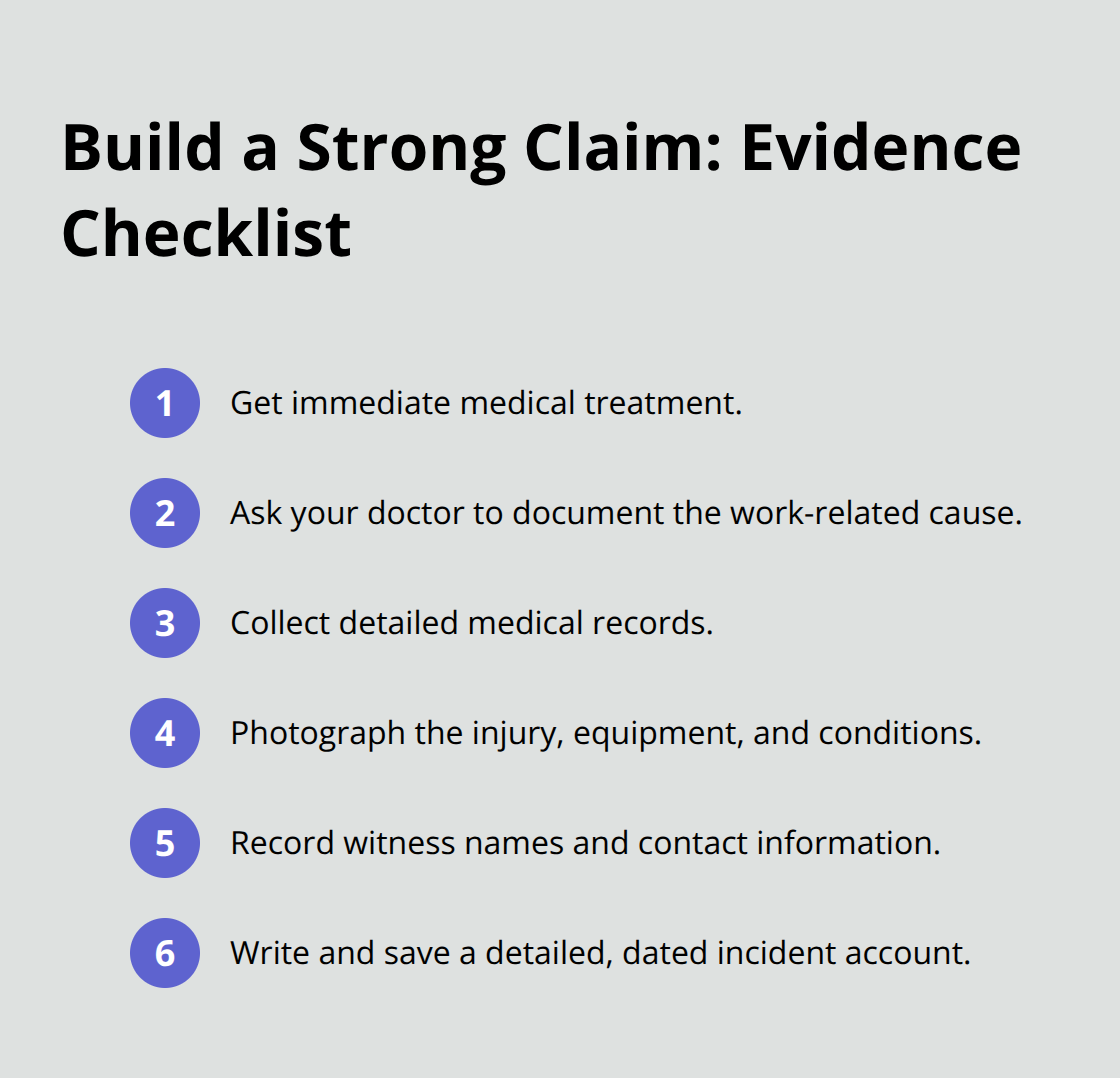
Gather medical documentation immediately after your injury occurs, since the Bureau of Workers’ Compensation requires detailed medical records showing the injury is work-related and the treatment is necessary. Photographs of the injury scene, written statements from witnesses, and your own detailed account of how the injury happened strengthen your claim significantly.
File your claim with the Bureau of Workers’ Compensation within one year of your injury date, though filing within the first 30 days gives you the strongest position and prevents your employer from raising procedural defenses. The documentation you collect now determines whether the Bureau of Workers’ Compensation approves your claim or denies it outright-which leads directly to understanding why some claims face rejection in the first place.
Filing Your Claim the Right Way
Report Your Injury Immediately
The moment you report your injury to your employer, the clock starts ticking on your workers’ compensation claim. Report it verbally first, then follow up with a written statement within 24 hours so you have documented proof of when your employer knew about the injury. Many workers wait days or weeks, thinking a minor injury will resolve on its own, but this delay weakens your claim significantly. Your employer is legally required to provide you with a claim form and must file it with the Bureau of Workers’ Compensation within 10 days of learning about your injury. If your employer fails to file or refuses to cooperate, you can submit the claim directly to the Bureau of Workers’ Compensation yourself.
Gather Medical Documentation and Evidence
Seek treatment immediately after your injury and request your doctor document exactly how the injury occurred and which job duties caused it. The Bureau of Workers’ Compensation reviews thousands of claims annually, and claims with detailed medical records showing the work-related connection get approved faster than those with vague or incomplete documentation. Take photographs of the injury, the equipment involved, and the workplace conditions that contributed to your accident. Write down the names and contact information of any coworkers who witnessed the injury, since their statements carry weight during the review process.
Submit Your Complete Claim Package
Submit your complete claim package to the Bureau of Workers’ Compensation within 30 days of your injury date, though submitting within one week accelerates approval. Include your medical records, witness statements, photographs, and a detailed written account of the incident. The Bureau of Workers’ Compensation typically makes a decision within 21 days of receiving a complete claim, but incomplete submissions get flagged for additional investigation, which delays your benefits. Keep copies of everything you submit and request a receipt confirmation from the Bureau of Workers’ Compensation to prove timely filing.
Even with a strong initial claim, the Bureau of Workers’ Compensation sometimes denies benefits or approves only partial coverage. Understanding why denials happen and how to challenge them separates workers who recover their full benefits from those who accept inadequate decisions.
Why Your Claim Gets Denied and How to Fight Back
Common Reasons the Bureau of Workers’ Compensation Denies Claims
The Bureau of Workers’ Compensation denies roughly 15-20% of initial claims submitted in Ohio, and most denials stem from preventable documentation gaps rather than legitimate ineligibility. The most common reason for denial is insufficient evidence linking your injury directly to your job duties, which happens when medical records lack specific language about work-relatedness or when your employer disputes the circumstances of the accident.
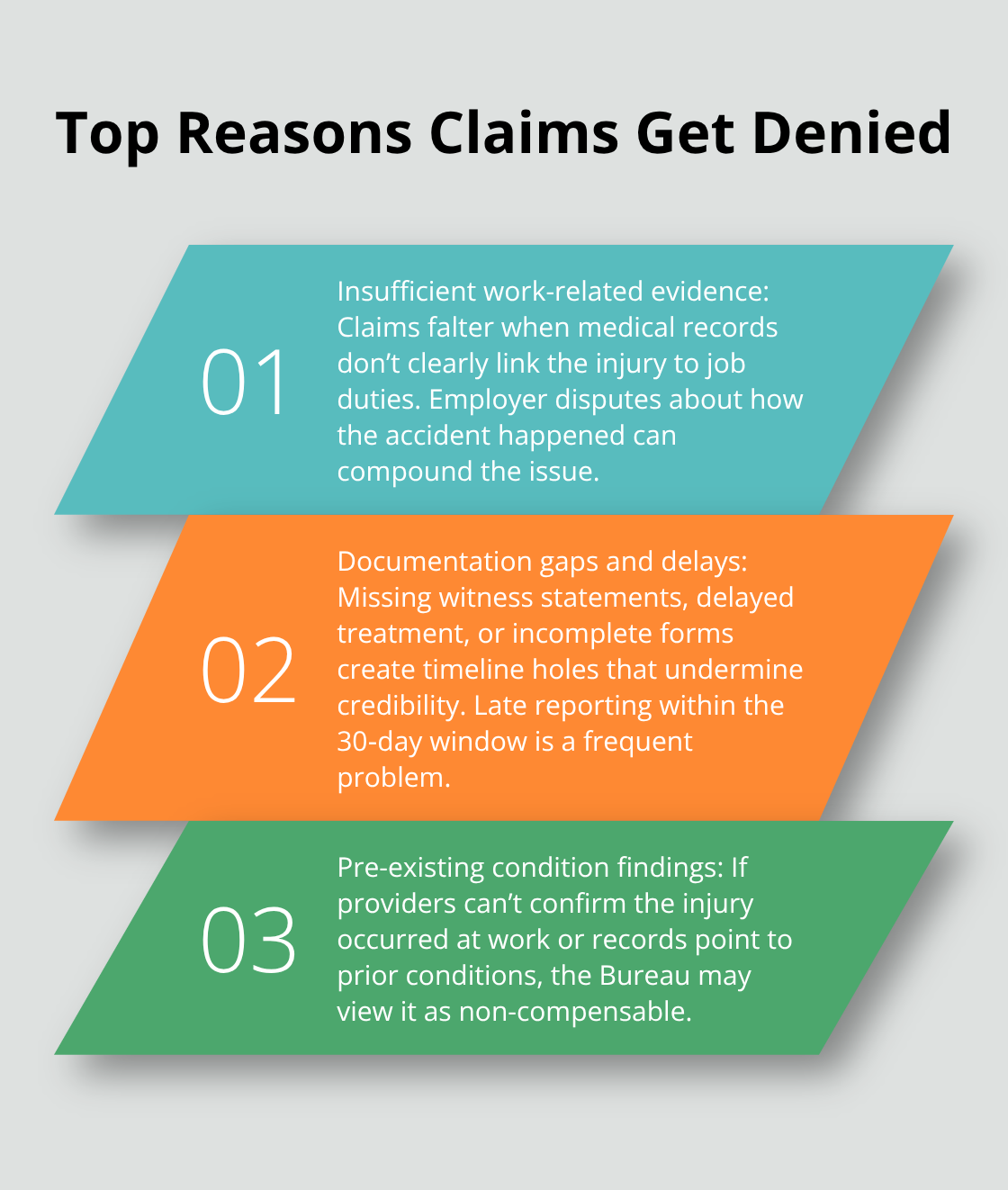
Other frequent denial triggers include missing witness statements, delayed medical treatment that creates gaps in your medical timeline, incomplete claim forms submitted to the Bureau of Workers’ Compensation, or failure to report the injury within the required 30-day window. The Bureau of Workers’ Compensation also denies claims when medical providers cannot confirm the injury actually occurred at work or when documentation shows pre-existing conditions rather than new work-related damage.
The Reconsideration Process: Your First Appeal Opportunity
If your claim receives a denial, you have 14 days from the denial letter to file a request for reconsideration with the Bureau of Workers’ Compensation, and this step matters enormously since roughly 30-40% of reconsideration requests succeed when properly documented. Many workers miss this deadline because they assume the denial is final, but the reconsideration process gives you a genuine second chance if you submit additional medical evidence, witness statements, or clearer documentation of the work-related connection. Submit new medical records that explicitly state the work-related nature of your injury, obtain written statements from coworkers who witnessed the accident, and provide a detailed written explanation of why the Bureau of Workers’ Compensation’s initial decision was incorrect.
Appealing to the Industrial Commission of Ohio
When reconsideration fails, you can appeal to the Industrial Commission of Ohio, which reviews your case independently and often overturns Bureau of Workers’ Compensation decisions based on new evidence or legal arguments. The Industrial Commission reviews legal issues, not just facts, and an experienced workers’ compensation attorney knows how to frame your case for maximum impact. An attorney files the proper appeal documents, gathers expert medical testimony if needed, and prepares you for the hearing before an Industrial Commission administrator. The Industrial Commission process typically takes 2-4 months from filing to hearing, and you can request expedited hearings if your financial situation is urgent (though expedited hearings require showing genuine hardship to the commission).
Working with Legal Representation
Workers’ compensation claims with professional legal representation succeed at significantly higher rates than those handled alone. A workers’ compensation attorney navigates the complex procedural rules that trip up unrepresented workers, identifies weaknesses in the Bureau of Workers’ Compensation’s decision, and presents evidence in the format the Industrial Commission expects. Robin J Peterson Company, LLC represents injured workers throughout Ohio during these appeals, fighting for their rights against employers and the Bureau of Workers’ Compensation. Your attorney also handles communication with the Bureau of Workers’ Compensation and the Industrial Commission, which prevents you from making statements that could harm your case.
Moving Forward After Your Work Injury
Wage loss benefits replace two-thirds of your average weekly wage while you recover, providing essential income during your time away from work. The Bureau of Workers’ Compensation calculates your benefit amount based on your wages at the time of injury, so accurate wage documentation from your employer matters significantly. These benefits continue until you reach maximum medical improvement, the point where your condition stabilizes and further treatment won’t improve your function.
Vocational rehabilitation services help you transition to different work if your injury prevents you from returning to your previous job. Ohio’s program covers job training, education, and placement assistance designed to get you earning again, with a vocational counselor assessing your abilities and identifying suitable job options that match your skills and physical limitations. Many employers participate in return-to-work programs that modify job duties temporarily while you recover, allowing you to maintain employment and income continuity.
Understanding your work injury rights Ohio means recognizing that recovery extends beyond medical treatment to include financial stability and career planning. If you face complications during your return to work or need guidance navigating benefits, Robin J Peterson Company, LLC represents injured workers throughout Ohio and helps you receive the full support you’re entitled to receive.