
Work injuries happen fast, but the paperwork that follows requires careful attention. At Robin J Peterson Company, LLC, we’ve seen workers lose valid claims because they missed critical deadlines or failed to report injuries correctly.
Understanding Ohio BWC notification requirements protects your rights and strengthens your claim. This guide walks you through exactly when and what to tell your employer.
When to Report Your Injury to Your Employer
Ohio’s Immediate Notification Rule
Ohio law requires you to notify your employer about a work injury as soon as possible. The state doesn’t specify an exact hour or minute, but waiting weeks or months creates serious problems for your claim. Most workers should report injuries the same day they occur or the next business day at the latest. Employers are legally required to have an injury report process in place, and you need to use it immediately.
The BWC Filing Deadline and Your Role
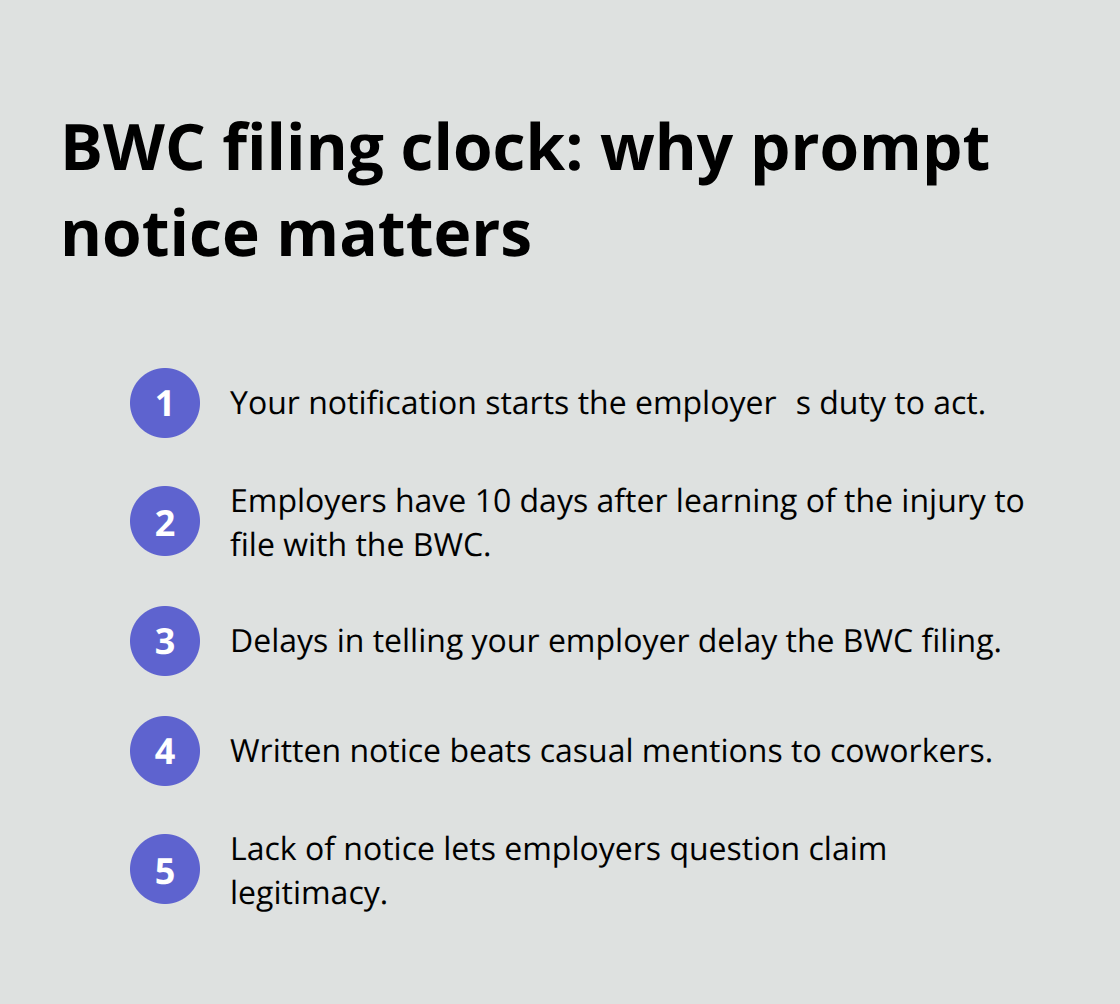
The Ohio Bureau of Workers’ Compensation expects employers to file a claim within 10 days of learning about the injury, so delaying your notification directly delays their filing deadline. If your employer claims they never heard about the injury, the BWC will question whether your claim is legitimate. This is why written notification matters far more than a casual mention to a coworker.
How Delayed Reporting Shrinks Your Timeline
Ohio law gives you up to one year to file a workers’ compensation claim with the BWC, but this timeline only starts when your employer receives notice of the injury. If you wait six months to tell your employer, you’ve effectively cut your filing window in half. Employers often use delayed reporting as grounds to deny claims, arguing the injury wasn’t work-related or that you failed to follow company procedures.
The BWC takes employer statements seriously, and you’ll spend months fighting to prove the injury happened when you claim it did. Your employer won’t penalize you for reporting an injury, but they will use your silence against you if a dispute arises.
Documentation Methods That Protect Your Claim
The moment you feel pain or notice something wrong, tell your supervisor or HR department in writing. Email counts as written notification. A text message to your boss with details about what happened is acceptable (include the date, time, and how the injury occurred). Keep copies of everything you send, and follow up with a formal written report if your employer requests it.
What you include in that notification matters just as much as when you send it.
What to Include in Your Injury Notification
Your notification needs to be specific enough that your employer and the BWC can understand exactly what happened and why you’re filing a claim. Vague reports create delays and give employers room to challenge your account later. Start with the date, time, and exact location where the injury occurred. If you were operating equipment, include the equipment name and what you were doing when the injury happened. If you slipped or fell, describe the surface conditions and what caused you to lose your footing.
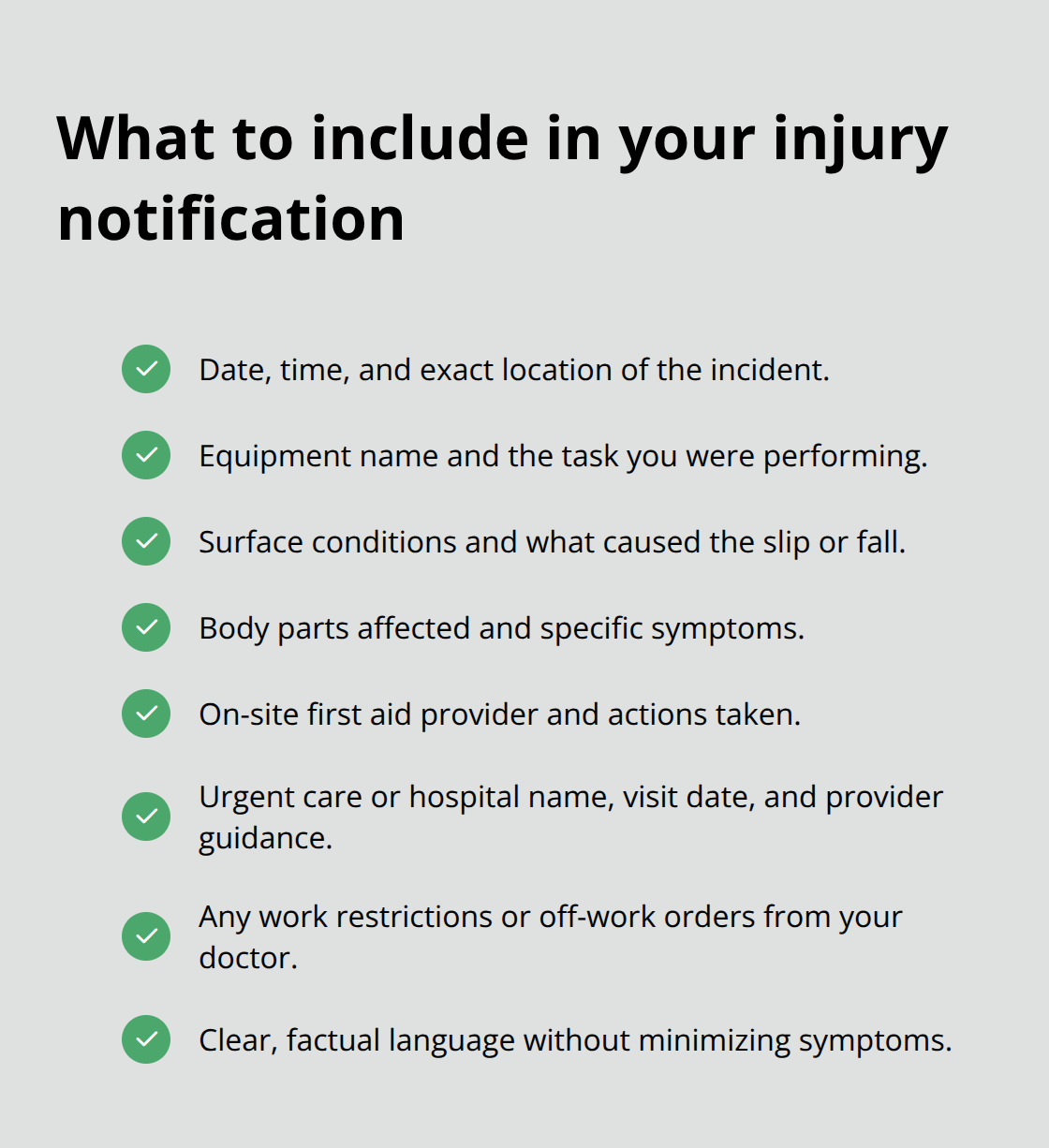
The Ohio BWC requires employers to document these details on their initial report form, so providing them upfront prevents back-and-forth communication that wastes weeks.
Describe Your Physical Condition and Medical Response
Explain which body parts hurt and what type of pain you’re experiencing. Use straightforward language: sharp pain in your lower back, swelling in your right ankle, numbness in your fingers, or difficulty breathing. If you received first aid at work, mention who provided it and what they did. If you went to urgent care or a hospital, include the facility name, the date you went, and what the medical provider told you about your condition. The BWC uses this information to establish that the injury is real and work-related. Workers who delay seeking medical treatment often face skepticism from the BWC, so documenting immediate medical attention strengthens your case significantly.
Provide Records and Keep Your Own Copies
Give your employer any medical records, imaging results, or provider notes you’ve already obtained. If your doctor provided a work restriction or recommended you stay home, include that documentation. Send these materials in writing through email or hand-deliver them with a signed receipt. Create a personal file with copies of everything you submit to your employer, including the date you provided it and confirmation that they received it. The Ohio Industrial Commission handles disputes between workers and employers, and your documentation becomes evidence if your claim is challenged. Workers who lose their claims often did so because they failed to maintain their own records of what they reported and when they reported it.
The mistakes you avoid during this notification stage determine whether the BWC accepts your claim or questions its validity.
Common Mistakes Workers Make When Reporting Injuries
Failing to Document Your Injury Report in Writing
The gap between what workers think they’ve reported and what their employers actually have on record causes more claim denials than almost anything else. A worker mentions an injury casually to a supervisor, assumes the message got through, and months later discovers the employer has no written documentation of the incident. Ohio law requires written notification, and verbal reports simply don’t count when disputes arise. Many workers believe a quick conversation with their boss satisfies the requirement, but employers have no legal obligation to create documentation from casual mentions. If you tell your supervisor about pain in your shoulder while standing in the break room, that conversation leaves no trail. An email, text message, or formal incident report creates evidence that the BWC can verify. The difference between these two approaches determines whether your claim gets accepted or rejected.
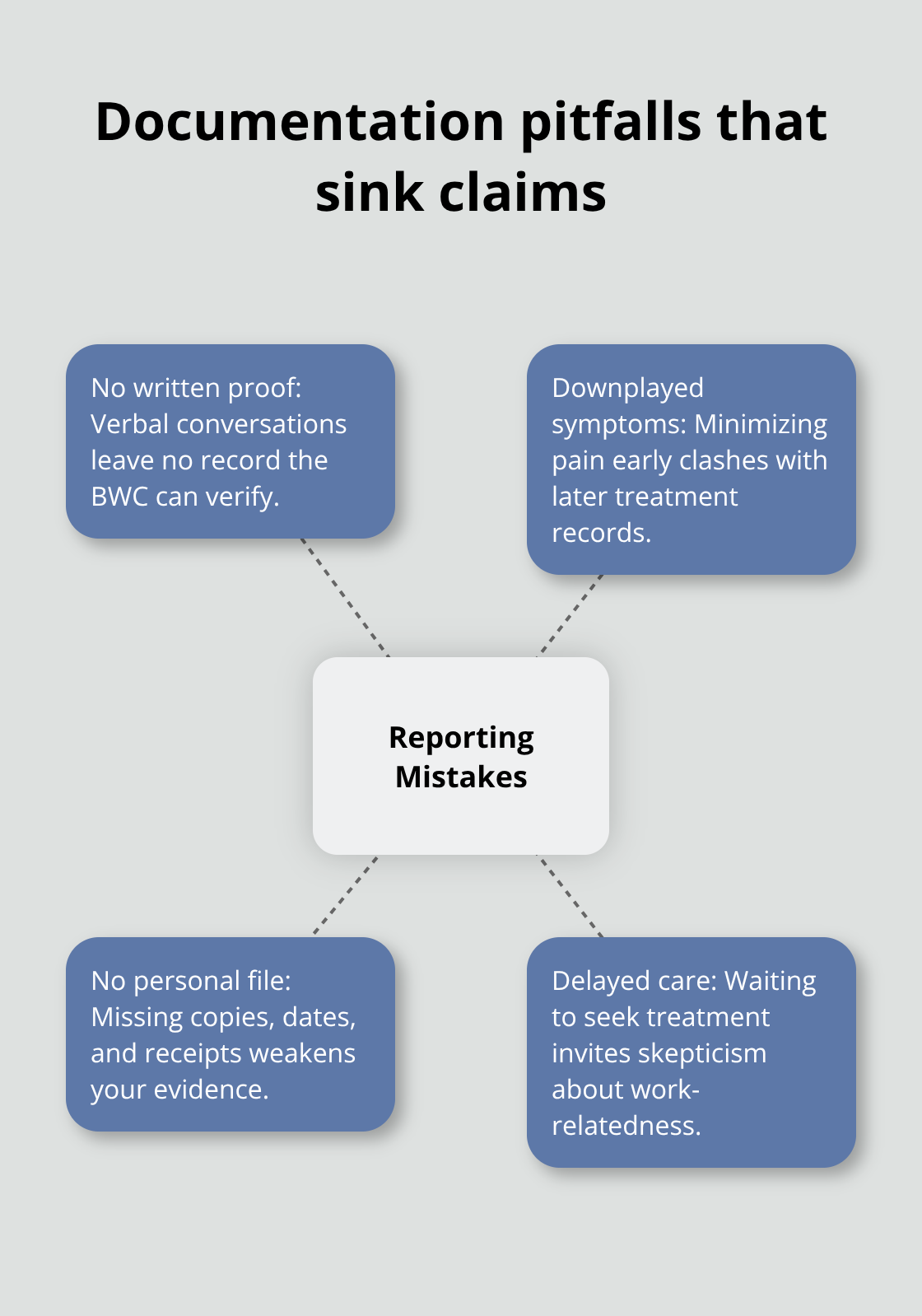
Workers who lose claims frequently report that their employers claimed they never heard about the injury at all. Without written proof, the BWC sides with the employer’s account. You need to send your notification through a method that creates a permanent record. Text messages work, emails work, and hand-delivered reports with signed receipts work. Verbal conversations do not work, no matter how many witnesses heard you speak.
Downplaying Your Symptoms in Initial Reports
Minimizing your injury during the initial report creates a second critical mistake. Workers often downplay symptoms because they don’t want to seem weak or fear losing their job, so they describe minor pain when they’re actually experiencing severe discomfort. This understatement becomes the official record that the BWC uses to evaluate your case. If you report mild soreness but later seek surgery, the BWC questions whether the injury was truly work-related or if you’re exaggerating after the fact.
Medical records from the date of injury carry enormous weight in these disputes, and your initial notification should match what medical professionals observe about your condition. The Ohio Industrial Commission specifically looks for consistency between what workers report and what doctors document. Workers who initially said they were fine but then file for ongoing treatment face intense scrutiny and often have claims reduced or denied. Describe your actual pain level and physical limitations honestly from the start.
Neglecting to Keep Personal Records of Communications
Failing to maintain your own records of every communication with your employer leaves you defenseless if the employer disputes what was said or when it was said. Create a simple file with copies of emails, text messages, dates you delivered documents in person, and names of people who witnessed your reports (including supervisors, HR staff, or coworkers present when you reported the injury). This personal documentation proves invaluable if your claim enters a dispute phase at the Industrial Commission. The Ohio workers’ compensation system relies heavily on documentation, and your records become critical evidence when your account conflicts with your employer’s version of events.
Final Thoughts
Your Ohio BWC notification requirements determine whether your claim succeeds or fails from day one. Workers who report injuries immediately in writing, describe their actual symptoms honestly, and maintain personal records of all communications with their employer protect their claims effectively. Employers cannot later deny they received notice, and the BWC will not question whether the incident was work-related when you follow these steps correctly.
The system requires you to act fast and document everything carefully, but these actions take only minutes and prevent months of fighting for benefits you earned. Delayed reporting, vague descriptions, and missing documentation give your employer grounds to challenge your claim, and many workers lose benefits they deserve because they failed to follow Ohio BWC notification requirements properly. Your initial report becomes the foundation that the Ohio Industrial Commission will examine if disputes arise.
If your claim becomes complicated or your employer disputes what happened, Robin J Peterson Company, LLC represents injured workers throughout Ohio and can guide you through the process.