
Filing a workers’ compensation claim in Ohio requires precision and attention to detail. Missing even one deadline or submitting incomplete information can delay your benefits significantly.
At Robin J Peterson Company, LLC, we’ve helped countless workers navigate Ohio BWC claim guidance successfully. This blog post walks you through the essential steps to build a strong filing from start to finish.
Document Everything From Day One
Act Quickly in the First 24 Hours
The first 24 hours after a workplace injury determine whether you gather critical evidence or lose it forever. Most workers fail to take action during this window, and that gap in documentation weakens claims significantly. Photograph the scene where the injury occurred, including equipment, hazards, and your physical condition if safe to do so. Write down the exact time, location, and circumstances of the incident while details remain fresh. Photograph any visible injuries, property damage, or unsafe conditions that contributed to the accident.
Collect Witness Information and Statements
Get the names and contact information of everyone who witnessed the incident-coworkers, supervisors, customers, or visitors present. Ask witnesses to write brief statements about what they saw, ideally within the same day. These immediate statements carry more weight than recollections gathered weeks later. Store witness contact information and statements in a dedicated file you can reference when filing your claim.
Gather Medical Records Systematically
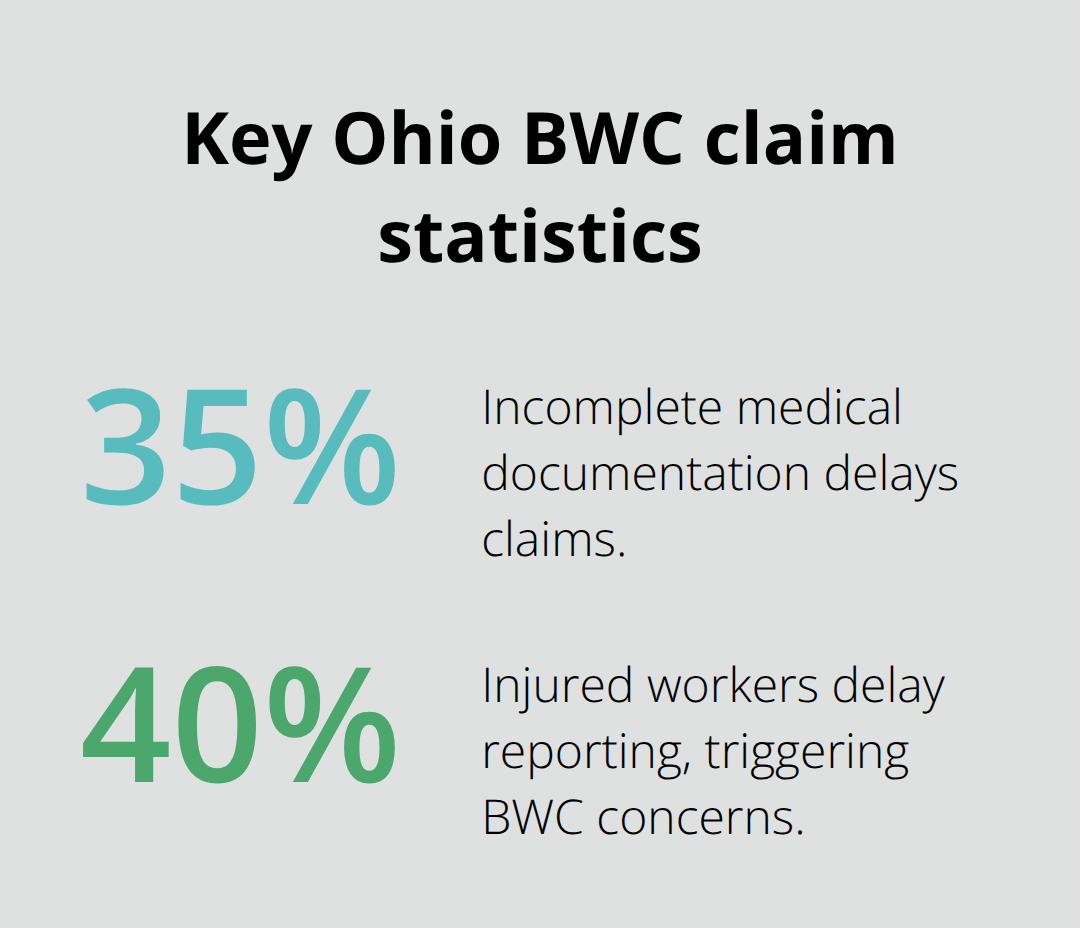
Request your medical records from your healthcare provider within one week of your first appointment. The Ohio Bureau of Workers’ Compensation receives thousands of claims monthly, and incomplete medical documentation causes delays in approximately 35 percent of cases. Include records showing the diagnosis, treatment dates, provider notes, and any prescribed medications or physical restrictions. Keep a separate file with all bills, receipts, and statements from medical providers.
Maintain detailed notes about your symptoms, pain levels, and how the injury affects your daily activities and work capacity. Document every medical appointment, including the date, provider name, and what was discussed or treated.
Organize Your Wage and Income Records
Gather pay stubs from the past year before filing your claim with the BWC. Your employer’s payroll records should match your personal records, but discrepancies happen frequently. Request a wage statement directly from your employer’s human resources department to verify your average weekly wage (this determines your benefit amount). Calculate any wages lost due to the injury or medical appointments, keeping receipts for any out-of-pocket expenses related to treatment. Store these financial records in one organized folder with clear labeling by date. The BWC uses your documented wage history to calculate temporary total disability benefits, so accuracy here directly affects your compensation.
With your documentation organized and complete, you’re ready to understand how the Ohio BWC filing process actually works.
Understanding Ohio BWC Deadlines and Forms
Report Your Injury Immediately to Your Employer
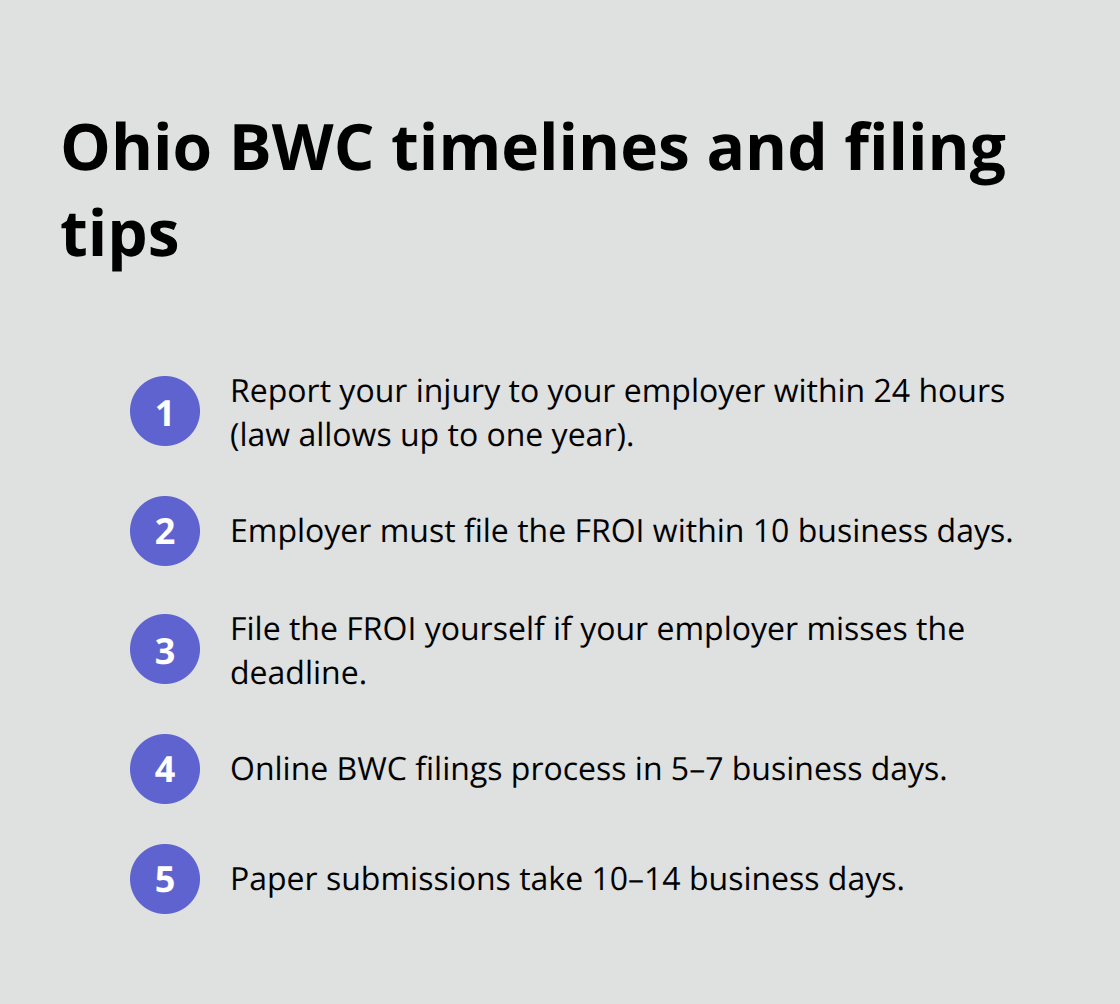
You must report your injury to your employer within 24 hours of the incident, though Ohio law technically allows up to one year. Reporting immediately protects your claim and prevents your employer from claiming they had no knowledge of the injury. Your employer then has 10 business days to report the injury to the BWC using the First Report of Injury form. If your employer misses this deadline, file the form yourself directly with the BWC to prevent claim denial.
Know the BWC’s Processing Timeline
The BWC processes approximately 200,000 claims annually in Ohio, and claims filed after the employer’s deadline face significantly higher rejection rates. The BWC accepts claims through their online system, by mail, or in person at regional offices. Filing online through the BWC’s e-filing system typically processes within 5 to 7 business days, while paper submissions take 10 to 14 days.
Include copies of your medical records, wage documentation, and witness statements with your initial filing rather than submitting them later.
Identify the Correct Forms for Your Situation
The specific forms you need depend on your injury type and circumstances. The First Report of Injury (FROI) applies to all workplace injuries. If you’re claiming occupational disease rather than acute injury, you’ll submit a separate form that requires medical evidence linking your condition to your job. Request the Application for Injury Leave Benefits if you need wage replacement while unable to work. Contact your BWC district office to confirm which specific forms apply to your situation, as filing incorrect paperwork wastes weeks waiting for corrections.
Submit Complete Documentation From the Start
Incomplete initial filings trigger requests for additional information that delay your benefits substantially. Organize these forms before filing to move through the BWC process more efficiently. Workers who gather documents proactively rather than reactively experience faster processing times. The forms you submit establish the foundation for your entire claim, so accuracy matters more than speed.
With your forms organized and your understanding of deadlines solid, you’re ready to recognize the mistakes that derail most claims.
Common Mistakes to Avoid When Filing
Report Your Injury Within 24 Hours
The single most damaging mistake workers make is delaying their injury report to their employer. Roughly 40 percent of injured workers wait days or weeks before notifying anyone, and this delay creates immediate problems with the BWC. Your employer has 10 business days to file the First Report of Injury after you report, but if you wait too long, the BWC views the delay as a red flag suggesting the injury either wasn’t work-related or wasn’t serious enough to report immediately. Some workers believe waiting helps them gather more evidence, but the opposite happens-delays create documentation gaps and give the BWC grounds to question your claim’s legitimacy. Report your injury verbally to a supervisor or manager the same day it happens, then follow up with written notification to human resources. Keep a copy of that written report for your records.
Submit Complete and Accurate Wage Information
Incomplete or inaccurate wage information destroys more claims than almost any other filing mistake. The BWC calculates your temporary total disability benefits based on your average weekly wage, so errors here directly reduce what you receive. Workers often submit only recent pay stubs without including a full year of wage history, forcing the BWC to request additional documentation that delays processing by 3 to 4 weeks. Some workers accidentally omit overtime pay, bonuses, or shift differentials that should be included in their average calculation. Request your complete wage statement directly from your employer’s payroll department before filing-don’t rely on your own calculations or incomplete records. If you’ve worked multiple jobs, include documentation from all employers.
Report All Complications and Secondary Injuries
The third critical error involves failing to report complications or secondary injuries that develop after your initial filing. A worker might suffer a back injury and report it, then develop a shoulder problem from compensating for the back pain, but never add this to their claim. The BWC won’t automatically discover secondary injuries-you must report them in writing and submit medical documentation showing the connection to your original workplace incident.
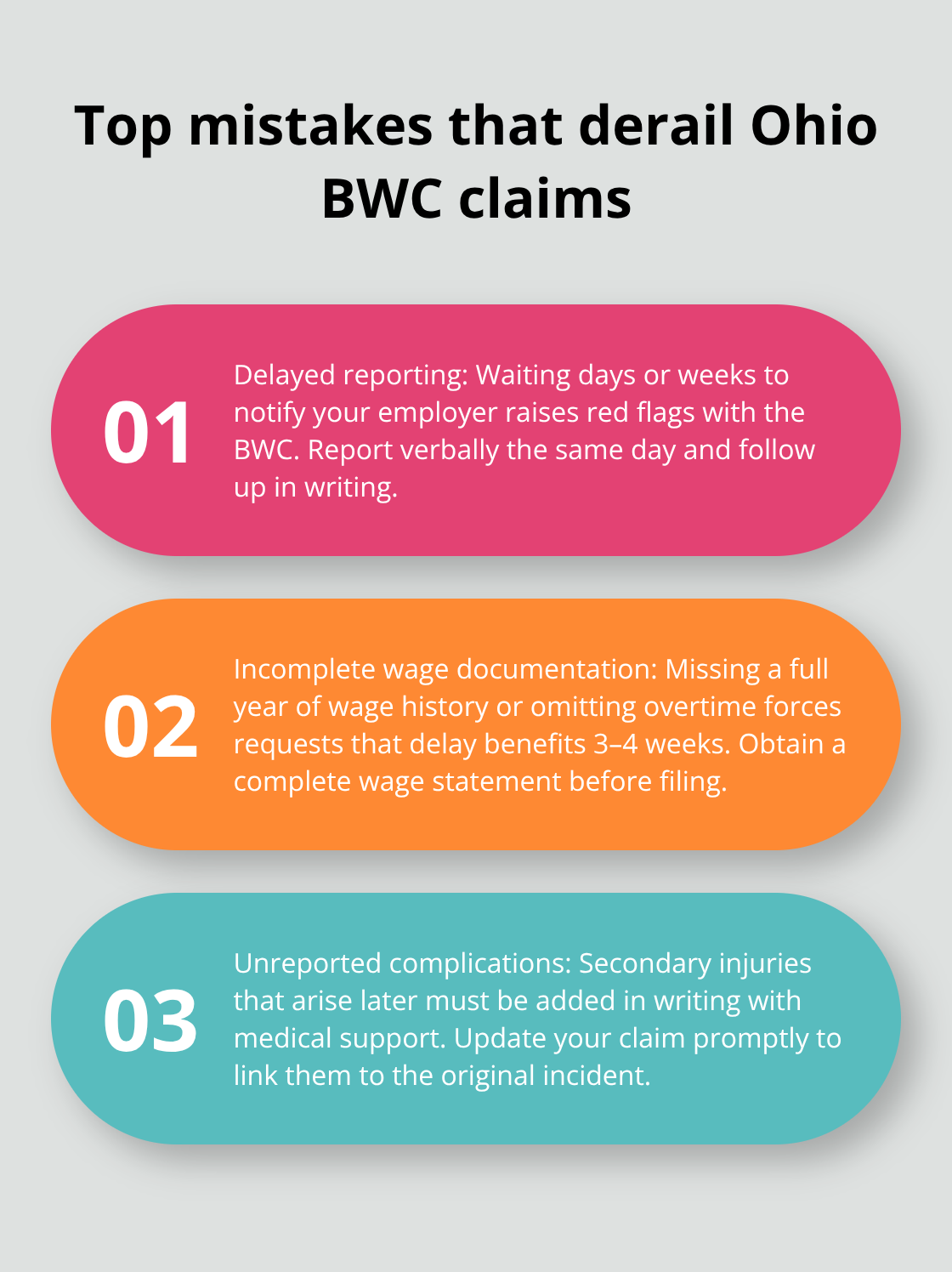
These three mistakes (delayed reporting, incomplete wage documentation, and unreported complications) account for the majority of claim denials and benefit delays that workers experience throughout the Ohio system.
Final Thoughts
A strong Ohio BWC claim filing rests on three actions that you cannot skip: you must document everything immediately, you must meet every deadline, and you must submit complete information from the start. Workers who photograph the incident scene, collect witness statements, and organize medical records within the first 24 hours build claims that withstand scrutiny. Those who report injuries to their employer immediately and file with the BWC on schedule avoid the rejection rates that plague delayed submissions.
The mistakes outlined in this guide-delayed reporting, incomplete wage records, and unreported complications-account for the majority of claim denials and benefit delays in Ohio. You control whether your claim succeeds or stalls by taking action during those critical first hours and days after your injury. Timeliness and completeness form the foundation of every successful workers’ compensation claim.
If navigating Ohio BWC claim guidance feels overwhelming or your claim has already been denied, legal representation can make a significant difference. The team at Robin J Peterson Company, LLC represents injured workers throughout Cleveland, Akron, and Canton, fighting to secure the benefits you’re entitled to. Contact experienced workers’ compensation attorneys today to protect your rights and present your case effectively to the BWC and Industrial Commission of Ohio.