
A head injury at work can change everything, from your ability to work to your financial stability. At Robin J Peterson Company, LLC, we help injured workers understand their head injury Ohio benefits and navigate the workers’ compensation system.
The Ohio Bureau of Workers’ Compensation offers specific protections and support for head injury claims. This guide walks you through the entire process, from filing your initial claim to accessing vocational rehabilitation and legal representation when you need it.
Head Injury Ohio Benefits: What Coverage Looks Like and How the BWC Evaluates Your Claim
Types of Head Injuries Ohio Workers’ Compensation Covers
Ohio’s workers’ compensation system covers head injuries that occur during employment, but the specifics matter. The Ohio Bureau of Workers’ Compensation distinguishes between traumatic brain injuries from direct impact, concussions from falls or accidents, and injuries resulting from exposure to hazardous conditions at work. Penetrating wounds to the head, closed head injuries from machinery, and injuries sustained during commutes on employer business all qualify for coverage.
Pre-existing conditions that worsen due to a workplace incident require careful documentation to prove the work connection. The BWC receives roughly 200,000 injury claims annually across all categories, with head and neck injuries representing a significant portion. What matters most is establishing that your injury occurred during work activities and reporting it within the required timeframe.
Ohio law requires notification to your employer within 24 hours of the incident, though the BWC accepts claims up to one year after the injury date if exceptional circumstances delayed reporting. This window gives you time to gather documentation and seek medical attention before filing formally.
How the BWC Evaluates Your Claim
The evaluation process starts with your initial medical examination. The BWC assigns a healthcare provider from its network, and this provider’s report becomes the foundation of your claim. They document the mechanism of injury, your current symptoms, and any functional limitations that affect your ability to work.
The BWC then reviews medical records, witness statements, and your employer’s incident report to determine compensability. Head injury claims often move to the Industrial Commission of Ohio if disputes arise between you and the BWC or your employer. The commission typically decides claims within 90 days of filing, though complex cases take longer.
Your medical records must show objective findings, not just subjective complaints, so imaging results, cognitive testing, or neurological examinations strengthen your position significantly. The BWC pays particular attention to whether your symptoms align with the injury mechanism and whether they improve or worsen over time (this pattern indicates the severity and permanence of your condition).
Temporary and Permanent Disability Benefits Explained
Temporary total disability benefits apply when you cannot work at all during recovery. Ohio pays 66.2 percent of your average weekly wage, capped at the state’s maximum rate, which was 916 dollars per week as of 2024. These payments continue until you return to work, reach maximum medical improvement, or transition to permanent benefits.
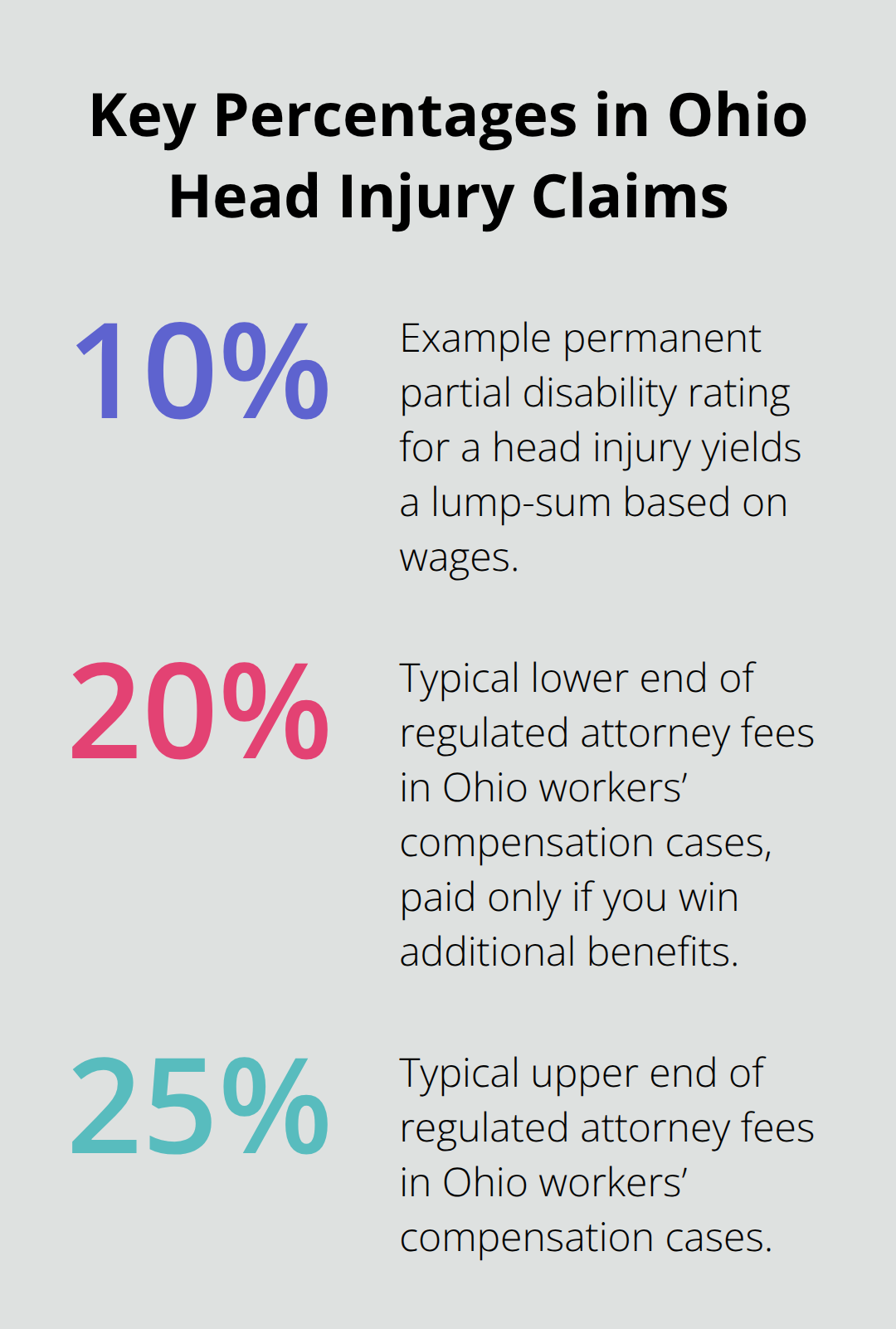
Permanent partial disability applies when you have lasting impairment but can still work in some capacity. The BWC rates permanent disabilities on a schedule for scheduled body parts and uses the functional capacity evaluation method for non-scheduled injuries like many head injuries. A head injury rated at 10 percent permanent partial disability means you receive a lump sum based on your average weekly wage and the rating percentage.
Permanent total disability is available if your head injury prevents you from working in any capacity, though these awards are harder to obtain and often contested. The difference between permanent partial and permanent total benefits can amount to thousands of dollars, making the rating determination critical to your financial recovery. Understanding which category applies to your situation shapes everything that follows in your claim process.
Filing Your Claim and Building Your Case
Act Quickly After Your Head Injury
Starting the claims process immediately after your head injury matters more than most injured workers realize. Ohio law gives you one year from the injury date to file with the BWC, but waiting creates problems. Your medical records become less detailed, witnesses disappear or forget details, and the connection between your injury and work becomes harder to establish. File within 30 days of your injury if possible, even if you’re still gathering documentation.
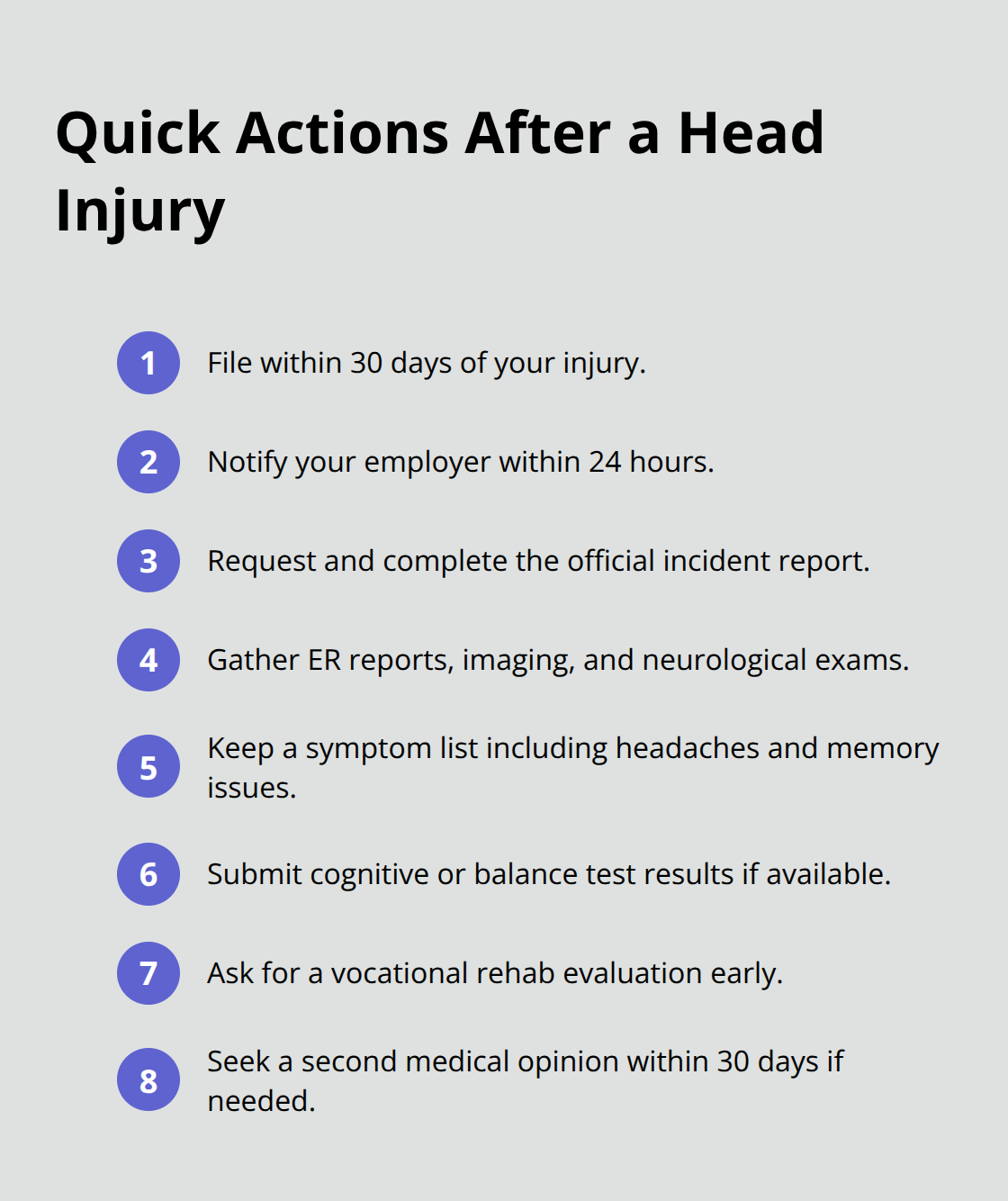
The BWC processes roughly 200,000 claims annually, and early filers with complete documentation move through the system faster than those who wait months to submit paperwork. Contact your employer’s human resources or safety department immediately after the incident and request the official incident report form. This report becomes part of your claim file and should accurately describe what happened, where it happened, and who witnessed it. If your employer downplays the incident or omits details, your own written account and witness statements will correct the record later.
Gather Complete Medical Documentation
Medical documentation determines whether the BWC approves or denies your claim, so this step deserves serious attention. The examining physician assigned by the BWC will base their initial assessment on your medical records, so collect everything before that appointment: emergency room reports, imaging results like CT scans or MRIs, neurological exams, and any prior medical history that might be relevant.
Bring a list of all your symptoms, including headaches, dizziness, memory problems, concentration difficulties, and any changes in mood or sleep patterns. The BWC pays attention to objective findings, so if your doctor ordered cognitive testing or balance assessments, those results strengthen your claim significantly. Document how your symptoms affect your daily work activities rather than just listing complaints when you meet with the BWC-approved healthcare provider.
Request Additional Medical Opinions
If the BWC provider’s report seems incomplete or inaccurate, request a second opinion from your own physician and submit that report to the BWC within 30 days. You are not limited to the BWC’s provider, and supplementary medical documentation from your personal doctor can shift the outcome of borderline cases. Keep detailed records of all medical visits, treatments, and how your condition changes over weeks and months (this documentation trail proves the severity and permanence of your injury when disputes arise with the BWC or your employer).
Your medical evidence directly influences what happens next in the claims process, particularly when the BWC must determine whether your injury qualifies for temporary or permanent disability benefits.
Getting the Most From Your Head Injury Claim
Understanding Your Wage Loss Benefits
The money you receive from your head injury claim depends on decisions made during the evaluation process, and understanding how those decisions work gives you leverage. Ohio’s wage loss benefits replace a percentage of your lost income, calculated from your average weekly wage in the 52 weeks before your injury. The BWC pays 66.2 percent of that average, capped at the state maximum, which was 916 dollars per week as of 2024. If you earned 1,500 dollars weekly before your injury, you receive roughly 990 dollars per week while unable to work, not the full amount. This gap matters significantly over months of recovery, so many injured workers need additional support beyond temporary disability payments.
Vocational Rehabilitation Services Bridge the Income Gap
Vocational rehabilitation services exist specifically to address the financial shortfall by retraining you for work you can actually perform with your head injury limitations. The BWC funds these services when your injury prevents you from returning to your previous job, covering tuition, equipment, transportation, and living expenses during retraining periods.
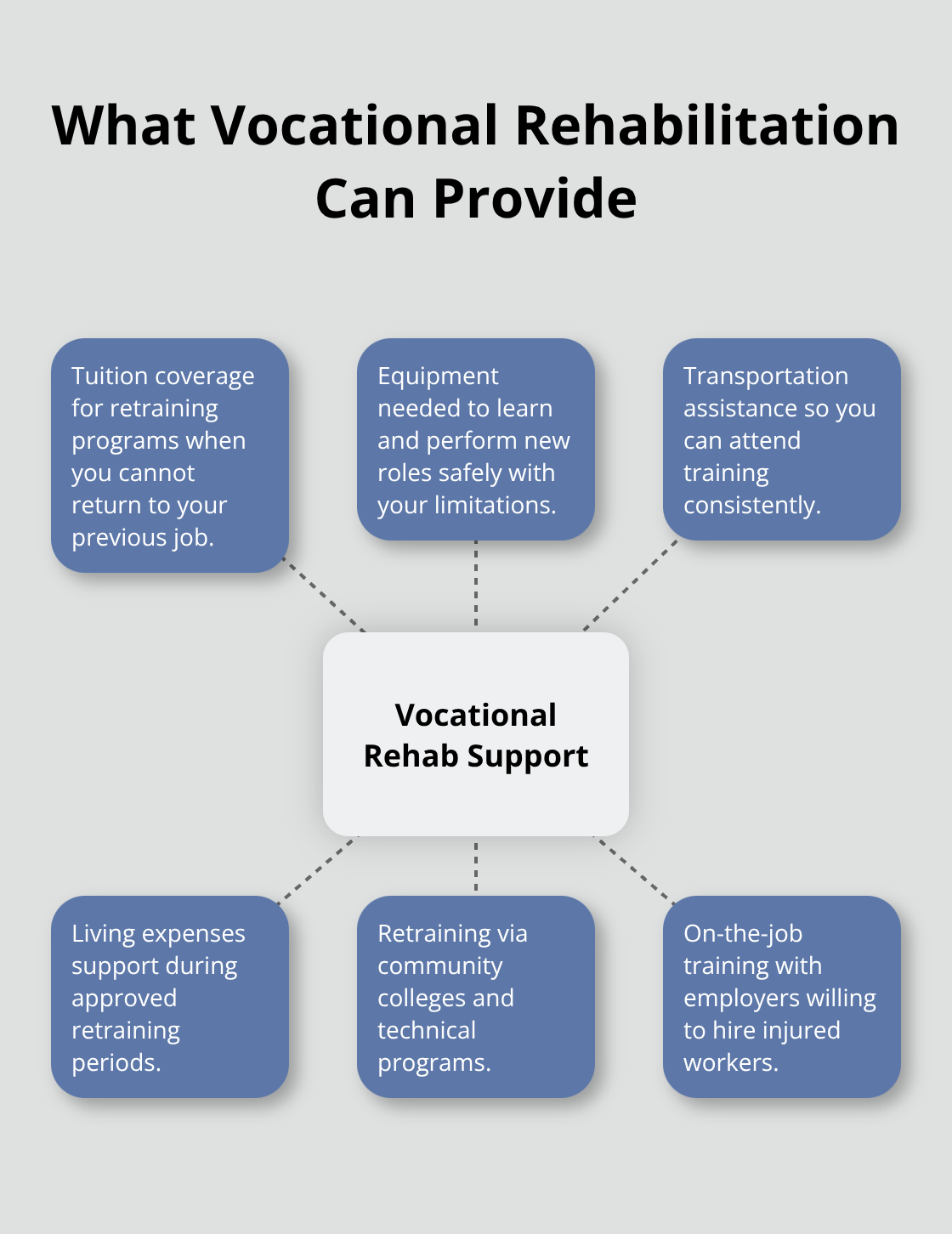
This might mean learning new skills through community colleges, technical programs, or on-the-job training with employers willing to hire injured workers. Request vocational rehabilitation evaluation early in your claim process rather than waiting months, because delays reduce the time available for retraining before your temporary benefits end. The state’s average vocational rehabilitation case costs between 3,000 and 8,000 dollars in direct services, but the long-term benefit of returning to stable employment far exceeds this investment.
When Legal Representation Becomes Essential
Legal representation becomes essential when the BWC denies your claim, offers inadequate permanent disability ratings, or disputes your medical evidence. Most injured workers assume they need a lawyer only if litigation reaches the Industrial Commission of Ohio, but that misconception costs them thousands in denied or undervalued benefits. An attorney reviews your medical records before the BWC’s initial decision and can spot deficiencies that lead to denials, then request additional documentation or medical opinions that strengthen your position. Consult with an attorney within the first month after your injury, particularly if your head injury involves cognitive symptoms, loss of consciousness, or requires imaging evidence like CT or MRI scans. These complex cases face higher denial rates and lower initial ratings from the BWC, and early legal involvement prevents costly mistakes.
Timing Your Legal Strategy
Ohio law allows you to hire an attorney after the BWC approves your claim, but that timing means you accept whatever rating they initially assign and fight uphill to increase it. Attorney fees in workers’ compensation cases are regulated by Ohio and typically range from 20 to 25 percent of benefits awarded, paid only if you win additional compensation. The Industrial Commission of Ohio decides contested claims within specific timeframes, and experienced legal representation significantly improves outcomes when your case reaches that stage. A law firm based in Ohio with experience in workers’ compensation law (such as Robin J Peterson Company, LLC, which serves the Cleveland, Akron, and Canton areas) can guide you through these decisions and protect your rights against employers and the BWC.
Final Thoughts
Head injury Ohio benefits provide financial support during recovery, but the system rewards workers who act fast and gather strong medical evidence. Filing within 30 days, collecting complete medical records, and requesting vocational rehabilitation early accelerates your claim and prevents costly delays. Temporary disability payments replace only 66.2 percent of your lost wages, so understanding permanent disability ratings and vocational services becomes essential to closing the income gap.
The most common mistake injured workers make is accepting the BWC’s initial determination without professional review. A difference between a 10 percent permanent partial disability rating and a 20 percent rating means thousands of dollars in lump sum compensation, yet many workers never question their outcome. Head injury claims involving cognitive symptoms, loss of consciousness, or imaging evidence face higher denial rates and lower initial ratings, making early legal consultation particularly valuable in these complex cases.
Contact Robin J Peterson Company, LLC within the first month after your head injury to discuss your situation and protect your rights. We represent injured workers throughout the Cleveland, Akron, and Canton areas who face denials, inadequate ratings, or disputes with the BWC. Your recovery depends on decisions made now, and professional guidance during this critical period determines whether you receive the full benefits you deserve.