
Elbow injuries at work can sideline you fast, whether from a sudden fall or a crushing accident. At Robin J Peterson Company, LLC, we know that understanding your elbow injury workplace rights under Ohio law is the first step toward protecting yourself.
You have real protections available, and knowing what they cover makes all the difference. This guide walks you through your options and what to expect.
How Elbow Injuries Happen at Work
Elbow injuries at work fall into distinct categories based on how they occur, and understanding the difference matters for your claim. Acute traumatic injuries strike suddenly-a fall from a ladder, a direct blow from equipment, or an object striking you. These injuries occur frequently in healthcare and manufacturing settings. The advantage here is that the workplace connection is immediate and obvious, which means the Ohio Bureau of Workers’ Compensation processes these claims faster because documentation moves smoothly. You have a specific incident date, witnesses potentially present, and a clear cause-and-effect relationship that resists dispute.

When Injury Builds Over Time
Overuse injuries develop gradually from repetitive motions on the job. Plumbers, electricians, mechanics, assembly line workers, painters, and retail cashiers face these risks regularly. The problem is that gradual-onset conditions require medical records that explicitly connect your symptoms to specific workplace tasks, not general statements. Bring written descriptions of your daily tasks to every medical appointment so your doctor can document the exact work connection. The Ohio BWC investigates these claims by reviewing medical evidence to verify the injury resulted from job duties rather than outside activities. These investigations take weeks to months because the workplace link isn’t as obvious as a fall or impact.
Crushing and Compression Injuries
Compression injuries occur when your elbow gets caught, pinched, or crushed against equipment, machinery, or heavy objects. These typically happen in manufacturing, construction, and warehouse environments. Unlike gradual overuse conditions, compression injuries usually have a specific incident date, which accelerates the claims process. However, you must act quickly-the 14-day deadline to file the First Report of Injury with the Ohio BWC is strict and begins immediately after the injury occurs. You should document everything: take photos of the equipment or workspace involved, record witness names and contact information, and seek medical treatment promptly. This documentation strengthens your claim significantly when the BWC investigates whether the injury occurred at work and resulted from your job duties.
What Happens Next in Your Claim
The Ohio BWC verifies three critical facts about every elbow claim: the injury occurred at work, it resulted from your job duties, and you filed within the required timeframe. Sudden injuries move through investigation faster because the workplace link is clear. Gradual conditions require medical record review and can take weeks to months. The speed of your investigation depends largely on how well you document the connection between your work tasks and your symptoms. This documentation becomes especially important if the BWC initially denies your claim, since you’ll need strong evidence to support an appeal.
What Ohio Workers’ Compensation Actually Covers for Your Elbow
Filing Your Claim Within the Critical Window
Filing a claim with the Ohio Bureau of Workers’ Compensation starts with one critical document: the First Report of Injury, or FROI. You have 14 days from the date of your injury to file this form, and missing that deadline eliminates your eligibility for benefits entirely. Your employer is legally required to provide the FROI form, but don’t wait for them to hand it over. Contact the Ohio BWC directly at their office or file online through their website if your employer delays. When you file, include precise details about how the injury occurred, the exact date it happened, and which body parts were affected. The more specific you are, the faster the BWC processes your claim.
For gradual-onset conditions like overuse injuries, document the exact date you first experienced symptoms and report that date to your employer immediately. This creates a credible timeline that strengthens your claim when the BWC investigates whether your work duties caused the condition.
Medical Treatment and Recovery Costs
Once your claim receives approval, the Ohio BWC covers necessary medical treatment related to your elbow injury. This includes doctor visits, physical therapy, diagnostic imaging, medications, and surgical procedures if conservative care fails. The BWC follows a staged care approach, meaning you typically start with conservative treatments like rest, activity modification, and physical therapy before moving to more invasive options.
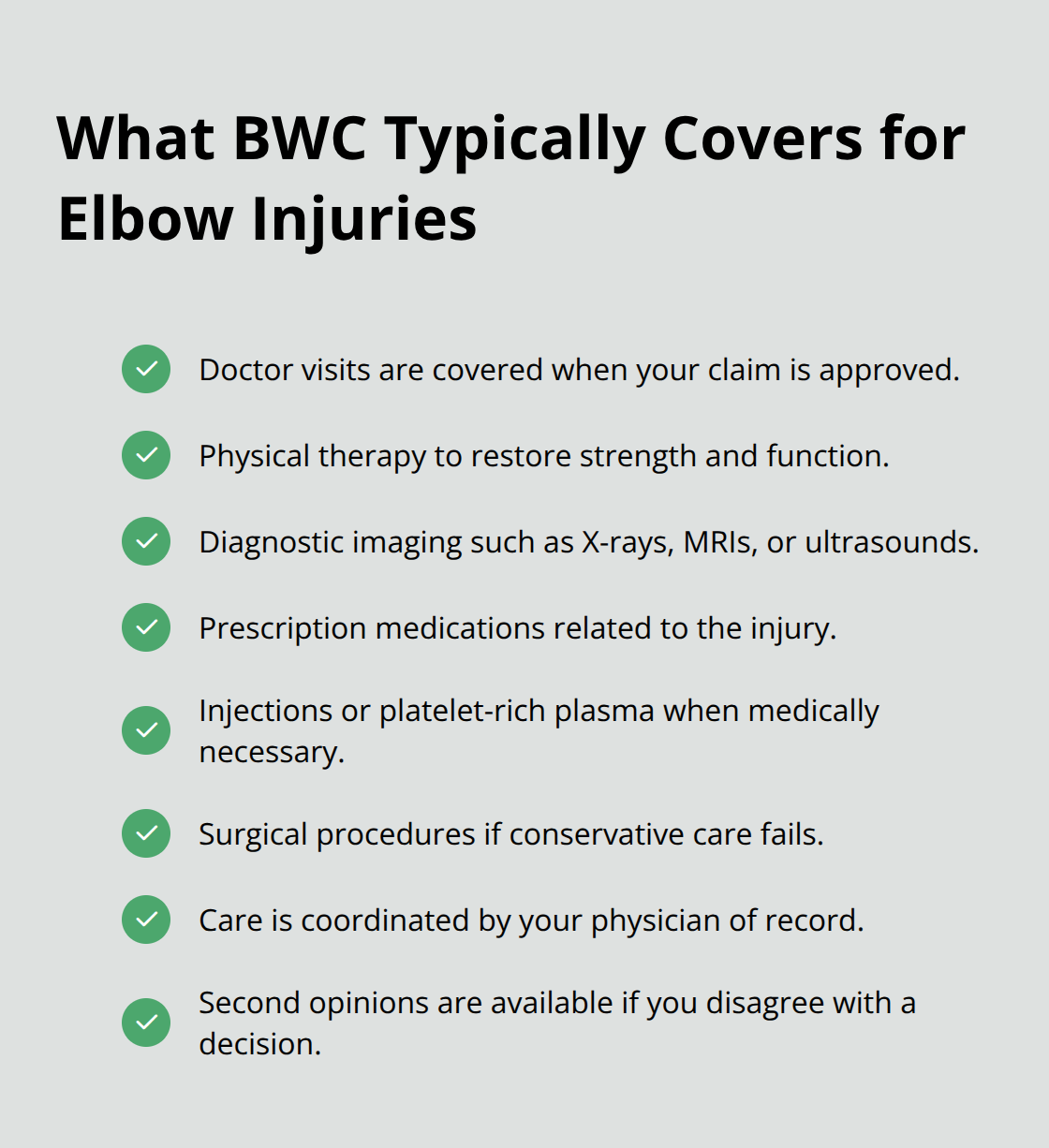
If your treatment plan requires a steroid injection, platelet-rich plasma therapy, or surgery to repair damaged tissue, the BWC must cover these expenses if your physician of record deems them medically necessary. The physician of record matters significantly in your claim because this doctor coordinates your care and determines which treatments the BWC will fund. If you disagree with treatment decisions or the BWC denies a specific procedure, you have the right to request a second opinion. Keep all medical appointments documented with notes about which job tasks you discussed with your doctor, since these details strengthen your claim if it’s ever disputed or denied.
Income Replacement While You Heal
If your elbow injury prevents you from working during recovery, you qualify for temporary total disability benefits that replace a portion of your lost wages. The BWC calculates these benefits based on your average weekly wage before the injury, and payments begin after a waiting period. Ohio law requires you to remain under a physician’s care and follow treatment recommendations to maintain eligibility for wage loss benefits.
If you attempt to return to light duty work while healing, the BWC reduces your benefits proportionally based on the wages you earn. Some employers offer modified duty assignments that let you stay productive while your elbow heals, and accepting this work doesn’t disqualify you from partial wage replacement. If your employer refuses to accommodate your restrictions or terminates you because of the injury, document this immediately and report it to the BWC, as retaliation for filing a workers’ compensation claim is illegal under Ohio law.
When the BWC Denies Your Benefits
Disputes over your claim can arise at any stage, and the BWC may deny your application or refuse to cover specific treatments. When this happens, you have 14 days to appeal to a district hearing officer. The appeals process moves through district, staff, and the Industrial Commission of Ohio if necessary. Strong medical evidence showing the elbow condition arose from your work duties rather than outside activities significantly improves your chances of overturning a denial. Incomplete or weak medical documentation linking your symptoms to specific workplace tasks remains the primary reason claims fail, so the documentation you gathered early in the process becomes your strongest asset during an appeal.
Why the BWC Rejects Elbow Claims and How to Fight Back
Medical Documentation That Actually Works
Medical documentation that fails to connect your symptoms to specific workplace tasks remains the single biggest reason the Ohio BWC denies elbow injury claims. Generic notes from your doctor stating you have elbow pain or inflammation will not satisfy the BWC. The agency needs explicit language linking your condition to identifiable work activities. If your medical records state you have lateral epicondylitis but omit that your job involves eight hours daily of gripping and twisting motions as an electrician, the claim weakens dramatically.
When you attend medical appointments, bring a written description of your exact daily tasks and discuss them directly with your physician. Ask your doctor to document in the medical record which specific job duties contributed to your elbow condition. This single step transforms a weak claim into one that withstands BWC scrutiny.
Building Evidence That Supports Your Claim
Take photos of your workspace, equipment, and tools you use regularly. Collect names and contact information from coworkers who witness your daily tasks. This evidence becomes critical ammunition if the BWC initially denies your claim and you move into the appeals process. The more specific your documentation, the stronger your position when a hearing officer reviews your case.
Understanding the 14-Day Appeal Deadline
The appeals timeline is unforgiving, and most injured workers miss critical deadlines through simple ignorance. When the BWC denies your claim or refuses to cover a specific treatment, you have exactly 14 days to file an appeal to a district hearing officer. That clock starts ticking the moment you receive the denial letter, and letting those 14 days slip away eliminates your appeal rights permanently. The hearing officer conducts a neutral review of your case and decides whether the BWC made the right call.

If you lose at the district level, you can appeal to the Industrial Commission of Ohio, but each stage demands meticulous adherence to filing deadlines and procedural rules. Missing even one deadline can cost you your entire case.
Strengthening Your Appeal With Independent Medical Evidence
Independent medical testimony from a physician who can explain how your workplace duties caused your elbow condition dramatically improves your appeal odds. The physician does not need to be your regular doctor; an independent evaluation from a specialist strengthens your position because it appears unbiased to the hearing officer. A specialist’s opinion carries significant weight when the hearing officer weighs competing medical evidence.
The complexity of the appeals process trips up most people attempting it alone. An attorney who handles workers’ compensation cases can track deadlines, gather proper medical evidence, and present your case persuasively to the hearing officer. The difference between a successful appeal and a failed one often hinges on whether you had someone managing these critical details.
Final Thoughts
Your elbow injury workplace rights under Ohio law protect you substantially, but only if you act decisively and document everything from day one. The Ohio Bureau of Workers’ Compensation provides real protections: coverage for medical treatment, rehabilitation services, and wage replacement during recovery. These benefits exist specifically to support workers like you when workplace injuries interrupt your life, and understanding how to access them matters because the system rewards workers who file promptly, maintain detailed medical records, and follow procedural deadlines.
The complexity of Ohio’s workers’ compensation system puts you at a disadvantage if you navigate it alone. The BWC denies claims regularly, often based on incomplete documentation or procedural missteps that could have been prevented with proper guidance. Hearing officers overturn denials when presented with strong evidence and proper legal arguments, but building that case requires someone who understands the system’s rules and deadlines (especially the unforgiving 14-day windows that govern every stage of your claim).
If your claim has been denied or delayed, or if you’re uncertain whether you’ve filed correctly, contact Robin J Peterson Company, LLC for a free case evaluation. We represent injured workers throughout the Cleveland, Akron, and Canton areas who face denied claims or disputes with the BWC. The sooner you get proper guidance, the better your chances of protecting your elbow injury workplace rights and receiving the benefits you deserve.