
Filing a workers’ compensation claim in Ohio can feel overwhelming if you don’t know where to start. We at Robin J Peterson Company, LLC have helped countless injured workers navigate the BWC claim filing process successfully.
This guide walks you through the essential steps, documents you’ll need, and common pitfalls to avoid. You’ll have everything required to file your claim correctly the first time.
Understanding the Ohio BWC Claim Process
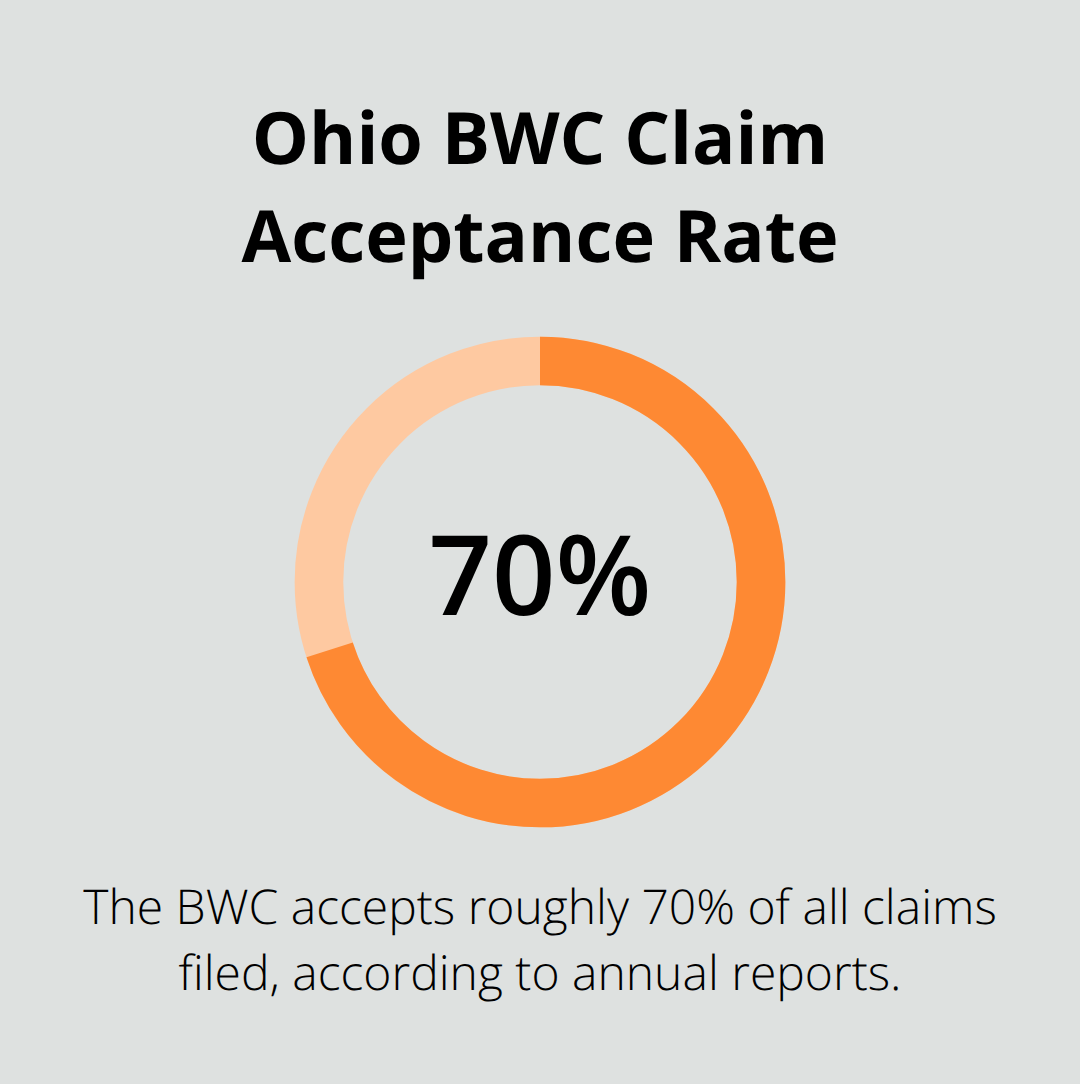
The Ohio Bureau of Workers’ Compensation operates under a no-fault system, meaning you don’t need to prove your employer was negligent to receive benefits. What matters is whether your injury happened during employment and arose from your job duties. The BWC accepts roughly 70% of all claims filed, according to their annual reports, which means a significant portion of claims face denial or complications.
Your injury must be work-related and documented properly from the start. This distinction separates legitimate claims from those that stall in the system.
What counts as a work injury
An injury qualifies for BWC coverage if it occurs during work hours and relates directly to your job responsibilities. Injuries from commuting to work don’t qualify, nor do injuries from horseplay or violations of safety rules you were explicitly told to follow. However, many workers misunderstand what counts as compensable. If you sustain an injury while performing duties outside your normal job description but still at your employer’s direction, that injury typically qualifies. The key factor is whether the injury happened while you performed something work-related, not whether it was your primary responsibility. Occupational diseases like hearing loss from prolonged workplace noise exposure also qualify under Ohio law, though these require documentation showing the condition developed from your job.
Why BWC claims differ from lawsuits
Filing a BWC claim is fundamentally different from pursuing a lawsuit against your employer. With a BWC claim, you receive benefits regardless of fault, but you generally cannot sue your employer for additional damages. A lawsuit requires proving negligence and typically takes years to resolve, while a BWC claim processes much faster when filed correctly.
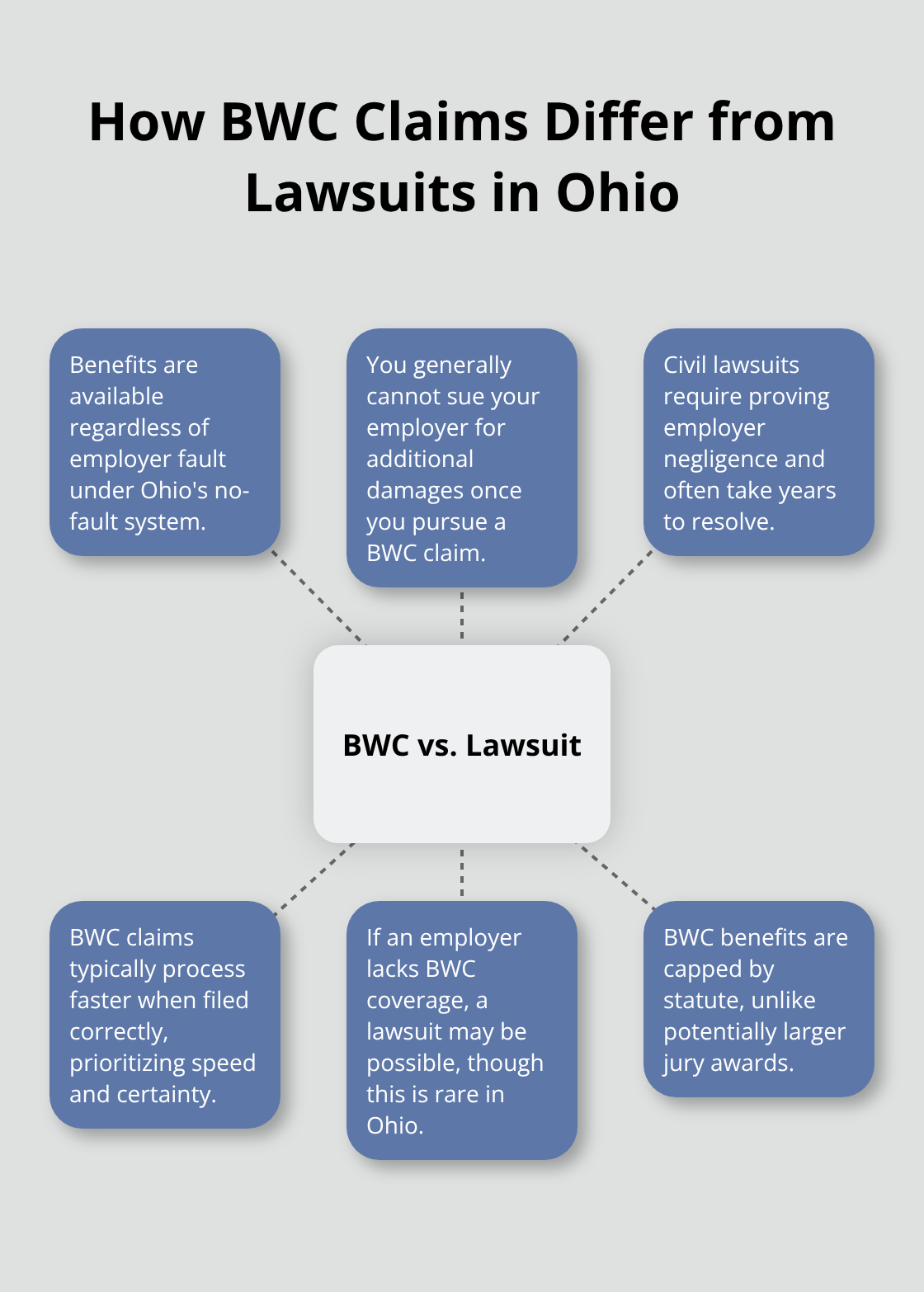
The BWC system prioritizes speed and certainty over punitive damages. If your employer failed to carry BWC insurance, you may have grounds for a lawsuit, but this is rare in Ohio. Most injured workers benefit from the BWC system because claims resolve within months rather than years, though the benefits cap at statutory limits rather than potentially larger jury awards.
Filing deadlines you cannot miss
Ohio law gives you one year from the date of injury to file your BWC claim, but waiting that long creates serious problems. The longer you wait, the harder it becomes to gather medical evidence and witness statements while details remain fresh. You must also report your injury to your employer as soon as possible, ideally within the same day or shift. Failing to report promptly gives employers and the BWC reasons to question the injury’s legitimacy. Medical treatment should begin immediately after injury, as gaps in treatment documentation weaken your claim significantly. The BWC tracks everything chronologically, and delays between injury and first medical visit raise red flags during claim review.
With your understanding of how the BWC system works and what qualifies for coverage, you now need to focus on gathering the specific documents and information that will strengthen your claim from the moment you file it.
Essential Documents and Information You’ll Need
Medical Records Tell Your Injury Story
Medical documentation forms the foundation of your BWC claim. Start by obtaining your emergency room report, physician’s notes, diagnostic test results (X-rays, MRI scans), and any treatment plans your doctor created. The BWC cross-references your medical timeline against your injury report, so gaps or inconsistencies raise questions during review. Request these records directly from your healthcare provider in writing and keep copies for your own files. Most providers charge between five and ten dollars per request to copy records, according to standard healthcare administrative practices. Do not delay this step-the sooner you submit complete medical documentation, the faster the BWC processes your claim.
Accident Reports and Witness Statements Strengthen Your Case
Your account of what happened matters as much as medical evidence. Write down exactly what occurred, including the date, time, location, and specific activities you performed when injured. Include weather conditions, lighting, equipment involved, and any safety equipment you wore. Add names and contact information for anyone who witnessed the incident, even if they work for your employer. Witness statements carry significant weight because they corroborate your account independently. Request a written incident report from your employer immediately after reporting the injury. Ohio employers must maintain injury records under OSHA regulations, and you have the right to request copies.
Employment and Insurance Information the BWC Requires
Bring your employment contract, job description, and any safety training documentation you received to establish that you performed work duties when injured. Include your employer’s insurance information, policy number, and the name of the BWC administrator handling your account. The BWC uses this information to coordinate benefits and verify coverage. Collect recent pay stubs showing your wage history for the past thirteen weeks before injury, as benefit calculations depend on your average weekly wage. If you received any communications from your employer about the injury, keep those as well.
Organize Everything Before You File
Organize all documents chronologically in a single folder before filing, making it easier to reference specific information if the BWC requests clarification. This preparation prevents delays and shows the BWC that you take your claim seriously. With your documents assembled and organized, you now face the critical task of avoiding the mistakes that derail many claims during the filing process.
Common Mistakes to Avoid When Filing Your Claim
The gap between filing a claim and receiving approval often comes down to timing and accuracy. Most workers lose benefits not because their injuries don’t qualify, but because they miss deadlines or submit incomplete information. The Ohio BWC processes claims on strict timelines, and missing even one deadline can push your case into a lengthy appeals process.
Missing Filing Deadlines Costs You Everything
You have one year from your injury date to file, but this deadline arrives faster than most people expect. More critically, you must report your injury to your employer immediately-waiting even a few days creates documentation problems that haunt your claim throughout the review process. The BWC flags delayed injury reports as suspicious, which gives administrators reason to question whether the injury truly occurred as described.
Your employer’s first report of injury form becomes the official timeline. If your medical treatment starts weeks after this report, the inconsistency raises red flags that delay processing. Start your claim the same day you sustain the injury. Contact your employer before leaving work if possible.
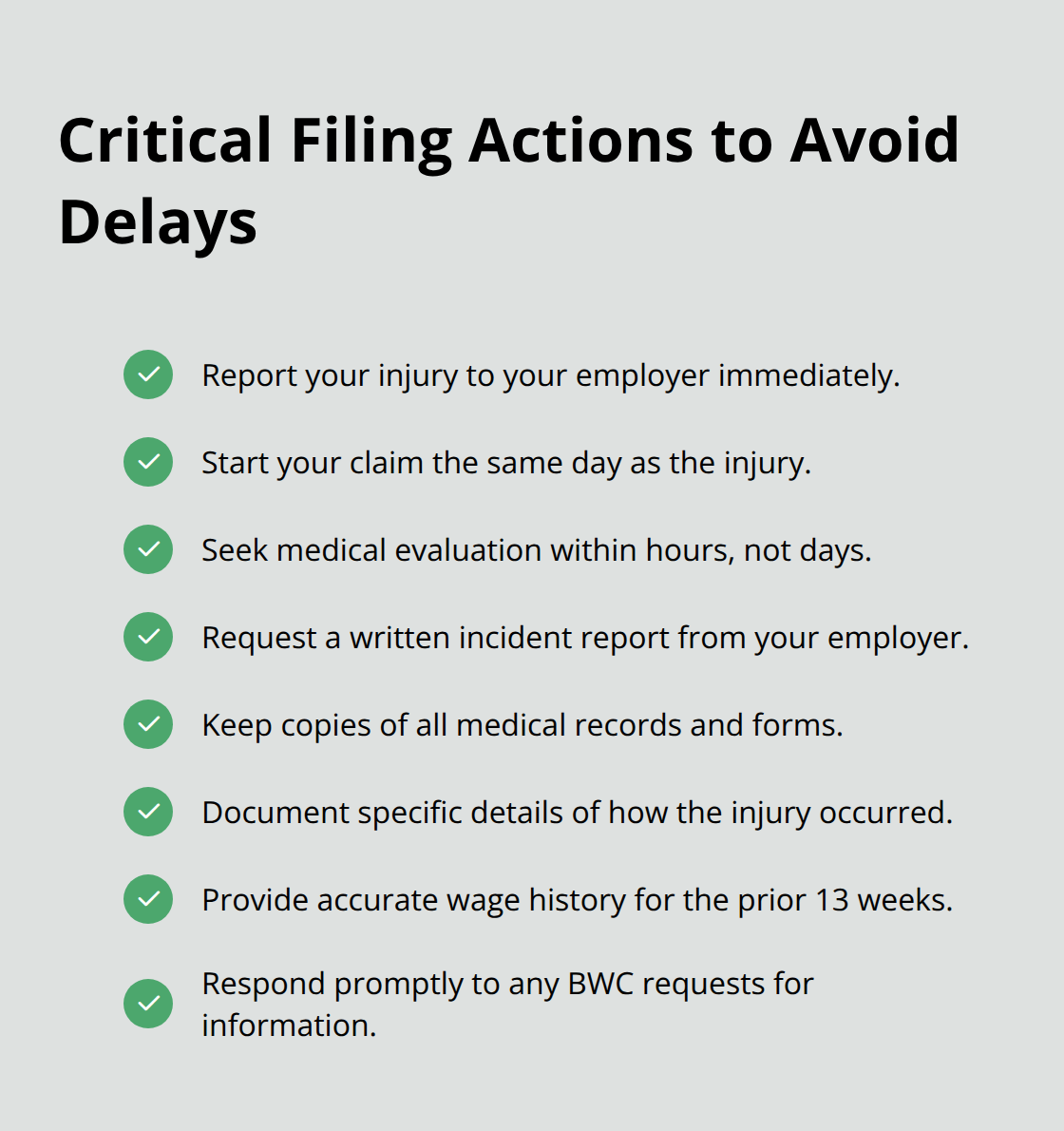
Seek medical evaluation within hours, not days.
Incomplete or Inaccurate Information Triggers Investigation
Incomplete or inaccurate information creates the second major problem we see repeatedly. Many workers omit details about how the injury occurred, equipment involved, or their exact job duties at the time, thinking minor details don’t matter. The BWC cross-references every statement you make against employer records, witness accounts, and medical documentation.
Contradictions between your injury report and your medical records (even small ones) trigger additional investigation and delay decisions by weeks or months. Provide your wage history accurately-miscalculating or rounding your average weekly wage affects your benefit amount and raises verification questions. Include all previous injuries or medical conditions you reported to your employer, as omitting these creates inconsistencies that undermine your credibility.
Write Specific Details, Not Vague Summaries
Write detailed descriptions of what you were doing when injured. Instead of stating you were lifting, explain that you were lifting a 40-pound box from a shelf at shoulder height while standing on a concrete floor. This specificity prevents the BWC from rejecting your claim due to insufficient information.
Review your completed claim forms with someone outside your situation-a family member, friend, or attorney-before submission. Fresh eyes catch errors and gaps that exhausted injured workers miss. This outside perspective strengthens your application significantly and reduces the risk of costly delays.
Conclusion
After you submit your claim, the BWC typically acknowledges receipt within a few days and assigns your case to a claims administrator who will contact you with your claim number and direct contact information. Most straightforward claims receive approval within 30 to 60 days, though complex cases involving multiple injuries or occupational diseases take longer. Your administrator will request additional information if gaps exist in your documentation, so respond promptly to any requests to avoid further delays.
If the BWC denies your claim or offers benefits you believe are insufficient, you have the right to appeal by submitting additional evidence or requesting a hearing before the Industrial Commission of Ohio. An attorney experienced in Ohio workers’ compensation law can identify weaknesses in the BWC’s decision, gather supporting evidence, and present your case effectively during appeals. This is where legal representation becomes invaluable, particularly when you need to challenge the BWC’s initial determination.
We at Robin J Peterson Company, LLC represent injured workers throughout Ohio who face claim denials or inadequate benefit offers. If your claim was denied, if you’re unsure whether you filed correctly, or if you need guidance navigating the appeals process, contact us for a consultation. Visit our website to learn how we can help protect your rights and secure the benefits you deserve.