
An Ohio Industrial Commission hearing is where contested workers’ compensation issues get decided after the Bureau of Workers’ Compensation has already issued an order, and knowing the timeline, notice rules, and appeal levels can change how prepared you feel walking into the room. Most injured workers never need a hearing, but when the claim is disputed, the Industrial Commission becomes the forum that resolves it.
At Robin J Peterson Company, LLC, we help injured workers across Cleveland, Akron, Canton, and Independence navigate Bureau of Workers’ Compensation decisions and Industrial Commission hearings so you can move forward with confidence. This guide explains how a district hearing works, what happens on appeal, and the mistakes that weaken a contested claim.
What an Ohio Industrial Commission Hearing Actually Is
The Ohio Bureau of Workers’ Compensation administers many claims and pays compensation and medical benefits when a claim is allowed. The Industrial Commission of Ohio resolves disputes over those claims. Hearings are held only when there is a contested issue among the injured worker, the employer, or the Bureau. Self-insuring employers may bypass Bureau administration for some claim handling, but they remain subject to the Industrial Commission hearing process when a dispute arises.
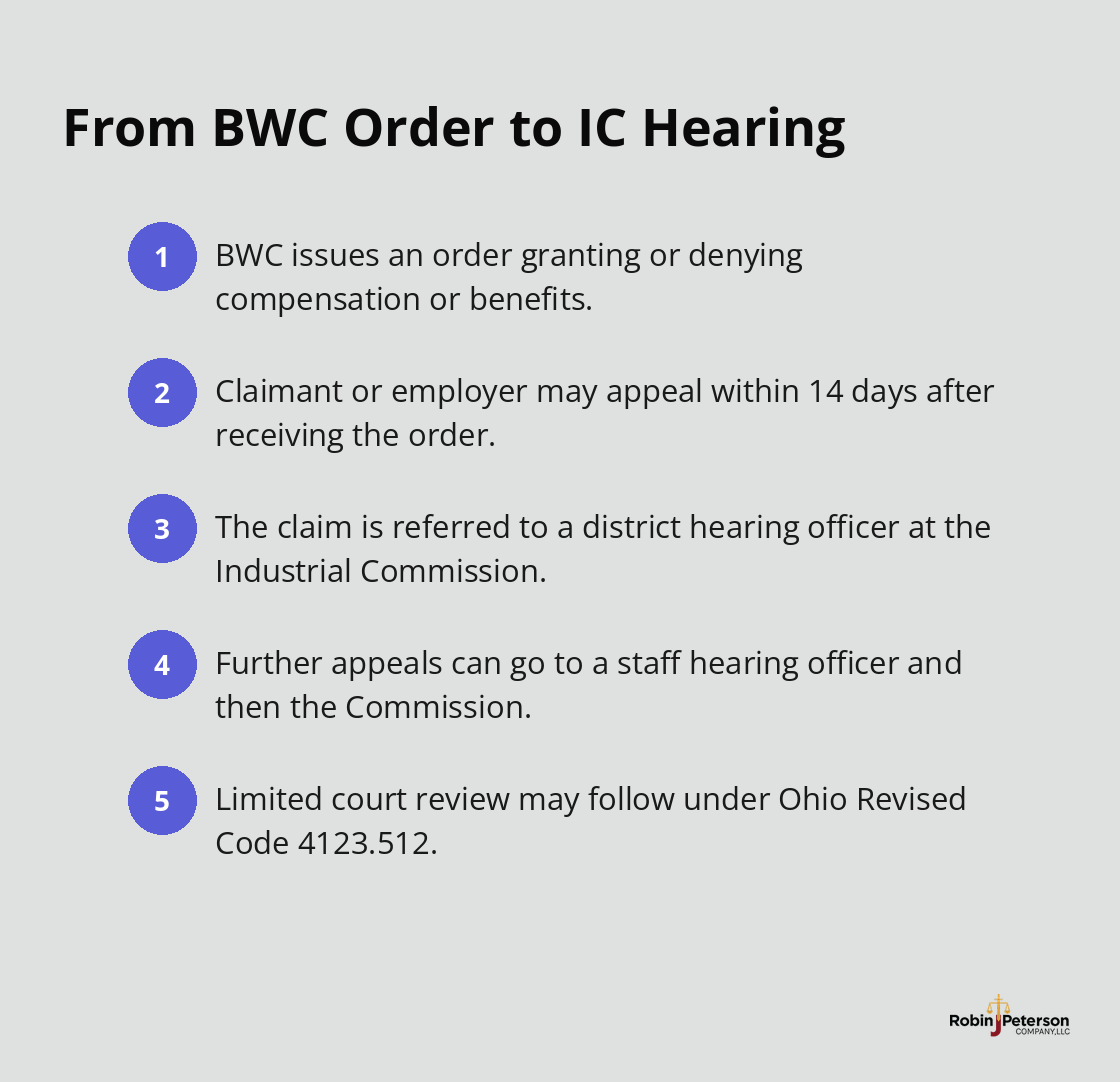
Ohio Revised Code section 4123.511 sets the claim-notice and appeal framework. After the Bureau receives a claim, it must notify the claimant and employer of receipt and of the facts alleged. When the administrator issues an order granting or denying compensation or benefits in a state-fund claim, the claimant or employer generally may appeal that order within fourteen days after receiving it. That appeal is what moves the dispute to a district hearing officer at the Industrial Commission.
Industrial Commission hearings are informal compared with a courtroom trial. Legal representation is not required, though many injured workers choose counsel for contested allowances, treatment disputes, or wage-loss issues. The Commission encourages a free exchange of information before the hearing so both sides can review the evidence the other intends to submit.
District, Staff, and Commission Levels
There are three administrative hearing levels. A contested claim first goes to a district hearing officer. Either party dissatisfied with that decision may appeal in writing or online within fourteen days after receiving the order, which leads to a staff hearing officer hearing. A further appeal may be taken to the full Industrial Commission within fourteen days after receiving the staff hearing officer’s order. The Commission may accept the appeal for hearing or refuse to hear it. Beyond the Commission, limited court appeals are available under Ohio Revised Code section 4123.512 within sixty days after receipt of the Commission-level order, subject to that section’s limits.
Where the Hearing Is Held and Who Gets Notice
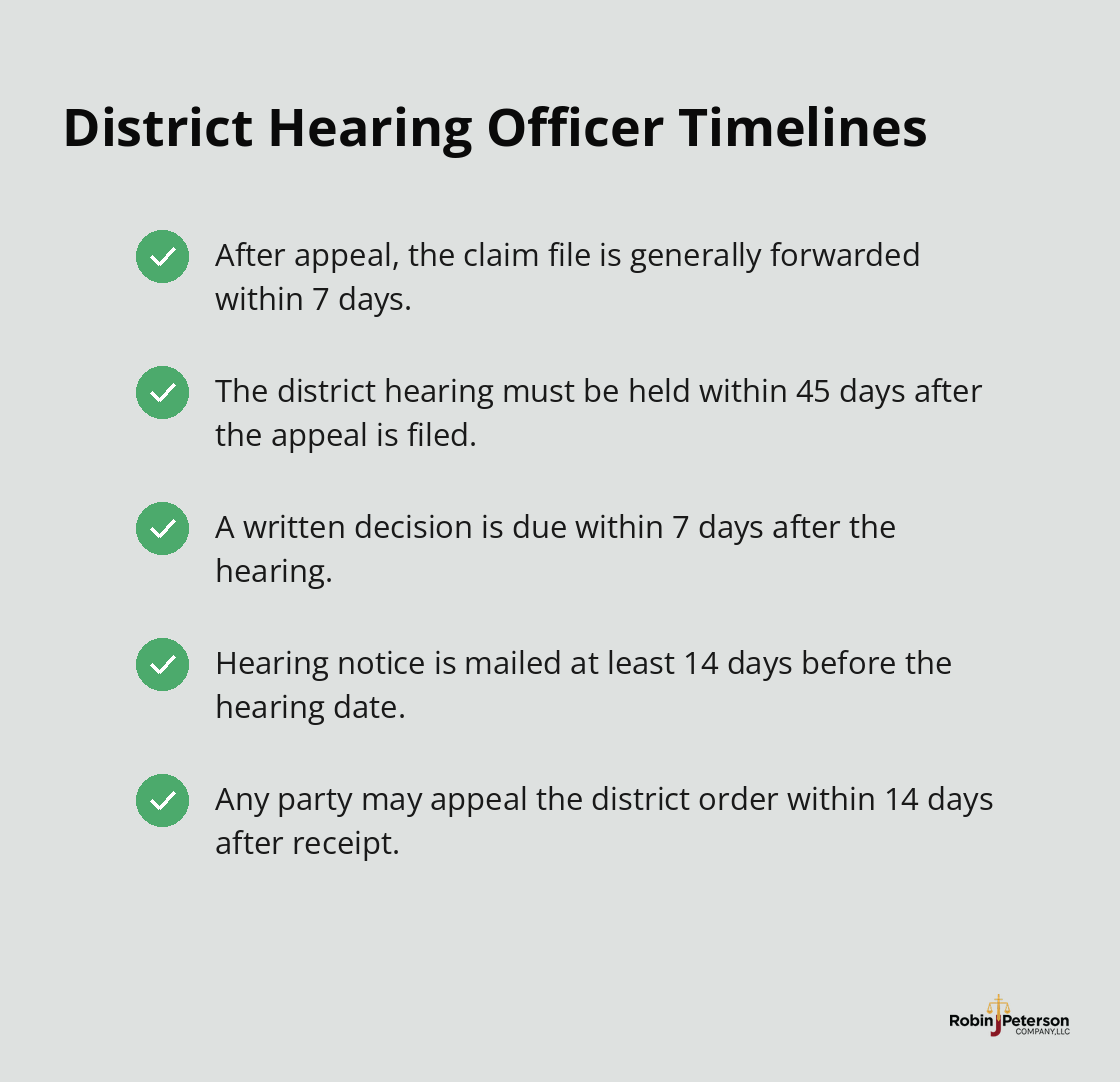
Under Ohio Revised Code section 4121.36, appeals from an administrator’s decision are assigned to a district hearing officer at the Commission service office closest in geographic proximity to the claimant’s residence. Notice of the hearing date, time, and place must be given to the injured worker, the employer, and their representatives. Ohio Administrative Code rule 4121-3-09 provides that, except for emergency hearings, the mailing of notice must precede the hearing by at least fourteen days. The notice identifies the issues in dispute so you can prepare the right medical records and witnesses.
What the Hearing Officer Must Put in Writing
Section 4121.36 requires every decision by a district hearing officer, staff hearing officer, or the Commission to be in writing. The written decision must include a concise statement of the order or award, a notation about notice and appearances, signatures verifying the vote, and a description of the part of the body and nature of the disability recognized in the claim. That written order is what starts the next fourteen-day appeal clock, so keep the envelope date and the electronic notice if you receive both.
How the District Hearing Actually Unfolds
Once an appeal is filed from a Bureau order under section 4123.511, the administrator forwards the claim file to the appropriate district hearing officer, generally within seven days. The district hearing officer must hold a hearing on the disputed issue within forty-five days after the appeal is filed and must issue a decision within seven days after holding the hearing. Those statutory timelines keep contested claims from sitting indefinitely, though continuances can still occur for good cause.
Before the hearing, parties are expected to exchange information relevant to the claim. Bringing surprise records that the other side never saw can lead to delay or a weaker presentation. Hearing officers review the claim file beforehand. At the hearing, the parties may present evidence and arguments, including rebuttal. If nobody appears after notice, the officer may decide the claim on the evidence already in the file when that evidence is enough, or continue the matter when it is not.
Preparing Medical Proof and Witnesses
Most contested allowances and treatment issues turn on medical evidence. Current reports that connect the diagnosed condition to the industrial injury, explain work restrictions, or address the specific request set for hearing carry more weight than vague notes. Coworker or supervisor statements can matter when the dispute is about how the injury happened. For Northeast Ohio workers traveling to Independence, Cleveland, Akron, or Canton hearing locations, organize documents in the same order you plan to discuss them so the hearing stays focused on the issues listed in the notice.
Participation by the Administrator and the Employer
Section 4123.511 makes the administrator a party who may appear and participate in administrative proceedings on behalf of the state insurance fund. When the employer is represented, the administrator generally should not present cumulative arguments or testimony that merely repeats the employer’s case. The employer may appear personally or through a representative. Understanding who will speak against allowance or treatment helps you anticipate the objections you need to answer at the district level.
What Happens After the District Order
Any party may appeal a district hearing officer’s order within fourteen days after receiving it. On a timely appeal, the Commission refers the claim to a staff hearing officer. The staff hearing officer must hold a hearing within forty-five days after the appeal is filed and issue a decision within seven days after the hearing. That second level is still an administrative hearing, not a new court case, and it remains one of the most important stages for injured workers who disagree with the first outcome.
What Derails an Industrial Commission Appeal
Missed appeal deadlines are the clearest way to lose a contested issue. Section 4123.511 repeatedly uses fourteen-day appeal windows from receipt of the Bureau order, the district order, and the staff order. Waiting to gather one more medical report after the deadline does not reopen a late appeal. Mark the receipt date the day the order arrives, count fourteen days, and file in writing or online before that period ends.
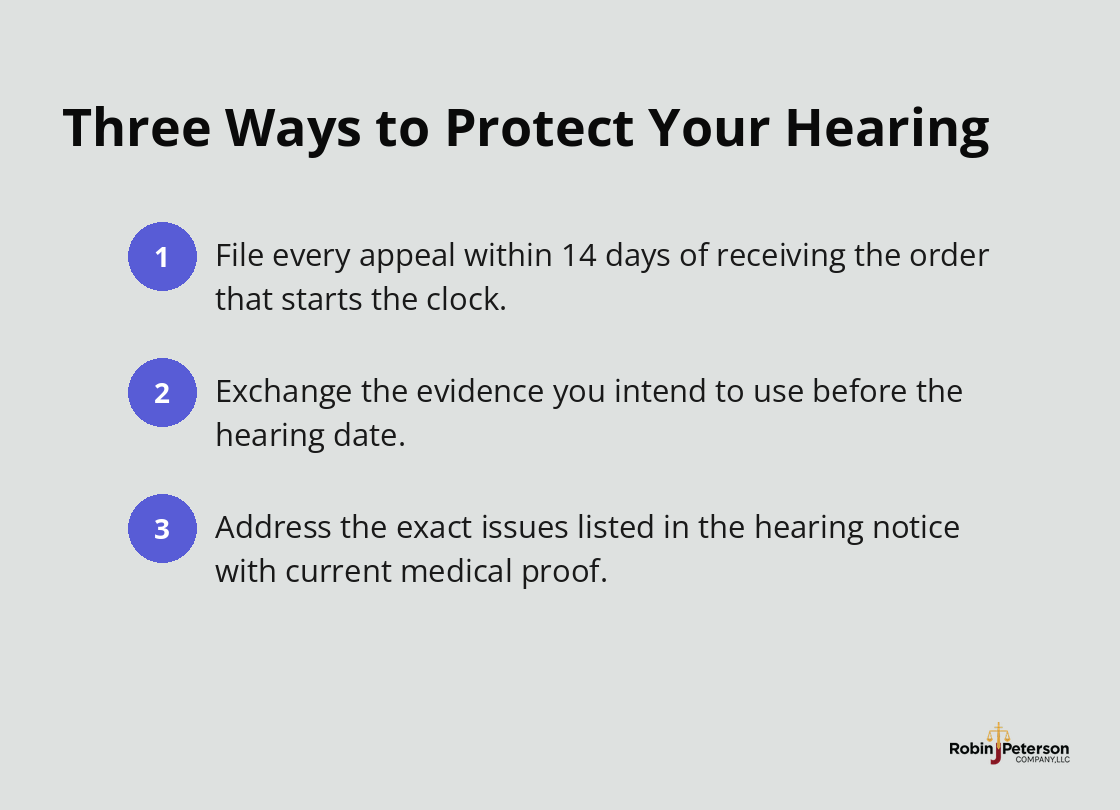
Another common problem is arriving without exchanging evidence. Commission rules expect parties to share intended hearing evidence beforehand. A hearing officer can still hear the claim, but last-minute records invite continuances and undercut credibility. Equally damaging is treating the hearing like a casual conversation and never addressing the exact issue on the notice, such as allowance of a specific condition, a treatment request, or a compensation question.
Ignoring the Hearing Notice or Skipping Attendance
Attendance is not always mandatory, but it is strongly recommended. If you stay home and the file is thin, the hearing officer may decide against you on the existing record. If you cannot attend, contact the Commission promptly about your options rather than hoping the date will pass without consequence. Emergency and disaster provisions in section 4123.511 can sometimes support deadline relief when a declared emergency made timely filing impossible, but ordinary schedule conflicts do not rewrite the default rules.
Confusing Bureau Claim Handling With Commission Hearings
The Bureau investigates and issues initial orders. The Industrial Commission hears contested matters. Calling the Bureau repeatedly about a dispute that already needs an appeal does not substitute for filing the appeal that places the claim before a district hearing officer. Workers in Cleveland, Akron, Canton, and Independence should read every order for appeal language and act on that language first.
Stopping After One Unfavorable Decision
A district hearing officer denial is not the end of the administrative road. The staff hearing officer level exists because the law guarantees a further administrative appeal when it is filed on time. Some workers assume one hearing settles everything and miss the next fourteen-day window. Others appeal without updating medical proof and repeat the same thin record. Use the time between levels to strengthen the evidence tied to the exact issue still in dispute.
Final Thoughts
An Ohio Industrial Commission hearing is the structured place where contested workers’ compensation issues are decided after a Bureau order is appealed. The process runs from district hearing officer to staff hearing officer and, in some cases, to the Commission itself, with short statutory timelines for hearings and written decisions. Notice, evidence exchange, and fourteen-day appeal deadlines are the practical details that protect your claim as much as the medical story behind it.
If your claim is contested, treat every written order as a clock that has already started. Keep the notice, confirm the issues set for hearing, exchange your evidence, and decide early whether you want representation at the Industrial Commission. Northeast Ohio injured workers who prepare for the hearing that is actually scheduled give themselves the clearest shot at a complete record.
If you are preparing for an Industrial Commission hearing or need to appeal a Bureau or hearing-officer order, contact Robin J Peterson Company, LLC to speak with our team serving Cleveland, Akron, Canton, and Independence. We help injured workers navigate contested Ohio workers’ compensation claims so you can move forward with a practical plan.