
When you’re injured and can’t work, wage loss Ohio benefits help replace the income you’ve lost. These payments exist specifically to support workers during recovery, so you’re not left struggling financially.
We at Robin J Peterson Company, LLC know that navigating the system can feel overwhelming. This guide walks you through what wage loss benefits are, how to calculate them, and how to file your claim successfully.
Understanding Ohio’s Wage Loss System
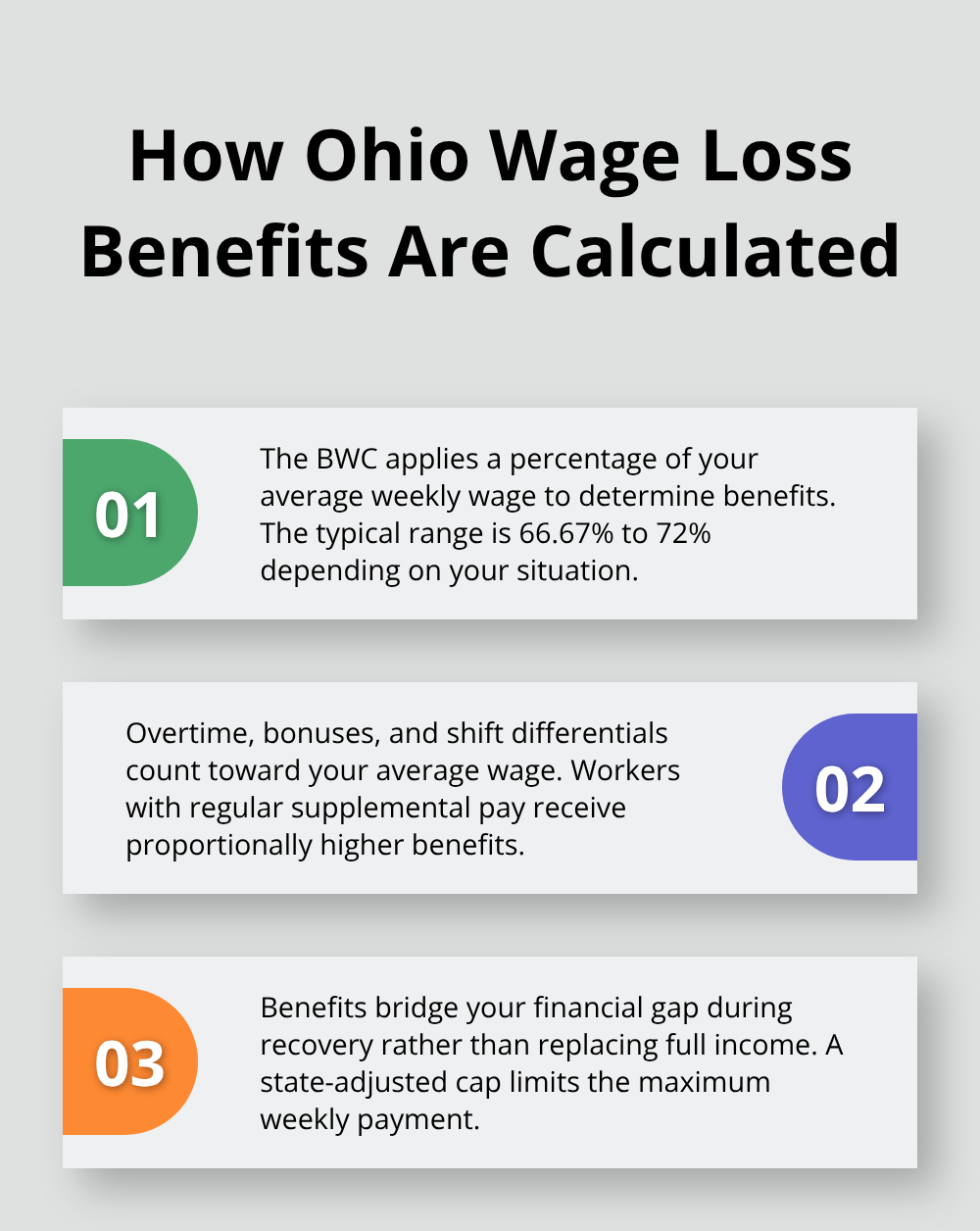
Ohio’s wage loss benefits operate through the Bureau of Workers’ Compensation, which manages a straightforward formula designed to replace a portion of your lost income. The state calculates your weekly benefit rate based on your average weekly wage before the injury, then applies a percentage that typically ranges from 66.67% to 72% of that wage, depending on your situation. This isn’t a one-size-fits-all approach-Ohio recognizes that different workers have different circumstances, and the system accounts for factors like whether you’re partially or completely unable to work. The key principle here is that wage loss benefits exist to bridge the financial gap while you recover, not to replace your entire income.
How the state determines your eligibility
To qualify for wage loss benefits in Ohio, you must have a compensable work injury recognized by the BWC and proof that the injury prevents you from earning your full pre-injury wage. The BWC requires medical documentation showing your restrictions, along with evidence that you’ve actually lost income as a result. If you returned to work at a reduced capacity or lower-paying position, you still qualify for wage loss benefits covering the difference between what you earned before and what you earn now. Self-employed workers and those in certain occupations face different eligibility criteria, so your specific employment status matters significantly. The state also imposes time limits on wage loss benefits-temporary total disability typically extends for up to 200 weeks, though vocational rehabilitation can extend this period in some cases.
What impacts your actual benefit calculation
Your pre-injury average weekly wage forms the foundation of everything else, and the BWC calculates this by examining your earnings for the 52 weeks before your injury occurred. If you worked less than a full year, the state uses the time you did work to establish an average. Overtime, bonuses, and shift differentials count toward your average wage, which means higher earners receive proportionally higher benefits. The maximum weekly benefit rate in Ohio is adjusted annually to reflect wage growth, and as of 2026, injured workers cannot receive benefits exceeding this state-determined cap. Your actual weekly payment also depends on whether you’re deemed totally unable to work or partially disabled, with the latter resulting in lower weekly amounts that reflect your reduced earning capacity.
Moving forward with your claim
Understanding these calculations helps you prepare for what comes next. The filing process requires specific documentation and a clear understanding of what the BWC needs from you to process your claim successfully.
How Your Weekly Benefit Gets Calculated
The BWC uses a formula that starts with your average weekly wage from the 52 weeks before your injury. If you earned $1,200 per week, the state applies a percentage between 66.67% and 72% depending on your circumstances, resulting in a weekly benefit that typically falls between $800 and $864. This calculation sounds simple, but the details matter significantly. The BWC includes overtime, bonuses, and shift differentials in your average wage calculation, which means workers in trades or positions with regular supplemental pay receive higher benefits. If you worked less than 52 weeks before injury, the state averages what you did earn. The maximum weekly benefit rate adjusts annually for wage growth, and as of 2026, the cap limits how high your weekly payment can go regardless of your pre-injury earnings.
Permanent versus temporary benefits operate on completely different timelines
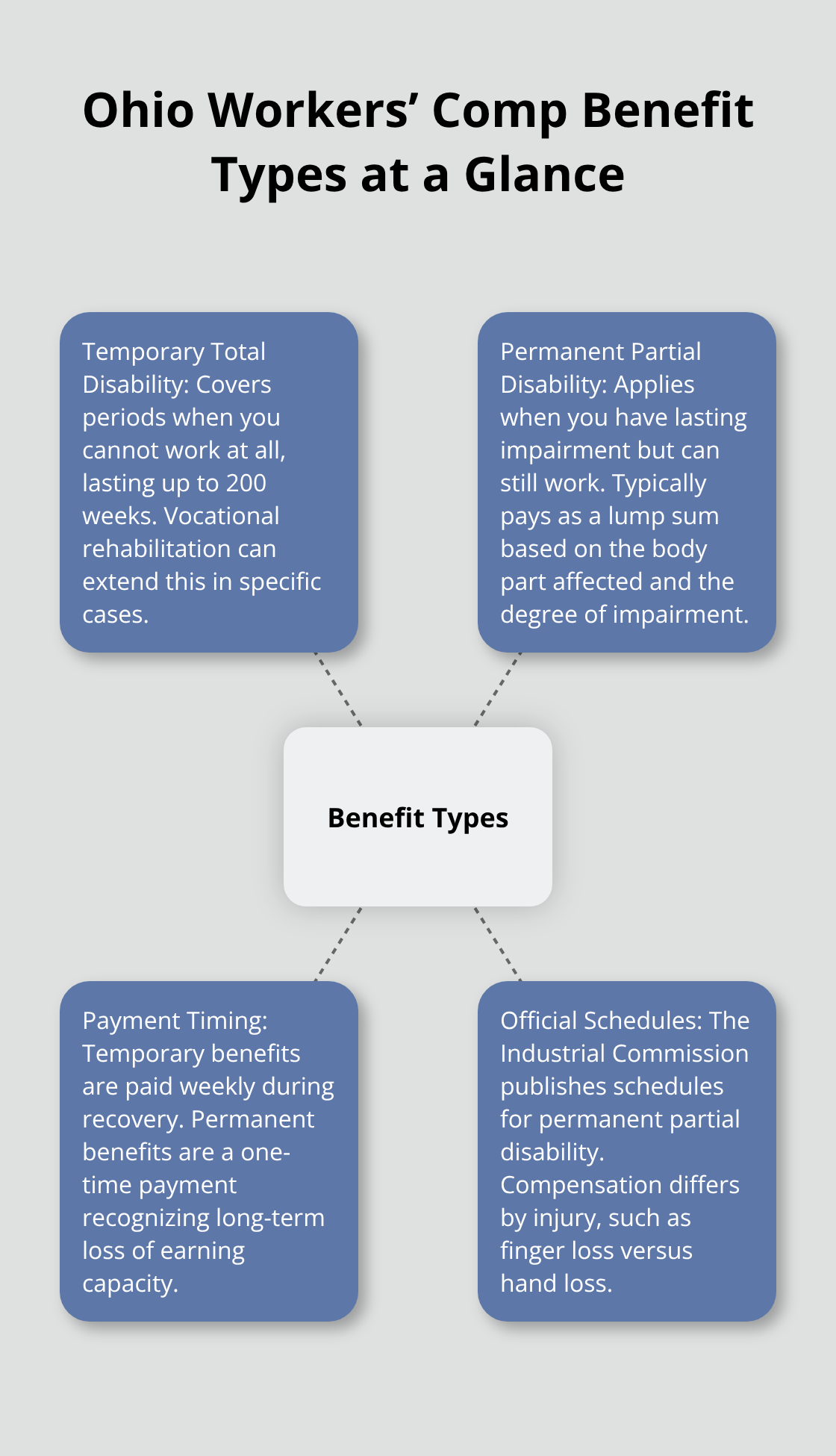
Temporary total disability covers the period when you cannot work at all and lasts up to 200 weeks, though vocational rehabilitation can extend this in specific cases. Permanent partial disability applies when you sustain lasting impairment but can still work, and this benefit typically pays out as a lump sum based on the body part affected and the degree of impairment. The distinction matters enormously because temporary benefits continue weekly throughout your recovery, while permanent benefits represent a one-time payment recognizing your long-term loss of earning capacity. Ohio’s Industrial Commission of Ohio publishes specific schedules showing how much permanent partial disability pays for different injuries-a finger loss differs significantly from a hand loss in terms of compensation.
Some workers receive both types of benefits sequentially, collecting temporary payments during active recovery and then permanent benefits once their condition stabilizes.
Your actual earnings after returning to work shape ongoing payments
If you return to work at reduced capacity or in a lower-paying position, wage loss benefits continue covering the income gap between your previous earnings and current earnings. The BWC calculates this gap monthly based on your actual reported wages, which means your benefit fluctuates if your work hours or position changes. Injured workers often make mistakes here by not reporting wage changes promptly to the BWC, resulting in overpayments they later owe back. If you secure vocational training and transition to a new field at lower pay, wage loss benefits can continue until you reach age 65 or until the 200-week period expires, whichever comes first. Documenting your current earnings carefully throughout your recovery protects you from benefit disputes and ensures accurate ongoing payments.
What happens when you file your claim
The filing process requires you to submit specific documentation to the BWC, and understanding what the agency needs from you helps you avoid delays and rejections. Your medical records, wage statements, and employment verification form the foundation of a successful claim.
Filing Your Wage Loss Claim With the BWC
Starting your wage loss claim with the Ohio Bureau of Workers’ Compensation requires more than submitting paperwork and hoping for approval. The quality and completeness of your initial submission determines whether your claim moves smoothly through the system or faces delays for months while the BWC requests additional information. The process begins when you or your employer reports your work injury to the BWC, but this initial report only forms the foundation. You must then file your own claim for wage loss benefits, which involves completing Form C-97 and submitting it along with medical documentation that establishes your work restrictions. The BWC requires proof that your injury is compensable under Ohio law, meaning it arose out of and in the course of your employment. Medical records should include your diagnosis, treatment records, and most importantly, clear statements from your healthcare provider about what work activities you cannot perform. Many injured workers submit incomplete medical documentation expecting the BWC to follow up with their doctors, but the agency processes thousands of claims monthly and won’t chase down missing information if your initial submission lacks detail. Your wage history matters equally, so gather your last two years of pay stubs and tax returns to establish your average weekly wage accurately. The BWC has 28 days from receiving your complete claim to make a determination, though this timeline extends significantly when documentation is incomplete. File your claim as soon as your doctor confirms you cannot work at full capacity, not weeks later when memory fades about your pre-injury earnings and job duties.
Documentation That Actually Matters for Approval
The BWC wants three specific categories of evidence: proof of your compensable injury, evidence of wage loss, and medical support for your work restrictions. Your medical records must come from licensed healthcare providers and should explicitly state functional limitations rather than just listing diagnoses. A doctor’s note stating you cannot lift more than ten pounds carries far more weight than a note saying you have a shoulder injury. Wage documentation includes pay stubs showing your earnings for the 52 weeks before injury, tax returns for self-employed workers, and written statements from your employer confirming your average hours and pay rate. The BWC cross-references employer records with what you submit, so discrepancies create delays and investigations. If you worked multiple jobs before injury, include documentation from all employers since the BWC calculates your average weekly wage across all employment. Employment verification letters stating your job title, duties, and wage rate help establish what work you could and could not perform after injury. Many workers overlook this step and later struggle to prove they actually lost income because their wage documentation doesn’t clearly show what they earned before.
Mistakes That Derail Claims and Cause Delays
The most damaging error involves inconsistent statements about your ability to work. If you tell your doctor you cannot work but post social media content showing you performing physical activities, the BWC uses this against you during their investigation. The agency employs investigators who follow claimants and document everything. Another frequent mistake is failing to report wage changes promptly. If you return to part-time work or take a lower-paying job, you must report your actual earnings to the BWC within the required timeframe so they can adjust your benefits accordingly. Workers who hide earnings or delay reporting face overpayment demands and potential fraud investigations. Additionally, many injured workers assume the BWC will automatically process their claim without follow-up, then miss deadlines for submitting requested information.
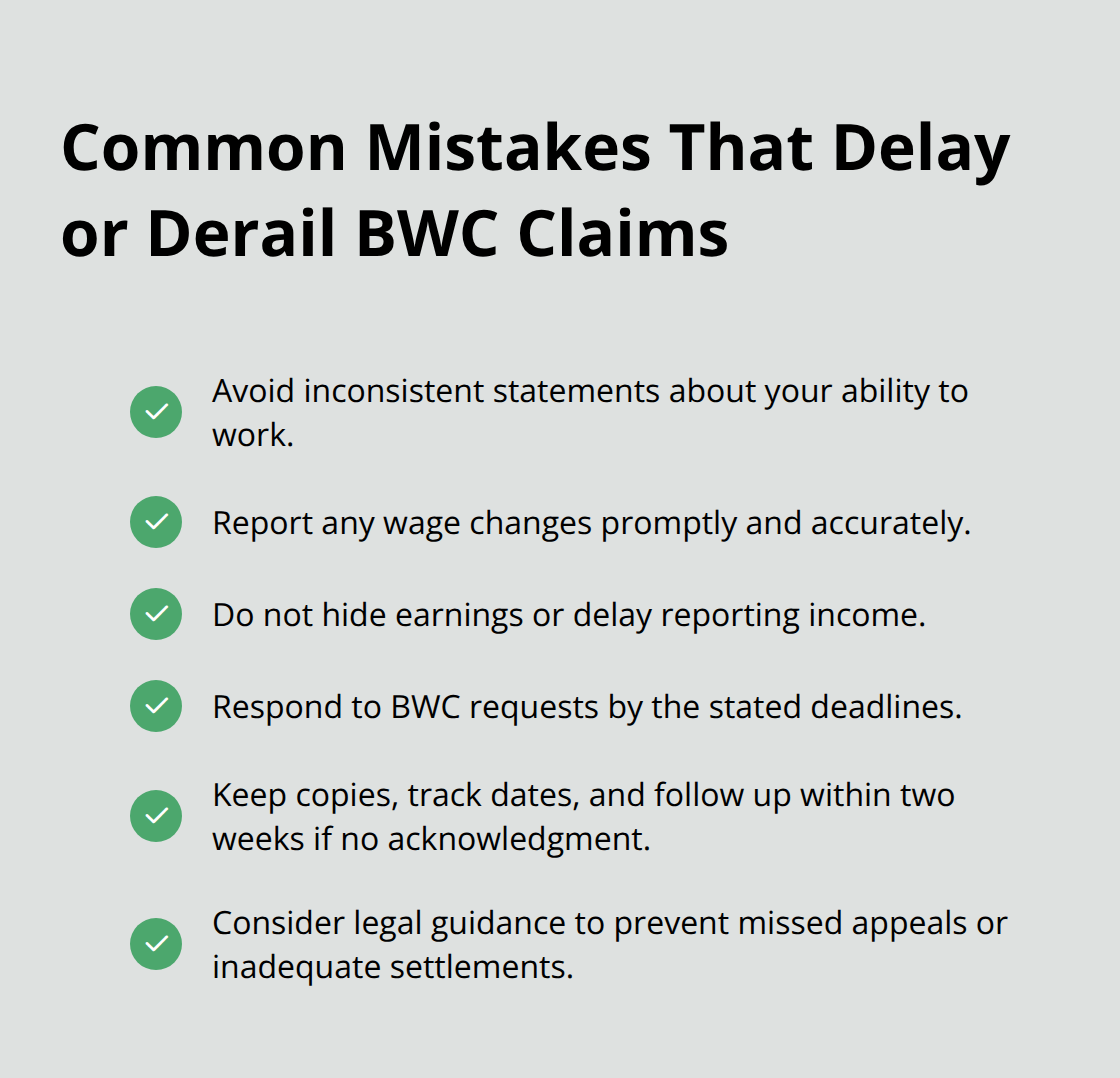
The agency sends notices requesting additional documentation, and if you don’t respond within the specified timeframe, they may deny your claim. Keep copies of everything you submit, track submission dates, and follow up if you don’t receive acknowledgment within two weeks. Attempting to handle a complex claim without legal guidance leaves you vulnerable to accepting inadequate settlements or missing opportunities to appeal denials.
Final Thoughts
Wage loss Ohio benefits replace income you lost due to a work injury, and understanding how they work puts you in control of your recovery. The system calculates your weekly payments based on your pre-injury earnings, typically replacing between 66.67% and 72% of what you earned before. Your actual benefit amount depends on complete medical documentation showing your work restrictions and accurate wage records spanning the 52 weeks before your injury.
Filing your claim successfully requires submitting detailed medical records, employment verification, and wage documentation to the Ohio Bureau of Workers’ Compensation. The BWC processes thousands of claims monthly, and incomplete submissions face significant delays. Common mistakes like inconsistent statements about your work capacity, failing to report wage changes, or missing documentation deadlines can derail your claim or result in overpayment demands.
If you haven’t filed yet, gather your medical records and wage documentation immediately and submit your claim to the BWC. If your claim was denied or you received an inadequate benefit determination, you have the right to appeal. Robin J. Peterson Company, LLC represents injured workers throughout Ohio’s Cleveland, Akron, and Canton areas, fighting to secure the benefits you’re entitled to from the BWC.