
Construction site injuries in Ohio happen more often than many workers realize, and when they do, knowing your rights becomes essential. We at Robin J Peterson Company, LLC understand the confusion and stress that follows a workplace accident on the job site.
This guide walks you through the types of injuries you might face, what protections Ohio law provides, and the concrete steps to take after an incident occurs.
Types of Construction Site Injuries in Ohio
Falls from Heights and Scaffolding
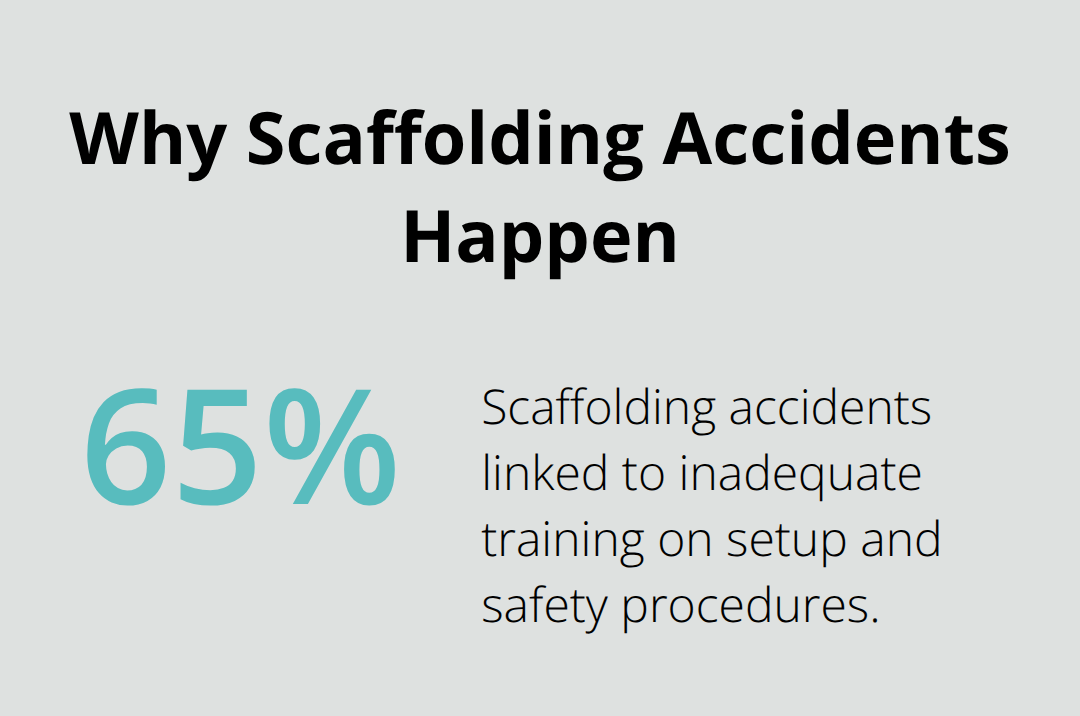
Falls from heights remain the leading cause of construction deaths in Ohio, with the Centers for Disease Control and Prevention reporting that falls account for roughly one-third of all construction fatalities nationwide. On Ohio job sites, workers fall from scaffolding, ladders, roofs, and elevated platforms regularly, and many of these incidents result in spinal injuries, broken bones, or head trauma that changes lives permanently. Scaffolding collapses occur when equipment isn’t properly secured or inspected, and OSHA data shows that nearly 65 percent of scaffolding accidents happen because workers lack adequate training on setup and safety procedures.
Equipment and Machinery Accidents
Machinery and equipment accidents pose equally serious threats on construction sites. Unguarded rotating equipment, malfunctioning safety devices, and inadequate lockout-tagout procedures cause workers to lose fingers, hands, and arms every year across Ohio construction sites. Trenching and excavation work presents crushing hazards when walls collapse without proper shoring, and these incidents often occur in seconds with little warning.
Electrocution and Electrical Hazards
Electrocution hazards on construction sites stem from contact with overhead power lines, damaged cords, wet conditions, and inadequate grounding. The Occupational Safety and Health Administration identifies electrocution as one of the four leading causes of construction worker deaths, and Ohio sees consistent incidents where workers contact live electrical sources while using power tools or working near energized lines.
Why Multiple Hazards Compound the Risk
Construction workers in Ohio face exposure to multiple hazards simultaneously on most job sites. A worker might be at height, near electrical equipment, and operating machinery all in the same shift, multiplying the risk of catastrophic injury. Many construction companies cut corners on safety training and equipment maintenance to save costs, and workers absorb the consequences.
Understanding Your Injury and Your Next Steps
The specific type of injury you sustain matters significantly because it determines what compensation you can pursue and what documentation you’ll need to support your claim. Understanding which hazard caused your injury helps establish liability and strengthens your position as you move forward with your workers’ compensation claim.
What Protections Does Ohio Law Give You After a Construction Injury
Ohio’s Workers’ Compensation System Protects You
Construction workers in Ohio operate under the state’s workers’ compensation system, which provides no-fault coverage through the Ohio Bureau of Workers’ Compensation. This means you can receive benefits regardless of who caused the accident, as long as the injury happened during employment on an Ohio job site. The BWC covers medical treatment, rehabilitation services, and wage replacement benefits if you cannot work. However, the system has strict timelines and requirements that workers often miss, which is why understanding the process matters before you file.
Critical Deadlines You Cannot Miss
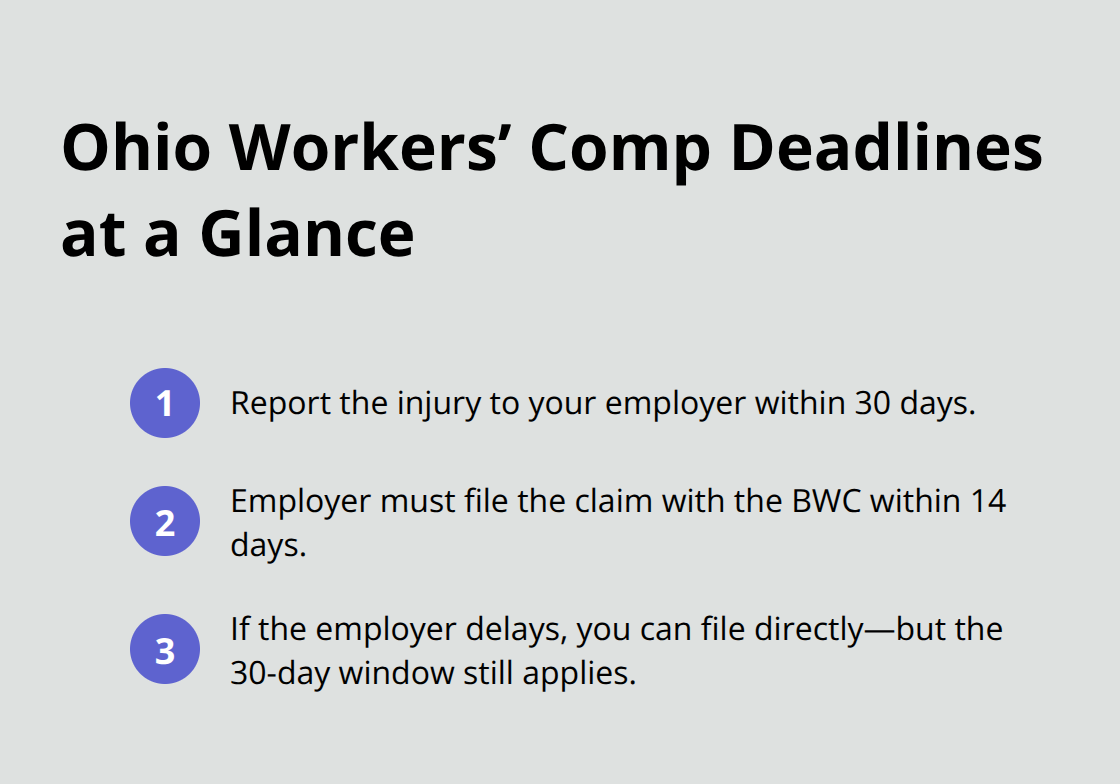
You have 30 days from the date of injury to report the incident to your employer, and failing to meet this deadline can jeopardize your entire claim. Your employer must then file the claim with the BWC within 14 days of learning about the injury. If your employer delays or refuses to report the injury, you can file directly with the BWC yourself, but the clock is still ticking on your 30-day window.
Who Qualifies for BWC Benefits
Eligibility for BWC benefits requires that you were working as an employee in Ohio when the injury occurred, which excludes independent contractors and self-employed individuals in most cases. Once your claim is accepted, the BWC pays for all necessary medical treatment related to your injury without deductibles or copays, and you receive wage replacement at two-thirds of your average weekly wage if you miss work.
Documentation Determines Your Claim’s Strength
The BWC will request medical records, incident reports, witness statements, and proof of your employment and wages. Gathering evidence immediately after the injury strengthens your position significantly. Take photographs of the accident scene, equipment involved, and any hazardous conditions present. Collect contact information from coworkers who witnessed the incident, as their statements corroborate your account when the BWC investigates your claim. This documentation becomes your foundation as you move forward with filing your claim and protecting your rights.
What to Do Immediately After Your Injury
Your actions in the first hours and days following a construction site injury directly determine whether you receive full benefits or face claim denials. Medical documentation created immediately after the injury becomes your most powerful evidence, so you must seek treatment before anything else.
Secure Medical Care Right Away
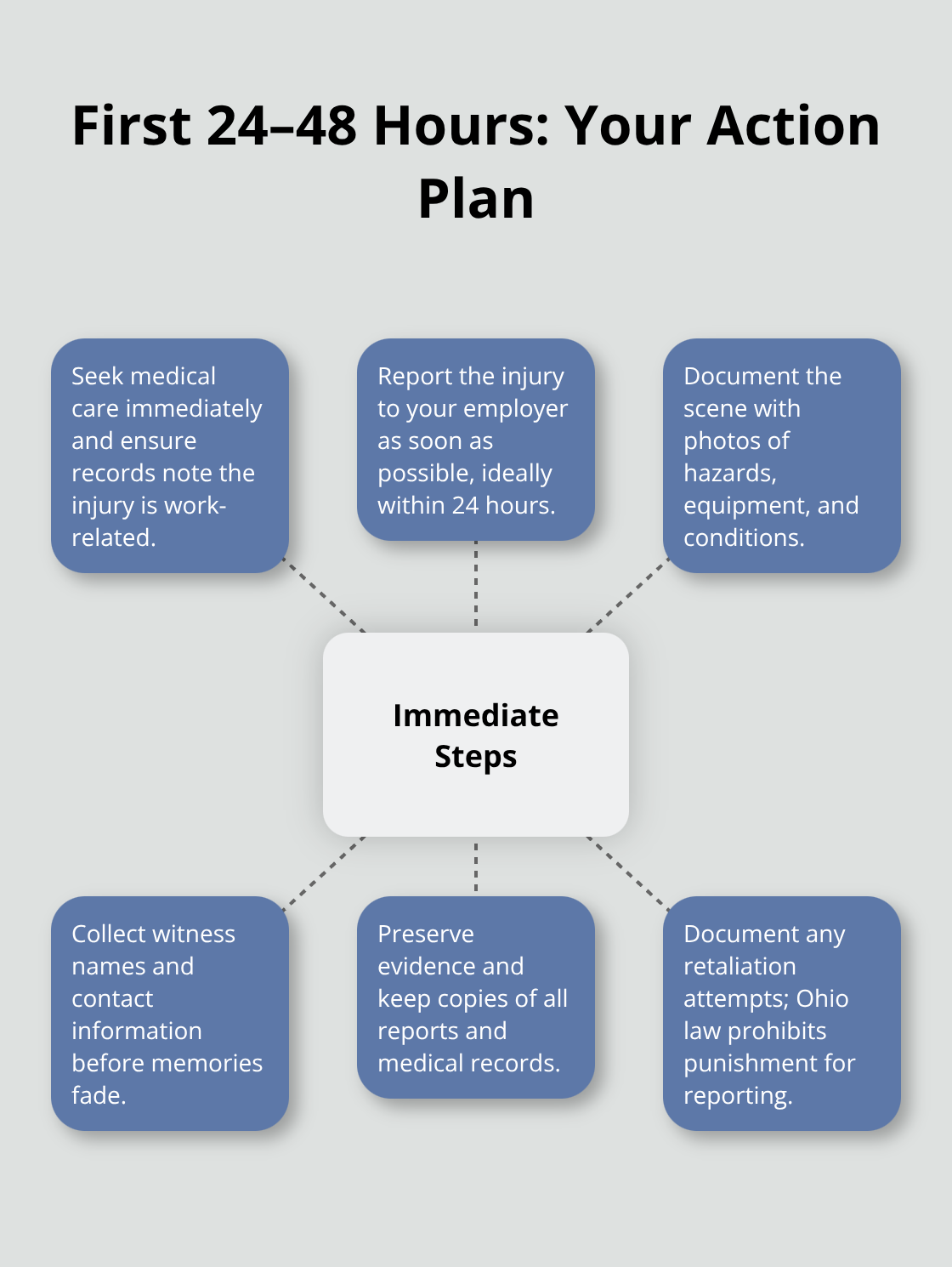
Go to an emergency room, urgent care facility, or your primary care physician and describe exactly what happened and which body parts were injured. Tell the medical staff this was a work-related injury and request that they document this explicitly in your medical records, because the BWC relies on these records to establish the connection between your injury and your employment. Do not wait to see if the pain subsides or if you feel better the next day. Construction injuries that seem minor often develop serious complications within 48 hours, and delaying treatment gives insurers ammunition to claim your injury wasn’t as severe as you reported.
Report the Injury to Your Employer
Contact your employer and report the injury verbally as soon as possible, ideally within 24 hours even though you technically have 30 days. Follow up with a written report via email or text message that states the date, time, location, and nature of the injury. Your employer must file the BWC claim within 14 days of learning about the injury, and having written proof of when you reported it protects you if your employer tries to delay or bury the report.
Document the Accident Scene and Conditions
Photograph the accident scene from multiple angles, capturing the equipment involved, hazardous conditions, and the exact location where the injury occurred. Take photos of any damaged machinery, missing safety guards, wet surfaces, or equipment failures that contributed to the incident (these images provide concrete evidence that the BWC cannot dispute). Collect the names, phone numbers, and email addresses of every coworker present at the time, and ask them what they saw before their memories fade. These witness statements carry enormous weight with the BWC because they come from neutral parties who have no stake in the outcome.
Protect Yourself Against Retaliation
If your employer pressures you to keep quiet or suggests you shouldn’t report the injury, that retaliation is illegal under Ohio law and strengthens any future claim you might pursue. Ohio protects workers who report injuries, and employers cannot fire, demote, or punish you for filing a legitimate workers’ compensation claim. Document any retaliation attempts in writing, just as you documented your initial injury report.
Final Thoughts
Construction site injury in Ohio leaves workers facing medical bills, lost wages, and uncertainty about their future. The steps outlined in this guide protect your rights, but navigating the BWC system alone often means missing deadlines, submitting incomplete documentation, or accepting settlements far below what you deserve. Insurance companies and employers have legal teams working against your interests, and you need experienced representation to level the playing field.
We at Robin J Peterson Company, LLC represent injured construction workers throughout Ohio, fighting for the benefits and compensation you’re entitled to under state law. Our firm focuses exclusively on workers’ compensation cases, which means we understand the BWC’s tactics, the deadlines that matter, and the documentation that strengthens your claim. We’ve handled construction injuries across Cleveland, Akron, and Canton, and we know how employers and insurers operate in your industry.
When you work with us, we handle the paperwork, communicate with the BWC, and challenge denials that should never happen. We gather evidence properly, interview witnesses before their memories fade, and build cases that force the system to pay what it owes. Contact us today to discuss your construction site injury in Ohio and learn what benefits you can pursue-your initial consultation costs nothing, and we only get paid if we win your case.