
Workplace injuries in Ohio can leave you confused about what happens next. At Robin J Peterson Company, LLC, we’ve helped countless injured workers understand their Ohio workplace injury rights and navigate the system.
This guide walks you through everything from filing your initial claim to appealing a denial. You’ll learn what the Bureau of Workers’ Compensation actually covers and when legal representation makes the difference.
What Ohio Workers’ Compensation Actually Covers
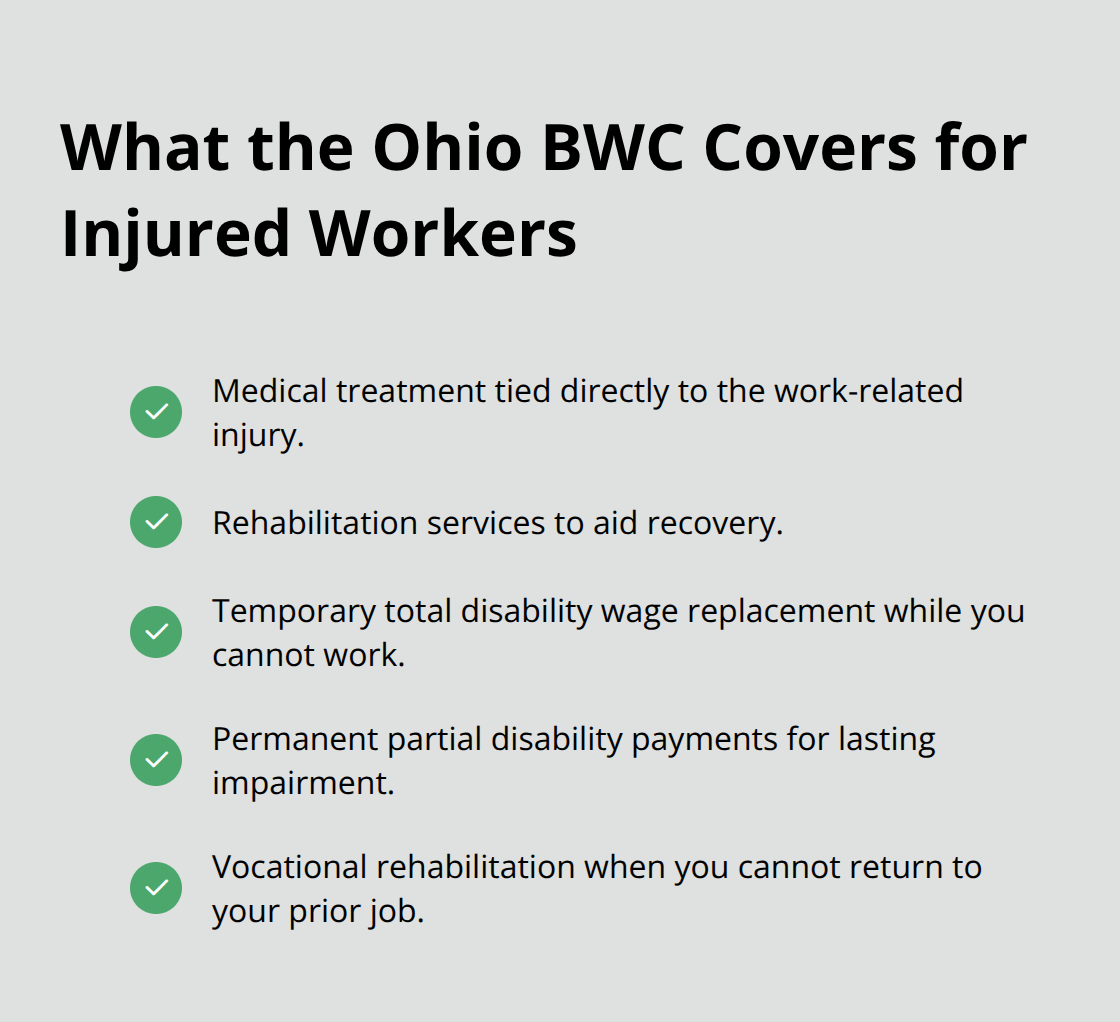
The Ohio Bureau of Workers’ Compensation covers medical treatment, rehabilitation services, and wage replacement benefits when you suffer a work-related injury. Medical coverage includes hospital visits, surgery, physical therapy, and medication directly tied to your injury. Wage replacement, called temporary total disability, pays a percentage of your lost wages while you’re unable to work.
If your injury results in permanent disability, you receive permanent partial disability payments based on the body part affected and the extent of impairment. The BWC also covers vocational rehabilitation if your injury prevents you from returning to your previous job. However, the BWC does not cover injuries that occurred outside of work, self-inflicted injuries, or injuries resulting from intoxication.
Common Misconceptions About BWC Coverage
Many injured workers believe the BWC automatically covers all workplace injuries. This assumption leads to problems. Your employer must report the injury within specific timeframes, and you must also report it to your employer within the required window. According to the Ohio Bureau of Workers’ Compensation, claims must typically be filed within one year of the injury date, though some exceptions exist for occupational diseases that develop over time.
Your Rights Under Ohio Law
Ohio Revised Code Section 4123.56 grants you the right to an independent medical examination if you disagree with the BWC’s assessment of your condition. This is a powerful tool that many injured workers overlook. You can request a second opinion from a physician of your choice, and the BWC must consider this evaluation in their decision-making.
You also have the right to appeal any BWC decision through the Industrial Commission of Ohio. The appeal process typically takes several months, and legal representation significantly improves your chances of success. Ohio law prohibits retaliation against employees who file workers’ compensation claims, but this protection only applies if you’ve followed proper reporting procedures.
Access to Your Medical Records and Evidence
Your access to medical records and claim files represents another critical right. The BWC must provide these documents upon request, allowing you to review what evidence they’re using to make decisions about your case. Many injured workers don’t realize they can challenge the BWC’s findings if new medical evidence emerges after an initial decision (meaning your case isn’t necessarily closed even after a denial).
Understanding these specific rights transforms how injured workers approach their claims. The next section walks you through the actual steps you need to take when filing your claim with the BWC.
Filing Your Claim and Moving Through the BWC System
Report Your Injury Immediately
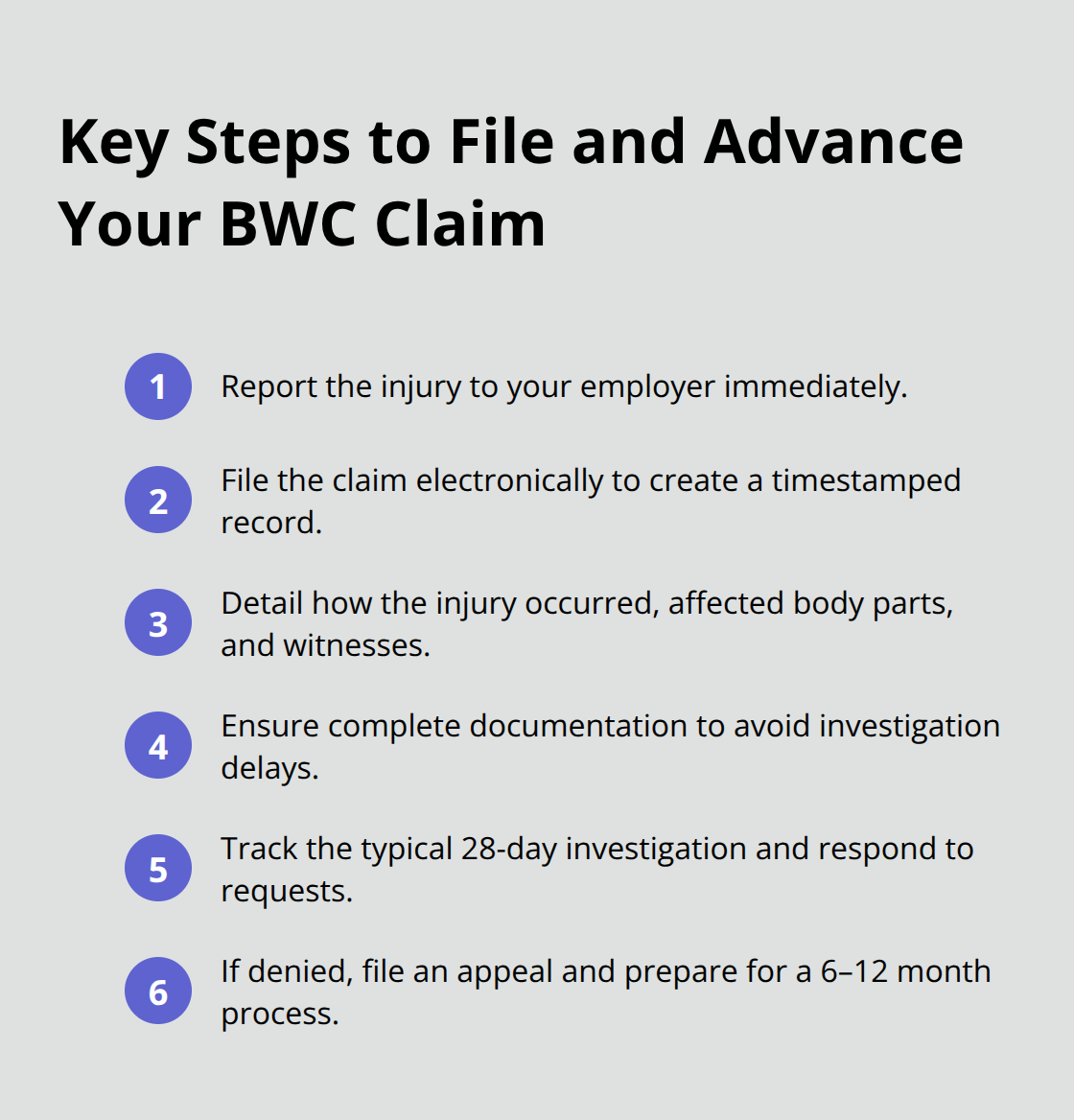
You must report your injury to your employer as soon as possible, ideally within the same shift or work day. Ohio law doesn’t specify an exact deadline for this initial report, but delays weaken your position if disputes arise later. Your employer then has 10 days to file a claim with the Bureau of Workers’ Compensation, though many employers file within 24 hours. You can also file directly with the BWC yourself if your employer fails to report the injury.
File Your Claim with the BWC
The BWC website allows electronic filing, which creates a documented timestamp of your claim submission. When filing, provide detailed information about how the injury occurred, the body parts affected, and any witnesses present. Missing details at this stage often resurface as problems during the investigation phase. Precision in your initial filing prevents complications later.
Understand the Investigation and Review Period
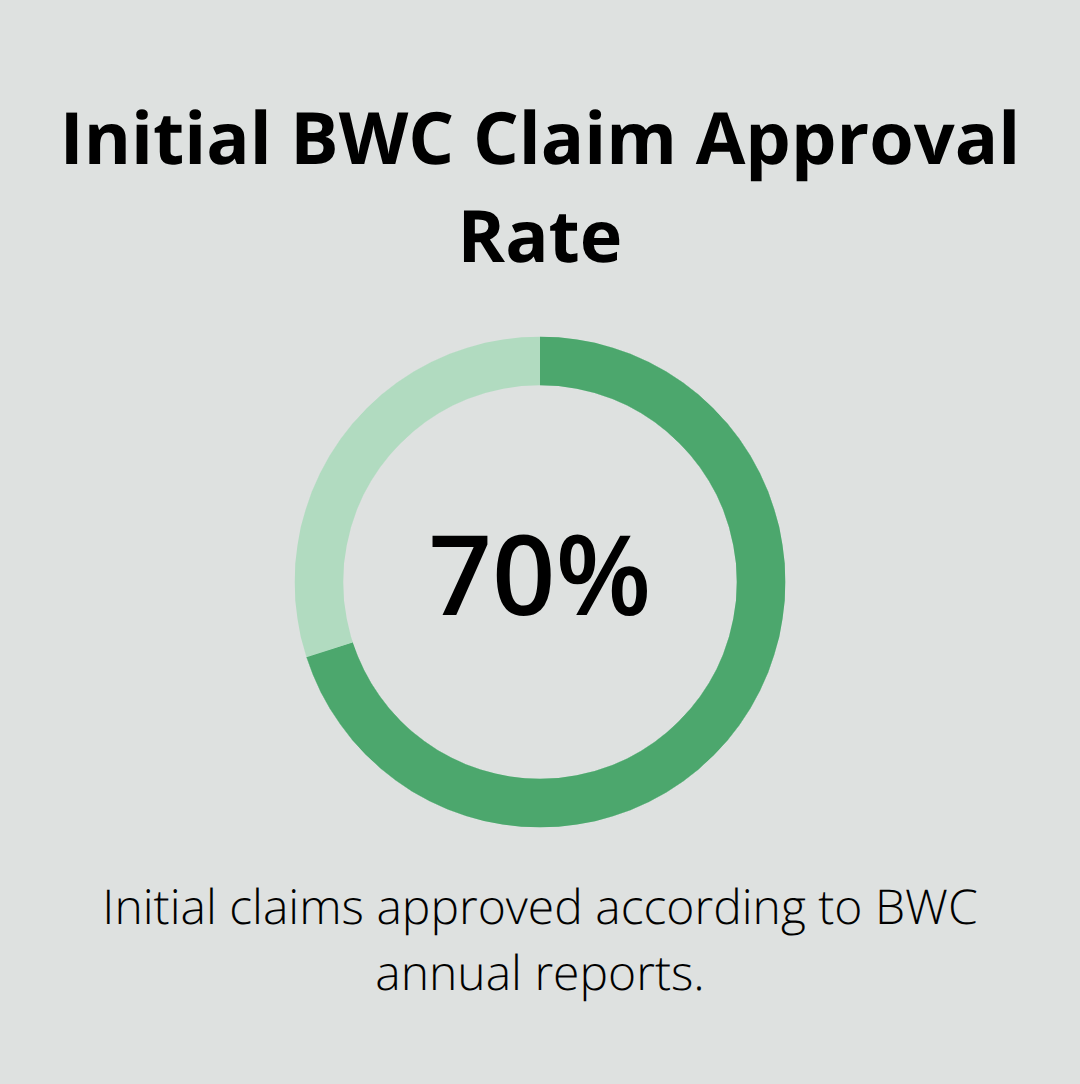
Once the BWC receives your claim, they enter an investigation and review period that typically lasts 28 days. During this time, the BWC examines medical records, employer reports, and your account of the incident. They may request additional documentation or order a medical examination to verify your injury. The BWC approves roughly 70 percent of initial claims according to their annual reports, but this varies significantly by injury type and occupation.
Navigate a Claim Denial Through Appeal
If the BWC denies your claim, you have appeal rights through the Industrial Commission of Ohio, which operates as an independent judicial body separate from the BWC. The Commission receives hundreds of appeals monthly, and cases typically proceed through a hearing before a staff hearing officer. The hearing process can take 6 to 12 months from filing your appeal to receiving a decision. At this stage, legal representation becomes invaluable because the Commission applies strict procedural rules and expects well-organized evidence presentation (an attorney familiar with Commission procedures significantly strengthens your position).
Secure Professional Advocacy for Your Case
The complexity of BWC denials and appeals demands experienced guidance. An attorney who understands Ohio workers’ compensation law can identify weaknesses in the BWC’s reasoning and present compelling evidence to the Commission. The difference between representing yourself and having skilled legal counsel often determines whether you receive the benefits you deserve. When you face a denial, your next step involves understanding exactly why the BWC rejected your claim and what evidence you need to overturn that decision.
When Should You Hire an Attorney for Your Claim
Act Before the BWC Denies Your Claim
Waiting until after the BWC denies your claim to seek legal help is a costly mistake. Consult with an attorney immediately after filing your initial claim, particularly if your injury is severe or your employer disputes the incident. An attorney reviews your claim before submission to identify missing documentation or weak points in your narrative. This preventative approach catches problems that could trigger a denial months later.
The BWC’s initial approval rate of 70 percent masks significant variation by injury severity and industry, meaning certain injuries face much higher denial rates. An attorney familiar with denial patterns in your occupation strengthens your filing from the start, addressing predictable objections before they become formal rejections.
Understand Why Representation Changes Appeal Outcomes
The appeal process through the Industrial Commission of Ohio heavily favors represented claimants. When injured workers represent themselves, they often misunderstand procedural rules, fail to present evidence in the required format, or miss critical deadlines that result in automatic dismissal. The Commission requires specific documentation organization, proper witness preparation, and strategic medical evidence presentation.
Represented claimants succeed in overturning denials at significantly higher rates than unrepresented claimants because attorneys understand how staff hearing officers evaluate cases and what evidence they find most persuasive. An attorney also handles all communication with the BWC and Commission, eliminating the confusion that often occurs when injured workers attempt to navigate formal proceedings alone.
Navigate Procedural Complexity With Professional Guidance
The difference between a successful appeal and a failed one frequently comes down to procedural competence and strategic case presentation that only experienced legal representation provides. An attorney familiar with Ohio workers’ compensation law identifies weaknesses in the BWC’s reasoning and presents compelling evidence to the Commission. An experienced workers’ compensation attorney based in Ohio with a strong presence in the Cleveland, Akron, and Canton metropolitan areas represents injured workers navigating these exact challenges. The firm’s experience with the Industrial Commission of Ohio helps clients understand what evidence staff hearing officers find most persuasive and how to organize documentation for maximum impact.
Final Thoughts
Your Ohio workplace injury rights protect you from the moment an injury occurs, but only if you understand how to use them. The BWC covers medical treatment, rehabilitation, and wage replacement when you suffer a work-related injury, yet many injured workers miss critical deadlines or file incomplete claims that trigger unnecessary denials. Reporting your injury immediately to your employer, filing with the BWC promptly, and gathering detailed documentation about how the injury happened form the foundation of a strong claim.
The appeal process through the Industrial Commission of Ohio represents your path forward if the BWC initially denies your claim. This process demands procedural precision and strategic evidence presentation that significantly favors represented claimants over those navigating the system alone. Staff hearing officers at the Commission evaluate cases based on specific documentation standards and medical evidence quality, factors that experienced legal representation addresses effectively from the start.
Acting quickly matters more than waiting to see if your claim receives approval. Consult with an attorney immediately after filing your initial claim, particularly for severe injuries or disputed incidents, and you prevent problems that could derail your case months later. Robin J Peterson Company, LLC represents injured workers throughout the Cleveland, Akron, and Canton metropolitan areas, helping clients navigate BWC denials and appeals with experience in the Industrial Commission process.