
A permanent disability diagnosis changes everything, and understanding your permanent disability Ohio rights is the first step toward protecting your future. At Robin J Peterson Company, LLC, we’ve helped countless workers navigate the complex system of ongoing support available to them.
This guide walks you through what permanent disability means under Ohio law, the benefits you’re entitled to, and how to fight for your rights if your claim is denied.
What Permanent Disability Means in Ohio
[TASK_CLASS=ACTIVE]
Permanent disability in Ohio carries a specific legal meaning that directly determines your access to ongoing benefits and support. Under Ohio law, permanent disability indicates your condition will not improve enough for you to return to work, even with medical treatment. The Ohio Bureau of Workers’ Compensation evaluates this through a structured process that examines medical evidence, your work capacity, and functional limitations. The distinction matters significantly because only permanent disabilities qualify for ongoing monthly payments and long-term support, whereas temporary disabilities end once you recover or reach maximum medical improvement. This alignment between state and federal definitions creates consistency in how your case is evaluated, though Ohio applies its own specific criteria on top of these federal standards.
How Ohio Evaluates Your Permanent Status
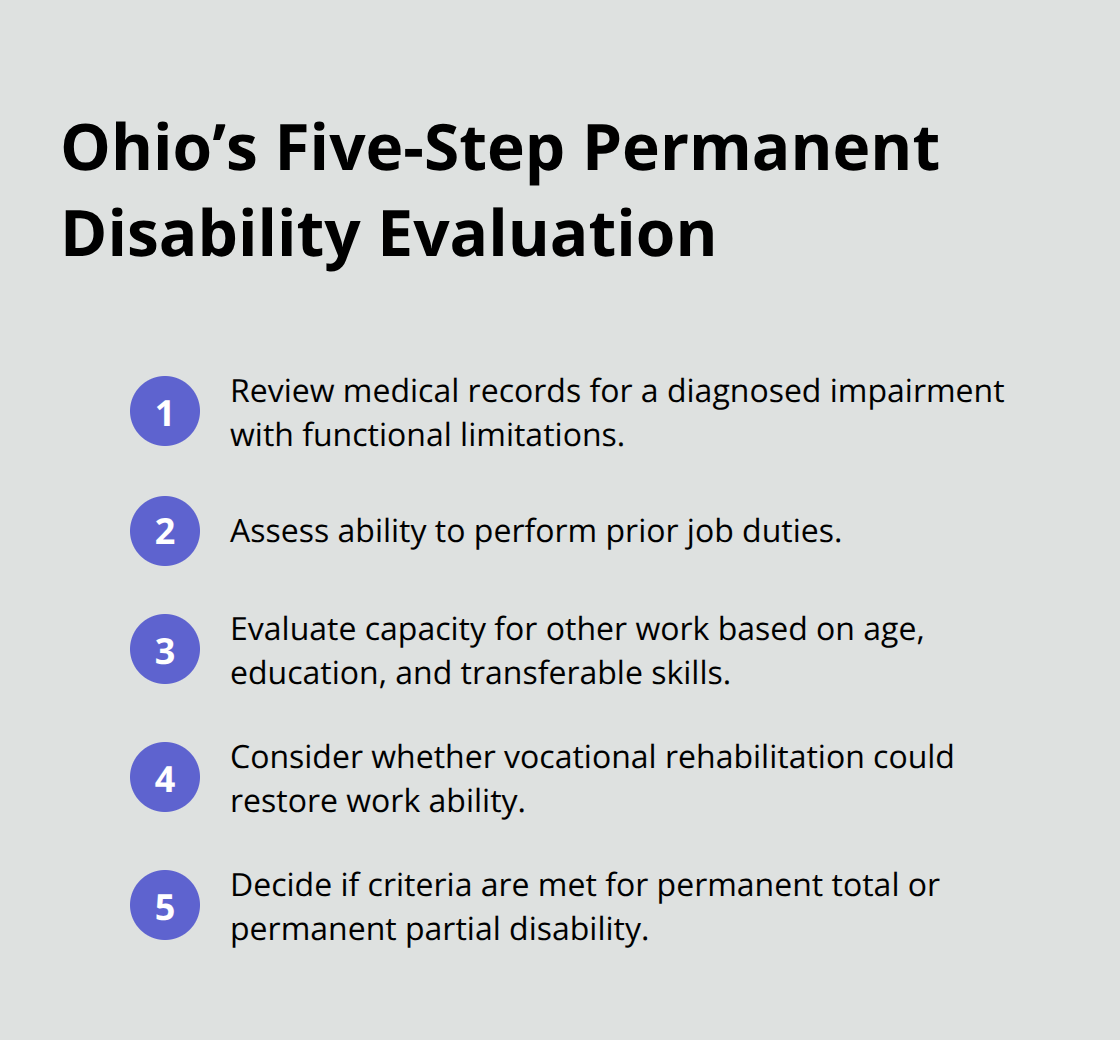
The Ohio Bureau of Workers’ Compensation applies a five-step evaluation process to determine if your disability is permanent. First, they examine your medical records to establish a diagnosed impairment with clear functional limitations. Second, they assess whether your condition prevents you from performing your prior job duties. Third, they evaluate your capacity for other work given your age, education, and transferable skills. Fourth, they consider whether vocational rehabilitation could restore your ability to work. Finally, they determine if your condition meets the criteria for permanent total disability or permanent partial disability. Medical documentation from your healthcare providers proves essential here-vague descriptions of pain or fatigue will not carry the same weight as specific assessments of range of motion, strength, cognitive function, or other measurable limitations.
The Ohio Bureau of Workers’ Compensation reviews your case file thoroughly, and missing or incomplete medical records often lead to denials that prevention with better documentation from the start could have avoided.
Permanent Partial Versus Permanent Total Disability
Ohio recognizes two categories of permanent disability, and understanding the difference directly affects the benefits you receive. Permanent partial disability means you have a lasting impairment that reduces your work capacity but does not completely prevent you from working. This category includes conditions like loss of a limb, permanent scarring, or chronic pain that limits but does not eliminate your ability to earn income. You receive a lump-sum award based on the body part affected and the degree of impairment, calculated using Ohio’s schedule of awards. Permanent total disability, by contrast, means you cannot work in any capacity due to your condition. This status qualifies you for ongoing monthly payments for life, not a one-time settlement. The threshold for permanent total disability is high-the Ohio Bureau of Workers’ Compensation must conclude that no substantial work opportunity exists for you (given your medical condition and vocational factors). Many workers who initially receive permanent partial disability awards later pursue reclassification as permanently totally disabled if their condition worsens or if they demonstrate they cannot find sustainable employment.
What Happens Next in Your Claim
Once the Ohio Bureau of Workers’ Compensation determines your permanent status, your claim moves into the benefits phase. The type of ongoing support you receive depends entirely on whether you qualify for permanent partial or permanent total disability. Understanding this distinction helps you prepare for the next stage of your claim and anticipate what documentation you’ll need to support your case.
What Ongoing Benefits Actually Look Like
Once the Ohio Bureau of Workers’ Compensation classifies your disability as permanent, you enter a fundamentally different phase where your eligibility for ongoing support becomes concrete. If you qualify for permanent total disability, you receive monthly payments for life, adjusted annually through cost-of-living increases determined by the Social Security Administration. These adjustments protect your purchasing power over time, though the base amount depends on your prior earnings and the specific circumstances of your injury.
How Permanent Partial Disability Payments Work
Permanent partial disability awards work differently than permanent total disability. You receive a lump-sum payment calculated from Ohio’s schedule of awards, which assigns specific compensation amounts based on the body part affected and the degree of impairment. The state schedule provides fixed values, so a permanent partial disability award for loss of a finger differs significantly from an award for spinal injury. Beyond cash payments, your permanent disability status opens access to medical benefits through Ohio’s workers’ compensation system, which covers ongoing treatment related to your injury indefinitely.
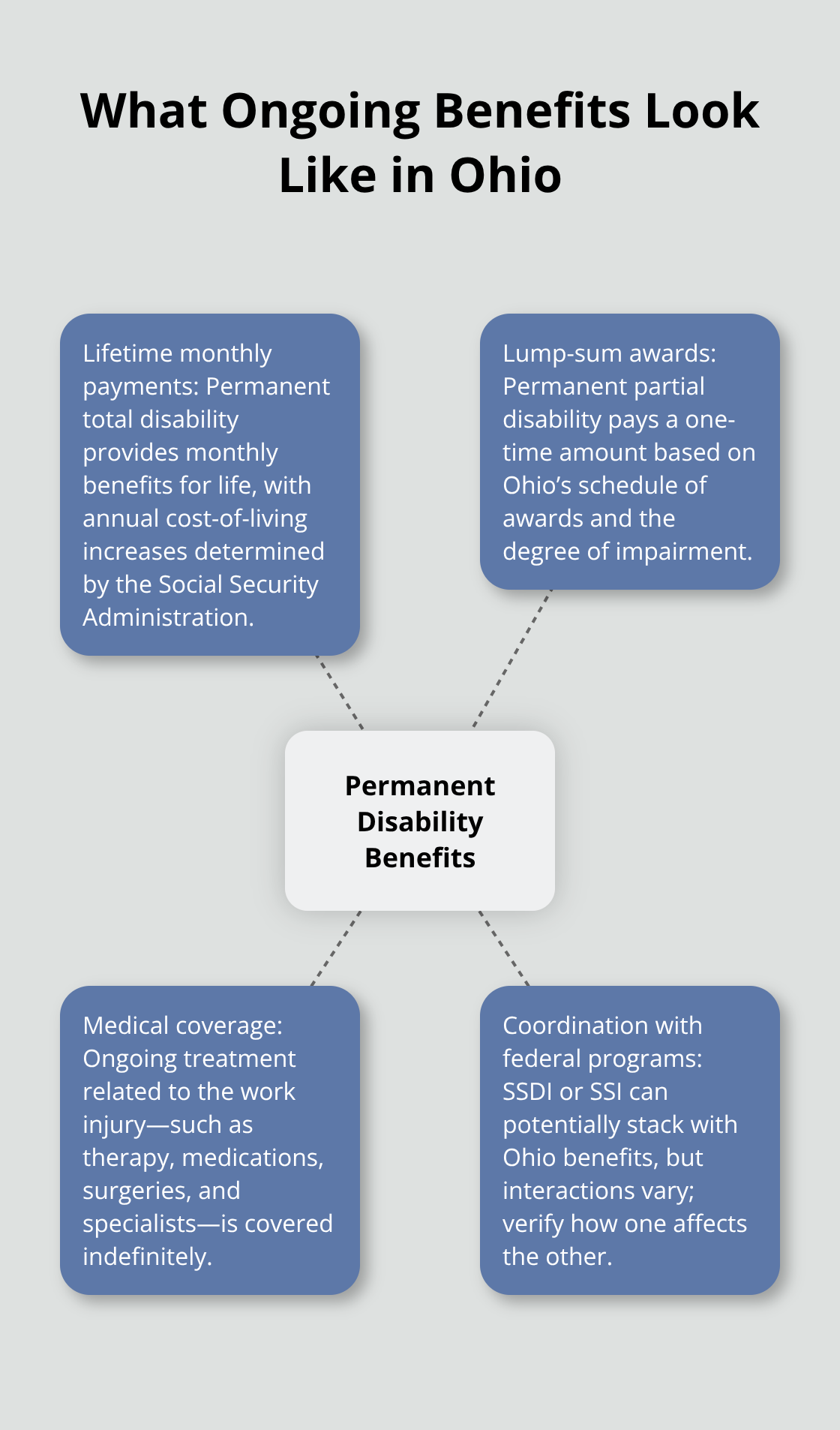
This means physical therapy, medications, surgeries, and specialist consultations remain covered as long as they treat your work-related condition.
Stacking Federal and State Benefits
Federal disability programs like SSDI or SSI operate on different criteria and timelines, so Ohio workers’ compensation benefits and federal programs can potentially stack. You should verify how receiving one affects eligibility for the other, since the interaction between state and federal systems varies based on your specific situation.
What Qualifies You for Permanent Total Disability
Qualifying for permanent total disability requires you to demonstrate that no substantial work opportunity exists for you given your medical condition, age, education, and transferable skills. The Ohio Bureau of Workers’ Compensation does not simply accept your claim that you cannot work-they evaluate vocational factors alongside medical evidence, and this combination determines your classification. If you have significant transferable skills, a younger age, or substantial education, the Bureau may conclude that work remains possible despite your impairment, placing you in permanent partial disability instead.
Building a Strong Medical Record
Medical documentation proves essential to your case. Vague statements about pain carry far less weight than objective measurements of range of motion, strength testing, or cognitive assessments. Healthcare providers should document how your condition prevents you from performing any job type, not just your prior occupation. This specificity directly influences whether the Ohio Bureau of Workers’ Compensation approves your permanent total disability claim or denies it.
Protecting Your Rights During the Claims Process
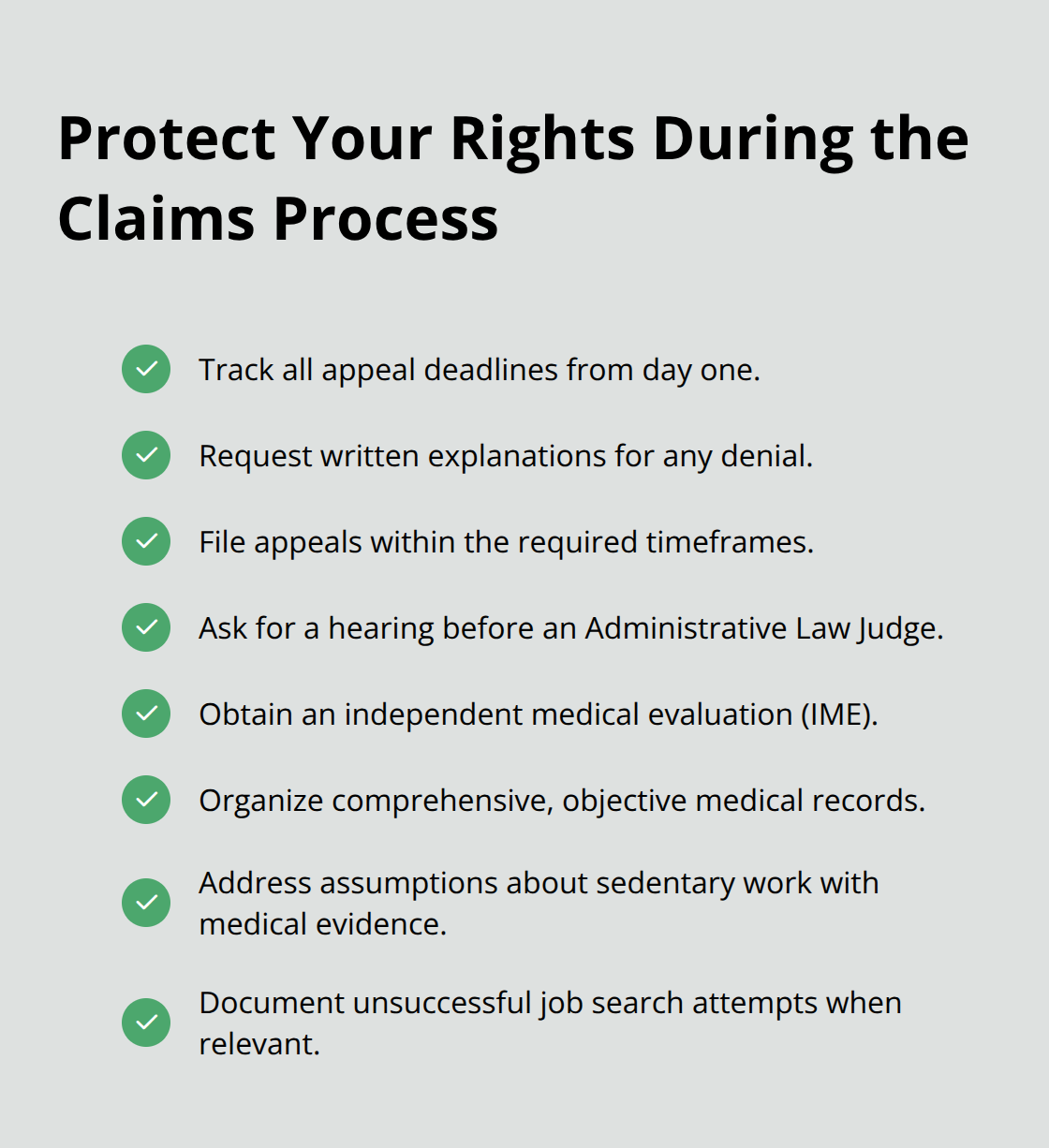
Throughout the claims process, you have rights that protect you from unfair treatment. The Ohio Bureau of Workers’ Compensation must provide written explanations for any denial, you have the right to appeal within specific timeframes, and you can request a hearing before an Administrative Law Judge if your claim is denied. Missing these deadlines eliminates your ability to appeal, so tracking dates carefully from the moment you file your claim protects your rights. You also have the right to obtain independent medical evaluations separate from the Bureau’s examining physicians, and this second opinion can contradict the Bureau’s findings and support your case during an appeal.
If you need guidance navigating these procedures, contact our office to discuss your situation with an experienced attorney.
What Happens When Your Claim Gets Denied
The Ohio Bureau of Workers’ Compensation denies permanent disability claims far more often than most workers expect. According to the Social Security Administration’s data on disability determinations, initial claims face rejection rates that make appeals a standard part of the process rather than an exception. When your claim lands in the denied pile, you have specific windows to act, and missing these deadlines eliminates your right to challenge the decision entirely. The Ohio Bureau of Workers’ Compensation must provide written reasons for any denial, which gives you the roadmap for building your appeal.
Why the Bureau Denies Claims
Common denial reasons fall into predictable patterns: insufficient medical evidence showing your condition prevents all work, medical records that lack objective measurements of your functional limitations, vocational assessments concluding you retain capacity for some type of employment, or documentation gaps that leave your claim incomplete. The Bureau frequently denies claims when medical providers use vague language about your condition instead of specific functional assessments. If your doctor states you have chronic pain but fails to document range of motion testing, strength measurements, or how pain prevents you from performing work tasks, the Bureau treats this as insufficient evidence.
Strengthening Your Appeal Strategy
Your appeal must directly address why the Bureau’s reasons for denial miss the mark. If they concluded you can perform sedentary work, your appeal needs medical evidence explaining why even sedentary positions remain impossible for you. If they determined your medical records were incomplete, your appeal strategy involves submitting comprehensive updated documentation that closes those gaps. Organize all medical records chronologically, obtain detailed statements from your healthcare providers about your functional limitations, and gather documentation of any job search attempts that failed due to your condition.
The Administrative Law Judge Hearing Process
The appeals process in Ohio includes reconsideration as your first step, followed by a hearing before an Administrative Law Judge if reconsideration fails. Reconsideration rarely succeeds unless you submit entirely new medical evidence the Bureau did not previously consider, which makes many workers request a hearing instead. Administrative Law Judge hearings carry substantially higher approval rates than initial determinations, because you present your case directly and can explain how your condition truly prevents work.
Working With Legal Representation
An attorney experienced in Ohio workers’ compensation law understands which evidence the Industrial Commission of Ohio values most heavily and structures your case accordingly. Your appeal succeeds when the evidence overwhelmingly demonstrates that no substantial work opportunity exists for you given your medical condition, age, education, and transferable skills combined (not just inability to return to your prior job). At Robin J Peterson Company, LLC, we focus specifically on workers’ compensation claims in Ohio and know how the Bureau and Administrative Law Judges evaluate permanent disability cases. The distinction matters: you must prove inability to work generally, not just inability to return to your prior occupation.
Final Thoughts
Permanent disability in Ohio creates a path forward, but only if you understand your rights and act decisively. The Ohio Bureau of Workers’ Compensation evaluates your claim through a structured process, and your success depends on presenting medical evidence that clearly demonstrates your functional limitations and inability to work. Whether you qualify for permanent partial or permanent total disability, your ongoing benefits represent compensation you’ve earned through your work history and the injury you sustained.
The permanent disability Ohio rights framework protects you at every stage, from the initial claim through appeals and beyond. You have the right to receive written explanations for denials, the right to appeal within specific timeframes, and the right to present your case before an Administrative Law Judge. These procedural protections exist because initial denials happen frequently, and appeals succeed at substantially higher rates when you present comprehensive medical documentation and vocational evidence (missing appeal deadlines eliminates these rights entirely).
Your next steps should focus on organizing your medical records, obtaining detailed functional assessments from your healthcare providers, and documenting how your condition prevents you from performing any type of work. If your claim has already been denied, do not delay filing your appeal-contact an attorney who focuses specifically on workers’ compensation law to understand how the Industrial Commission of Ohio evaluates evidence and structures cases to maximize approval odds. Contact our firm to discuss your permanent disability claim and explore how we can help protect your rights and secure your ongoing support.