
Getting injured at work in Ohio puts you in a stressful position. You need medical care, lost wages replaced, and answers about what comes next.
At Robin J Peterson Company, LLC, we’ve guided countless workers through the Ohio BWC claim process. This guide walks you through each stage-from filing your initial claim to receiving your benefits-so you know exactly what to expect and what steps matter most.
Starting Your Ohio BWC Claim
Report Your Injury Immediately
Work injuries demand action, not hesitation. The moment you get hurt on the job in Ohio, you have specific legal obligations and narrow windows to meet them. Ohio’s workers’ compensation system is built on a trade-off: you give up your right to sue your employer, but in return, you get automatic coverage for medical treatment and lost wages. That trade-off only works if you file correctly and on time.
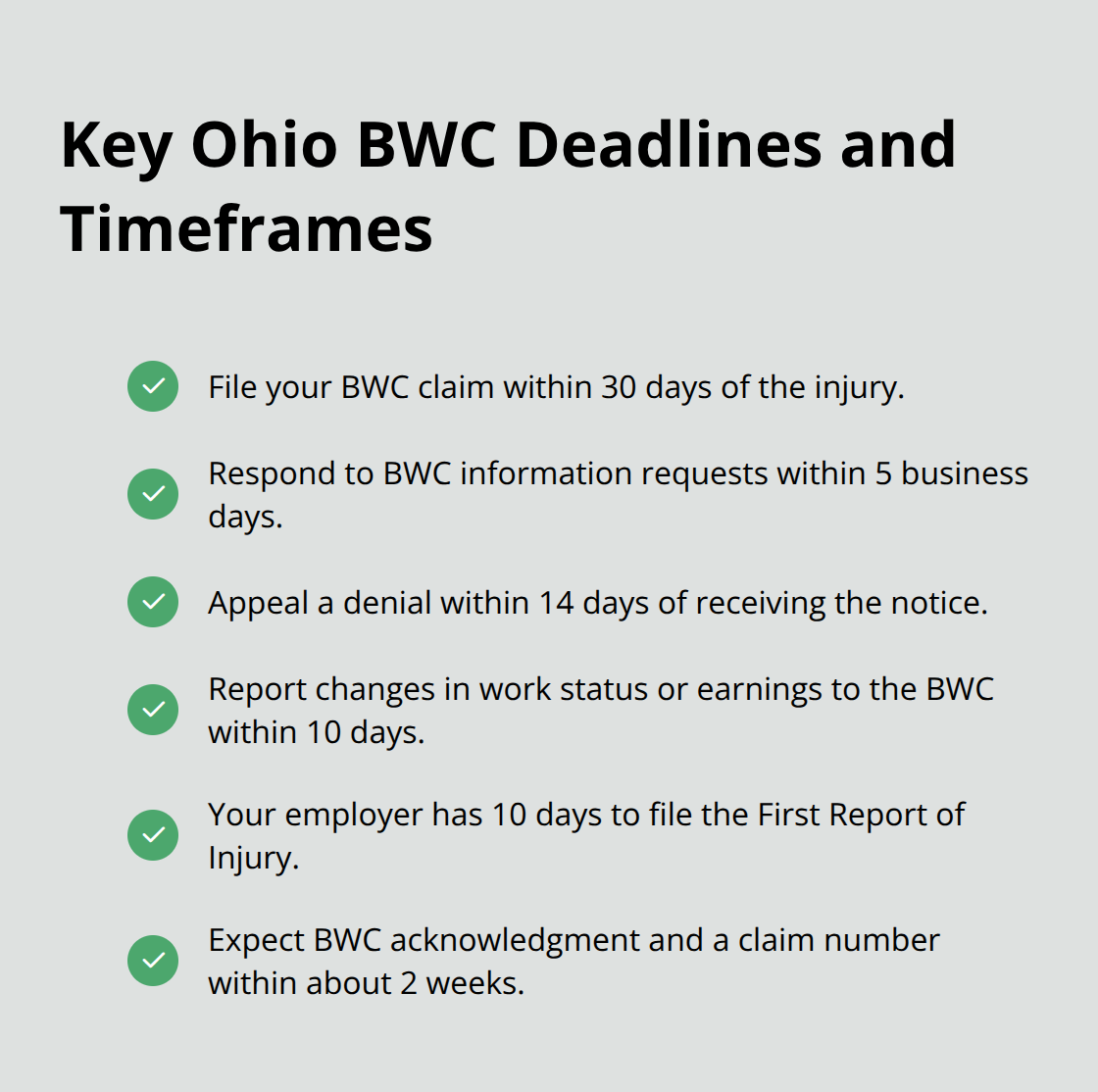
You must report your injury to your employer immediately after it happens. Ohio law does not set a specific deadline for this initial report, but waiting weeks or months weakens your credibility and can trigger claim denials. Many employers have internal reporting procedures outlined in your employee handbook or safety manual-follow those procedures exactly. Your employer then has ten days to file the First Report of Injury with the Ohio Bureau of Workers’ Compensation. If they fail to do this, you can file it yourself, and we recommend acting quickly if your employer drags their feet.
Understand What Qualifies as Compensable
Ohio law recognizes a compensable injury as any work-related harm that arises from your job duties or the conditions of employment. This includes acute injuries like a fall from a ladder, but also gradual conditions tied to your work environment. The key is establishing a direct connection between your injury and your employment.
Complete Your Forms With Precision
The forms you need are straightforward but demand accuracy. The First Report of Injury form requires your personal information, employment details, a clear description of how the injury occurred, the date and time of the incident, and your medical provider’s information if you’ve already sought treatment. Incomplete or vague descriptions of how you got hurt create problems later. Instead of saying you hurt your back, explain exactly what you were doing when the injury happened, what movement caused the pain, and whether you felt immediate symptoms or noticed them later. The more specific your account, the harder it is for the BWC to deny your claim based on insufficient information.
You’ll also need documentation of your employment status, your average weekly wage, and any witness statements. Gather these materials within the first week after your injury. If coworkers saw what happened, get their names and contact information immediately. Memories fade fast, and witness statements submitted early carry more weight than those collected months later.
Secure Medical Documentation
Medical records form the foundation of your entire claim. Seek treatment from a licensed physician as soon as possible and ensure they document the work-related nature of your injury in their records. The treating physician’s report must clearly state that your injury arose from your job duties. A report that simply describes your symptoms without linking them to work creates unnecessary delays and opens the door to denial.
Meet the Thirty-Day Deadline
Ohio law gives you thirty days from the date of injury to file a claim with the BWC. This is not a soft deadline-missing it forfeits your right to benefits. However, if your employer files within that window, you’re protected even if you haven’t personally submitted anything. The real danger comes when an injury develops gradually or when you don’t immediately recognize it as work-related.
For acute injuries, the thirty-day clock starts the day you get hurt. If you’re hospitalized or unable to act, the clock still runs. Assign someone you trust to handle your filing if you cannot do it yourself. The BWC typically acknowledges receipt of your claim within two weeks and assigns a claim number.
This number becomes your reference point for all future communications, so write it down and keep it accessible.
Once filed, your claim enters the review phase, where the BWC begins evaluating whether your injury qualifies for coverage and what happens next in the process.
Navigating the BWC Review Process
How the Bureau Evaluates Your Claim
After you file your claim, the Ohio Bureau of Workers’ Compensation assigns a claims administrator to your case. This administrator reviews the First Report of Injury, your medical documentation, and any statements from your employer or witnesses. The review typically takes two to four weeks, though complex cases stretch longer.
The administrator cross-checks your injury description against Ohio’s legal definition of compensable injury to determine if your condition arose from work duties or the workplace environment. During this phase, the BWC may request additional medical information, employment records, or clarification on how the injury occurred. You must respond to any BWC requests within five business days-delays in providing requested information give the agency reason to deny your claim outright.
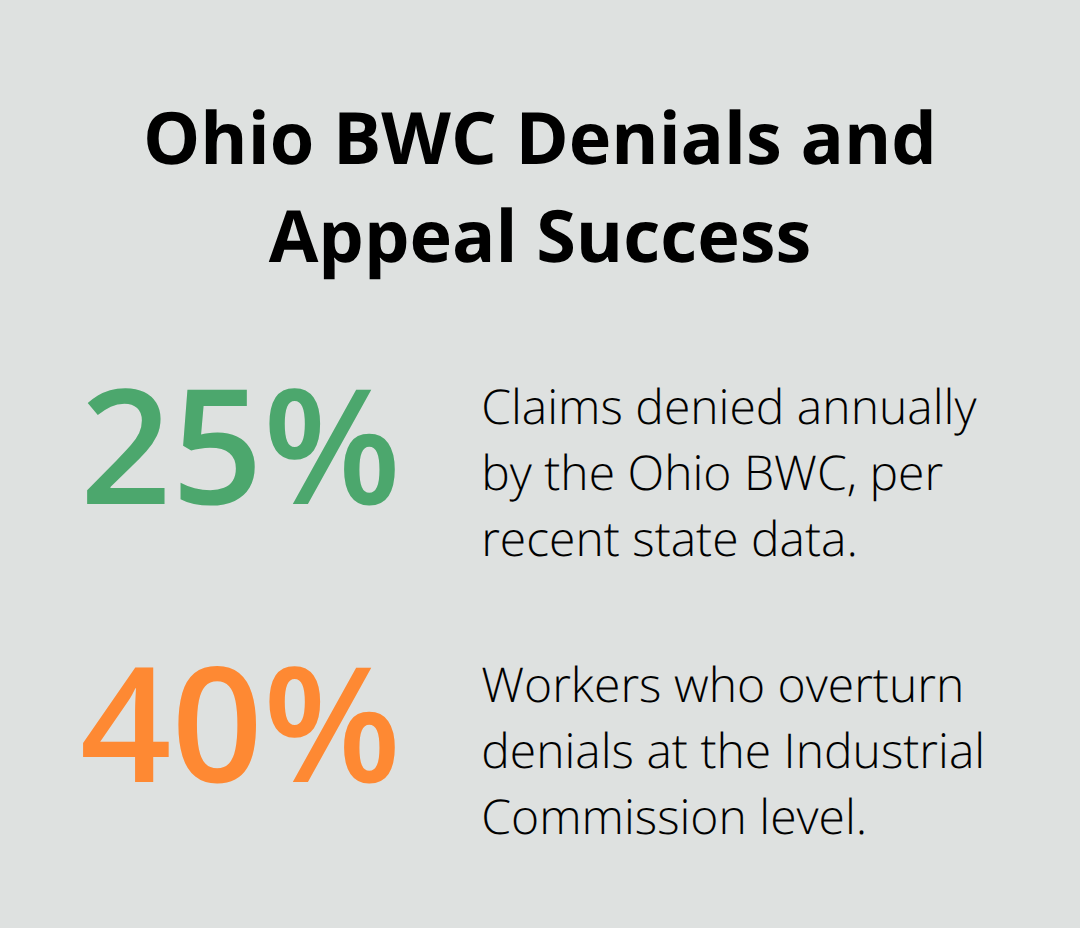
The administrator also verifies your employment status, wage history, and whether you reported the injury within the required timeframe. This is not a rubber-stamp process; the BWC denies approximately 25 percent of claims submitted in Ohio annually according to recent state data. Many of those denials stem from incomplete documentation or vague injury descriptions rather than injuries that genuinely don’t qualify. Your medical records carry the most weight during this evaluation, so ensure your treating physician explicitly documents that your condition is work-related and not a pre-existing condition aggravated by work.
Why Claims Get Denied or Delayed
Claims get delayed or denied most often because workers fail to link their injury clearly to job duties, miss the thirty-day filing deadline, or provide contradictory information between their claim form and medical records. If your employer disputes your account of how the injury happened, the BWC investigates further, which adds weeks to the process.
Medical records that lack detail about your work activities at the time of injury also trigger delays because the administrator cannot establish the required causal connection. Vague descriptions create problems that specific accounts prevent. When you explain exactly what you were doing, what movement caused the pain, and whether you felt immediate symptoms, you eliminate ambiguity that administrators use to justify denials.
Your Right to Appeal and Request a Hearing
You have the right to appeal any denial decision, and you must request an appeal within fourteen days of receiving the denial notice-missing this deadline eliminates your appeal rights entirely. To appeal, you file a request for reconsideration with the BWC, which sends your case back to the claims administrator for a second look.
If reconsideration fails, you can request a hearing before the Industrial Commission of Ohio, an independent judicial body that reviews disputed claims. At a hearing, you present testimony, medical evidence, and witness statements to an administrative judge who decides whether your injury qualifies for benefits. Roughly 40 percent of workers who appeal denials at the Industrial Commission level succeed in overturning the initial decision according to commission data, which means fighting back produces real results.
Legal representation during this phase strengthens your position significantly. An attorney knows which evidence matters most and how to present your case effectively before the commission. If you work with Robin J. Peterson Company, LLC, our team brings experience navigating these hearings and understands the specific evidence that persuades administrative judges in Ohio workers’ compensation disputes.
The outcome of your appeal determines whether you move forward to receive benefits or face additional legal steps. Understanding what benefits you qualify for-and how the Industrial Commission calculates your award-shapes your strategy at every stage of this process.
Understanding Your Ohio BWC Benefits
Four Benefit Categories That Apply to Your Injury
Ohio’s workers’ compensation system provides four distinct benefit categories, and understanding which ones apply to your injury determines your financial recovery. Temporary total disability replaces your lost wages while you cannot work due to your injury, calculated at two-thirds of your average weekly wage before the injury occurred. These benefits continue until you return to work, reach maximum medical improvement, or your condition stabilizes enough that you can perform some type of employment.
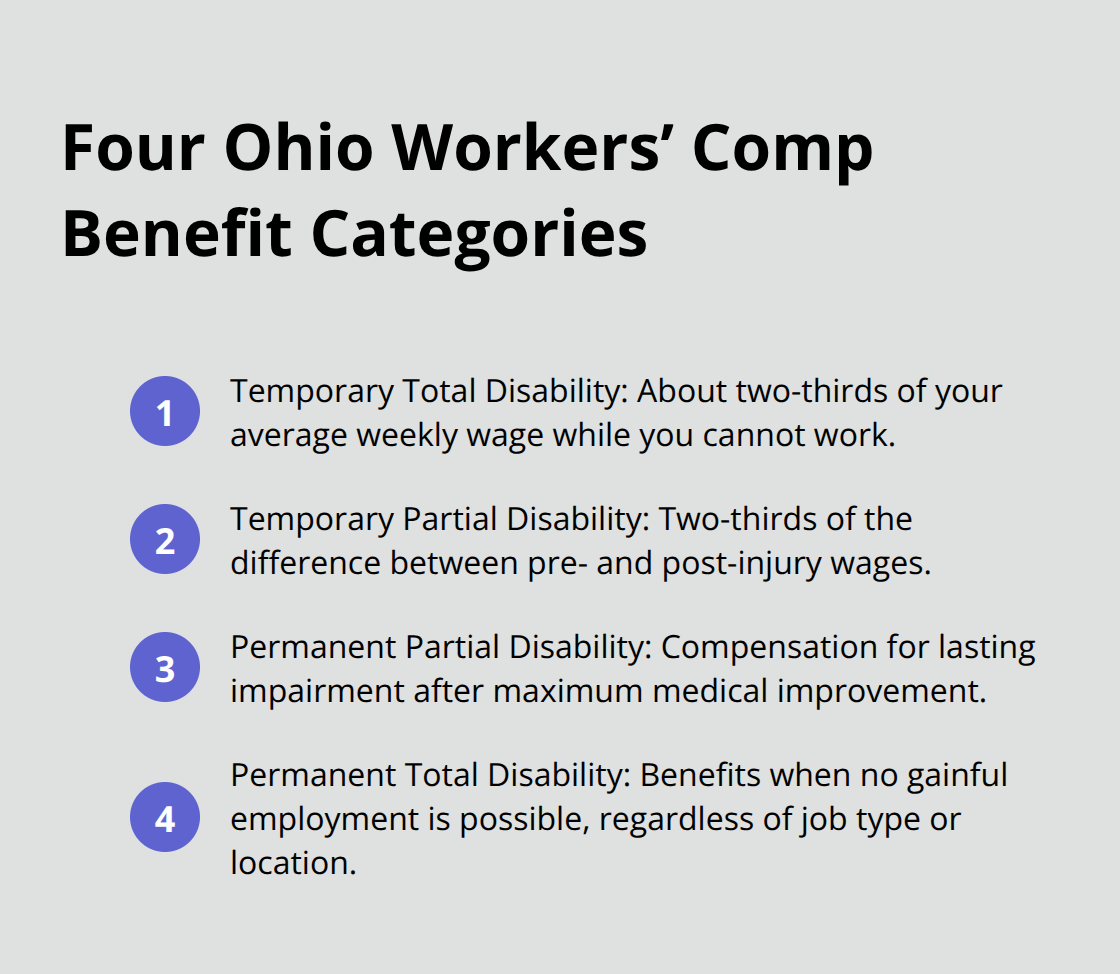
Temporary partial disability applies when you can work but earn less than you did before the injury; you receive two-thirds of the difference between your pre-injury and post-injury wages. Permanent partial disability compensates you for lasting impairment that reduces your earning capacity after you’ve healed as much as possible medically. Permanent total disability is the most substantial benefit, available only when your injury prevents any gainful employment regardless of job type or location.
Medical Benefits Cover All Treatment Related to Your Injury
Medical benefits cover all necessary treatment related to your work injury, including physician visits, surgery, rehabilitation, medications, and medical devices. These benefits have no time limit and continue as long as your condition requires treatment. The Industrial Commission of Ohio determines which benefits you qualify for based on medical evidence, your wage history, and vocational factors that show whether you can return to suitable work.
How the Industrial Commission Calculates Your Award
The process of calculating your award hinges on your average weekly wage in the thirteen weeks before your injury. The commission takes your gross earnings during that period, divides by thirteen, and uses that figure to establish your benefit rate. If you worked part-time, earned seasonal income, or had wage fluctuations, the commission adjusts the calculation to capture a fair representation of your typical earnings. Once the commission assigns you a benefit category, it applies the appropriate percentage-typically two-thirds for wage replacement-to your average weekly wage.
Your Claim Remains Open and Subject to Change
Your claim remains open and subject to review; if your medical condition worsens or improves significantly, either you or the BWC can request a reevaluation that adjusts your benefits accordingly. You must report changes in your work status, medical treatment, or earnings to the BWC within ten days (failure to report changes can result in benefit suspension or overpayment demands). Keep detailed records of all medical appointments, treatment notes, and any communications from the BWC or your employer. If you return to work in a limited capacity, notify the BWC immediately because your temporary partial disability rate adjusts based on your actual post-injury earnings. Many injured workers assume their benefits are permanent and unchanging; Ohio’s system treats benefits as responsive to medical progress and work capacity, meaning your award can increase or decrease as your circumstances evolve.
Final Thoughts
The Ohio BWC claim process rewards workers who act fast and document thoroughly. You’ve learned how immediate reporting, timely filing, and detailed medical records form the backbone of successful claims. The BWC processes thousands of cases annually, and those that succeed share one trait: workers who took control early and kept meticulous records throughout. Your claim remains active and subject to change as your medical condition and work capacity evolve, so staying informed protects your benefits from interruption.
Navigating denials and delays while managing pain and lost income exhausts most workers, and many accept poor outcomes simply because they lack knowledge of their rights or how to present their case effectively. An attorney experienced in Ohio workers’ compensation law knows which evidence persuades administrative judges, how to challenge flawed BWC decisions, and what strategy strengthens your position at every stage. Contact Robin J. Peterson Company, LLC if your claim has been denied, delayed unreasonably, or if you question whether you’re receiving your full entitled benefits.
Taking control of your Ohio BWC claim process means acting now rather than waiting passively for outcomes to unfold. The firm represents injured workers throughout Ohio’s workers’ compensation system and brings experience navigating the complexities of the BWC and the Industrial Commission of Ohio. Move forward with your claim today.