
A work injury that leaves you with lasting effects can feel overwhelming, especially when you’re unsure about your benefits. Permanent partial disability in Ohio provides financial support for workers who’ve suffered permanent impairment from job-related injuries, but understanding your eligibility is the first step.
At Robin J Peterson Company, LLC, we help injured workers navigate this complex process. This guide breaks down what you need to know about PPD benefits, who qualifies, and how to move forward with your claim.
What PPD Actually Means in Ohio
The Legal Definition and How It Works
Permanent partial disability in Ohio is a legal recognition that a work injury has caused lasting physical impairment that affects your earning capacity, even if you can still work. The Ohio Bureau of Workers’ Compensation defines PPD not as a complete inability to work, but as a measurable, permanent change to your body’s function after you reach maximum medical improvement. This distinction matters because many injured workers mistakenly believe they must be unable to work at all to qualify for PPD benefits. In reality, you can return to your job, earn a full paycheck, and still receive a PPD award if the injury created permanent impairment.
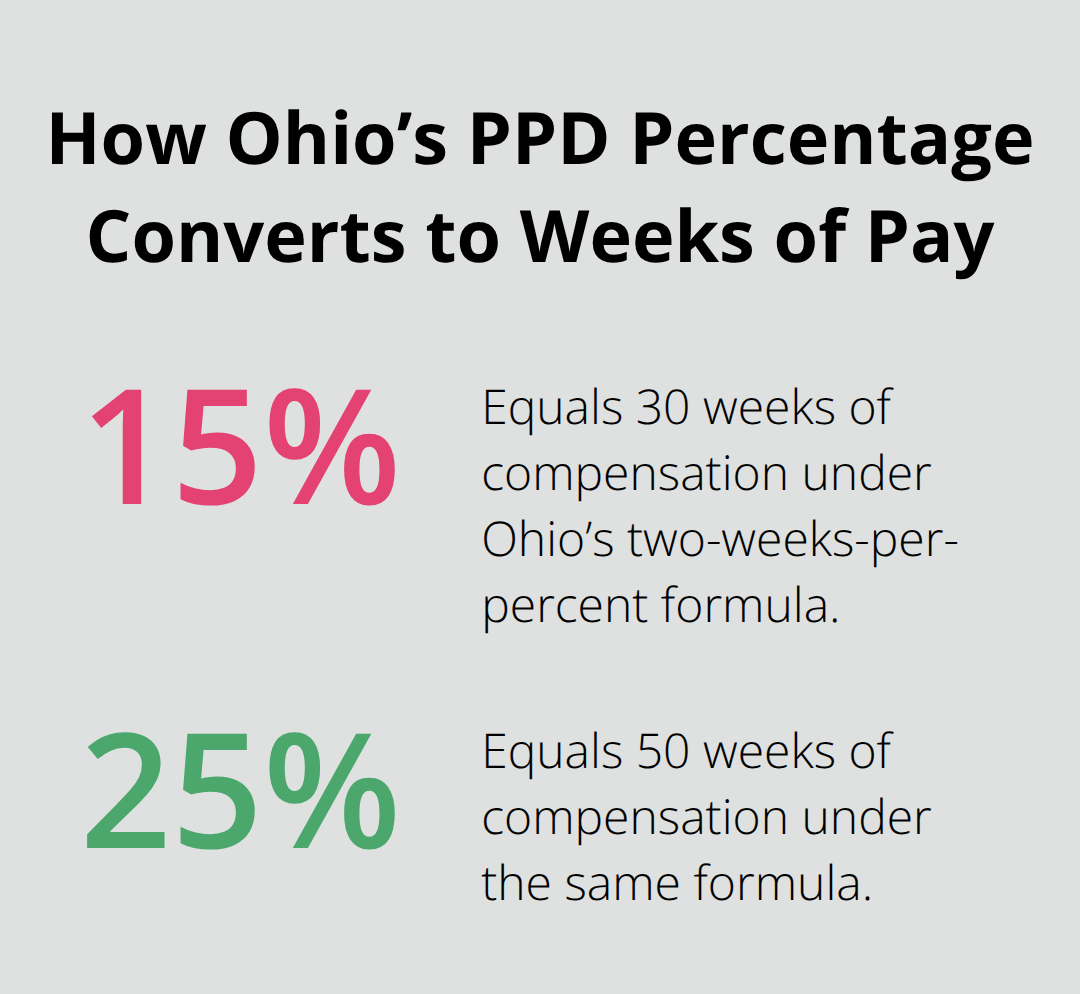
The Ohio Industrial Commission uses the AMA Guides to the Evaluation of Permanent Impairment to assign a rating between 0 and 100 percent, which directly determines your benefit payout. Ohio’s formula is straightforward: you receive two weeks of compensation for each percentage point of impairment. A 15 percent rating equals 30 weeks of benefits; a 25 percent rating equals 50 weeks. This lump-sum payment compensates for the permanent effects of your injury, whether that’s chronic pain, reduced mobility, hearing loss, vision problems, nerve damage, or loss of limb function.
PPD Versus Temporary Disability
The critical difference between PPD and temporary disability lies in timing and purpose. Temporary total disability provides weekly wage replacement while you’re unable to work during treatment and recovery. Once you reach maximum medical improvement, temporary benefits stop, and PPD takes over. If your condition leaves permanent impairment after medical improvement, you file for PPD using the Ohio Bureau of Workers’ Compensation’s C-92 form.
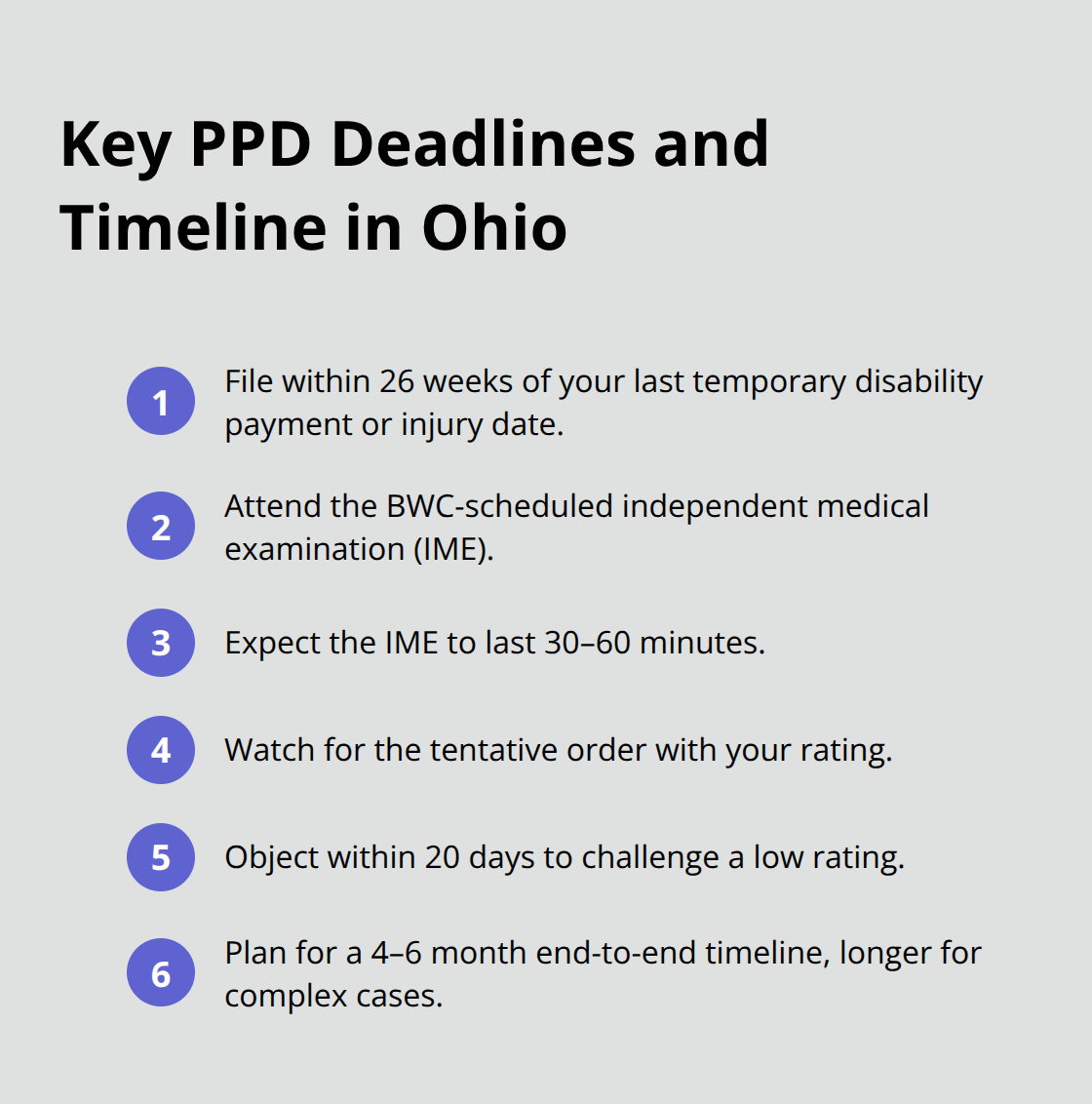
Your deadline matters enormously: you must file within 26 weeks of your last temporary disability payment, or 26 weeks from your injury date if you never received wage replacement. Missing this window forfeits your right to claim PPD entirely.
The Medical Examination and Rating Process
The BWC schedules an independent medical examination with a doctor of its choosing, who evaluates your impairment and assigns the rating that determines your entire benefit amount. This examination is mandatory, and the doctor’s assessment becomes the foundation of your claim. If you disagree with the rating, you have exactly 20 days from the tentative order to object and request review by the Industrial Commission of Ohio.
That 20-day window is absolute, and missing it means the low rating becomes final. The entire process from filing to a final ICO decision typically takes four to six months, though complex cases involving multiple medical opinions extend that timeline. Understanding these deadlines and procedures positions you to protect your rights and move forward with confidence toward the next phase of your claim.
Who Qualifies for Permanent Partial Disability in Ohio
Work-Related Injury Requirements
To qualify for PPD in Ohio, your work injury must meet three concrete requirements: it must be work-related, it must result in permanent impairment, and you must reach maximum medical improvement before filing. The Ohio Bureau of Workers’ Compensation doesn’t care whether you’ve returned to work or earned a full paycheck since your injury-PPD eligibility depends solely on whether the injury created measurable, lasting physical change. Qualifying injuries span back disorders, knee damage, vision loss, hearing impairment, nerve damage, and amputation.
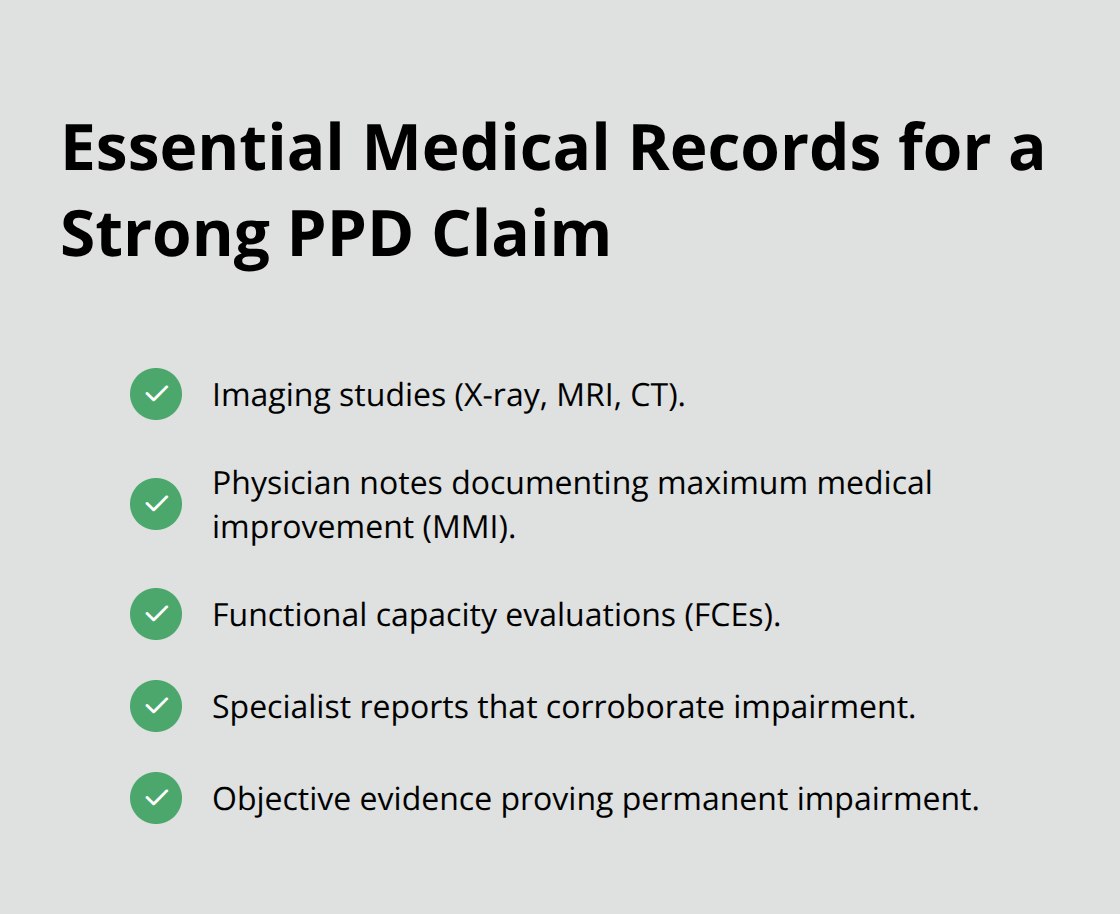
If your injury is psychological, such as PTSD or depression, it qualifies only if you document it as directly caused by the work incident and have medical evidence showing it stems from the job, not preexisting conditions. The medical documentation you submit becomes your foundation: imaging studies, physician notes, functional capacity evaluations, specialist reports, and proof of maximum medical improvement all determine whether the Ohio Industrial Commission rates your impairment at 1 percent or 50 percent.
Medical Documentation That Matters
Incomplete records sabotage claims constantly. Missing imaging, outdated physician notes, or absent functional capacity evaluations signal to the BWC examiner that your impairment isn’t as serious as you claim. Attach every relevant medical record to your C-92 application, not just summaries. The comprehensiveness of your submission directly influences the examiner’s assessment and the rating you receive.
The Critical Filing Deadline
Your filing deadline is absolute and unforgiving: 26 weeks from your last temporary disability payment, or 26 weeks from your injury date if you never received wage replacement. File online with the Ohio Bureau of Workers’ Compensation as soon as possible after your injury or final wage replacement check; waiting until week 25 leaves no margin for technical delays. The BWC then schedules an independent medical examination, which is mandatory and cannot be skipped.
The Examination and Objection Window
The examining physician assigns an impairment rating using the AMA Guides, and this rating directly determines your payout through Ohio’s two-weeks-per-percent formula. You receive a tentative order with the rating, and you have exactly 20 days to object. That 20-day window is final-missing it means the rating becomes permanent and binding. If you object, the Industrial Commission of Ohio reviews the case and issues a final decision, typically within four to six months from your initial filing.
Why Legal Representation Changes Outcomes
Workers represented by an attorney generally achieve higher impairment ratings because experienced counsel submits comprehensive medical documentation, anticipates examiner objections, and properly frames the evidence. An attorney who understands Ohio’s PPD system knows which medical specialists strengthen your case and how to present evidence that the examiner cannot dismiss. The difference between a low rating and a fair one often comes down to how well your claim is prepared and presented. With these eligibility requirements and deadlines in place, the next step involves understanding exactly how to file your claim and what happens after you submit your C-92 application to the Ohio Bureau of Workers’ Compensation.
Filing Your C-92 and Moving Through the Examination
Submit Your Application Online With Complete Documentation
Submit your C-92 application with the Ohio Bureau of Workers’ Compensation immediately after you reach maximum medical improvement or within 26 weeks of your last temporary disability payment, whichever applies. The Ohio Bureau of Workers’ Compensation processes online filings faster than paper submissions, and speed matters because delays can push you closer to your deadline. Attach comprehensive medical documentation with your C-92: imaging studies, physician notes documenting your maximum medical improvement, functional capacity evaluations, specialist reports, and any objective evidence of permanent impairment. Incomplete submissions force the BWC examiner to request missing records, which delays the process and gives you less time to prepare your response to a potentially low rating.
Prepare for the Independent Medical Examination
The Ohio Bureau of Workers’ Compensation schedules your independent medical examination with a physician of its choosing. This examination is mandatory, and the doctor assigned will use the AMA Guides to assign your impairment rating. The examination itself typically lasts 30 to 60 minutes, and the examining physician will review your medical records, test your range of motion, assess your functional limitations, and document findings that directly support the impairment percentage. After the examination, the BWC issues a tentative order with your assigned rating.
Act Within Your 20-Day Objection Window
Your 20-day objection window begins when you receive the tentative order, and this deadline is absolute and unforgiving. Many injured workers miss this window simply because they don’t understand its importance or don’t receive clear notification of the deadline. The Industrial Commission of Ohio becomes your only recourse if you object within 20 days, and this is where legal representation makes the measurable difference in outcomes. Workers represented by an attorney achieve significantly higher ratings because experienced counsel knows how to challenge low assessments with proper medical evidence and expert testimony.
Navigate the Industrial Commission Review and Beyond
When you object, the Industrial Commission reviews the entire case file, considers any additional medical opinions you submit, and issues a final decision that cannot be appealed further. The typical timeline from C-92 filing to final Industrial Commission decision spans four to six months, though complex cases with multiple specialists and disputed medical findings extend that period. During this waiting period, do not communicate directly with insurance carriers or BWC representatives without your attorney present. Insurance carriers sometimes contact workers for statements or medical release forms, and signing anything without legal review can damage your case.
File for Increased Ratings When Your Condition Worsens
If your condition deteriorates after the initial determination, you can file another C-92 for an increased rating, but you must provide new objective medical evidence showing the deterioration. Subjective complaints alone do not support a higher rating, so updated imaging, new physician evaluations, or functional capacity testing demonstrating worsening function becomes essential. The most common obstacles at this stage include submitting incomplete initial documentation, missing the 20-day objection deadline, failing to gather specialist opinions that strengthen your case, and attempting to navigate the process without experienced guidance. Workers who address these obstacles proactively, particularly those who consult with experienced Ohio workers’ compensation counsel early in the process, position themselves for fair ratings and successful outcomes.
Final Thoughts
Permanent partial disability in Ohio hinges on three core requirements: your injury must stem from work, it must create permanent impairment, and you must reach maximum medical improvement before filing. The 26-week filing deadline is absolute, and missing it eliminates your right to claim PPD entirely. Your C-92 application must include comprehensive medical documentation, and the independent medical examination scheduled by the Ohio Bureau of Workers’ Compensation will determine your impairment rating and entire benefit amount.
File your C-92 online as soon as you reach maximum medical improvement, attach every relevant medical record, and prepare for the examination by gathering specialist reports and functional capacity evaluations that support your impairment claim. When you receive your tentative order, review the rating immediately and understand that objecting within 20 days is your only opportunity to challenge a low rating before it becomes final and binding. The Industrial Commission of Ohio will review your case if you object, but only if you meet that deadline.
Workers represented by an attorney consistently achieve higher impairment ratings because experienced counsel presents evidence effectively, anticipates examiner objections, and navigates the Industrial Commission process with precision. An attorney who understands Ohio’s PPD system identifies which medical specialists strengthen your case and ensures your documentation withstands scrutiny. Contact Robin J Peterson Company, LLC for a free consultation to discuss your claim and understand how legal representation can improve your outcome.