
Picking the wrong workers’ compensation attorney can cost you benefits you deserve. A Northeast Ohio injury lawyer with the right experience makes all the difference in how your case unfolds.
At Robin J Peterson Company, LLC, we’ve seen injured workers struggle because they didn’t ask the right questions before hiring representation. This guide walks you through exactly what to look for and what warning signs to avoid.
What Makes a Workers’ Compensation Lawyer Worth Hiring
Deep Knowledge of Ohio’s BWC System
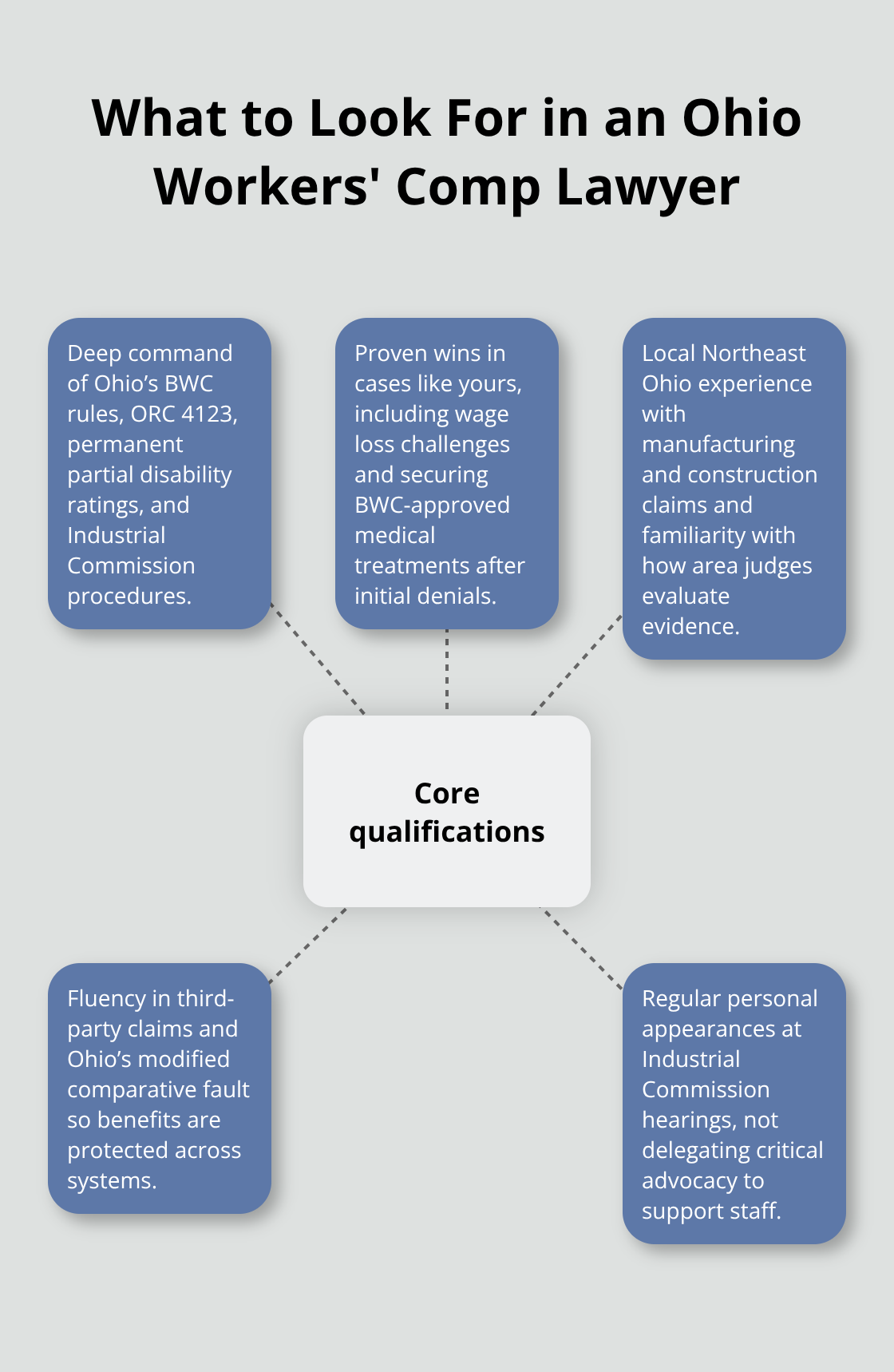
Your attorney must understand how Ohio’s Bureau of Workers’ Compensation actually operates. The BWC system differs fundamentally from typical personal injury law, and a lawyer who hasn’t spent years navigating Ohio Industrial Commission hearings will waste your time and money. Look for an attorney who knows Ohio Revised Code Section 4123 thoroughly, understands how the BWC evaluates permanent partial disability ratings, and has experience challenging denied claims at the Industrial Commission level. Ask potential attorneys how many cases they’ve handled before the Industrial Commission in the past two years. A vague answer signals they spend most of their time on other practice areas. You want someone whose calendar fills with workers’ compensation hearings, not someone who handles it occasionally alongside divorce cases or real estate closings.
Proven Success in Cases Like Yours
The second critical factor is whether the attorney has actually won benefits for injured workers in situations similar to yours. Request specific examples of recent cases they’ve handled, including what benefits they secured and how long the process took. Don’t accept generic answers about success rates. Instead, ask about cases involving your type of injury or industry, whether they’ve successfully challenged wage loss denials, and if they’ve obtained approval for specific medical treatments the BWC initially rejected.
Local expertise matters enormously because Northeast Ohio has unique industrial sectors. An attorney familiar with manufacturing injuries in Summit County or construction claims in Cuyahoga County will understand the medical evidence that carries weight with local Industrial Commission judges. This regional knowledge shapes how judges respond to your case and what documentation strengthens your position.
Understanding Third-Party Claims and Comparative Fault
Finally, verify that your attorney understands how Ohio’s modified comparative fault rules interact with workers’ compensation claims. Some injured workers face complications when third-party negligence is involved. The right lawyer will explain whether a third-party claim could affect your BWC benefits and how to protect your interests across both systems (workers’ compensation and third-party liability). This knowledge prevents costly mistakes that could reduce or eliminate your recovery.
With these factors in mind, you’re ready to ask the specific questions that separate qualified representatives from those who lack the expertise your case demands.
Questions That Reveal a Lawyer’s Real Expertise
Caseload and Specific Case Outcomes
The difference between a workers’ compensation attorney who understands Ohio’s system and one who merely dabbles in it shows up immediately when you ask about their caseload. Start by asking how many cases similar to yours they handled in the past 12 months, then ask for specific details about outcomes. Don’t accept vague statements like “we handle many cases.” Push for numbers. An attorney managing 15 workers’ compensation cases annually across Ohio’s Industrial Commission has fundamentally different expertise than one managing 100 cases spread across multiple practice areas.
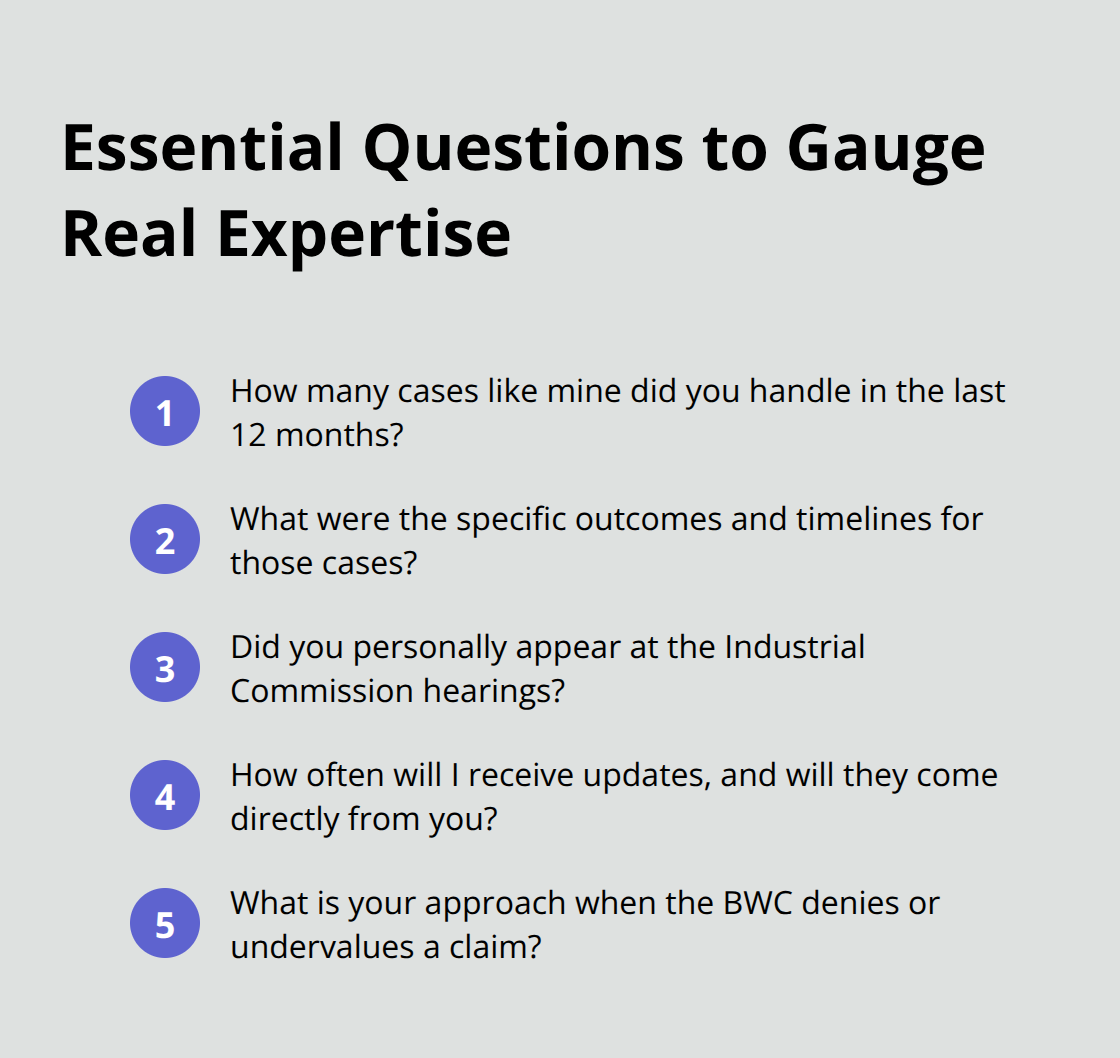
Ask whether they personally appeared at Industrial Commission hearings for those cases or delegated the work to paralegals. This matters enormously because judges develop relationships with attorneys who appear regularly, and that familiarity influences how your case gets evaluated. Request the names of specific cases they can reference, including what benefits were awarded and how long the process took from filing to resolution. If an attorney hesitates or claims confidentiality prevents sharing any details, that’s a red flag that they either haven’t won significant cases or they’re hiding weak results.
Direct Attorney Involvement and Response Times
Communication patterns reveal whether an attorney will actually support you through the process or disappear until settlement arrives. Ask directly how often clients hear updates and from whom. Will you speak with the attorney or primarily with a paralegal? How quickly do they respond to calls and emails? Some firms promise 24-hour response times; verify this claim by calling their office and timing how long it takes to reach someone.
Ask what happens if your case gets complicated or disputed at the Industrial Commission. Will your attorney personally handle the hearing, or will someone else represent you? This distinction matters because you need answers from the person making decisions about your case, not from support staff who lack authority to adjust strategy.
Willingness to Challenge Denials and Appeal Decisions
Finally, ask about their philosophy when the BWC denies your initial claim or offers benefits you believe underestimate your injury. Do they routinely challenge these decisions, and if so, what percentage of challenged claims result in improved outcomes? An attorney who avoids this question or expresses reluctance to pursue appeals is signaling they lack confidence in their ability to win at the Industrial Commission level.
These questions separate attorneys who actively fight for injured workers from those who accept whatever the BWC initially offers. The answers you receive will guide you toward representation that matches your case’s complexity and your need for aggressive advocacy.
Red Flags That Disqualify an Attorney
Promises of Guaranteed Outcomes
Any workers’ compensation attorney who promises specific outcomes or guarantees a particular settlement amount is either lying or inexperienced. Ohio’s Industrial Commission judges make independent decisions based on evidence, medical records, and applicable law-no legitimate attorney can predict these outcomes with certainty. When an attorney tells you they’ll secure a specific amount or guarantee approval of your claim, they signal they don’t understand how the system works or they’re willing to mislead you to win your business.
False promises set unrealistic expectations that lead to disappointment. When results fall short, you’re left without adequate representation at a critical moment. Ask potential attorneys what range of outcomes is realistic for your situation, but walk away from anyone who offers guarantees.
Lack of Fee Transparency
Transparency about fees and case handling separates trustworthy representatives from those hiding something. Most workers’ compensation attorneys work on contingency, meaning they take a percentage of your award, but the specific percentage, what costs you’re responsible for, and how expenses are handled must be crystal clear before you sign anything.

If an attorney refuses to explain their fee structure in writing, avoids discussing what happens if you lose, or won’t clarify whether they advance costs like medical record requests and expert witness fees, that’s a serious warning. These questions deserve straightforward answers, not evasion.
Unwillingness to Explain the Process
An attorney unwilling to explain how the workers’ compensation process actually works-what stages your case will go through, how long each typically takes, and what evidence matters at the Industrial Commission-is someone who either doesn’t know the system well or doesn’t respect your need to understand your own case.
If a lawyer dodges straightforward questions about their experience with Ohio’s BWC system, their track record challenging denials, or their philosophy on fighting for maximum benefits versus accepting initial offers, trust that instinct and keep looking. You need representation from someone who communicates clearly and operates with complete transparency about how your case will proceed.
Final Thoughts
The right workers’ compensation attorney combines deep knowledge of Ohio’s BWC system with a proven track record of securing benefits for injured workers. Local expertise in Northeast Ohio matters because judges at the Industrial Commission develop familiarity with attorneys who appear regularly before them. A Northeast Ohio injury lawyer familiar with manufacturing claims in Summit County or construction injuries in Cuyahoga County understands the medical evidence and documentation that carries weight with local judges.
When you’re ready to move forward, contact Robin J Peterson Company, LLC for a free initial consultation. The firm represents injured workers navigating the complexities of Ohio’s workers’ compensation system with offices across the Cleveland, Akron, and Canton metropolitan areas. Their attorneys focus exclusively on workers’ compensation law and have the experience needed to fight for the benefits you deserve.
During your consultation, ask the specific questions outlined in this guide and pay attention to how thoroughly they answer. The attorney you choose will determine whether you receive fair compensation or settle for less than your injury warrants. This decision shapes your financial recovery and your peace of mind throughout the process.