
Workplace injuries happen fast, but the process to get fair compensation shouldn’t be complicated. If you’ve been hurt on the job in Ohio, understanding your rights under the state’s workers’ compensation system is the first step toward recovery.
At Robin J Peterson Company, LLC, we help injured workers navigate the claims process and fight for the benefits they deserve. As a Cleveland area injury attorney, we know the system inside and out.
How Ohio’s Workers’ Compensation System Actually Works
Ohio’s Bureau of Workers’ Compensation operates as a state-run insurance system, meaning injured workers file claims through a government agency rather than suing employers directly. This system covers roughly 2.8 million workers across the state, according to the Ohio BWC’s annual reports. When you get hurt on the job, the BWC handles your claim from start to finish, which sounds straightforward until you realize the agency denies approximately 15-20% of initial claims. The state requires most employers to carry BWC coverage, though some large employers self-insure. Understanding which agency handles your claim matters because the process differs significantly depending on whether your employer is a traditional policy holder or a self-insured entity.
What Benefits Actually Cover Your Situation
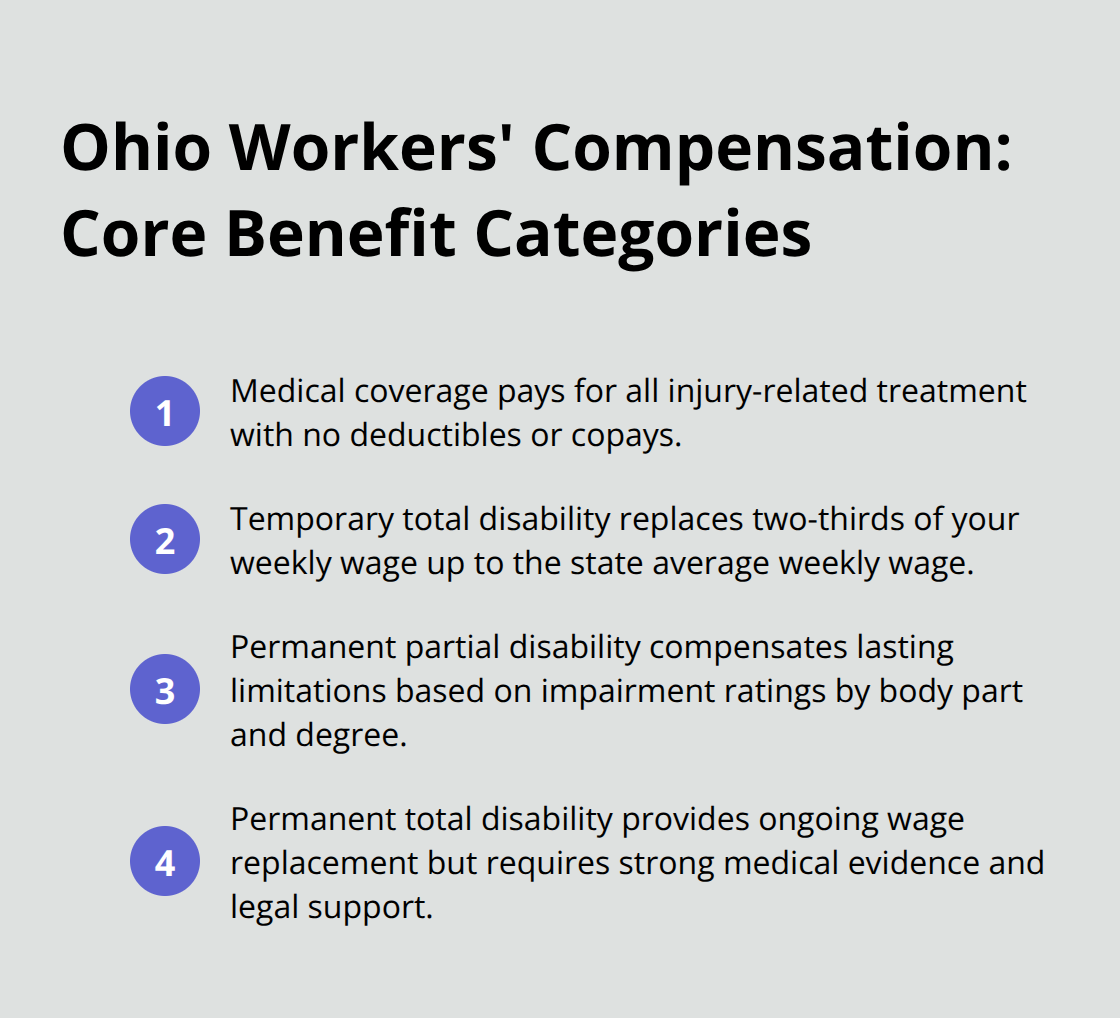
Ohio workers’ compensation provides four main benefit categories: medical coverage, temporary total disability payments, permanent partial disability compensation, and permanent total disability benefits. Medical benefits cover all treatment related to your work injury without deductibles or copays, which is genuinely valuable since occupational injuries often require multiple specialists and ongoing care. Temporary total disability payments replace two-thirds of your weekly wage while you cannot work, capped at the state average weekly wage, which was approximately $1,200 in 2024. Permanent partial disability applies when you recover but have lasting limitations, and the BWC uses a complex rating system to calculate compensation based on body part affected and degree of impairment. Permanent total disability provides ongoing wage replacement if you cannot return to any job, though the BWC rarely approves these claims without strong medical evidence and legal support.
The Claims Process and Why Timing Matters
You must report your injury to your employer immediately, and your employer has specific deadlines to file with the BWC. The initial BWC claim investigation typically takes 28 days, during which the agency reviews medical records and determines whether your injury qualifies for coverage. Most injured workers do not realize that the BWC frequently requests additional medical documentation during this window, and failing to provide records promptly can result in claim denial. Once approved, you receive a claim number and begin accessing benefits, but the real complications emerge when the BWC or your employer contests the claim. The appeals process involves requesting a hearing before the Industrial Commission of Ohio, where a judge reviews evidence and testimony. This hearing stage separates workers who navigate it alone from those with legal representation, as workers represented by attorneys receive significantly higher compensation awards according to data from the Industrial Commission of Ohio’s own case statistics.
When the BWC denies your claim or your employer challenges your benefits, the path forward becomes far more complex than most workers anticipate.
What Happens When Your Employer Contests Your Claim
The Contest Timeline and What Triggers It
When the BWC approves your initial claim, your employer receives notice and has the right to challenge it within a specific timeframe. Many employers contest claims, particularly if they believe the injury occurred outside work or involved pre-existing conditions. The BWC’s own data shows that employer contests create a secondary claims process that complicates what should be straightforward benefit delivery. Once your employer files a challenge, the BWC does not automatically suspend your benefits, but the uncertainty creates real problems for injured workers who suddenly face questions about whether their medical treatment will remain covered.
Where the Burden of Proof Shifts
Understanding the mechanics of this contest phase matters because most workers do not realize that the burden of proof shifts significantly once an employer challenges the claim. The Industrial Commission of Ohio receives thousands of contested claims annually, and workers who navigate this stage without legal representation face substantially worse outcomes than those with attorney representation. Your employer’s contest typically focuses on three areas: whether the injury actually occurred at work, whether it resulted from your negligence or misconduct, or whether pre-existing conditions caused the problem rather than the workplace incident.

How Employers Build Their Challenge
The BWC requires your employer to submit evidence supporting the contest within strict deadlines, but many employers submit vague or incomplete challenges that still trigger the formal hearing process. Once a contest is filed, you have the right to request a hearing before the Industrial Commission of Ohio, where a judge evaluates medical evidence, witness testimony, and your employer’s documentation. This is where the difference between representation and no representation becomes stark: workers with attorneys win contested claims at significantly higher rates than unrepresented workers, according to Industrial Commission statistics.
Defending Against Common Employer Arguments
During the hearing, you need someone who understands Ohio’s workers’ compensation case law and knows how to challenge employer arguments effectively. If your employer claims your injury resulted from negligence, your attorney can present evidence that workplace negligence claims have extremely high thresholds in Ohio, making this a difficult argument for employers to win. If they argue pre-existing conditions caused the problem, medical testimony becomes critical, and having someone who knows which medical questions matter most makes a real difference in case outcomes.
The hearing process itself demands preparation and strategic thinking that most injured workers cannot manage alone while recovering from their injuries.
When You Need a Workers’ Compensation Attorney
Your employer contests your claim or the BWC requests additional documentation, and the complexity shifts dramatically. Workers represented by attorneys win contested claims at substantially higher rates than those navigating the system alone, according to data from the Industrial Commission of Ohio. An attorney handles the technical requirements that trip up unrepresented workers, from meeting strict filing deadlines to presenting medical evidence effectively. The BWC operates under regulations that change regularly, and missing a single procedural requirement can result in claim dismissal regardless of the strength of your injury.
How Attorneys Navigate Industrial Commission Hearings
The real advantage of legal representation emerges during the hearing phase before the Industrial Commission of Ohio. When your employer argues that pre-existing conditions caused your injury rather than the workplace incident, an attorney understands which medical questions expose weaknesses in that argument. Judges evaluate evidence based on how effectively you present it, and attorneys know what types of medical testimony carry the most weight. Workers with legal support secure higher compensation awards because their attorneys challenge employer arguments effectively and present medical evidence in ways that judges find compelling.
Why Medical Evidence Presentation Matters
The difference between representing yourself and having legal support often means the difference between partial benefits and the full compensation you deserve. Your medical records tell a story, but an attorney structures that story in ways that support your claim. Judges hear hundreds of cases annually, and they respond to presentations that follow established patterns and address the specific legal standards they apply. An attorney knows how Industrial Commission judges evaluate evidence and what documentation strengthens your position against employer challenges.
Addressing the Cost Concern
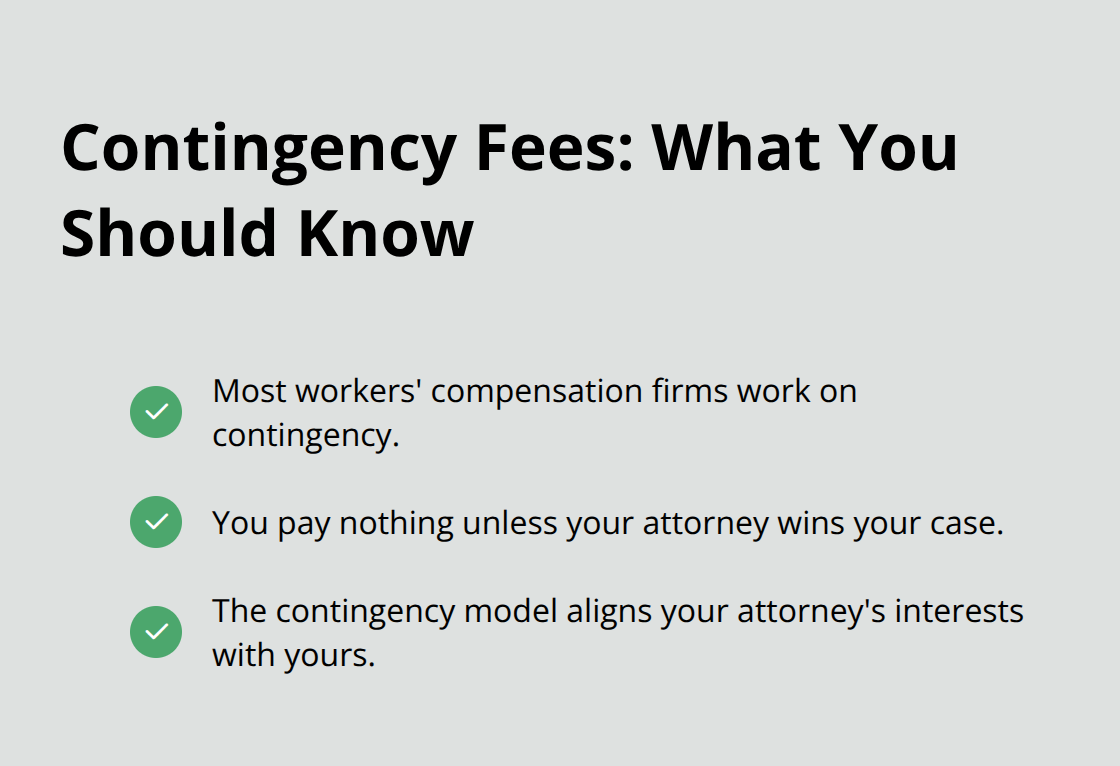
Many injured workers assume they cannot afford an attorney, but most workers’ compensation firms work on contingency. This arrangement means you pay nothing unless your attorney wins your case, which removes the financial barrier that keeps most injured workers fighting alone against employers who have already invested in their own legal teams. The contingency model aligns your attorney’s interests with yours-your attorney only succeeds when you receive the benefits you deserve.
When to Contact an Attorney
If your employer contests your claim, the BWC denies your initial request, or you face a hearing before the Industrial Commission of Ohio, legal representation becomes essential. The sooner you contact an attorney, the more time they have to prepare your case and gather supporting medical evidence. Waiting until the hearing date approaches limits your attorney’s ability to build a strong presentation and respond to employer arguments effectively.
Final Thoughts
Ohio’s workers’ compensation system provides real benefits to injured workers, but accessing those benefits requires understanding the rules and knowing when to fight back. The BWC denies initial claims regularly, employers contest legitimate injuries, and the appeals process demands technical knowledge that most workers do not possess. Your medical records matter, your timing matters, and your presentation before the Industrial Commission of Ohio matters enormously when your employer challenges your claim.
We at Robin J Peterson Company, LLC represent injured workers throughout the Cleveland area and beyond because we understand how employers and the BWC operate. As a Cleveland area injury attorney firm, we know the specific arguments employers use to contest claims and the medical evidence that defeats those arguments. We handle the procedural requirements that trip up unrepresented workers, from meeting filing deadlines to presenting your case effectively before judges who evaluate hundreds of cases annually.
If your employer has contested your claim, the BWC has denied your initial request, or you face a hearing before the Industrial Commission of Ohio, contact Robin J Peterson Company, LLC. The sooner you reach out, the more time we have to prepare your case and gather the medical evidence that strengthens your position.