
The Ohio Bureau of Workers’ Compensation denies thousands of claims each year, often leaving injured workers without the support they need. A BWC denial appeal in Ohio isn’t simple, but it’s absolutely winnable with the right approach.
At Robin J Peterson Company, LLC, we’ve helped workers navigate this process and overturn denials that seemed final. This guide walks you through exactly what you need to do.
Why the BWC Denies Claims
The 25% Denial Rate and What It Means
The Ohio Bureau of Workers’ Compensation denies approximately 25% of initial claims. Most of those denials stem from preventable mistakes rather than legitimate grounds for rejection. The BWC doesn’t deny claims out of malice-it denies them because the agency found gaps in your documentation, inconsistencies in your story, or insufficient proof that your injury is work-related. Understanding exactly why your claim was denied is the foundation of an effective appeal.
Reading Your Denial Letter as a Roadmap
The denial letter from the BWC states the specific reason for rejection, and that reason becomes your roadmap for appeal. If the agency says your injury isn’t work-related, you’ll need medical evidence and witness testimony proving the connection. If the denial cites a missed reporting deadline, you’ll need to demonstrate that you notified your employer in writing as soon as possible. The BWC evaluates claims using a strict evidence standard: medical records must clearly link the injury to your job duties, accident reports must match medical documentation, and timelines must be consistent. When these elements don’t align, the BWC interprets the gaps against you.
Common Denial Triggers You Can Control
The most common denial triggers are missed filing deadlines, vague injury descriptions, treatment from non-certified providers, and inconsistencies between your accident report and medical records. An injured worker who tells their employer they hurt their back but then seeks treatment for a shoulder injury creates a credibility problem that’s difficult to overcome. Similarly, waiting weeks or months to report an injury signals to the BWC that the injury may not be work-related. The agency expects immediate written notice to your employer-email or a formal accident report-to create a verifiable paper trail.
If your employer failed to report the injury to the BWC, you should file the First Report of Injury yourself through the BWC portal or by mail and keep your claim number for reference. Incomplete medical documentation is another frequent culprit. The BWC wants explicit statements from your physician connecting your treatment to the work injury, not vague notes about symptoms. Wage statements, employment verification, and records showing you were performing job duties at the time of injury strengthen your claim significantly.
What Happens Next in Your Appeal
The specific reason cited in your denial letter determines which evidence you’ll need to gather and how you’ll present your case to the Industrial Commission. Your next step is to organize that evidence and file your appeal within the strict 14-day window that the law provides.
How to File Your Appeal and Prepare for the Hearing
The 14-Day Filing Deadline
You have exactly 14 days from the date of the BWC’s written denial to file your appeal with the Industrial Commission of Ohio. Missing this deadline eliminates your right to challenge the decision, so treat this as non-negotiable. File the IC-12 Notice of Appeal either online through the Industrial Commission Online Network (ICON) or by mail to your local IC office. Online filing through ICON is faster and creates an immediate timestamp, which protects you if processing delays occur.
Completing Your IC-12 Notice of Appeal
The IC-12 form is straightforward: you state the claim number, your name, the employer, and the specific grounds for your appeal. Reference the exact reason the BWC cited in the denial letter and explain briefly why you believe that reason is incorrect. Save lengthy arguments for your hearing. At the District Hearing Officer level, the IC typically schedules your hearing within 45 days of filing. These hearings are informal and held in local IC offices, not courtrooms, which means you avoid the formality of a traditional trial. The DHO hearing usually lasts 15 to 20 minutes, so your evidence must be organized and your presentation concise.
Organizing Medical Records and Supporting Documentation
Organize your medical records chronologically, starting with the date of injury. Include treatment notes, diagnostic reports, imaging results, and any physician statements that explicitly link your condition to work duties. The BWC will have copies of some records, but you should bring complete sets to avoid gaps the DHO might interpret against you. If your original medical provider did not document the work connection clearly, obtain a supplemental letter from that physician addressing the denial reason directly.
Wage statements, employment verification, and time records showing you were on duty during the injury are equally critical. Gather written statements from coworkers or supervisors who witnessed the incident-these carry significant weight because they corroborate your account independently. Photograph the work area, equipment, or conditions that contributed to the injury if possible.
Presenting Your Case at the Hearing
At the hearing, present your evidence in the order it occurred: start with the accident itself, move to immediate reporting and medical treatment, then address how the injury affected your work capacity. Speak clearly and answer the DHO’s questions directly without volunteering extra information. If you disagree with the DHO’s decision within 14 days, you can appeal to a Staff Hearing Officer, where you may introduce new medical evidence that was not available before. This second level is often decisive because the SHO evaluates facts fresh, not just reviewing the DHO’s reasoning.
The Value of Legal Representation
Having legal representation from a firm with Ohio workers’ compensation experience substantially improves your odds of success at every level, as attorneys understand the procedural requirements and know how to present evidence in ways that resonate with hearing officers. The appeals process involves multiple stages, each with distinct procedural rules and strategic opportunities that require careful navigation.
What Medical Evidence Actually Wins Appeals
Medical evidence determines whether the Industrial Commission overturns your denial or upholds it. The BWC evaluates claims based on documentation that proves your injury is work-related and that treatment is necessary. At the District Hearing Officer level, medical records outweigh all other evidence you present. A vague treatment note stating you hurt your back carries no weight. An explicit statement from your physician stating you injured your lower back while lifting a 50-pound box at work on a specific date wins cases.
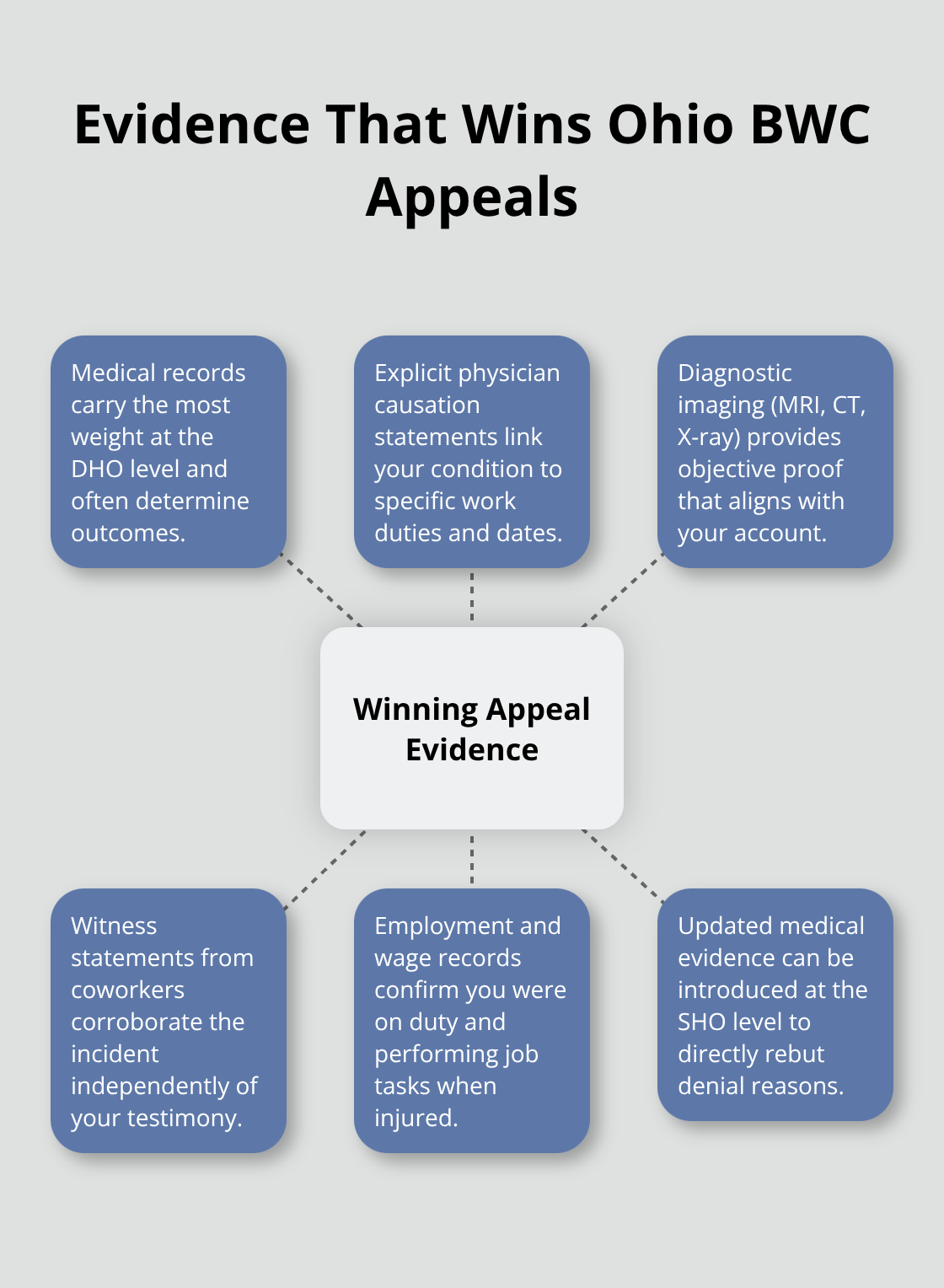
Before your hearing, contact your treating physician and request a supplemental letter that addresses the reason the BWC denied your claim directly. If the denial cited lack of work-relatedness, your physician should state clearly that the injury resulted from job duties. If the denial pointed to a delay in treatment, your physician should explain why the delay occurred and confirm that the injury remains work-related despite the timing gap.
Diagnostic Reports and Imaging Results
Diagnostic reports and imaging results strengthen your appeal significantly. An MRI, CT scan, or X-ray showing structural damage carries substantial weight with hearing officers. Bring those results and any radiologist interpretation to your hearing. The radiologist’s written findings provide objective evidence that an injury exists and matches your account of what happened. These reports eliminate speculation about whether your condition is real or exaggerated.
Witness Testimony From Coworkers
Witness testimony from coworkers who saw the accident ranks second only to medical evidence in credibility. A coworker’s statement that they witnessed you fall or heard you describe the injury immediately afterward corroborates your account without relying solely on your word. Written statements from witnesses carry weight even if they cannot attend the hearing. Coworkers who observed the incident provide independent verification that strengthens your narrative considerably.
Employment and Wage Documentation
Wage statements and employment records prove you were on duty during the injury, which eliminates one denial ground entirely. These documents establish that you performed job duties at the time of the accident. Organize all documents in chronological order and bring originals or certified copies to your hearing. The DHO will have some records from the BWC file, but gaps in that file will be interpreted against you. Complete documentation prevents the hearing officer from filling those gaps with assumptions unfavorable to your case.
Physician Statements and Updated Medical Evidence
If your original medical provider is unavailable for the hearing, a written statement from that provider addressing the specific denial reason carries significant weight. Many DHOs admit these statements into the record even without the physician present, though having the physician testify in person is ideal. At the Staff Hearing Officer level, you can introduce new medical evidence that was not available at the DHO hearing. This second opportunity allows you to present updated records or expert opinions that directly rebut the denial reason. Many workers succeed at the SHO level after failing at the DHO level because the SHO evaluates facts fresh, not just reviewing the DHO’s reasoning.
Final Thoughts
A BWC denial appeal in Ohio succeeds when you understand the specific reason for rejection and respond with targeted evidence. The three hallmarks of winning appeals are immediate written notice to your employer, complete medical documentation that explicitly links your injury to work duties, and organized evidence presented clearly at your hearing. Missing the 14-day filing deadline eliminates your right to appeal entirely, so you must file your IC-12 Notice of Appeal through ICON or by mail immediately after receiving the denial letter.
The Industrial Commission process moves through multiple levels, and each level offers a fresh opportunity to strengthen your case. At the District Hearing Officer stage, medical records and witness testimony carry the most weight. If the DHO denies your appeal, the Staff Hearing Officer level allows you to introduce new evidence that addresses the denial reason directly, and many workers overturn denials at the SHO stage because the hearing officer evaluates facts independently rather than simply reviewing the DHO’s reasoning.
Professional legal representation from a firm experienced in Ohio workers’ compensation law substantially improves your odds at every stage. Attorneys understand the procedural requirements, know how to organize evidence effectively, and can cross-examine opposing witnesses in ways that strengthen your position. Contact Robin J Peterson Company, LLC to discuss your BWC denial appeal Ohio and explore your options for overturning it.