
Selecting the right Ohio workplace injury attorney can significantly impact the outcome of your workers’ compensation claim. The difference between working with an experienced lawyer and making the wrong choice often determines whether you receive fair treatment through the process.
At Robin J Peterson Company, LLC, we’ve seen firsthand how the right legal representation protects injured workers. This guide walks you through the essential criteria for finding an attorney who understands Ohio’s workers’ compensation system and will advocate effectively for your case.
What Kind of Experience Actually Matters
Ohio’s workers’ compensation system operates differently than most states, and this distinction separates competent attorneys from those who will struggle with your case. The Ohio Bureau of Workers’ Compensation processes more than 95,000 claims annually, and the system’s complexity demands lawyers who have navigated it repeatedly. An attorney who handles general personal injury work but rarely touches workers’ compensation will miss critical deadlines and procedural requirements that could cost you benefits. You need someone with hands-on experience before the Industrial Commission of Ohio, not someone who studied the rules once and moved on. Ask potential attorneys how many workers’ compensation cases they handled in the past year, not over their entire career. If they hesitate or give vague numbers, that’s your answer-keep looking.
Track Record Speaks Louder Than Promises
Any attorney who guarantees a specific outcome is either lying or inexperienced. What matters instead is their actual success with denied claims, which happen frequently in Ohio due to paperwork errors or disputes over work-relatedness. Request concrete information about how many denied claims they successfully appealed and what percentage resulted in benefits being awarded. A strong attorney will readily discuss their approach to cases similar to yours and explain why previous clients in comparable situations received favorable results. Local knowledge counts significantly here-an attorney who regularly appears before specific hearing officers at the Industrial Commission develops relationships and understands what evidence each officer prioritizes. This familiarity translates to better case preparation and more persuasive presentations.
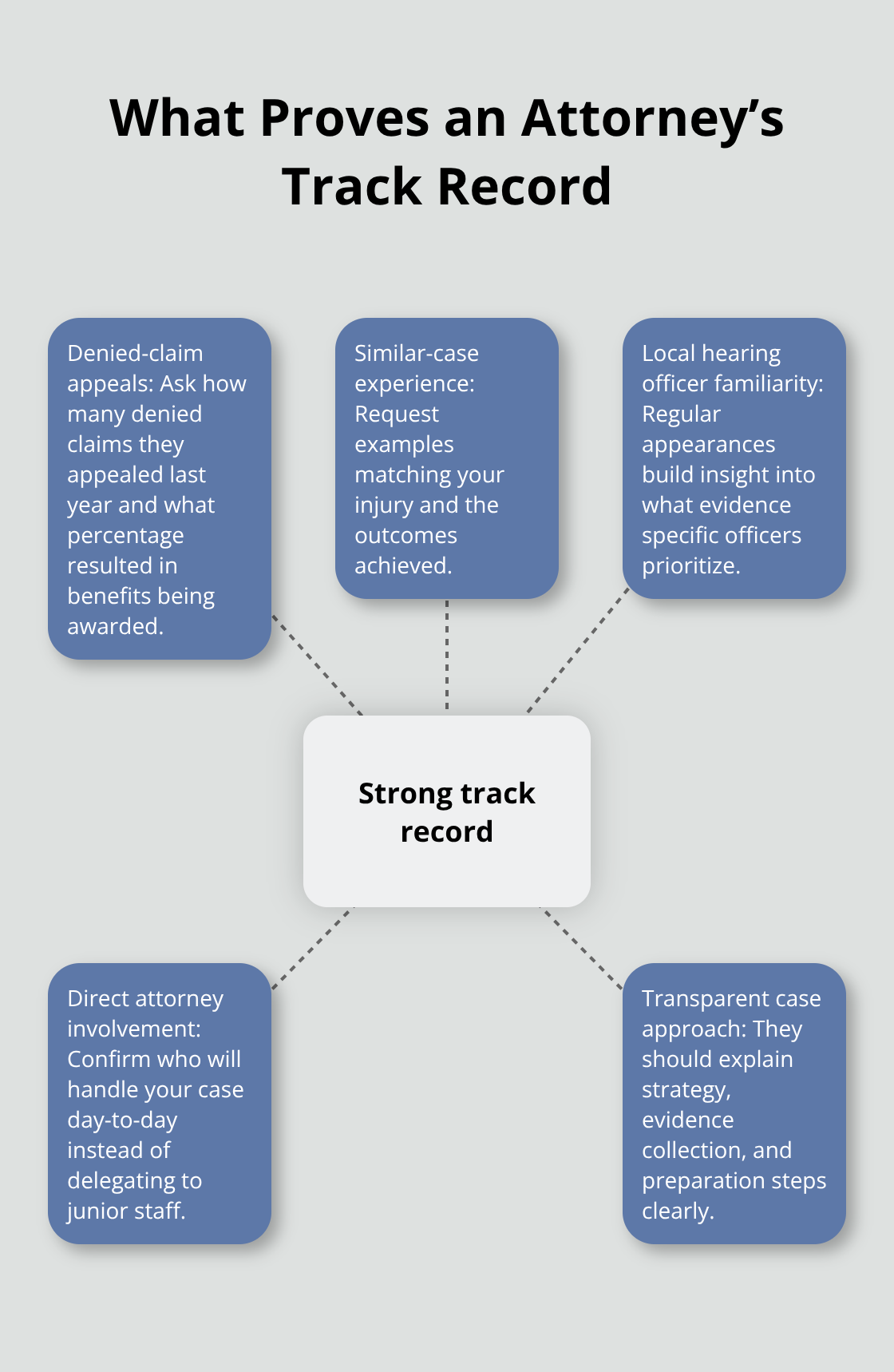
You should also ask whether the attorney personally handles your case or whether junior associates will do the heavy lifting. Experienced attorneys manage cases directly rather than delegating to less experienced staff, which reflects the standard you should expect.
Accessibility and Responsiveness Matter More Than Office Locations
Communication breakdowns create unnecessary stress when you’re already dealing with injury recovery. The right attorney responds to calls and emails within 24 hours, explains legal concepts in language you actually understand, and provides regular updates without you having to ask. During your initial consultation, assess whether the attorney listens carefully to your situation or rushes through your story. Poor communication early signals how the relationship will function throughout your case. Ask how they prefer to stay in contact and whether they have evening or weekend availability if your work schedule creates conflicts. An attorney’s willingness to meet in person when necessary, combined with reliable phone and email communication, demonstrates commitment to client service rather than just collecting cases.
What Questions Reveal About an Attorney’s Approach
The questions you ask during your consultation reveal whether an attorney truly understands your needs. Inquire about their specific experience with cases similar to yours-not just workers’ compensation in general, but injuries comparable to what you sustained. Ask them to walk you through how they would handle your claim from start to finish, including potential obstacles they anticipate. Request details about their communication preferences and how often you can expect updates. An attorney who answers these questions with specificity and confidence has handled similar situations before.
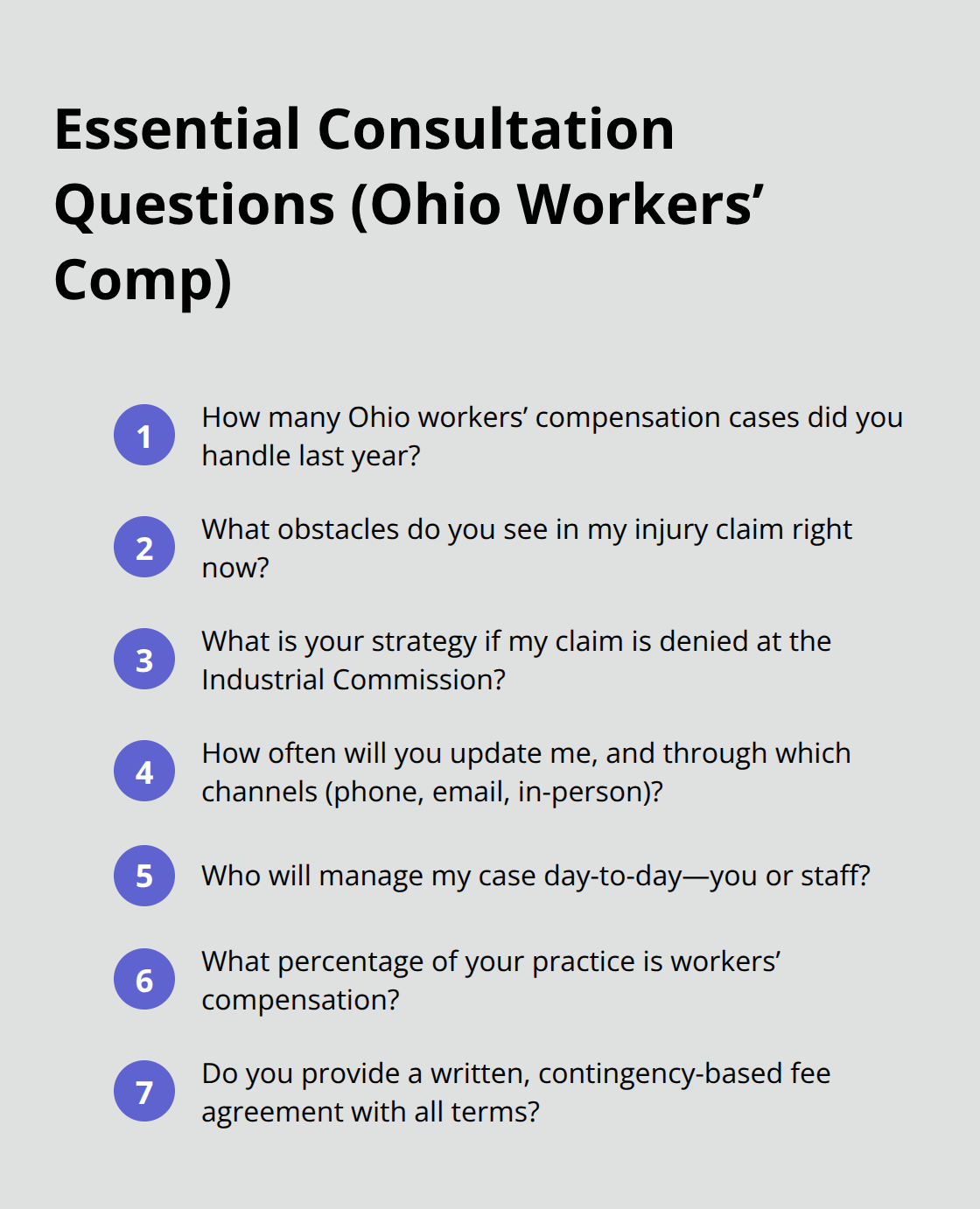
One who offers vague responses or deflects to discuss fees first has not invested the time to understand your case properly.
Fee Structures and Transparency
Most Ohio workers’ compensation attorneys work on a contingency basis, meaning you pay nothing unless they win your case. However, the specifics matter considerably. Ask what percentage they take from your award and whether they advance costs like medical records requests or expert witness fees. Request a written fee agreement that outlines all terms before you sign anything. An attorney who refuses to discuss fees clearly or pressures you to decide immediately is signaling that transparency is not their priority. This conversation also reveals whether they view your case as a partnership or simply another file to process.
Questions That Separate Serious Attorneys From Mediocre Ones
Ask About Their Specific Strategy for Your Injury
The consultation phase determines whether an attorney will actually fight for your claim or simply process paperwork. Start by asking how they would specifically handle your injury rather than requesting general information about workers’ compensation law. An attorney who can immediately identify potential obstacles in your case-such as disputes over whether your injury is truly work-related or missing medical documentation-has experience with situations like yours. Ask them to describe their strategy for addressing these obstacles before they even know all the details, because this reveals whether they think strategically or reactively. Request their exact process for gathering evidence, communicating with the Ohio Bureau of Workers’ Compensation, and preparing for an Industrial Commission hearing if your claim gets denied. Attorneys who answer with vague statements like “we will handle everything” have not actually developed case strategies and are unlikely to advocate aggressively on your behalf.
Evaluate Their Performance on Denied Claims
Your second line of questioning should focus on their track record with denied claims specifically, since approximately 95,000 claims pass through Ohio’s system annually and many face initial denials. Ask how many denied claims they appealed last year and what percentage resulted in benefits being awarded. Request specific examples of cases similar to yours and what the outcomes were. An attorney who hesitates or refuses to provide these numbers is either hiding poor results or does not track their performance-neither option is acceptable.
Clarify Communication Expectations and Availability
Finally, clarify exactly how they will keep you informed throughout the process. Will they contact you weekly, monthly, or only when major developments occur? Can you reach them directly or will staff members handle your calls? Do they prefer phone calls, emails, or in-person meetings? The answers to these questions matter because communication gaps during your recovery period add unnecessary stress and often signal that your case is not receiving the attention it deserves. An attorney’s willingness to establish clear communication channels from the start indicates how seriously they will treat your case moving forward. This foundation of transparency and accessibility becomes especially important when you face red flags that demand immediate attention and action.
Red Flags That Signal a Poor Choice
Guarantees and Unrealistic Promises
An attorney who guarantees specific outcomes or settlement amounts is either inexperienced or dishonest. Ohio’s workers’ compensation system involves too many variables-medical evidence disputes, BWC procedural decisions, and hearing officer interpretations-for anyone to promise predetermined results. When an attorney states they will secure a particular award or settlement figure, they are either unfamiliar with how Ohio’s system actually functions or attempting to manipulate you into hiring them. Legitimate attorneys discuss what outcomes are possible based on your injury, medical documentation, and comparable cases, but they never guarantee amounts.
Opacity Around Fees and Payment Terms
Any attorney who avoids discussing fees or deflects when you ask about payment structures is hiding something. Contingency-based arrangements mean you pay nothing unless they win, but the percentage they take from your award and whether they advance costs like medical records requests matter considerably. An attorney who refuses to provide a written fee agreement or pressures you to decide immediately without reviewing terms in writing has signaled that transparency is not their priority.
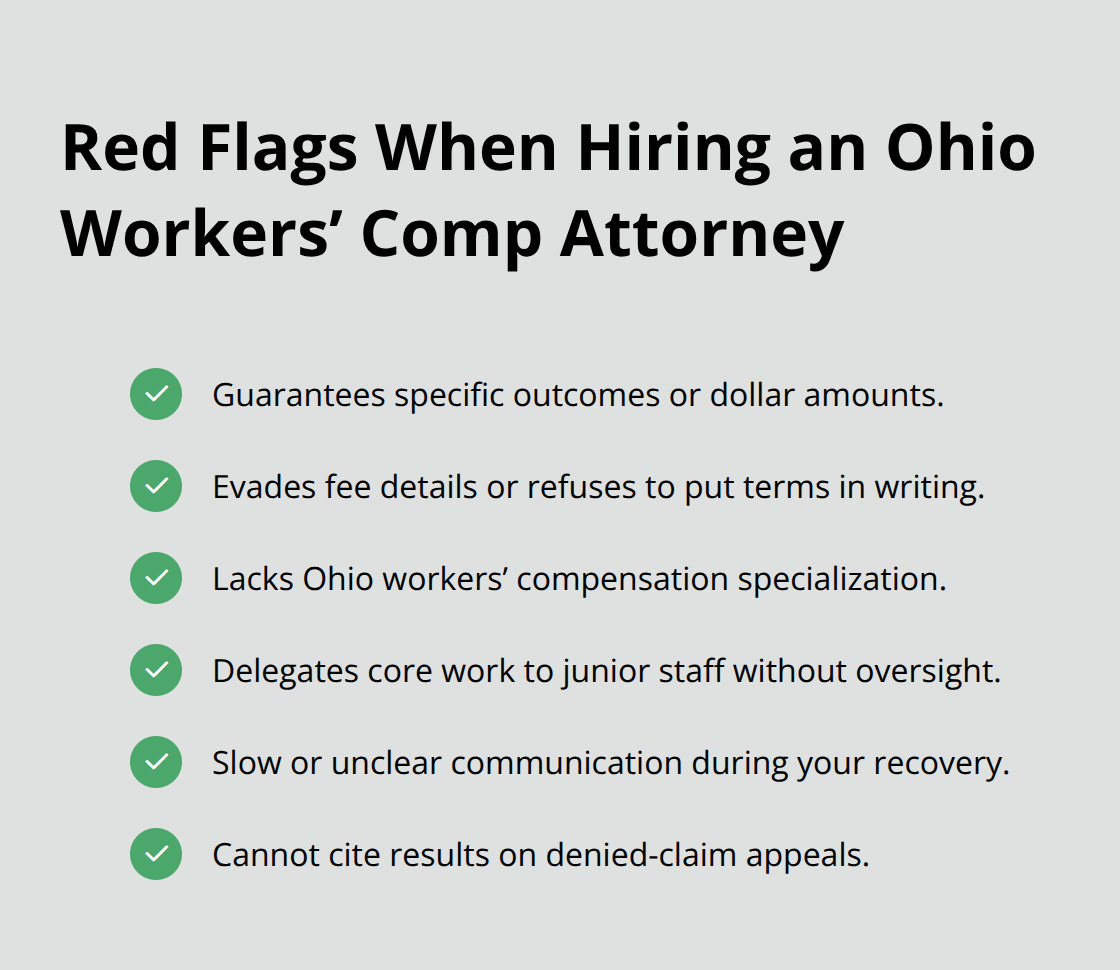
This behavior typically reflects how they will handle your case throughout-with minimal disclosure and maximum pressure.
Lack of Workers’ Compensation Specialization
The third red flag appears when an attorney’s practice spans multiple areas of law rather than focusing on workers’ compensation. An attorney who handles car accidents, personal injury, divorce, and workers’ compensation simultaneously lacks the specialized knowledge Ohio’s system demands. The Ohio Bureau of Workers’ Compensation processes more than 95,000 claims annually, and each claim requires understanding specific procedural rules, filing deadlines, and evidence standards that differ from general personal injury law. An attorney who divides their time across multiple practice areas cannot maintain the expertise necessary to identify obstacles in your case or prepare effectively for Industrial Commission hearings.
During your consultation, ask what percentage of their practice focuses on workers’ compensation specifically. If the answer is less than 50 percent, their attention and expertise are divided. An attorney who cannot articulate Ohio-specific rules-such as the difference between an allowed claim and a denied claim, or how the BWC evaluates work-relatedness-has not invested sufficient time in this specialty. Firms that concentrate exclusively on workers’ compensation (like Robin J Peterson Company, LLC, which serves the Cleveland, Akron, and Canton areas) develop the depth of knowledge that protects your rights and maximizes your benefits.
Final Thoughts
Choosing the right Ohio workplace injury attorney requires evaluating three core elements: specialized experience with Ohio’s workers’ compensation system, a documented track record with denied claims, and genuine accessibility throughout your case. An attorney who handles workers’ compensation exclusively, regularly appears before the Industrial Commission, and can articulate specific strategies for your injury demonstrates the expertise your claim demands. Their willingness to discuss fees transparently, provide written agreements, and commit to direct communication signals how seriously they will treat your case from start to finish.
An experienced attorney identifies obstacles early, gathers evidence strategically, and presents your case persuasively to hearing officers who determine your benefits. The difference between working with someone who understands Ohio’s system and someone who does not often determines whether you receive fair treatment or face unnecessary denials and delays. Your recovery should not suffer from poor legal guidance or communication breakdowns that complicate your path forward.
Schedule consultations with at least two or three attorneys before making your decision, and prepare your questions in advance. Assess how carefully they listen to your situation, request concrete information about their experience with cases similar to yours, and pay attention to how they explain legal concepts. We at Robin J Peterson Company, LLC focus exclusively on workers’ compensation law and serve injured workers throughout Cleveland, Akron, and Canton-contact us to discuss your case with an Ohio workplace injury attorney who fights for the benefits you have earned.