
A head injury at work can change everything in an instant. Whether you hit your head on equipment, fall from a height, or suffer a blow during your shift, understanding your head injury workers comp rights is essential.
At Robin J Peterson Company, LLC, we help injured workers navigate the claims process and secure the benefits they deserve. This guide walks you through what qualifies for coverage, what benefits you can receive, and how to successfully return to work.
What Head Injuries at Work Actually Look Like
How Often Head Injuries Happen on the Job
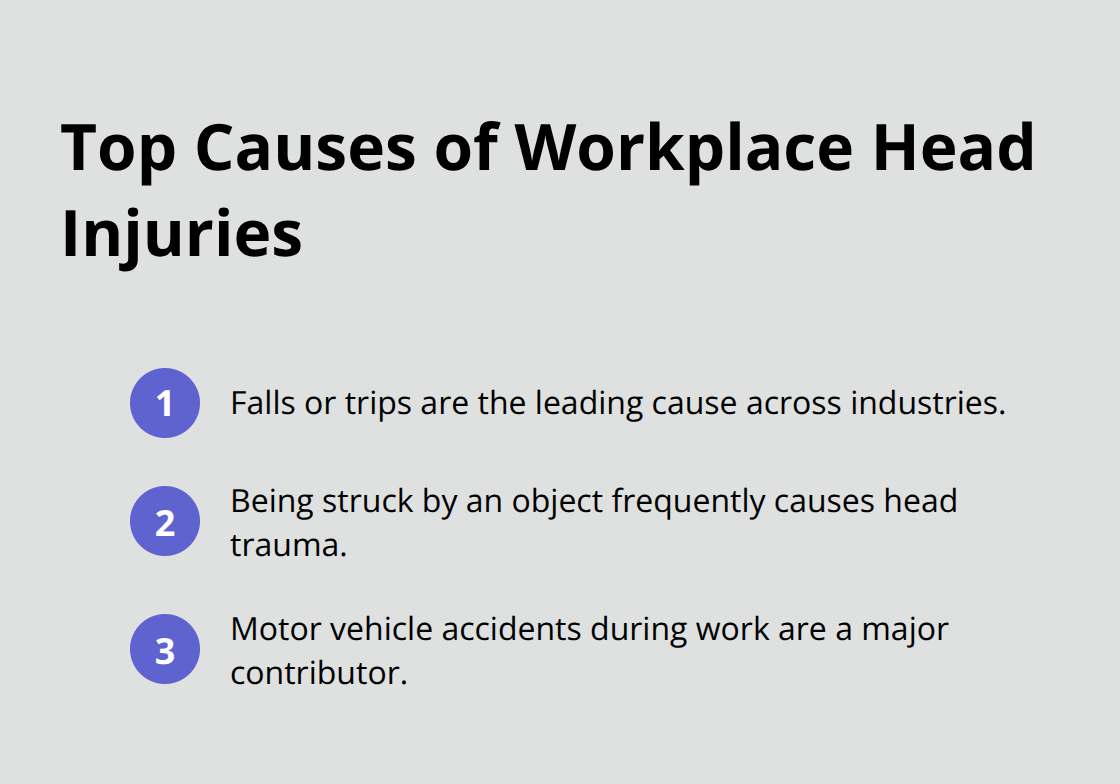
Head injuries at work occur far more frequently than most people realize. About 1 in 4 mild traumatic brain injuries happen on the job, according to workplace injury data. These injuries range from concussions that seem minor but cause lasting problems to severe traumatic brain injuries that require months of rehabilitation. The three most common causes of workplace head injuries are falls or trips, being struck by an object, and motor vehicle accidents while working. Falls alone account for a significant portion of these incidents, making them the leading cause across most industries. Construction workers face the highest risk, but head injuries happen in offices, warehouses, retail stores, and manufacturing facilities too.
Reporting Your Head Injury Immediately
The moment after a head injury at work is critical. You must report the injury to your supervisor or employer immediately, even if symptoms seem minor or you think you’re fine. This notification starts the clock on your workers compensation claim and protects your right to receive benefits. In Ohio, you need to report the injury promptly to preserve your claim. After reporting, seek medical evaluation from a healthcare provider who understands head injuries, ideally someone trained in concussion or brain injury assessment. Do not wait to see if symptoms improve on their own.
Documenting the Incident and Your Symptoms
Document everything about the incident, including what happened, what you hit or how you fell, who witnessed it, and the exact time and location. Write down these details because they fade quickly and you’ll need them for your claim. Get a detailed injury report from your employer and request a copy for your records. Save all medical bills, test results, appointment records, and notes about your symptoms and how they affect your daily life. This documentation becomes essential evidence for your claim.
Avoiding Early Return to Work
Avoid returning to work until a healthcare provider clears you, even if your employer pressures you or the injury feels manageable. Returning too soon after a head injury can cause serious complications and jeopardize your recovery and your claim. The Ohio Bureau of Workers’ Compensation covers medical treatment, rehabilitation, and lost wages for work-related head injuries regardless of how the accident occurred. What matters most is recognizing that head injuries qualify for workers compensation coverage in Ohio if they happen during your job duties or at your workplace. Your next step involves understanding exactly what benefits the Ohio BWC provides and how to access them.
What the Ohio BWC Actually Covers for Your Head Injury
Head Injuries That Qualify for BWC Coverage
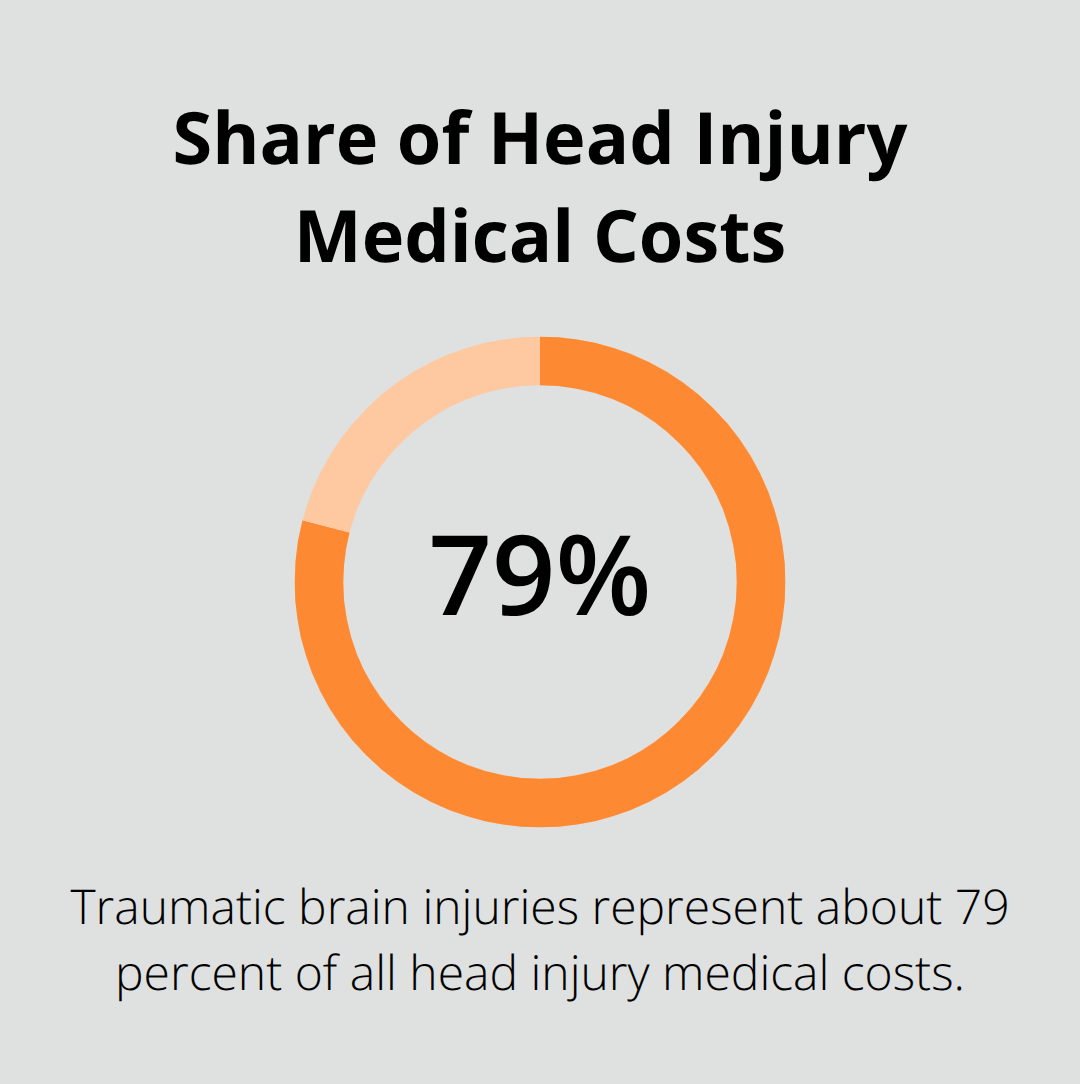
The Ohio Bureau of Workers’ Compensation covers head injuries that occur during work, but understanding what falls under coverage matters more than you might think. If you suffered a head injury while performing job duties or at your workplace, the BWC treats it as a compensable claim. This includes concussions, traumatic brain injuries, contusions, and any head injury requiring medical evaluation. The BWC does not care whether the injury resulted from your own mistake, equipment failure, or someone else’s negligence-what matters is that the injury happened at work. Head injuries account for a growing share of workers compensation medical payments in Ohio and across the country, with traumatic brain injuries representing about 79 percent of all head injury medical costs according to the National Council on Compensation Insurance. This recognition means the BWC provides substantial coverage for treatment and rehabilitation.
Medical Treatment the BWC Pays For
The BWC covers emergency room visits, neurology and neuropsychology evaluations, CT scans and MRI imaging, physical therapy, occupational therapy, and speech therapy if your injury affects communication or cognition. The BWC also covers medications prescribed for post-concussion symptoms, including anticonvulsants and medications for mood or behavioral changes. If a concussion specialist recommends ongoing neuropsychological testing to track your cognitive recovery, that testing receives coverage. Many workers fail to access specialized concussion care because they assume it is not covered or because their employer directs them to a general practitioner instead of a brain injury specialist. You have the right to seek treatment from an authorized workers compensation provider who specializes in head injuries, and the BWC pays for that care.
Wage Loss and Disability Benefits
Wage loss benefits cover a portion of your lost income while you recover and cannot work. In Ohio, temporary total disability benefits typically replace a percentage of your average weekly wage, allowing you to focus on recovery without financial strain. If your head injury causes permanent disability, you may qualify for permanent partial disability benefits or permanent total disability benefits depending on your ability to return to work. Vocational rehabilitation services are also available if your injury prevents you from returning to your previous job, helping you retrain for suitable alternative employment.
Building a Strong Claim From the Start
The key to accessing all available benefits involves reporting your injury promptly, seeking specialized medical care, and documenting everything so the BWC understands the full scope of your injury. Collect all medical records, test results, and appointment documentation. Save receipts for any injury-related expenses. Write down how your symptoms affect your daily activities and work capacity. This documentation becomes essential evidence that supports your claim and helps the BWC process your benefits without unnecessary delays. Once you understand what coverage the BWC provides, the next step involves structuring your return to work in a way that protects your recovery and your long-term health.
Navigating Return-to-Work Plans After a Head Injury
Structure Your Return to Work Around Recovery, Not a Calendar
Return-to-work after a head injury is not a single event but a structured process that must match your recovery timeline, not a predetermined calendar date. The Ohio BWC expects employers and healthcare providers to work together on a phased return that gradually increases your work demands as your symptoms improve and your cognitive function recovers. Most workers return to some form of work within one to two weeks after a mild concussion, but this timeline varies significantly depending on injury severity and individual recovery. If symptoms persist beyond three weeks, you likely need further evaluation from a concussion specialist before returning to any work duties.
Reject the All-or-Nothing Approach to Work
The critical mistake many workers and employers make is treating return-to-work as binary-either you work full duties or you don’t work at all. In reality, Ohio’s workers compensation system supports modified duty arrangements where you perform lighter tasks, work fewer hours, or focus on roles that don’t aggravate your symptoms while your brain heals. A phased approach actually reduces the risk of re-injury and expensive complications.
Match Work Tasks to Your Current Cognitive Capacity
Your healthcare provider should separate cognitive and physical work demands from environmental factors like lighting, noise, and workplace stress when developing your return-to-work plan. A job that requires intense concentration or rapid decision-making may be unsuitable early in recovery even if you can physically perform it, while the same job might work fine with reduced hours or in a quieter environment. Talk with your treating physician about which specific work tasks trigger symptoms-headaches, dizziness, memory problems, or difficulty concentrating.
Implement Light Duty Options That Support Recovery
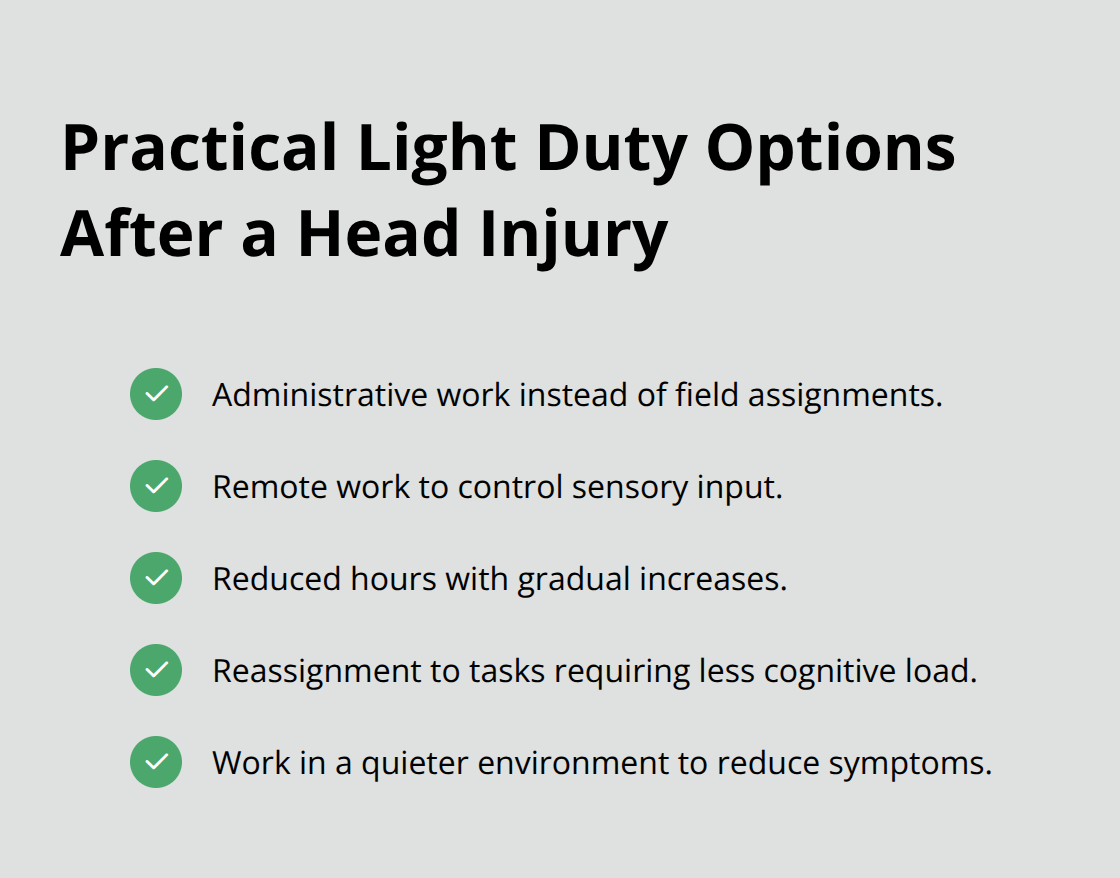
Light duty options might include administrative work instead of field work, remote work to control sensory input, reduced hours with gradual increases as you improve, or reassignment to tasks requiring less cognitive load. Your employer should understand that a phased approach actually reduces the risk of re-injury and expensive complications. Document your work capacity, symptoms during trial periods, and any accommodations that help or hinder your recovery.
Protect Your Rights When Employers Resist Cooperation
If your employer resists modified duty or tries to force full-duty return before medical clearance, contact a workers compensation attorney immediately. Ohio law protects workers from retaliation for pursuing legitimate claims and requires employers to cooperate with medically supervised return-to-work plans. An experienced workers compensation attorney can advocate for your rights and hold your employer accountable to legal obligations.
Final Thoughts
Head injury workers comp claims in Ohio demand immediate action, thorough documentation, and a clear understanding of your rights under the Ohio Bureau of Workers’ Compensation system. Report your injury immediately, seek specialized medical care, and document everything so the BWC understands the full scope of your injury. Structure your return to work around your recovery timeline rather than employer pressure or arbitrary deadlines.
The complexity arises when employers resist modified duty arrangements, when the BWC delays approvals, or when insurance adjusters undervalue the long-term impact of your brain injury. Head injuries often cause invisible but lasting effects on memory, concentration, mood, and decision-making that persist long after you return to work. Without proper documentation and advocacy, you risk accepting inadequate benefits that don’t cover your actual medical needs or lost wages.
An experienced workers compensation attorney understands Ohio’s system, knows how to build a compelling case with medical evidence, and can challenge unfavorable decisions from the BWC or insurance carriers. Contact a workers compensation attorney for a free consultation to evaluate your claim, discuss your injury and medical treatment, and develop a strategy to maximize your benefits. Don’t navigate this alone-reach out today and protect your rights.