
Filing a workers’ compensation claim in Ohio can feel overwhelming, especially when you’re dealing with an injury. We at Robin J Peterson Company, LLC know that understanding your rights and the process makes a real difference in getting the support you deserve.
This guide walks you through everything you need to know about BWC claim help in Ohio, from filing your initial claim to appealing a denial if necessary.
Understanding Ohio BWC Claims
What Ohio Workers’ Compensation Actually Covers
The Ohio Bureau of Workers’ Compensation covers injuries and illnesses that occur while you perform your job duties. This is a no-fault system, meaning coverage depends on whether the injury happened during work, not on who caused it. Traumatic injuries like fractures from falls, vehicle collisions, or machinery accidents qualify for coverage. Musculoskeletal conditions from typical job activities also qualify-lower back strains, rotator cuff tears, pinched nerves, and hernias all fall under this umbrella. Ohio maintains a schedule of occupational diseases, including certain cancers, infections, and poisonings from substances like asbestos, lead, mercury, and arsenic. Medical bills and lost wages form the primary benefits, though vocational rehabilitation may apply depending on your situation. The key requirement is proving the injury happened in the course of employment and that medical treatment was necessary.
Why Claims Get Denied and How to Avoid It
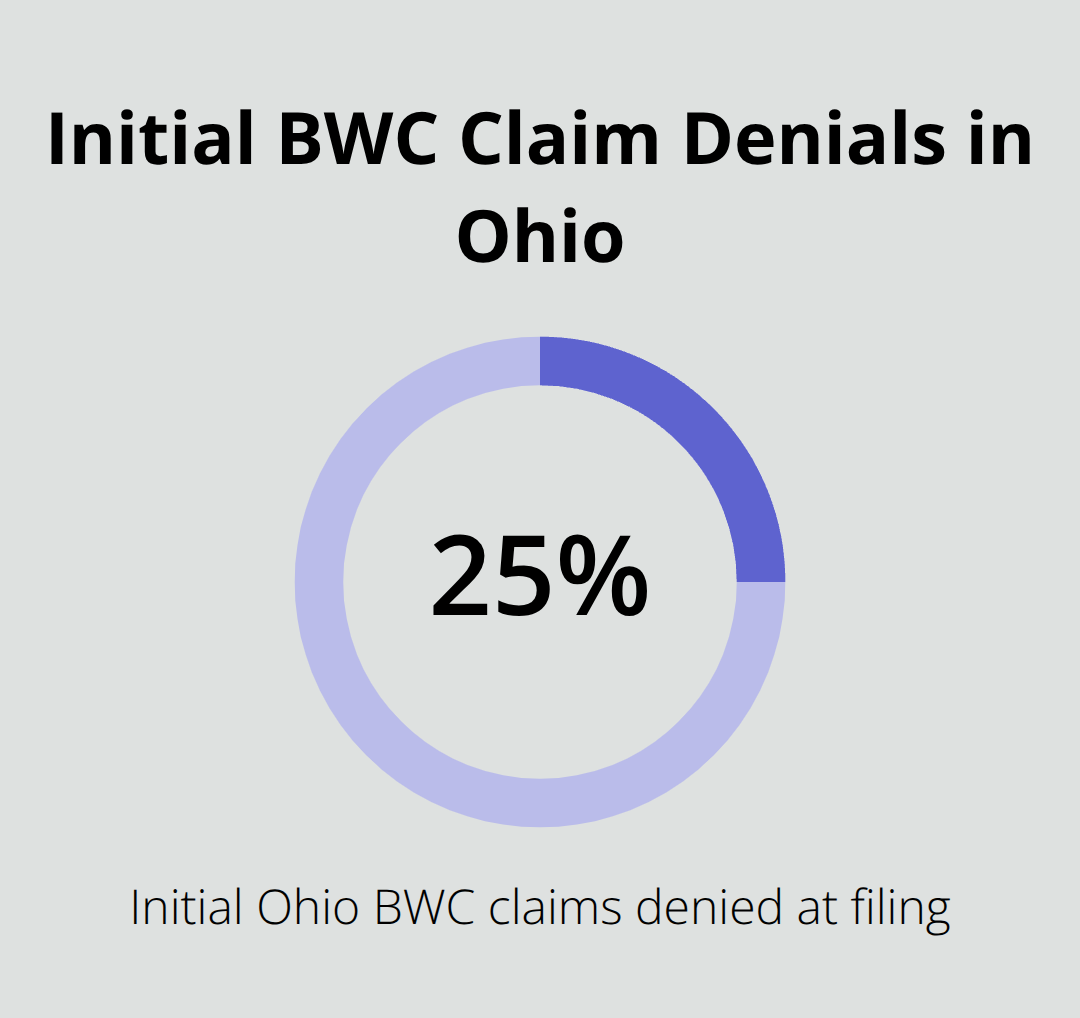
Claims fail most often because of timing problems and documentation gaps. The Ohio Bureau of Workers’ Compensation denies roughly 25 percent of initial claims, and understanding your legal rights after a job injury helps you avoid common pitfalls. You should provide written notice to your employer-email or an accident report-to create a verifiable paper trail.
Discrepancies between your accident report and medical records trigger another major denial reason. Pre-existing conditions don’t automatically disqualify you, but you must truthfully disclose them and show how work aggravated the condition. You should use a BWC-certified medical provider for ongoing care; non-certified providers may have their bills rejected. Intoxication carries a rebuttable presumption that it caused the injury, and refusing a post-accident test can jeopardize your claim. Finally, vague descriptions of how the injury occurred-especially about whether you were truly in the course of employment-create openings for denial. The more specific your documentation, the stronger your position.
The Critical Timeline for Filing
You should file your claim as soon as possible after the injury. Report to your employer immediately, then seek medical evaluation from a BWC-certified provider who documents the work-relatedness and any work restrictions. Your employer or medical provider can file the First Report of Injury online, by mail, or by phone. Once filed, you should monitor the claim status through the BWC online portal or contact center. If the BWC denies your claim, you have 14 days to appeal with the Industrial Commission of Ohio. This window is strict-missing it eliminates your right to challenge the decision. You should gather supporting medical records, witness statements, and a clear timeline of injury and treatment before the appeal deadline. An Ohio workers’ compensation attorney can help you meet deadlines and build a strong appeal record if needed. With the filing process underway, your next step involves organizing the specific documents and evidence that will support your case.
Filing Your BWC Claim Step by Step
Report Your Injury to Your Employer in Writing
Notify your employer in writing immediately after the injury occurs. Email works perfectly, but an accident report is even better because it creates a timestamped record that the BWC can reference later. Include specific details about what happened, where it happened, what time it occurred, and which body parts were affected. Vague descriptions like “I hurt my back at work” invite scrutiny and denial. Instead, write “I strained my lower back while lifting a 50-pound box from a shelf at 2 PM on March 20 in the warehouse.” This specificity protects you because it eliminates ambiguity about whether you were truly performing job duties when the injury happened.
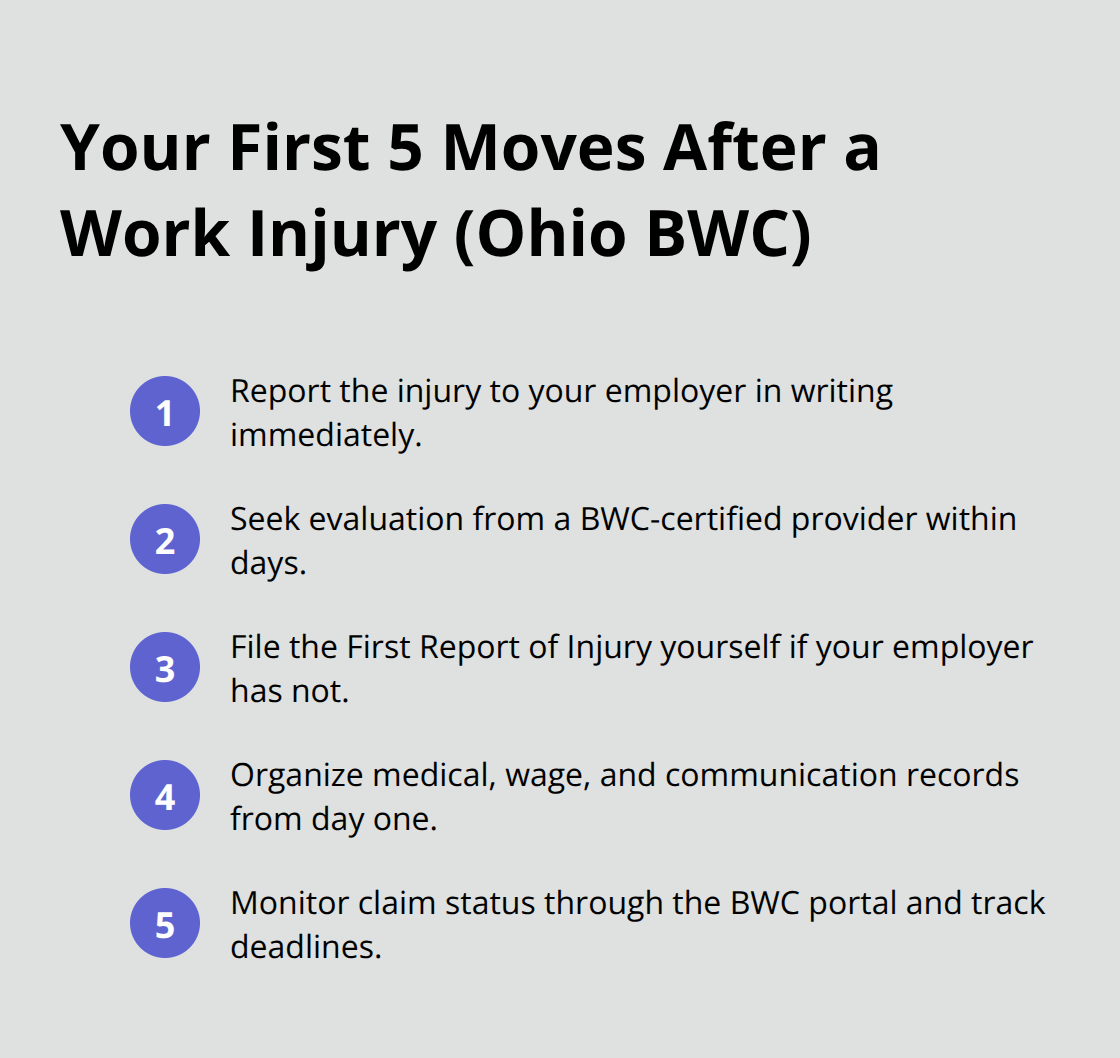
Your employer is legally required to report the injury to the BWC, but do not rely solely on them to handle it. File the First Report of Injury yourself through the BWC online portal, by mail, or by phone if your employer hasn’t done so within the required timeframe. Keep the claim number the BWC assigns you and reference it in all future communications.
Gather Medical Documentation From a Certified Provider
Schedule an appointment with a BWC-certified provider within days of the injury, not weeks later. The provider must explicitly document that the injury is work-related and note any work restrictions or limitations you have. Non-certified providers can treat you in emergencies, but ongoing care through a non-certified provider will likely result in rejected bills.
Collect and organize every document: medical records, test results, treatment notes, physician statements about work-relatedness, wage statements from your employer showing your average weekly wage before injury, and any correspondence with your employer or the BWC. Discrepancies between your accident report and your medical records trigger denials regularly, so ensure both tell the same story about when the injury occurred and how it happened.
Handle Pre-Existing Conditions Honestly
If you had a pre-existing condition that the work injury aggravated, disclose it truthfully in your medical records and explain clearly how the job duties made it worse. The BWC sees through attempts to hide pre-existing conditions, and honesty actually strengthens your credibility. This transparency prevents the BWC from discovering hidden information later and using it as grounds for denial.
Submit Your Complete Claim Package
Submit your complete claim package to the BWC through their online portal, which provides tracking and confirmation. If you submit by mail, use certified mail so you have proof of delivery. The BWC typically acknowledges receipt within 10 business days and begins processing your claim. Getting your claim filed correctly matters more than speed-the Ohio Bureau of Workers’ Compensation processes thousands of claims annually, and the ones that succeed share a common trait: thorough, accurate documentation from day one. With your claim now submitted and documented, the next phase involves understanding what happens if the BWC denies your initial request and how to challenge that decision effectively.
Appealing a Denied BWC Decision
The 14-day appeal window after a BWC denial is brutally short, and most workers miss it because they don’t realize the clock is ticking. The Industrial Commission of Ohio handles appeals, and this is where your claim either receives a genuine second look or dies quietly. The appeal process differs fundamentally from your initial filing because now you’re not just submitting paperwork-you’re building a case to overturn a specific denial reason. The BWC cited a reason for the denial, whether it’s insufficient medical evidence, disputed work-relatedness, or a procedural error, and your appeal must directly address that reason with concrete evidence.
Waiting for the perfect evidence or collecting documents slowly guarantees you’ll miss the deadline. File your appeal immediately and request a hearing with the Industrial Commission. This forces both the BWC and your employer to present their case in front of an actual decision-maker, not a claims processor reviewing a file. Most workers who miss the 14-day window and attempt to file late lose their right to appeal entirely, making this deadline non-negotiable.
What Happens During an Appeal Hearing
Your appeal triggers a formal hearing before an administrative law judge with the Industrial Commission of Ohio. You’ll testify about your injury, your job duties, and how the work caused or aggravated your condition. The BWC or your employer’s representative will present their argument for why the claim should remain denied.
Medical evidence dominates these hearings-your physician’s testimony or written statement about work-relatedness carries far more weight than your own account alone. If the denial centered on whether you were truly performing job duties when injured, witnesses who saw the incident become invaluable. If the denial cited insufficient medical documentation, bring updated medical records and a detailed physician statement that explicitly links your injury to work. The judge reviews everything submitted and issues a written decision explaining the ruling.
Building Evidence That Wins Appeals
The strength of your appeal rests entirely on the evidence you present. Organize your medical records chronologically so the judge sees a clear timeline from injury through treatment. Include physician statements that explicitly address the specific reason the BWC cited for denial. If work-relatedness was disputed, obtain a detailed statement from your doctor explaining exactly how your job duties caused or aggravated the condition.
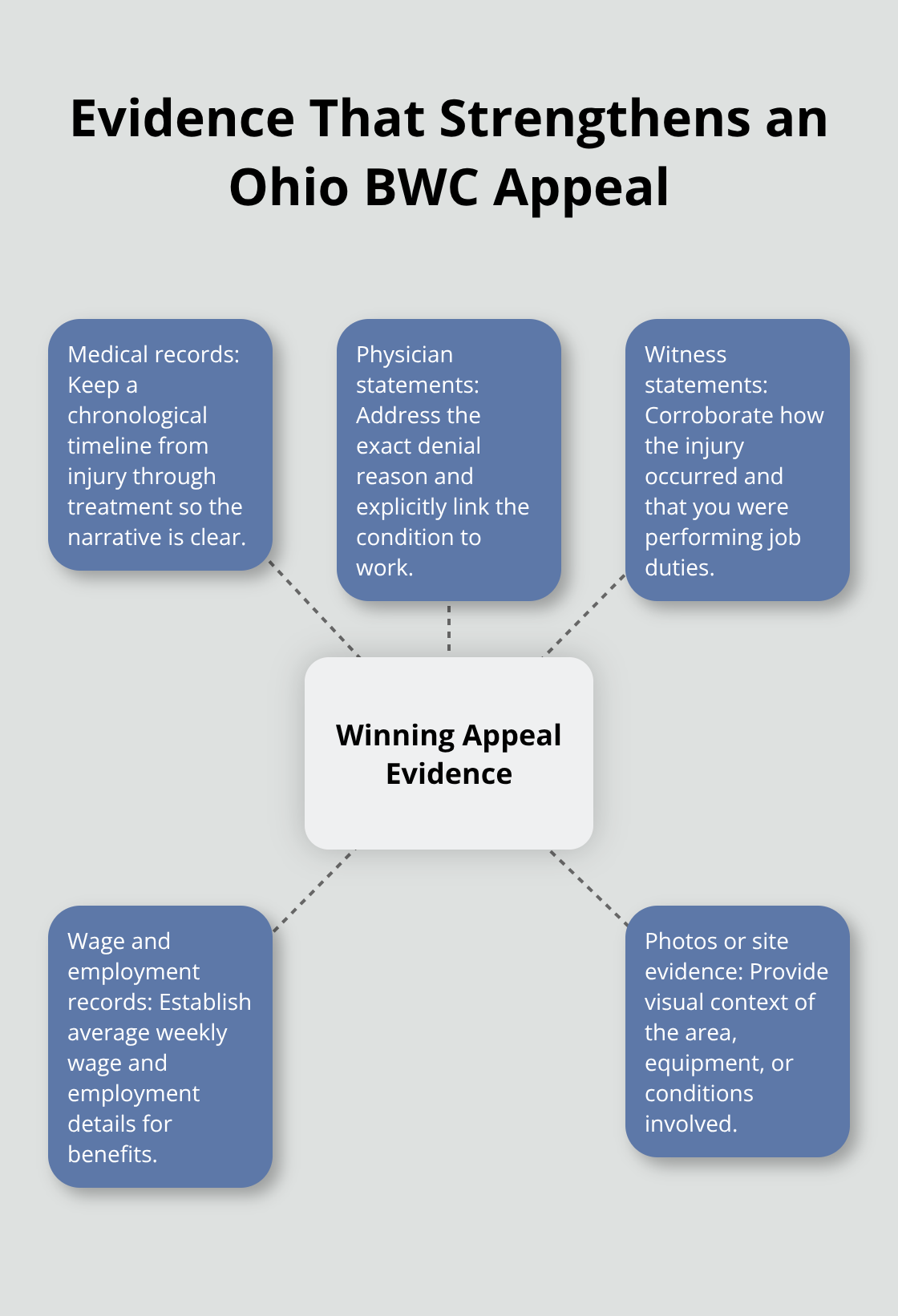
Witness statements carry significant weight (especially if the incident occurred in front of coworkers). Written statements from people who observed the injury or know your job duties help counter employer claims that you weren’t performing work duties when injured. Wage statements and employment records establish your average weekly wage, which determines benefit amounts if your appeal succeeds. Photographs of the work area or equipment involved in the injury provide visual context that strengthens your narrative.
When You Need Legal Representation
Handling an appeal alone is possible but statistically unwise. Workers who hire an Ohio workers’ compensation attorney improve their chances of overturning a denial substantially because attorneys know which evidence the Industrial Commission actually values and how to present it effectively. An attorney identifies weaknesses in the BWC’s denial reasoning and builds evidence specifically designed to counter those points.
They also manage the procedural requirements that trip up unrepresented workers-proper notice requirements, correct filing formats, meeting discovery deadlines, and submitting evidence within required timeframes. During the hearing itself, an attorney cross-examines the BWC’s independent medical examiner and employer representatives, exposing inconsistencies or bias in their testimony. They prepare you thoroughly for your own testimony so you stay focused, avoid volunteering extraneous information, and answer questions in ways that strengthen your case. The financial investment in legal representation typically pays for itself through recovered benefits, especially if ongoing medical coverage or wage replacement is at stake.
Final Thoughts
Filing a BWC claim in Ohio requires attention to detail, prompt action, and organized documentation from the moment injury occurs. The most successful claims share three characteristics: immediate written notice to your employer, medical evaluation from a BWC-certified provider within days of injury, and complete, accurate documentation that tells a consistent story across all forms and records. Timing matters enormously-the 14-day appeal window after denial is fixed and unforgiving, so you must treat every deadline as non-negotiable to protect your rights.
Specificity in your accident report and medical records eliminates ambiguity that the BWC uses as grounds for denial, while truthfulness about pre-existing conditions actually strengthens your credibility rather than weakening it. An attorney navigates the procedural requirements that trip up unrepresented workers and identifies weaknesses in the BWC’s reasoning that you might miss on your own. They prepare you for hearings, cross-examine opposing witnesses, and present evidence in ways the Industrial Commission values.
If you need BWC claim help Ohio or face a denied claim, contact Robin J. Peterson Company, LLC to discuss your situation with experienced workers’ compensation attorneys who understand the system and know how to win.