
Returning to work after a workplace injury in Ohio involves navigating several programs and resources designed to support your recovery and reemployment. The state’s return to work Ohio system combines employer support, rehabilitation services, and financial benefits to help you transition back successfully.
At Robin J Peterson Company, LLC, we guide injured workers through each step of this process. Understanding your options makes the difference between a smooth recovery and unnecessary delays.
What Ohio’s Return to Work System Actually Covers
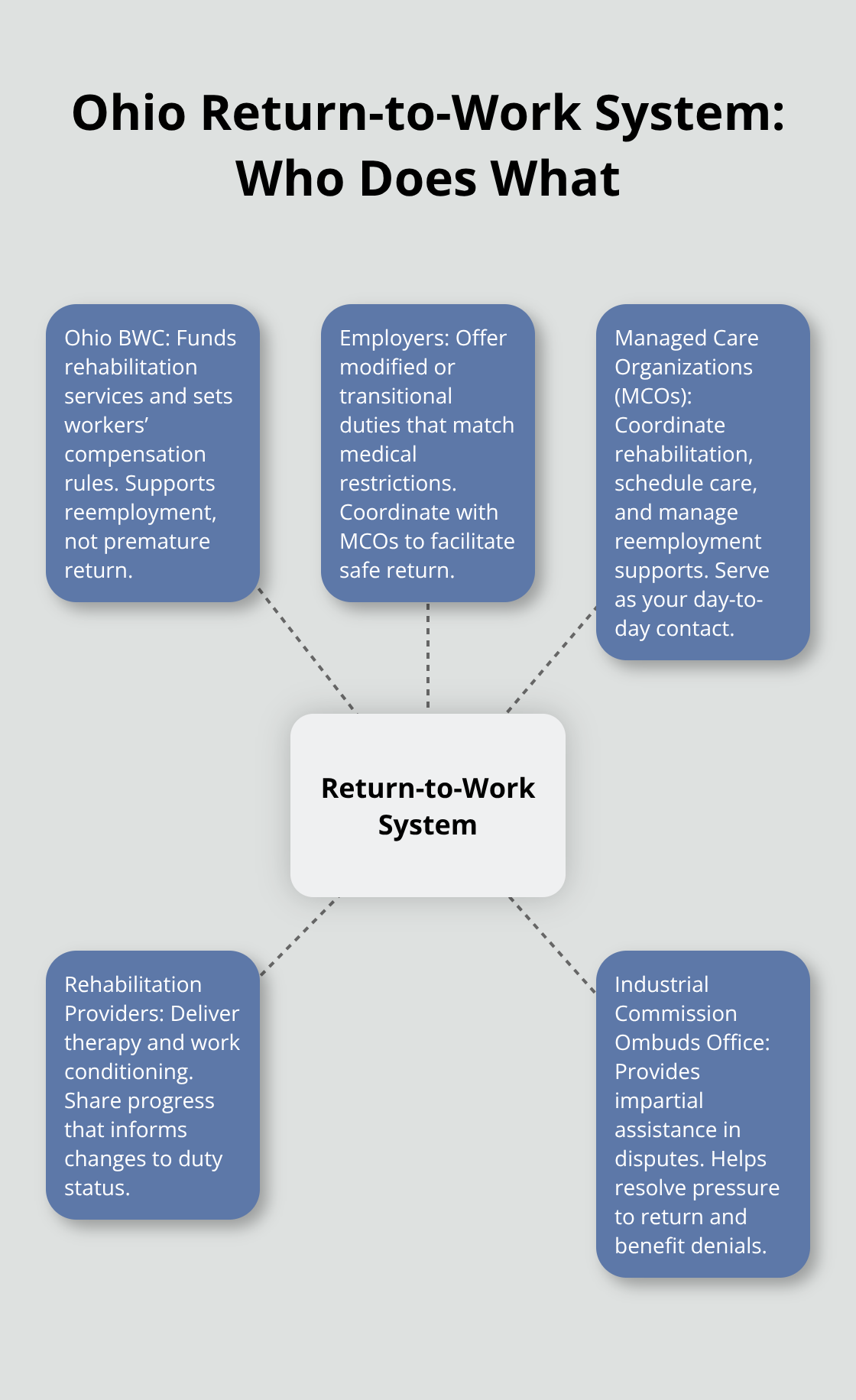
Ohio’s return to work framework isn’t a single program-it’s a coordinated system where the Ohio Bureau of Workers’ Compensation, employers, and rehabilitation providers work together to move injured workers back into employment. The Ohio Department of Job and Family Services reports that Ohio’s labor force participation rate stands at 62.3% as of December 2025, meaning thousands of workers need pathways back into productive employment after injury. The system prioritizes moving you back to work through modified duty, transitional work, and direct rehabilitation support rather than maintaining you on benefits indefinitely. This approach reflects a fundamental shift away from passive income replacement toward active reemployment, which research shows leads to better long-term outcomes for workers and faster wage recovery.
Who Qualifies and What You Actually Receive
To access Ohio’s return to work benefits, you must have a work-related injury recognized under Ohio workers’ compensation law and qualify for benefits from the BWC. Your employer’s managed care organization (which you can identify through the MCO lookup tool or by calling 1-800-644-6292) determines your specific rehabilitation and reemployment services. The system provides temporary total disability benefits that replace a portion of lost wages while you recover-not 100% of your earnings, but enough to prevent financial collapse during healing. Continuing these benefits requires you to follow your doctor’s treatment plan and attend all scheduled medical appointments; missing appointments gives the BWC grounds to reduce or suspend your benefits. Light-duty work options often become available before you’re cleared for full-duty work, and accepting appropriate light-duty positions can actually accelerate your return to normal wages rather than delay it. The Ohio Industrial Commission Ombuds Office provides impartial assistance if disputes arise about your claim or if you feel pressured to return before medically appropriate.
Medical Documentation Protects Your Timeline and Benefits
Your medical records directly affect both your timeline and your benefits. Obtain written statements from your doctor about your restrictions and readiness status to create a clear record that protects you if disputes emerge later. Private-sector employment in Ohio rose only 2,900 jobs in December 2025 according to the Ohio Department of Job and Family Services, underscoring that job market conditions vary significantly-the sooner you’re cleared and prepared to return, the better your positioning. Coordinate actively among yourself, your employer, and your doctor rather than assuming communication will happen automatically; many delays stem from unclear expectations rather than medical barriers. If your employer pressures you to return against medical advice, report this directly to the BWC rather than complying out of fear; the agency has clear authority to intervene and enforce compliance with workers’ compensation rules.
What Happens When Conflicts Arise
Disputes between you, your employer, and the BWC can derail your return to work plan. The Ohio Industrial Commission Ombuds Office exists specifically to resolve these conflicts and provide impartial guidance when disagreements occur. Understanding your rights under Ohio workers’ compensation law prevents employers from exploiting injured workers or the BWC from denying legitimate benefits. When you face pressure to return prematurely or encounter resistance to your rehabilitation plan, documentation and direct communication with the BWC protect your interests. The next section covers how you actually communicate with your employer and manage these relationships during your recovery phase.
How the BWC Actually Works for Your Reemployment
Your Managed Care Organization Coordinates Your Path Forward
The Ohio Bureau of Workers’ Compensation operates as your primary advocate during return to work, but understanding how the system functions prevents costly mistakes. Your managed care organization, identified through the MCO lookup tool or by calling 1-800-644-6292, coordinates all rehabilitation services and determines what reemployment support you receive. This MCO acts as the intermediary between you, your employer, and the BWC, so establishing direct communication with your assigned MCO representative accelerates decisions about modified duty eligibility and rehabilitation planning. The BWC itself doesn’t force you back to work prematurely; instead, it funds rehabilitation services designed to restore your capacity for employment.
Modified Duty Creates a Bridge to Full Employment
Ohio’s system prioritizes moving you into modified or transitional work roles before full-duty return, which research shows produces better wage recovery outcomes than remaining on temporary total disability benefits indefinitely. When your doctor approves light-duty work within specific restrictions, your employer should offer positions matching those restrictions. If your employer claims no suitable light-duty work exists, document this refusal in writing and report it to the BWC immediately, as employers have obligations to facilitate appropriate transitional work when medically feasible. Modified duty and transitional work aren’t punitive measures or ways to reduce your benefits prematurely. These roles serve as structured bridges between medical recovery and full employment, allowing your body to gradually rebuild capacity while you maintain income and job continuity.
Light-Duty Work Accelerates Your Return to Normal Wages
Light-duty positions typically involve reduced physical demands, modified schedules, or temporary reassignment to different tasks within your workplace. Your doctor specifies which activities you can safely perform, and your employer must respect these restrictions or face BWC sanctions. Accepting appropriate light-duty work often accelerates your return to normal wages because employers typically restore full compensation once you’re cleared for unrestricted duty, whereas workers who refuse suitable modified work risk benefit suspension. The Ohio Industrial Commission Ombuds Office provides free, impartial assistance if your employer pressures you to exceed medical restrictions or if your MCO denies rehabilitation services you believe are necessary.
Documentation and Compliance Protect Your Benefits
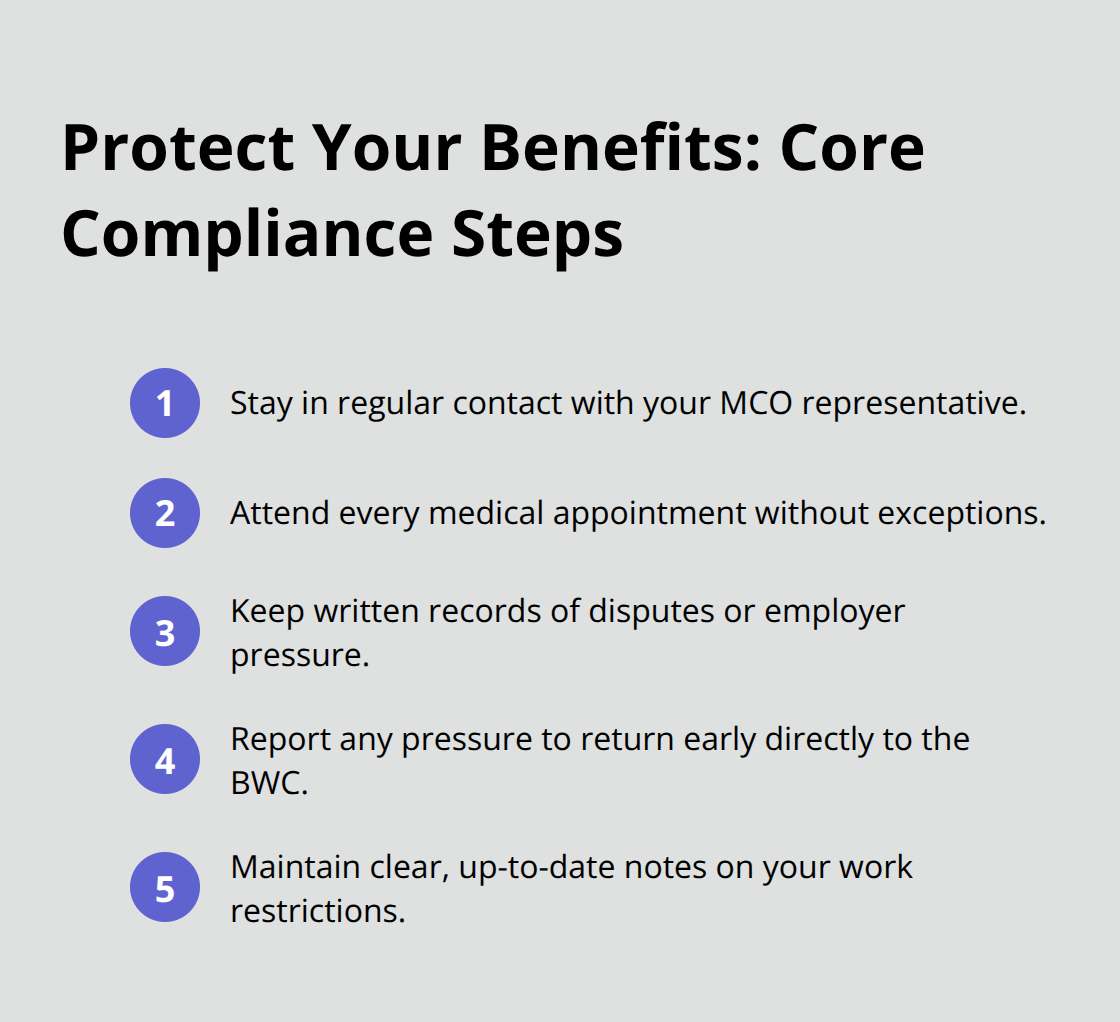
Managing your claim successfully means maintaining regular contact with your MCO, attending all medical appointments without exception, and providing written documentation of any disputes or pressure from your employer. Missing appointments gives the BWC legal grounds to reduce benefits, so treating medical compliance as non-negotiable protects both your health and your income during recovery. When your employer pressures you to return against medical advice, report this directly to the BWC rather than complying out of fear; the agency has clear authority to intervene and enforce compliance with workers’ compensation rules.
Your next step involves communicating directly with your employer about your status and restrictions, which requires clarity about what you can and cannot do physically.
How to Talk with Your Employer and Access Real Support
Schedule a Formal Conversation About Your Restrictions
Start the conversation with your employer about your return to work status sets the tone for everything that follows. Most employers want injured workers back productively, but misalignment on medical restrictions creates friction that delays your recovery. Schedule a formal conversation with your direct supervisor and your human resources department rather than having casual discussions that create no paper trail. Bring your doctor’s written statement outlining your specific restrictions, your expected timeline for progression, and any light-duty work your physician recommends. State your restrictions clearly: instead of saying you have back pain, specify that you cannot lift more than 20 pounds or stand for more than two hours consecutively. This specificity prevents your employer from misinterpreting your limitations and assigning tasks that aggravate your injury.
Document Refusals and Report Them Immediately
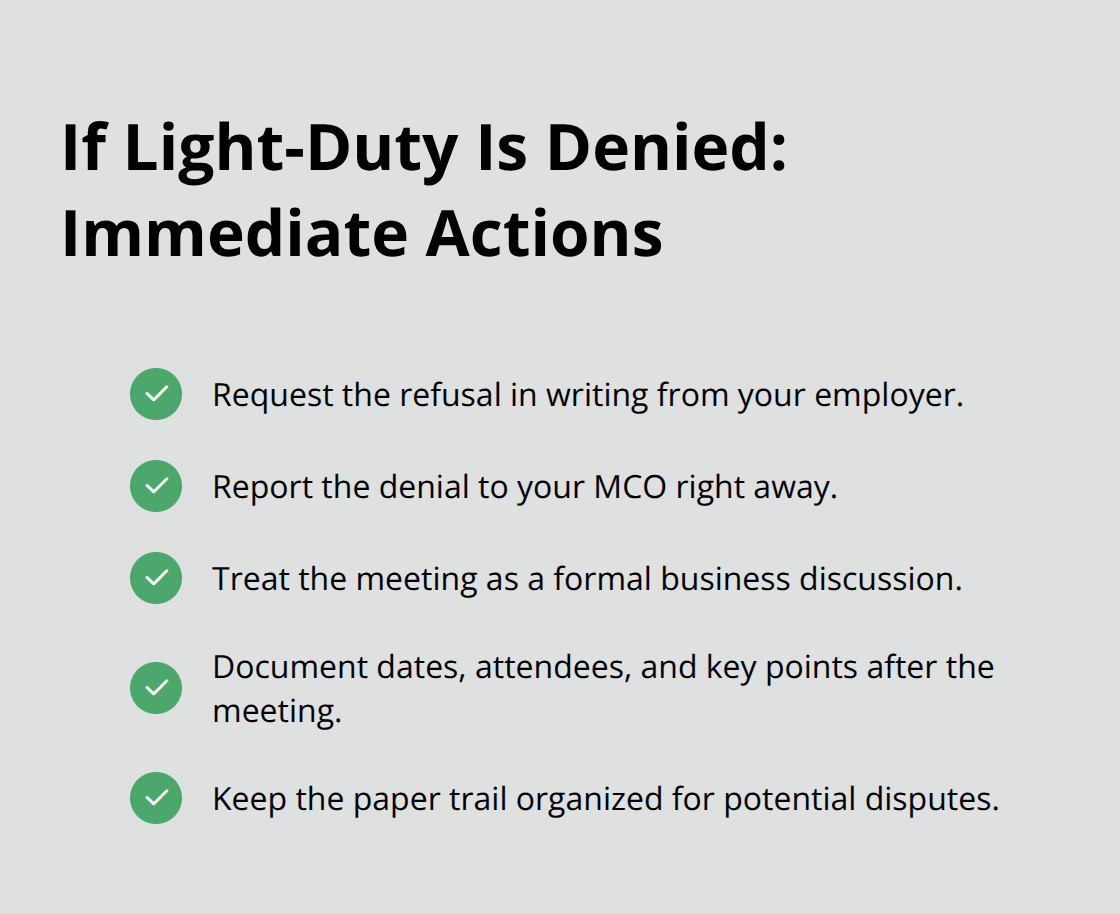
If your employer responds that no suitable light-duty work exists, request this refusal in writing and immediately report it to your managed care organization, as employers have documented obligations to facilitate appropriate transitional work when medically feasible. The Ohio Department of Job and Family Services emphasizes that clear communication among workers, employers, and medical providers accelerates reemployment outcomes, so treat this conversation as a formal business meeting rather than a casual update. Document everything in writing after these conversations, including dates, attendees, and what was discussed. This paper trail protects your interests if disputes arise later.
Work with a Rehabilitation Specialist to Build Skills
A rehabilitation specialist transforms your return from a passive waiting period into an active skill-building process. Your managed care organization assigns a rehabilitation provider who coordinates your medical care with job readiness, identifies transferable skills from your previous role, and sometimes recommends training in new occupations if your injury permanently restricts your former work. Rehabilitation specialists in Ohio often connect workers to OhioMeansJobs resources, which offers free resume assistance, interview preparation, and access to labor market data showing which occupations are actually hiring in your region.
Request a New Provider if Progress Stalls
If your assigned rehabilitation provider seems unresponsive or fails to develop a concrete return-to-work plan within 30 days of your claim approval, contact your MCO representative directly and request a different provider, as passive rehabilitation services waste your time and delay your wage recovery. Some workers resist rehabilitation recommendations because they hope to return to their exact previous position, but accepting realistic alternatives often accelerates your path to full-time employment and normal earnings. The Ohio Industrial Commission Ombuds Office provides free consultation if you believe your rehabilitation plan is inadequate or if your provider pressures you into unsuitable training.
Leverage Additional Job Search Resources in Your County
Beyond your assigned provider, tap OhioMeansJobs centers in your county for additional job search support, virtual workshops on interview skills, and connections to employers actively hiring in sectors like healthcare, skilled trades, and logistics (which experienced significant growth in Ohio through 2025). These resources complement your rehabilitation plan and expand your network of potential employers who understand workers’ compensation accommodations.
Final Thoughts
Return to work Ohio requires you to maintain regular contact with your managed care organization, follow your doctor’s treatment plan without exception, and communicate clearly with your employer about your medical restrictions and timeline for progression. If you’re newly injured, contact your employer’s managed care organization immediately to start rehabilitation planning rather than waiting passively for the system to reach out. If disputes have emerged between you and your employer or the BWC, the Ohio Industrial Commission Ombuds Office provides free, impartial assistance before the conflict escalates.
Understanding your rights under Ohio workers’ compensation law protects your benefits and accelerates your return to normal wages. At Robin J Peterson Company, LLC, we represent injured workers throughout the Cleveland, Akron, and Canton areas who face obstacles during their recovery and reemployment process. Our firm specializes in navigating the Ohio Bureau of Workers’ Compensation and the Industrial Commission of Ohio, and we fight for the benefits and compensation you’re entitled to receive.
If your employer pressures you to return prematurely, your managed care organization denies rehabilitation services you need, or disputes threaten your claim, contact our team for a consultation about your specific situation and how we can help protect your interests throughout your recovery and reemployment.