
Construction work in Ohio carries real risks, and when injuries happen, knowing your construction injury rights in Ohio matters. We at Robin J Peterson Company, LLC help injured workers understand what fair compensation actually looks like.
This guide walks you through the claims process, common injury scenarios, and how to avoid costly mistakes that lead to denied claims.
What Ohio’s Workers’ Compensation System Actually Covers
When you get injured on a construction site in Ohio, you enter a no-fault system administered by the Ohio Bureau of Workers’ Compensation. This means you don’t need to prove your employer was negligent to receive benefits-the injury itself qualifies you if it happened during work.
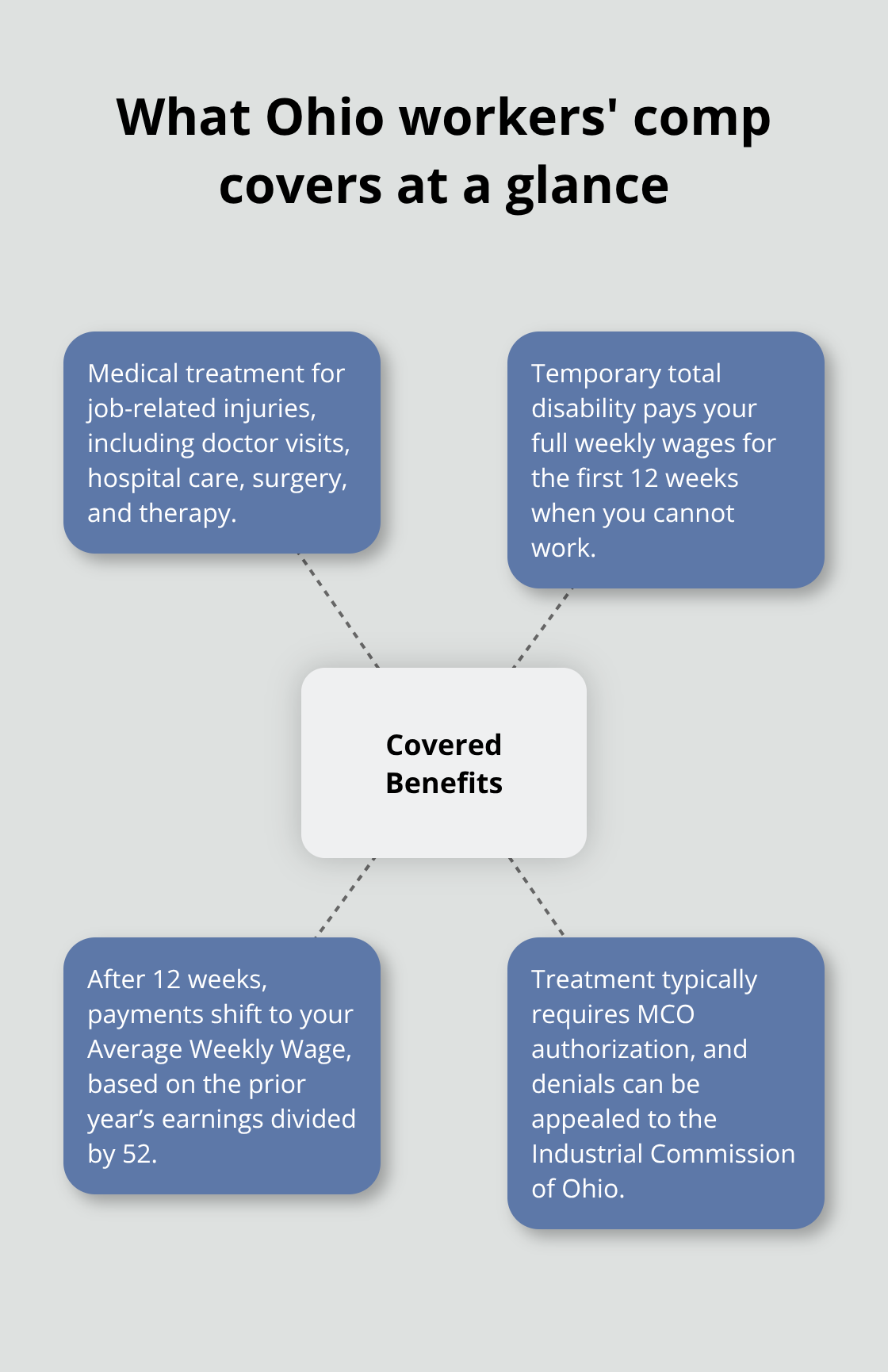
The BWC covers medical treatment related to your workplace injury, including doctor visits, hospital care, surgery, and therapy. Wage replacement kicks in when you can’t work, with temporary total disability payments covering your full weekly wages for the first 12 weeks after injury. After 12 weeks, your payments shift to your average weekly wage, calculated by dividing your total earnings from the year before the injury by 52. Getting this calculation right matters enormously because it directly affects how much you receive while recovering.
Report Your Injury Immediately
Speed matters in Ohio’s system. You must report your injury to your supervisor immediately after it happens-not later that day, not the next morning. This official documentation becomes the foundation of your entire claim and creates the record the BWC uses to process benefits. When you report, list every injured body part, even if some injuries seem minor at the moment. The BWC system limits medical care to body parts listed on your initial injury report, so missing a shoulder injury or knee damage now means struggling to get treatment for those areas later. File your formal claim with the BWC within one year of the injury date; missing this deadline forfeits your right to benefits entirely. For occupational diseases, you have two years from diagnosis or when you stop working due to the condition.
Medical Treatment Authorization and Your Role
The BWC assigns a Managed Care Organization to oversee your medical treatment. Your doctor must request authorization from the MCO before procedures, and the MCO reviews whether treatments align with disability guidelines for your specific injury. This isn’t your insurer denying care arbitrarily-it’s a structured process designed to track your progress toward maximum medical improvement (the point where further treatment won’t improve your condition). You have the right to see your own doctor, and the MCO must authorize treatment that’s medically necessary for your workplace injury. If the MCO denies a treatment your doctor recommends, you can appeal through the Industrial Commission of Ohio, which has the authority to override the MCO’s decision if evidence supports the treatment’s necessity. Understanding these authorization steps helps you avoid treatment delays and positions you to challenge denials when they occur.
What Compensation Looks Like for Different Construction Injuries
Traumatic Injuries from Falls and Equipment Accidents
Falls from scaffolding, being struck by falling objects, and equipment malfunctions represent the most common traumatic injuries on Ohio construction sites, and each follows a different path to compensation. Falls cause the leading number of fatal injuries in construction, with OSHA fall-protection standards requiring protection on heights over six feet, yet violations remain frequent. When you fall and suffer a fracture, head injury, or internal trauma, your compensation depends on how long you cannot work and the severity of permanent damage.
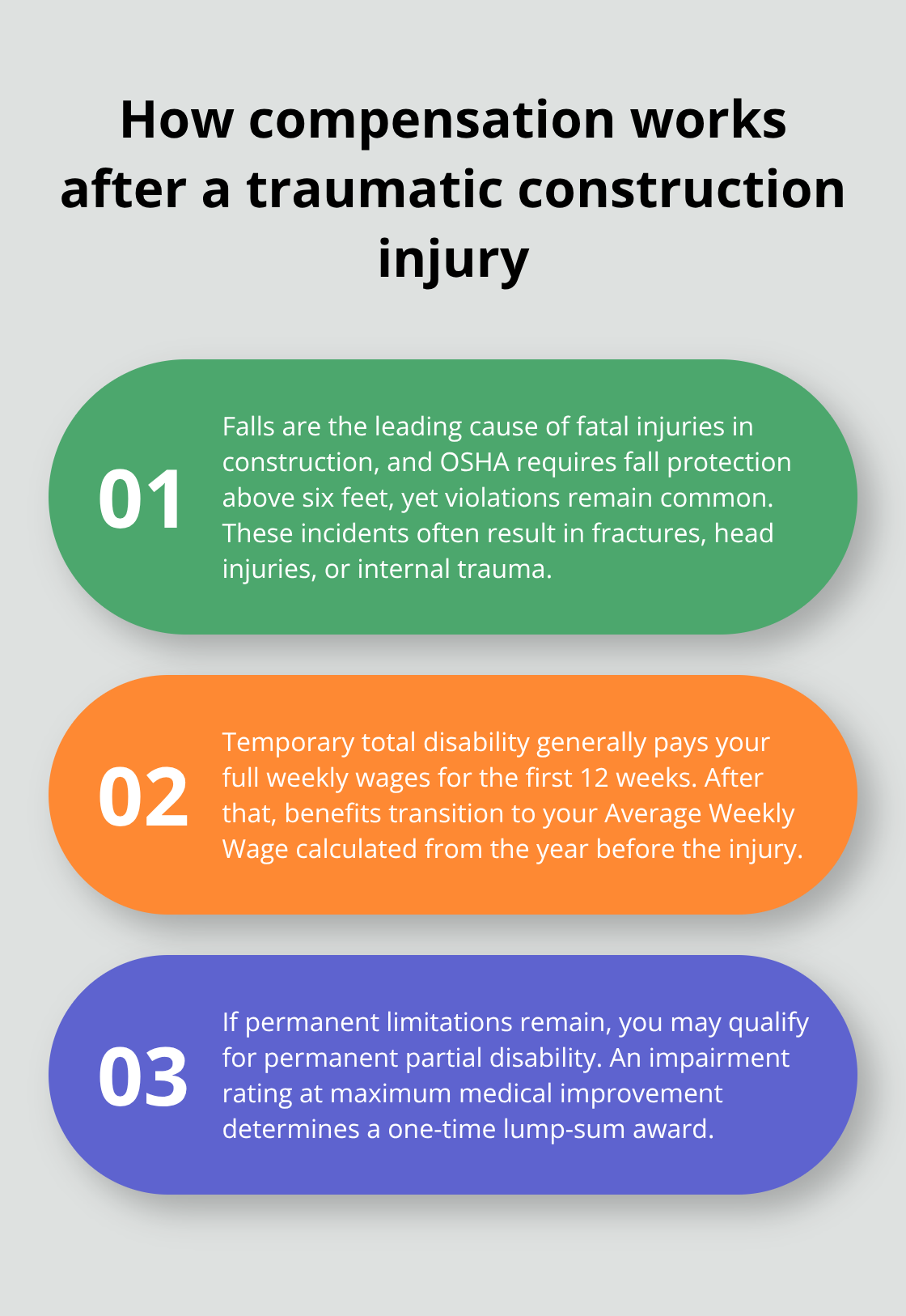
Temporary total disability payments cover your full weekly wages for the first 12 weeks, then shift to your average weekly wage calculation. If the injury leaves you with permanent limitations-a surgically repaired shoulder that cannot handle overhead work, or a knee that prevents climbing-you qualify for permanent partial disability. An impairment rating performed after you reach maximum medical improvement determines this payment, which comes as a one-time lump sum for that permanent loss of function.
Back and Spinal Injuries from Heavy Labor
Spinal and back injuries from heavy labor follow a different compensation pattern because they often develop gradually rather than from a single traumatic event. You have two years from the date of diagnosis to file an occupational disease claim for conditions like degenerative disc disease or chronic back strain caused by your work. These claims require stronger medical documentation linking your condition directly to job duties, and the MCO scrutinizes treatment authorizations more carefully because back injuries can lead to expensive, long-term care.
When your doctor recommends spinal imaging, injections, or physical therapy, the MCO evaluates whether each treatment aligns with your disability guidelines and progress toward maximum medical improvement. If the MCO denies treatment your physician recommends, you have the right to appeal to the Industrial Commission of Ohio-and the Industrial Commission frequently overrides MCO denials when clinical evidence supports medical necessity.
Documentation’s Impact on Your Compensation
The compensation you receive depends heavily on documentation quality, so maintaining detailed records of when symptoms started, how your work tasks triggered pain, and what specific job duties you can no longer perform strengthens both your initial claim and any appeals. Construction workers with spinal injuries who document their functional limitations thoroughly receive higher permanent partial disability ratings than those with vague medical records, making your role in the claims process as important as your doctor’s evaluation. When the MCO or BWC questions your claim, strong documentation becomes your defense against benefit reductions or denials that could follow you through recovery and beyond.
Protecting Your Claim From Denial
Why the BWC Denies Claims
The BWC denies construction injury claims for specific, preventable reasons, and understanding these triggers separates workers who receive full benefits from those who lose everything. The most common denial reason is incomplete or delayed reporting. When you wait days to report your injury or fail to list every affected body part on your initial report, the BWC treats missing information as a sign the injury wasn’t work-related. If you report a wrist fracture but neglect to mention the shoulder impact that happened simultaneously, the BWC will later deny treatment for your shoulder, forcing you to fight through appeals to access care.
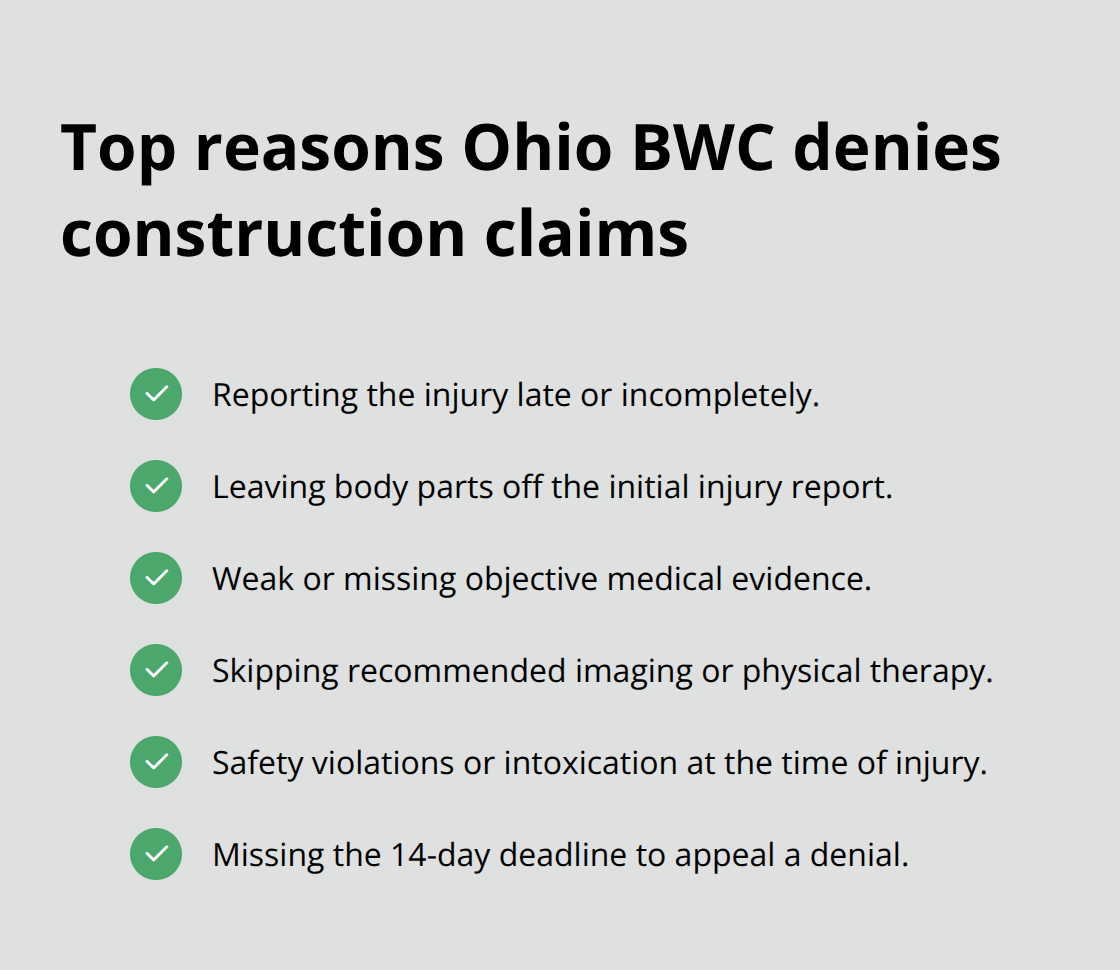
Documentation gaps create the second major denial trigger. The MCO and Industrial Commission of Ohio require objective clinical findings-X-rays showing fractures, MRI results confirming disc herniation, nerve conduction studies documenting nerve damage. Construction workers who show up to appointments without bringing prior medical records, who fail to follow through with recommended imaging, or who skip physical therapy sessions give the BWC ammunition to claim your injury isn’t as severe as you reported.
The third reason claims get denied involves safety violations or intoxication. Ohio law allows the BWC to deny benefits if you were intoxicated at the time of injury, and the employer can demand a chemical test within 32 hours. A positive result shifts the burden to you to prove intoxication didn’t cause the accident-a difficult position when you’re already injured and recovering.
Filing Your Appeal With the Industrial Commission
Navigating the Industrial Commission of Ohio requires understanding that this isn’t a court; it’s an administrative body with specific procedures that trip up unrepresented workers. You have 14 days from a BWC denial to file a formal appeal with the Industrial Commission, and missing this deadline kills your case permanently. When you appeal, you must present certified medical records, witness statements, and evidence directly linking your diagnosis to the workplace incident. Generic statements like “my back hurts from work” won’t succeed; you need your doctor’s report stating that your specific job duties caused your degenerative disc condition, supported by imaging and clinical examination.
Evaluating Settlement Offers Carefully
Settlement offers from the BWC deserve extreme skepticism. Insurance companies structure these offers to close your case permanently, often providing a lump sum that seems substantial until you realize it doesn’t cover future medical care or long-term treatment. Construction workers with spinal injuries or traumatic brain injuries face decades of ongoing medical needs, and accepting a settlement that sounds reasonable today leaves you paying out-of-pocket for treatment next year.
Have legal representation review any settlement before you accept it, because once signed, you forfeit your right to additional benefits regardless of how your condition evolves. An attorney experienced in Ohio workers’ compensation law can identify whether a settlement offer accounts for your long-term medical needs and whether you should pursue additional compensation through third-party claims against liable parties beyond your employer.
Final Thoughts
Fair compensation for construction injuries in Ohio means receiving full medical care, accurate wage replacement, and recognition of permanent limitations without fighting unnecessary battles with the BWC. Construction injury rights in Ohio protect you from the moment you’re injured, but only if you act decisively and avoid the common mistakes that trigger denials. A spinal injury today becomes chronic pain management next year, and a traumatic brain injury affects your ability to work in ways that emerge months after the accident.
You should seek legal representation if your claim gets denied, if you’re offered a settlement that seems inadequate, or if your injury involves multiple body parts and long-term care needs. An experienced attorney identifies whether third-party claims exist against contractors, equipment manufacturers, or other liable parties beyond your employer, potentially opening additional compensation pathways. Early legal involvement preserves evidence, prevents procedural mistakes, and positions you to challenge low settlement offers before accepting them.
We at Robin J Peterson Company, LLC represent injured construction workers throughout Ohio’s Cleveland, Akron, and Canton areas, fighting for the benefits you’re entitled to against the BWC and employers who resist fair claims. If your claim has been denied or you’re uncertain whether your settlement offer reflects your actual losses, contact our firm for a review of your situation.