
A BWC denial can feel like a dead end, but it’s not. We at Robin J Peterson Company, LLC know that Ohio workers have real options to challenge these decisions.
The path forward involves understanding your denied claims remedies in Ohio and taking strategic action. This guide walks you through the appeal process, evidence requirements, and how to build a stronger case.
Why the BWC Denies Your Claim
The Numbers Behind Denials
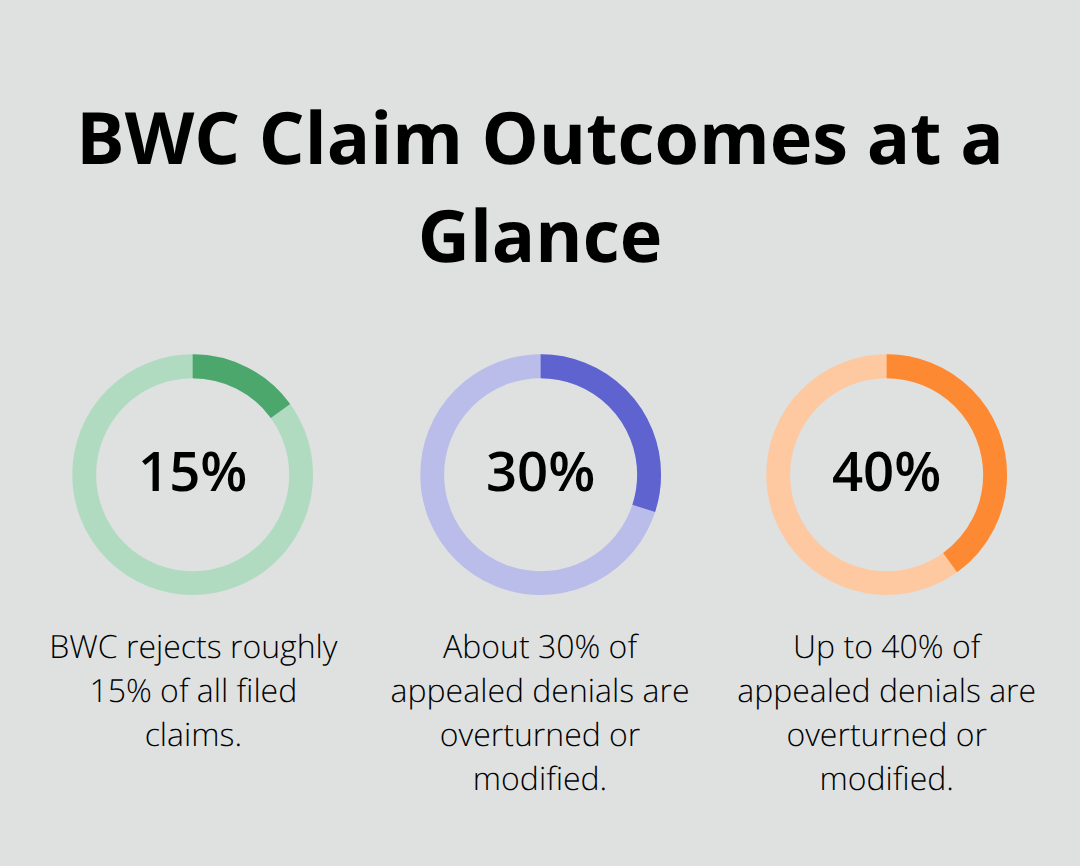
The Ohio Bureau of Workers’ Compensation rejects roughly 15% of all filed claims, according to BWC data. These denials rarely happen randomly. The BWC follows specific evaluation criteria, and understanding what triggers a denial gives you the information needed to challenge the decision effectively.
Three Core Reasons for Rejection
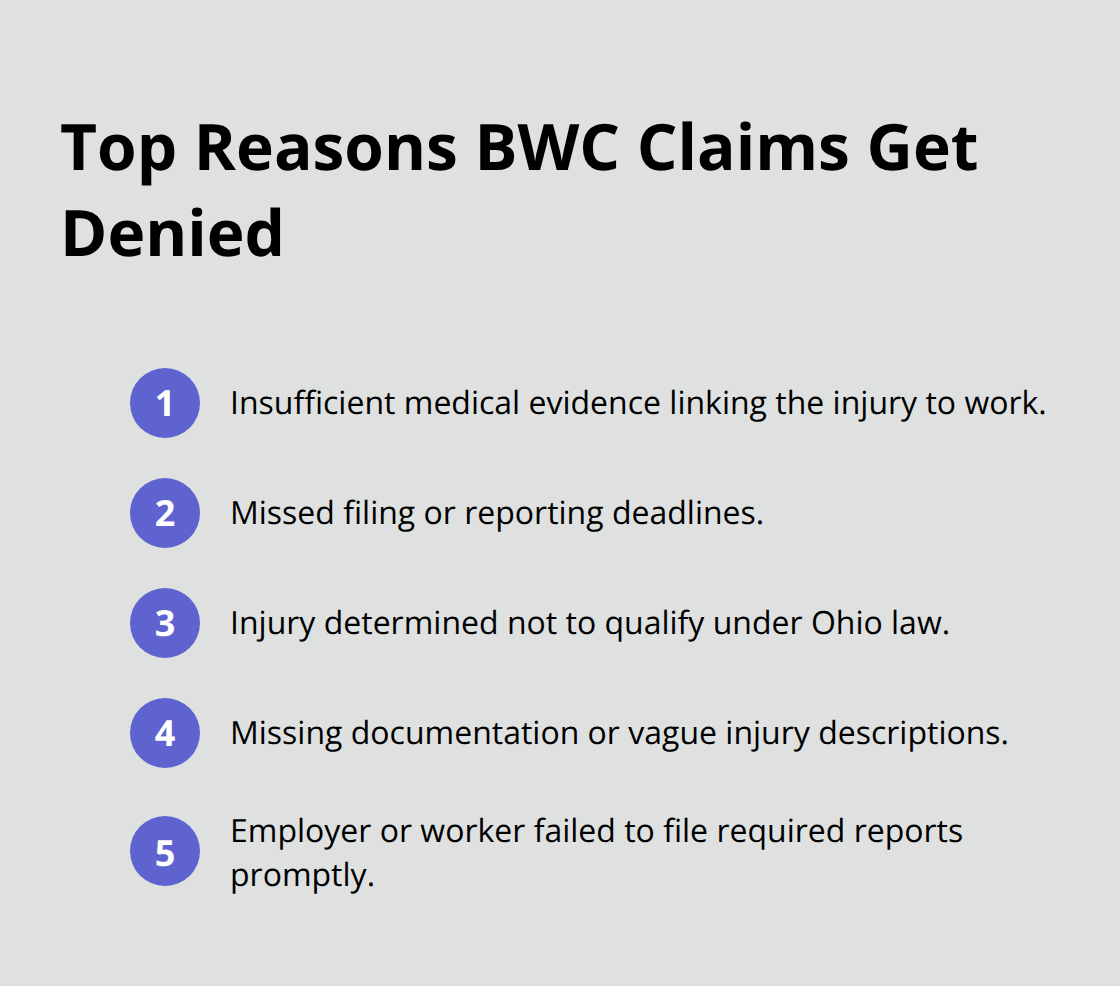
Most denials stem from three core issues: insufficient medical evidence linking your injury to work, a missed filing deadline, or the BWC’s determination that your injury doesn’t qualify under Ohio law. The agency scrutinizes whether your injury occurred during employment and whether it resulted in a compensable condition. Missing documentation or vague descriptions of how the injury happened frequently leads to rejection. The BWC also denies claims when workers fail to report injuries within the required timeframe or when employers don’t file the initial report promptly.
How the BWC Evaluates Your Claim
The BWC processes claims through a structured review system where claims examiners evaluate medical records, employer reports, and injury descriptions against Ohio Revised Code requirements. This evaluation typically takes 28 days from the date of injury, though complex cases extend beyond this timeline. Examiners look for specific medical documentation showing diagnosis, treatment records, and clinical findings that establish the injury occurred.
If your medical provider’s notes lack detail about how the injury happened or fail to connect symptoms to your work activities, examiners often deny the claim. The agency requires clear causation, not just coincidence. Many Ohio workers receive denials because their initial injury report lacked specificity or because follow-up medical records didn’t adequately document the work-related nature of the condition.
What Happens After Denial
When the BWC issues a denial, you receive written notice explaining the reason, typically citing either insufficient evidence, ineligibility under state law, or procedural issues like late reporting. This notice contains the specific grounds for rejection and outlines your right to appeal. Understanding these grounds matters because many denials are based on procedural failures rather than the legitimacy of your injury-and procedural failures can be corrected through the appeal process.
How to Appeal a BWC Denial in Ohio
Filing Your Appeal Within the Legal Window
After the BWC denies your claim, you have one year from the denial date to file an appeal through the Industrial Commission of Ohio. This deadline matters because waiting longer weakens your position-evidence becomes stale and witnesses’ memories fade. The Industrial Commission assigns your case to an administrative law judge who reviews the entire file, including the original denial decision, medical records, and any new evidence you submit. Roughly 30% to 40% of appealed denials are overturned or modified, according to Ohio workers’ compensation data, which means the BWC’s initial decision is far from final.
Addressing the Specific Grounds for Denial
Your appeal must directly address why the BWC’s stated reasons for denial were incorrect, not simply restate that you deserve benefits. If the denial cited insufficient medical evidence, your appeal needs stronger documentation or expert testimony that proves the work connection. If the denial claimed you missed a filing deadline, you must present evidence showing you reported the injury timely or explain legitimate reasons for the delay. This specificity separates successful appeals from rejected ones.
Building Your Evidence Strategy
The hearing before an administrative law judge determines whether most appeals succeed or fail. You can testify, your medical providers can submit written statements or appear as witnesses, and your employer’s records become part of the evidence record. Ohio law requires clear and convincing evidence that your injury is work-related and compensable, which means the evidence must be substantially more persuasive than what the BWC initially reviewed.
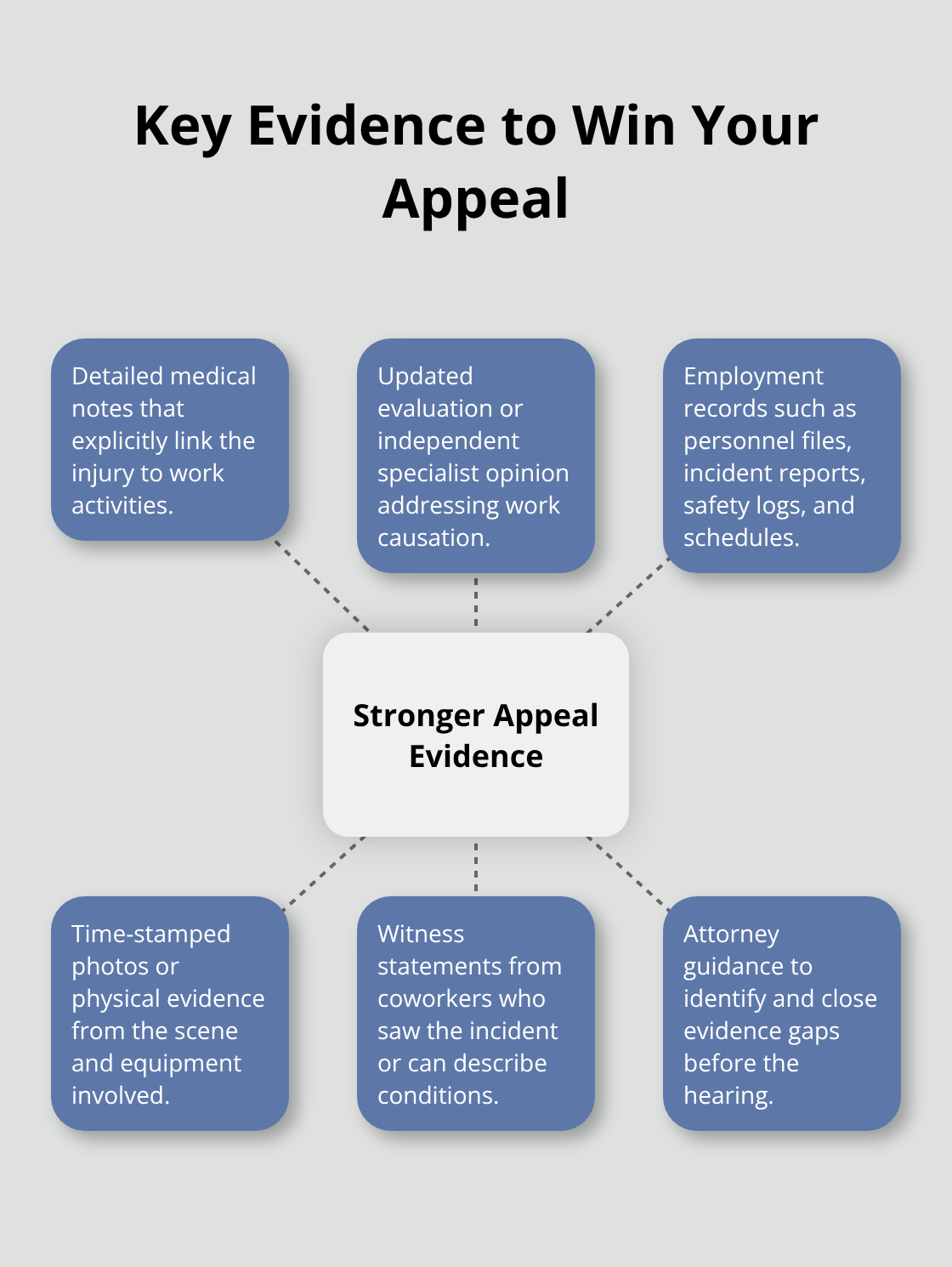
Many workers strengthen their appeals by obtaining an updated medical evaluation from their treating physician that specifically addresses the work-related nature of the injury, using language that directly connects symptoms and diagnosis to job duties. Witness statements from coworkers who saw the injury occur or who can describe your work environment carry significant weight. Employment records showing your job duties, shift schedules, and any incident reports filed at the time of injury provide concrete documentation.
Moving Forward with Professional Guidance
An attorney experienced in Ohio workers’ compensation law can identify exactly what evidence gaps caused your denial and develop a strategy to fill those gaps before the hearing, rather than scrambling to gather documents at the last minute. This preparation phase determines whether you present a compelling case or a disorganized collection of documents. The next step involves understanding what specific evidence you need to gather and how to present it effectively.
Building Strong Evidence to Support Your Appeal
Medical Documentation That Proves Work Causation
Medical documentation forms the foundation of any successful appeal, and vague or incomplete records guarantee failure. Your treating physician’s notes must explicitly state that your injury occurred at work and describe how job duties caused the condition. Many Ohio workers lose appeals because their medical records lack this critical connection, even though the injury itself is legitimate.
Request a detailed written statement from your doctor addressing the specific mechanism of injury at work, the clinical findings that support work causation, and how your job duties directly contributed to the condition. If your initial treatment records lack this specificity, schedule a follow-up appointment and ask your provider to document the work-related causation in writing.
Medical experts carry substantial weight in appeals, particularly when they testify that the injury could not have occurred outside a work setting or that your job duties were the primary cause. Ohio administrative law judges rely heavily on expert medical testimony when evidence is contested, so an independent medical evaluation from a specialist in your injury type strengthens your position significantly.
Employment Records and Incident Documentation
Employment records prove what actually happened on the day of injury and establish your job duties. Request your complete personnel file, incident reports, safety records, and scheduling information from your employer. These documents create a factual foundation for your injury claim and often reveal that your employer or the BWC overlooked critical details during the initial review.
Document any physical evidence from the incident, including photographs of the location where the injury occurred, equipment involved, or hazardous conditions present at the time. Time-stamped photos taken shortly after the injury demonstrate conditions that may have changed by the time of your hearing.
Witness Statements From Coworkers
Coworkers who witnessed the injury or can describe your work environment provide testimony that medical records alone cannot supply. Identify specific employees who were present when the injury occurred and ask them to provide written statements describing what they saw, how the injury happened, and any immediate reactions. These witness statements carry credibility because they come from people without financial interest in the outcome, unlike your own testimony.
Statements from multiple witnesses strengthen your appeal considerably. Workers who can describe hazardous conditions, unsafe practices, or the exact sequence of events leading to your injury add layers of corroboration that administrative law judges find persuasive. The more independent sources confirm your account, the harder it becomes for the BWC to maintain its denial.
Connecting All Evidence to Address the Denial
Your appeal must directly address why the BWC’s stated reasons for denial were incorrect, not simply restate that you deserve benefits. If the denial cited insufficient medical evidence, your appeal needs stronger documentation or expert testimony that proves the work connection. If the denial claimed you missed a filing deadline, you must present evidence showing you reported the injury timely or explain legitimate reasons for the delay.
This specificity separates successful appeals from rejected ones. An attorney experienced in Ohio workers’ compensation law can identify exactly what evidence gaps caused your denial and develop a strategy to fill those gaps before the hearing, rather than scrambling to gather documents at the last minute. This preparation phase determines whether you present a compelling case or a disorganized collection of documents.
Final Thoughts
Challenging a BWC denial requires three concrete steps: understanding why the agency rejected your claim, gathering evidence that directly addresses those specific reasons, and presenting that evidence strategically before an administrative law judge. Your medical records must explicitly connect your injury to work, your employment documentation must establish what actually happened, and witness statements must corroborate your account. Vague or incomplete evidence fails, but specific, detailed documentation succeeds.
The statistics show that roughly 30% to 40% of appealed denials get overturned or modified, which means the BWC’s initial decision frequently contains errors or overlooks critical information. An attorney experienced in Ohio workers’ compensation law identifies exactly what caused your denial and develops a strategy to address those gaps systematically. This preparation determines whether you present a compelling case or scramble through a disorganized hearing.
If you’re facing a BWC denial in Ohio, the denied claims remedies available to you start with understanding your appeal rights and building a stronger case than what the BWC initially reviewed. Robin J. Peterson Company, LLC represents injured workers throughout the Cleveland, Akron, and Canton areas who are fighting BWC denials. The firm handles the legal strategy while you move forward with your case and your recovery.