
Filing a workers’ compensation claim in Ohio can feel overwhelming when you don’t know what to expect. The Ohio BWC claim process involves multiple stages, from initial paperwork to potential appeals, and understanding each step makes a real difference in your outcome.
At Robin J Peterson Company, LLC, we’ve guided countless injured workers through this system. This guide walks you through everything you need to know to move your claim forward effectively.
Getting Your Claim Started Right
The First 30 Days Set Your Foundation
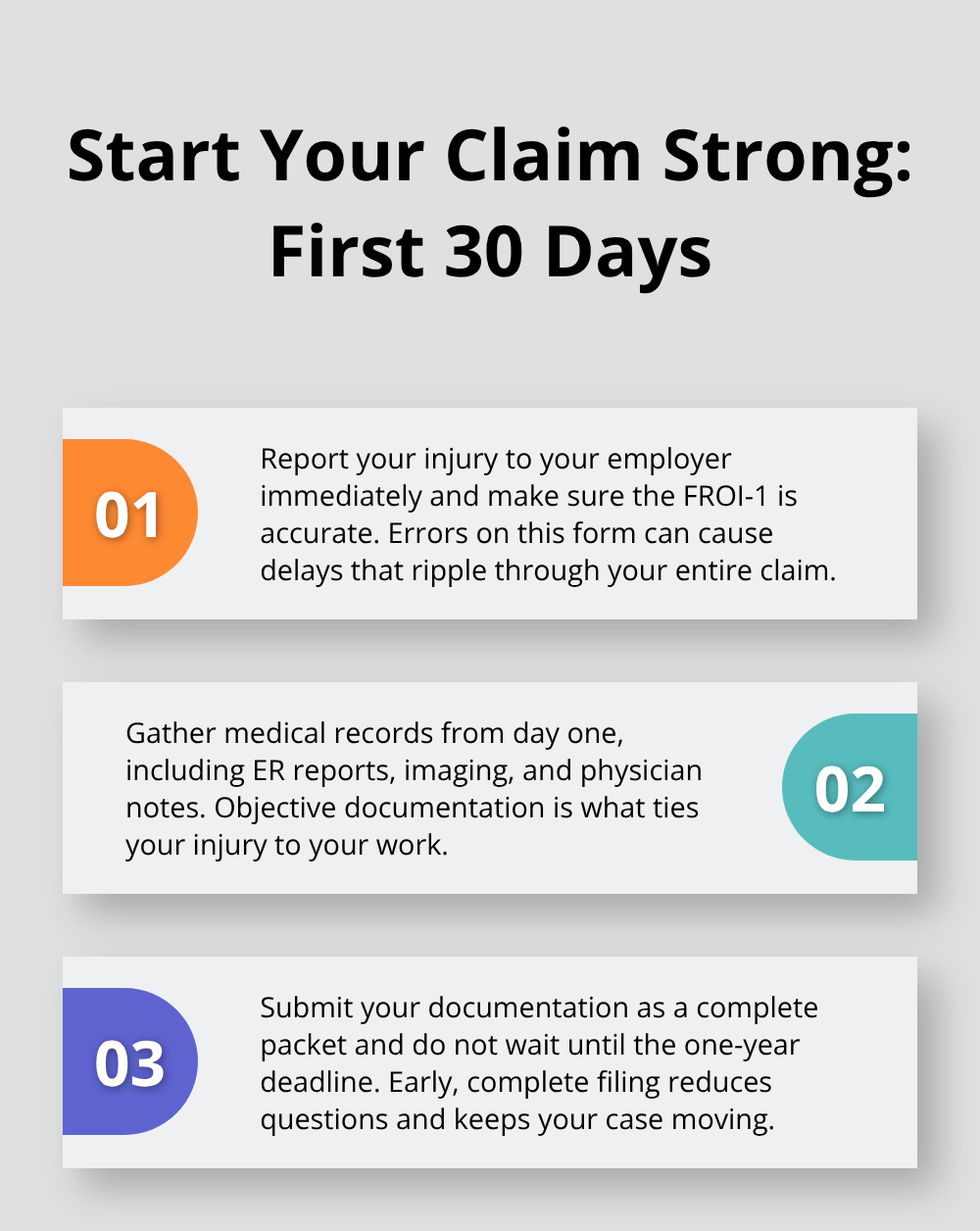
The first 30 days after your injury matter more than most injured workers realize. Ohio law requires you to report your workplace injury to your employer as soon as possible, and your employer then has specific timeframes to file with the Ohio Bureau of Workers’ Compensation. The Notice of Injury Form, officially called the FROI-1, is your employer’s responsibility to submit, but you need to understand what goes into it because errors here create problems later.
This form captures essential details about your injury, the date it occurred, and your job duties. Many claims get delayed simply because basic information on this form contains mistakes or incomplete details. You should request a copy of what your employer files and review it carefully for accuracy. If something is wrong, contact your employer’s HR department immediately to request a correction before it gets submitted to the BWC.
Medical Documentation Determines Your Outcome
Medical documentation is where most claims succeed or fail. Gather every medical record related to your injury starting from your first visit, including emergency room reports, diagnostic imaging results, physician notes, and any treatment plans. The BWC doesn’t take your word for what happened; they want objective medical evidence showing the connection between your work and your injury.
If you waited days or weeks before seeking treatment, that gap will be scrutinized, so document why the delay occurred if one exists. Photographs of the accident scene, equipment involved, or your injuries can strengthen your case significantly. Keep detailed personal notes about your symptoms, how they affect your daily activities, and when they started.
Submit Everything on Time
Ohio Administrative Code requires claims to be filed within one year of the injury, but don’t wait that long; filing sooner gives the BWC less reason to question whether your injury truly happened at work. Submit all documentation together rather than piecemeal (fragmented submissions often get lost in the system). Once you’ve assembled your complete file, the BWC begins its formal review process, which involves specific evaluation criteria and timelines that shape what happens next.
What Happens During the BWC’s Claim Review
The Adjudicator Reviews Your Complete File
After you submit your complete claim file, the BWC enters an evaluation phase that typically takes 28 days, though complex cases often extend beyond this timeline. The BWC assigns a claims adjudicator to your file, and this person reviews every document you submitted against Ohio’s workers’ compensation eligibility criteria. They check whether your injury meets the legal definition of a compensable work injury, meaning it arose from and occurred during the course of your employment. The adjudicator verifies that you reported the injury within the required timeframe and that all employer documentation is complete.
Medical Evidence Carries the Most Weight
Medical records receive particular scrutiny during this phase because the adjudicator compares your physician’s findings against the injury details you reported. If medical evidence contradicts your injury account, the BWC will likely deny your claim outright. Most initial denials happen because the medical documentation fails to establish a clear work connection or because the injury doesn’t meet Ohio’s statutory definition. Your physician’s notes must explicitly connect your condition to your workplace activities for the claim to survive this stage.
The Investigation Phase Runs in Parallel
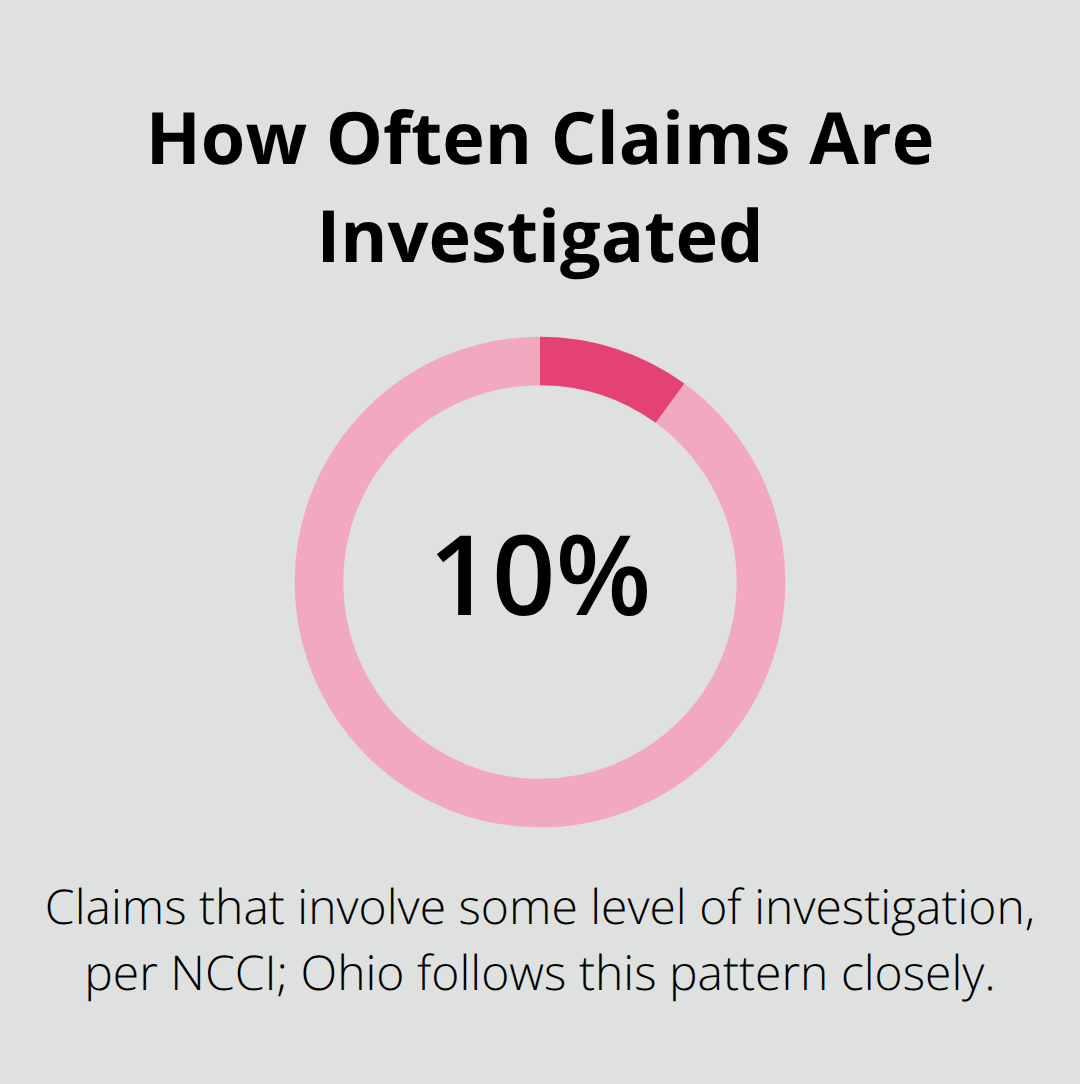
The investigation phase often runs parallel to evaluation, especially when the BWC suspects fraud or when the injury circumstances seem unclear. The BWC employs investigators who contact your employer, interview coworkers, review security footage if available, and conduct surveillance in some cases. According to the National Council on Compensation Insurance, about 10 percent of workers’ compensation claims involve some level of investigation, and Ohio follows this pattern closely.
Investigators Look for Inconsistencies
The investigation examines inconsistencies between your statement, employer records, and medical evidence. If you claimed the injury happened while performing specific job duties but witnesses describe different circumstances, that discrepancy triggers deeper scrutiny. Investigators contact people without notifying you first, so any statement you made to coworkers or posted on social media becomes part of the investigation record. The BWC’s decision ultimately rests on whether they believe your injury is work-related and whether medical evidence supports your claim for ongoing treatment or wage replacement.
What Happens Next Depends on the BWC’s Decision
The adjudicator’s findings determine your path forward. An approval means you move into the benefits phase, but a denial sends your case toward the appeal process, where you’ll have the opportunity to challenge the BWC’s decision before the Industrial Commission of Ohio.
Challenging a BWC Denial
You Have 14 Days to File Your Appeal
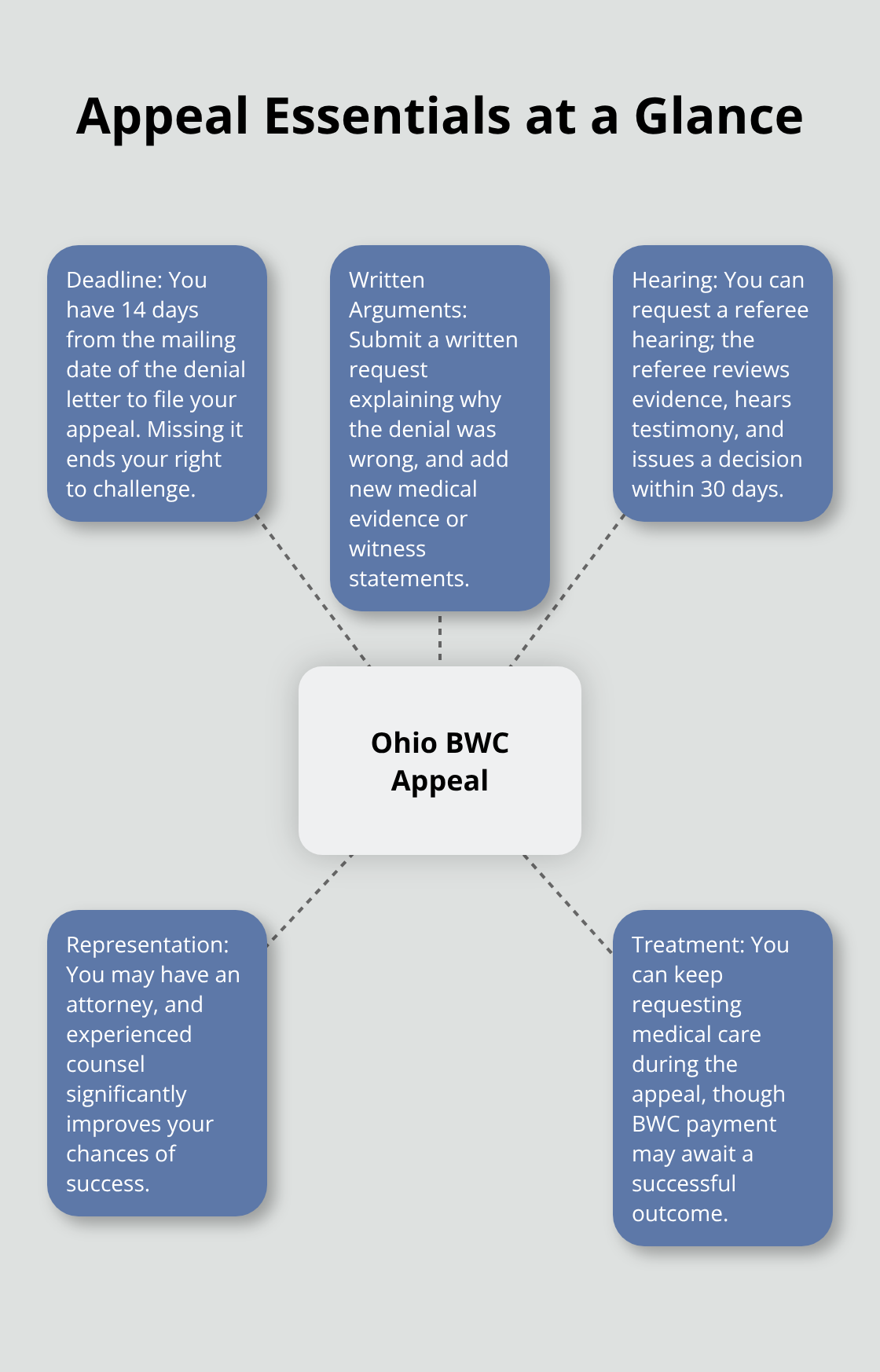
When the BWC denies your claim, you have legitimate options to fight that decision. The appeal process exists specifically for situations where you disagree with their adjudicator’s findings. You have 14 days from the date the BWC mails their denial letter to file an appeal, so act quickly because missing this deadline eliminates your right to challenge the decision. Your appeal goes to the Industrial Commission of Ohio, which operates independently from the BWC, meaning they review your case fresh without bias toward the BWC’s original position.
Submit Written Arguments and New Evidence
The appeal process requires submitting a written request that explains why you believe the BWC’s denial was wrong. You can include additional medical evidence, witness statements, or documentation that wasn’t in your original file. Many workers fail to appeal simply because they don’t understand this right exists or they assume the BWC’s decision is final, which is a significant mistake because the Industrial Commission reverses denials regularly when proper arguments and evidence are presented.
Request a Hearing Before a Referee
The hearing before a referee represents your opportunity to present your case directly and question the BWC’s evidence. You can request a hearing as part of your appeal, and the referee will listen to your testimony, examine medical records, and hear from any witnesses you bring. At this hearing, you can ask the BWC’s representative questions about why they denied your claim, and their answers often reveal weaknesses in their decision-making. The referee issues a decision within 30 days of your hearing.
Legal Representation Improves Your Odds
You have the right to legal representation at every stage of this process, and bringing an attorney dramatically improves your chances because they know Ohio workers’ compensation law and understand how referees evaluate evidence. An experienced workers’ compensation attorney can identify weaknesses in the BWC’s reasoning and present arguments the initial adjudicator overlooked or misinterpreted. If you disagree with the referee’s decision, you can appeal again to the Industrial Commission’s full board.
Medical Treatment Continues During Appeals
Throughout this entire dispute resolution process, you maintain your right to request ongoing medical treatment for your injury even while your claim status is being contested (though the BWC may not pay for treatment until your appeal succeeds). This protection ensures you receive necessary care regardless of the appeal outcome, which protects both your health and your legal position.
Final Thoughts
The Ohio BWC claim process demands attention to detail at every stage, from your initial filing through potential appeals. Success depends on submitting complete medical documentation, meeting all deadlines, and understanding your rights when the BWC denies your claim. Most injured workers don’t realize that denials aren’t final decisions; the Industrial Commission of Ohio exists specifically to review cases where you disagree with the BWC’s adjudicator.
Your best strategy involves gathering comprehensive medical evidence immediately after your injury and submitting everything together rather than in fragments. Request copies of all forms your employer files, verify accuracy, and keep detailed records of your symptoms and treatment. If the BWC denies your claim, file your appeal within 14 days and consider requesting a hearing before a referee where you can present your case directly and question the BWC’s reasoning.
Legal representation significantly improves your outcomes because workers’ compensation attorneys understand Ohio law and know how referees evaluate evidence. They identify weaknesses in the BWC’s decision-making and present arguments that initial adjudicators may have overlooked. At Robin J Peterson Company, LLC, we represent injured workers throughout the Cleveland, Akron, and Canton areas, fighting to secure the benefits you’re entitled to against employers and the BWC.