
Navigating Ohio’s workers’ compensation system can feel overwhelming when you’re injured and unsure where to turn. We at Robin J Peterson Company, LLC have compiled this guide to help you find the Ohio workers comp resources you need.
Whether you’re filing a claim for the first time or managing an ongoing case, knowing which tools and contacts to use makes a real difference. This resource walks you through government agencies, online portals, and support options available to you.
How Ohio’s Workers’ Compensation System Actually Works
The BWC Claims Process
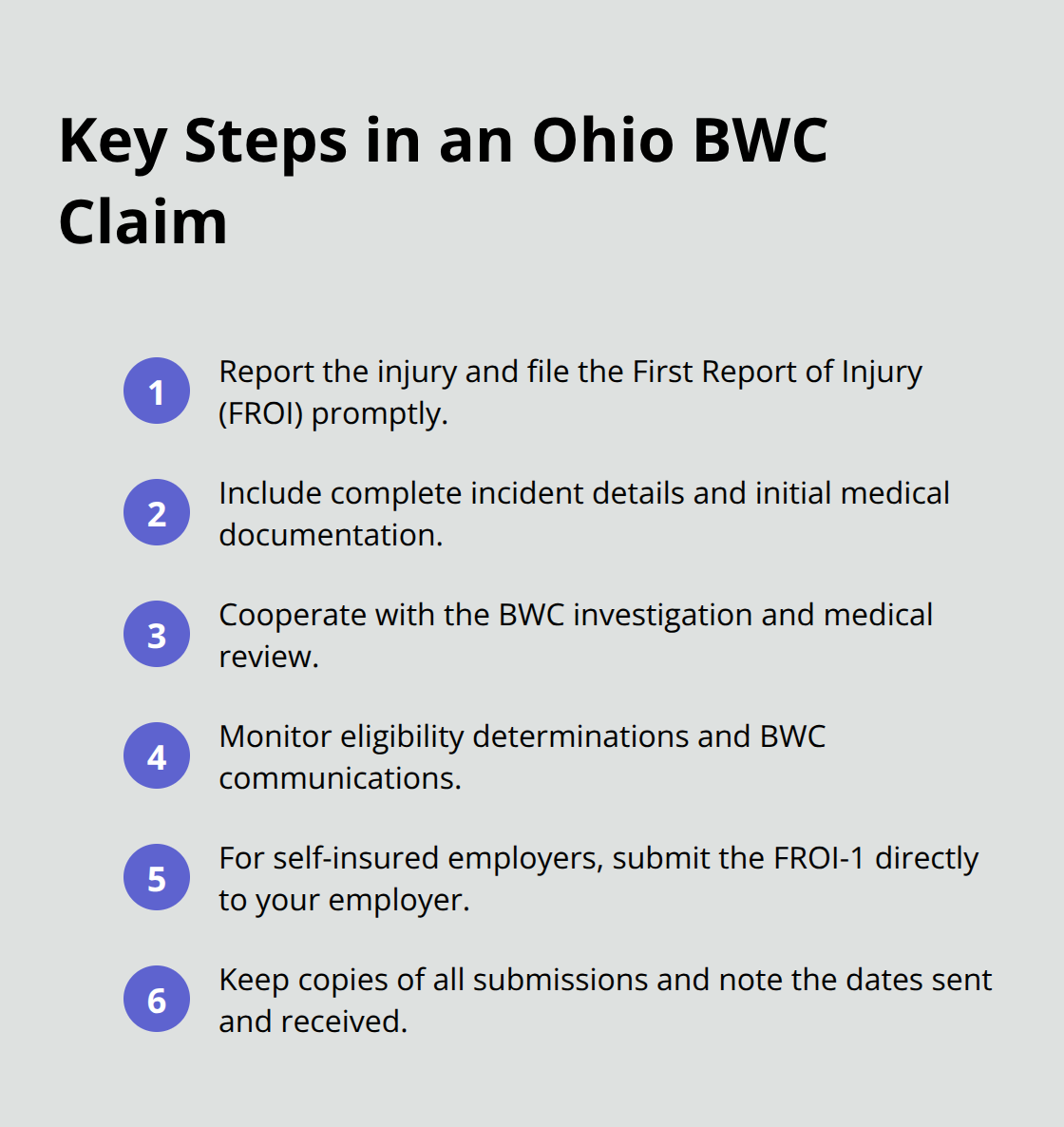
The Ohio Bureau of Workers’ Compensation administers all workplace injury claims in the state, and understanding how this agency operates matters before you file. When an injury happens, you or your employer must file a First Report of Injury with the BWC to officially start your claim. This document triggers the entire process, and delays in filing can cost you benefits. The BWC then investigates the claim, reviews medical evidence, and determines eligibility based on whether the injury occurred during employment. Self-insured employers use a different form called FROI-1, but the timeline and outcome remain the same.
Why Ohio’s System Stands Apart
Ohio’s system differs fundamentally from federal workers’ compensation because the state administers it rather than individual employers. The BWC acts as an independent arbiter between you and your employer, which matters because the agency cannot face pressure from your employer to deny legitimate claims. However, the BWC does take a conservative approach to approvals, so documentation and legal representation strengthen your position significantly.
Medical and Wage Replacement Benefits
The benefits available to injured Ohio workers extend far beyond simple medical coverage. Temporary total disability payments replace your wages while you recover and cannot work, and these payments continue until you return to work or reach maximum medical improvement. Medical benefits cover all treatment related to your injury, including medical care, chiropractic services, psychological or psychiatric treatment, and physical therapy.
What Counts as a Compensable Injury
Ohio law defines an injury broadly to include sprains, fractures, lacerations, hearing or vision loss, herniated discs, and aggravation of pre-existing conditions. Cumulative trauma disorders from repetitive work also qualify for compensation. Permanent disability awards provide ongoing compensation if your injury causes lasting impairment, and if an injury results in death, your dependents receive survivor benefits. Psychiatric or psychological conditions can be compensable if they arise directly from the workplace injury or from the inability to work.
Taking Action With Your Claim
Document everything from the moment of injury forward, as this evidence directly impacts your claim’s strength. Consult with a workers’ compensation attorney early in the process-legal guidance significantly improves claim outcomes and helps maximize the benefits you receive. The next section covers the specific government contacts and resources that support your claim at every stage.
Where to Find Official Help When You File Your Claim
The Ohio Bureau of Workers’ Compensation as Your Starting Point
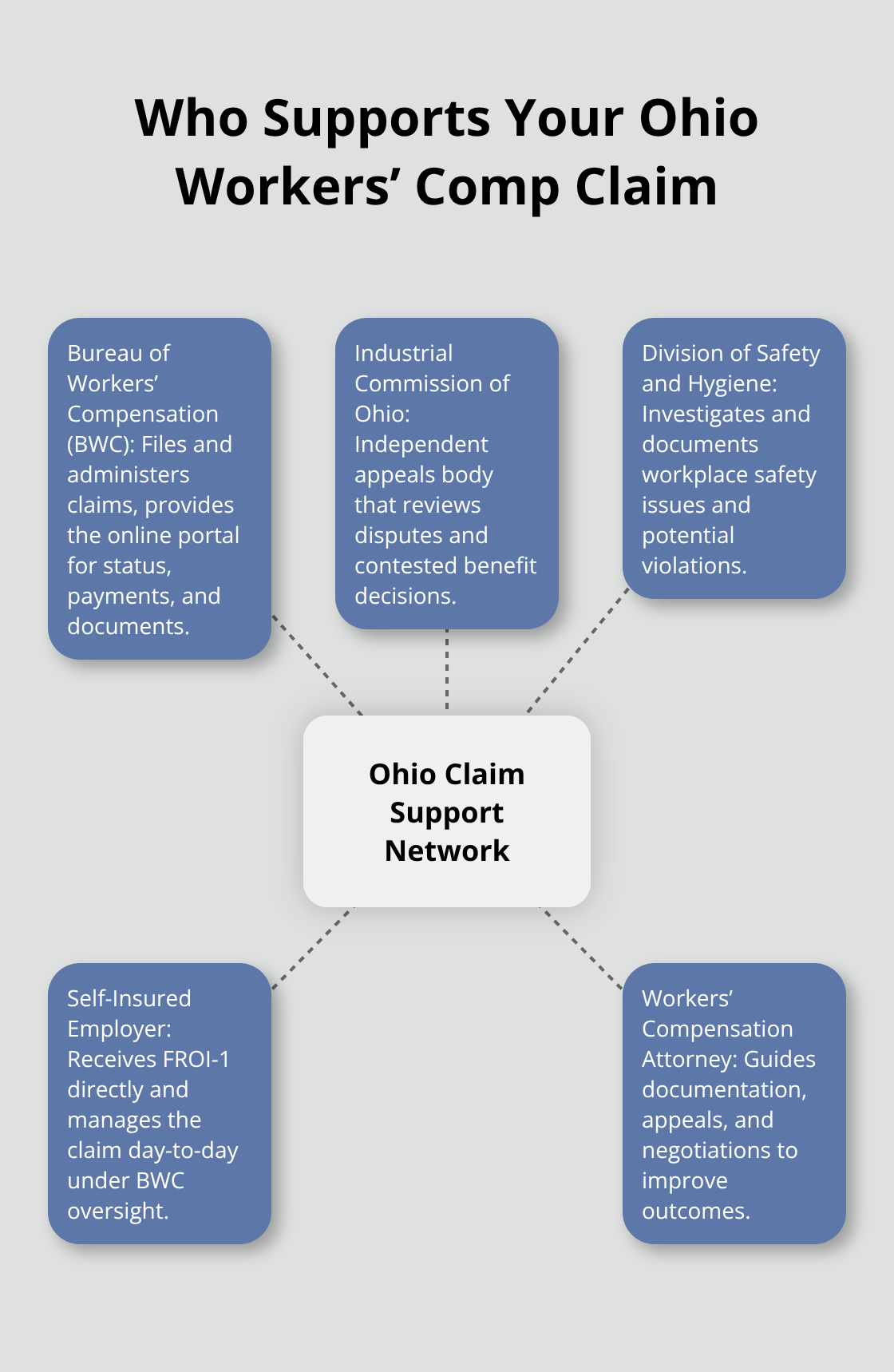
The Ohio Bureau of Workers’ Compensation stands as your primary contact for filing claims and tracking your case from start to finish. You can reach the BWC at 1-800-644-6292, and representatives answer questions about claim status, required documentation, and benefit eligibility. The BWC maintains an online portal where you log in to monitor your claim’s progress in real time, check payment schedules, and download claim documents without waiting on phone lines. Your First Report of Injury through the BWC portal or with your employer initiates the entire process, and the agency typically acknowledges receipt within five business days.
Understanding Self-Insured Employer Claims
If your employer is self-insured, you file FROI-1 directly with them instead of the BWC. The BWC still maintains oversight of your case and ensures compliance with state requirements. This distinction matters because self-insured employers operate under different administrative rules, though your rights and benefits remain the same.
The Industrial Commission of Ohio for Disputes
The Industrial Commission of Ohio handles disputes when the BWC denies your claim or you disagree with benefit decisions. This agency operates independently from the BWC to review appeals and contested cases, providing a separate avenue for challenging unfavorable outcomes. An attorney experienced in Ohio workers’ compensation law can navigate these appeals effectively and significantly improve your leverage in negotiations.
Safety Violations and the Division of Safety and Hygiene
The State Division of Safety and Hygiene enforces workplace safety standards across Ohio, and if your injury resulted from an employer’s violation of safety requirements, this division maintains records of inspections and citations that strengthen your claim. Contact this division through the Ohio Department of Commerce at 1-800-35-OSHA if you believe safety violations contributed to your injury. An attorney can interpret safety violation findings and connect them directly to your injury, which substantially improves your position in appeals or negotiations.
Building Your Case With Complete Documentation
Gather all documentation from your employer, medical providers, and the BWC before pursuing your claim further, as complete records prevent delays and denials. The combination of these three resources-the BWC for claims administration, the Industrial Commission for dispute resolution, and the Division of Safety and Hygiene for safety violation documentation-provides the framework you need to build a strong case. With these contacts and resources in place, you’re ready to explore the specific tools that help you manage your claim day-to-day.
Managing Your Claim After Filing
Access the BWC Portal to Track Progress in Real Time
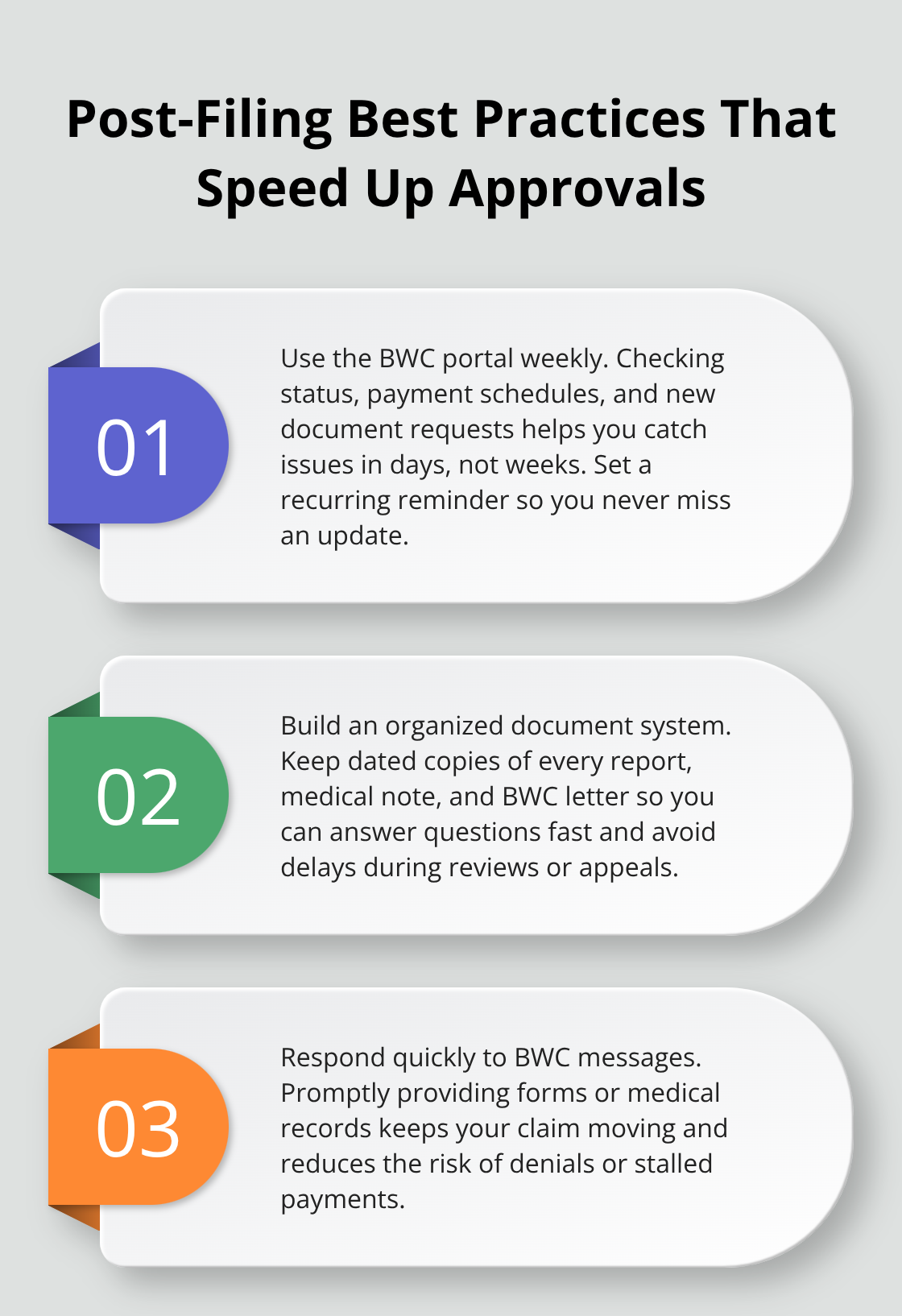
The BWC online portal becomes your most valuable tool once your claim enters the system, and you must access it regularly to prevent surprises about benefit decisions or payment schedules. Log in through the BWC website to monitor your claim status in real time, review medical reports submitted by your healthcare providers, and track temporary total disability payments week by week. The portal shows exactly when the BWC received documents, which stage your claim occupies in the approval process, and whether additional information is needed to move forward. Most injured workers who check their portal weekly catch documentation issues within days rather than weeks, which accelerates claim approval significantly. The BWC processes claims faster when you respond promptly to requests for additional forms or medical records, so set a calendar reminder to review your portal every Monday morning and respond to any BWC messages the same day.
Create a Dedicated System for All Your Documents
You should start a dedicated folder for every single document related to your injury the moment it happens, including incident reports filed with your employer, initial medical evaluation notes, prescription records, physical therapy progress notes, and all correspondence from the BWC. Request copies of everything from your employer and healthcare providers in writing rather than accepting verbal summaries, as written records carry weight during disputes or appeals. The BWC requires specific medical documentation to approve ongoing treatment, so ask your doctor to submit detailed reports explaining why continued care remains medically necessary rather than assuming the BWC understands your condition. Injured workers who maintain organized records with dates clearly marked experience faster claim approvals and stronger positions if disputes arise with the BWC or during appeals to the Industrial Commission of Ohio. A simple spreadsheet tracking document dates, document types, and which agency received each record prevents confusion and ensures nothing gets lost in the process.
Understand When Legal Representation Becomes Essential
You should hire a workers’ compensation attorney early in your claim process to substantially improve your outcome, particularly if the BWC initially denies your claim or offers inadequate benefits. An experienced attorney interprets complex BWC decisions, identifies documentation gaps before they cause denials, and handles communication with the BWC so you focus on recovery rather than bureaucracy. An attorney working on your claim from the start prevents costly mistakes that become difficult to correct later, such as missing filing deadlines or failing to document that your pre-existing condition worsened due to your workplace injury. The earlier you consult with legal representation, the stronger your position becomes because an attorney guides you through proper documentation practices and ensures the BWC receives complete information the first time rather than requesting it repeatedly. Robin J Peterson Company, LLC represents injured workers throughout the Cleveland, Akron, and Canton areas with deep expertise in Ohio workers’ compensation law and the specific patterns the BWC follows when approving or denying claims.
Final Thoughts
You now have access to the Ohio workers comp resources that matter most when you’re injured and navigating the system. The Ohio Bureau of Workers’ Compensation handles your claim from filing through resolution, the Industrial Commission of Ohio addresses disputes when decisions go against you, and the Division of Safety and Hygiene documents safety violations that strengthen your position. The BWC portal tracks your claim in real time, organized documentation prevents delays and denials, and legal representation transforms your outcome by catching problems early and maximizing the benefits you receive.
After an injury occurs, file the First Report of Injury with the BWC or your self-insured employer within the required timeframe, and simultaneously start gathering every document related to your injury, your medical treatment, and your employer’s response. Contact the BWC at 1-800-644-6292 to confirm receipt of your claim and understand what documentation they need next. Access the BWC portal immediately to monitor your claim’s progress and respond to any requests for additional information within days rather than weeks.
Consult with a workers’ compensation attorney the moment you realize your injury will prevent you from working or require ongoing medical treatment, as many injured workers wait too long and face denials that become expensive to challenge later. An attorney working with you from the start prevents documentation mistakes, interprets complex BWC decisions, and handles communication so you focus on recovery. Contact Robin J Peterson Company, LLC to discuss your claim and learn how legal representation strengthens your position with the BWC and protects your rights throughout the entire process.