
After a workplace injury in Ohio, you have specific legal rights about who treats you and how your care proceeds. Understanding your medical treatment rights in Ohio protects you from being forced into inadequate care or unnecessary delays.
We at Robin J Peterson Company, LLC help injured workers navigate these rights every day. This guide walks you through selecting providers, accessing treatment without obstacles, and managing your care long-term.
Choosing Your Doctor After a Workplace Injury
Your Right to Select a Certified Physician
Ohio law grants you the right to select your own physician for workplace injury treatment, but this right carries specific conditions that many injured workers misunderstand. Under Ohio’s workers’ compensation system, you can choose any doctor licensed in Ohio to treat your injury-provided that doctor holds certification from the Ohio Bureau of Workers’ Compensation. This distinction matters enormously. If you see an uncertified provider, the BWC may deny reimbursement for those visits, leaving you responsible for the costs. The BWC maintains a searchable database of certified physicians across all specialties and regions, so verify your provider’s status before scheduling your first appointment.
Employer Restrictions and Your Protection
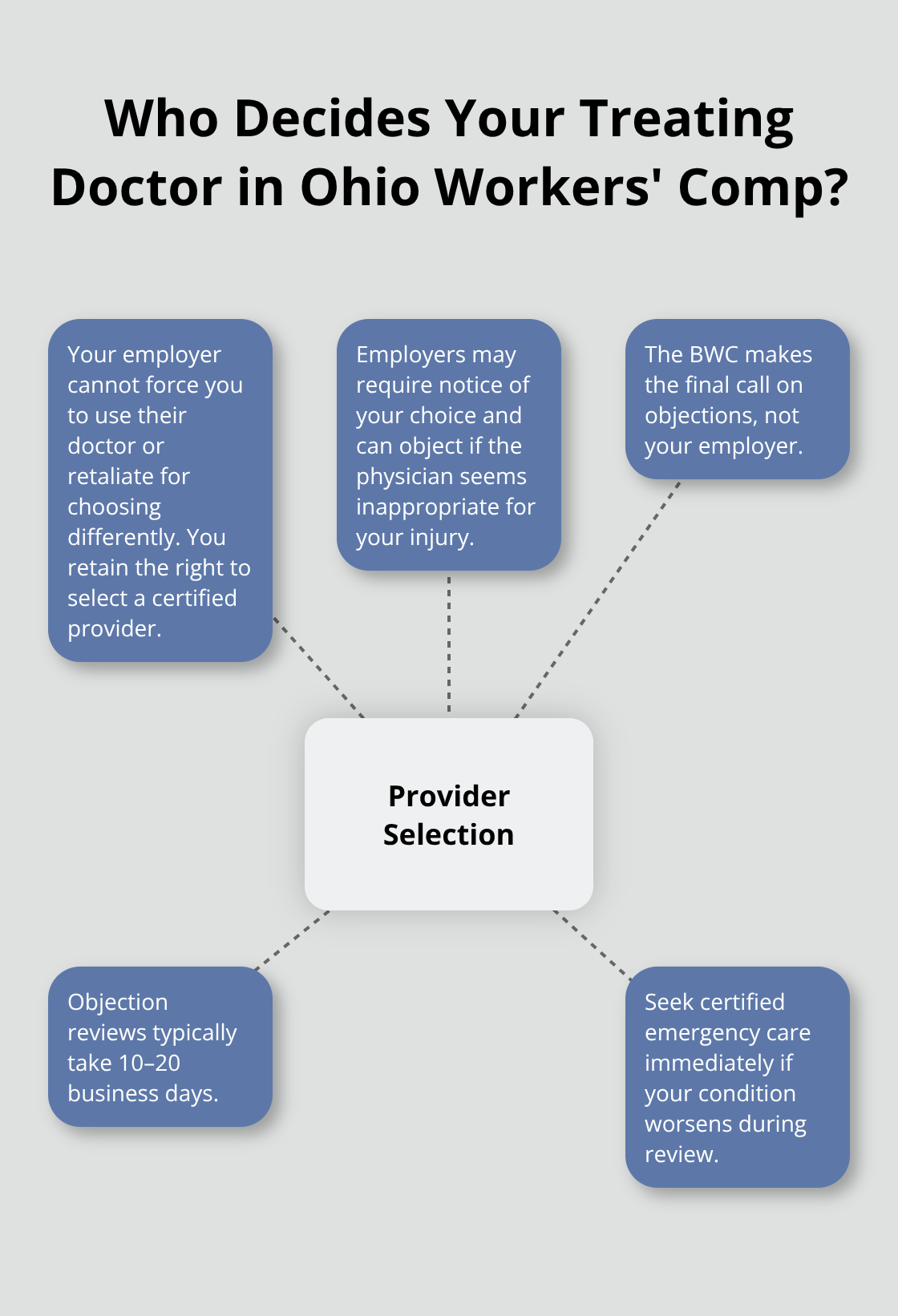
Your employer cannot force you to use only their preferred doctor, and they cannot retaliate against you for selecting a different provider. However, your employer can require you to notify them of your choice and can object if they believe the selected physician is not appropriate for your specific injury. When an objection occurs, the BWC ultimately decides whether your chosen doctor can treat you-not your employer. This process typically takes 10 to 20 business days, during which time you should seek immediate care from any certified emergency physician if your injury worsens.
How the BWC Shapes Your Medical Decisions
The BWC’s approval process influences your medical decisions more than most workers realize. Once you select a certified provider, that doctor becomes your authorized treating physician and controls your initial treatment plan and referrals to specialists. If your employer objects to your choice, they must file a formal objection with the BWC within specific timeframes, or their objection is considered waived. The BWC examines whether the physician has relevant experience treating your type of injury and whether any conflict of interest exists. In practice, the BWC rarely sides with employer objections unless the selected doctor lacks credentials for your condition or has a documented history of providing unnecessary care.
Protecting Yourself Through Documentation
If the BWC denies your physician choice, you can appeal that decision or select another certified provider. Document everything during this process: keep copies of your physician selection form, the BWC’s response, and any communications from your employer. This documentation protects you if treatment delays occur and strengthens your position if disputes arise later. Act decisively when selecting providers because delays in care can complicate your medical narrative and reduce the strength of your claim. Once you have your authorized treating physician in place, the next critical step involves securing approval for the specific treatments and services that physician recommends.
How to Get Treatment Approved and Keep Care Moving Forward
Understanding the Approval Timeline
The approval process for medical treatment in Ohio operates differently than many injured workers expect. Once you have your authorized treating physician in place, that doctor submits treatment requests directly to your employer’s workers’ compensation insurance carrier or the BWC. Most routine care receives approval within 3 to 5 business days without formal objection. However, specialized treatments like surgery, advanced imaging, or ongoing physical therapy trigger additional scrutiny. Your physician should submit detailed documentation explaining why the treatment is medically necessary and how it relates directly to your workplace injury.
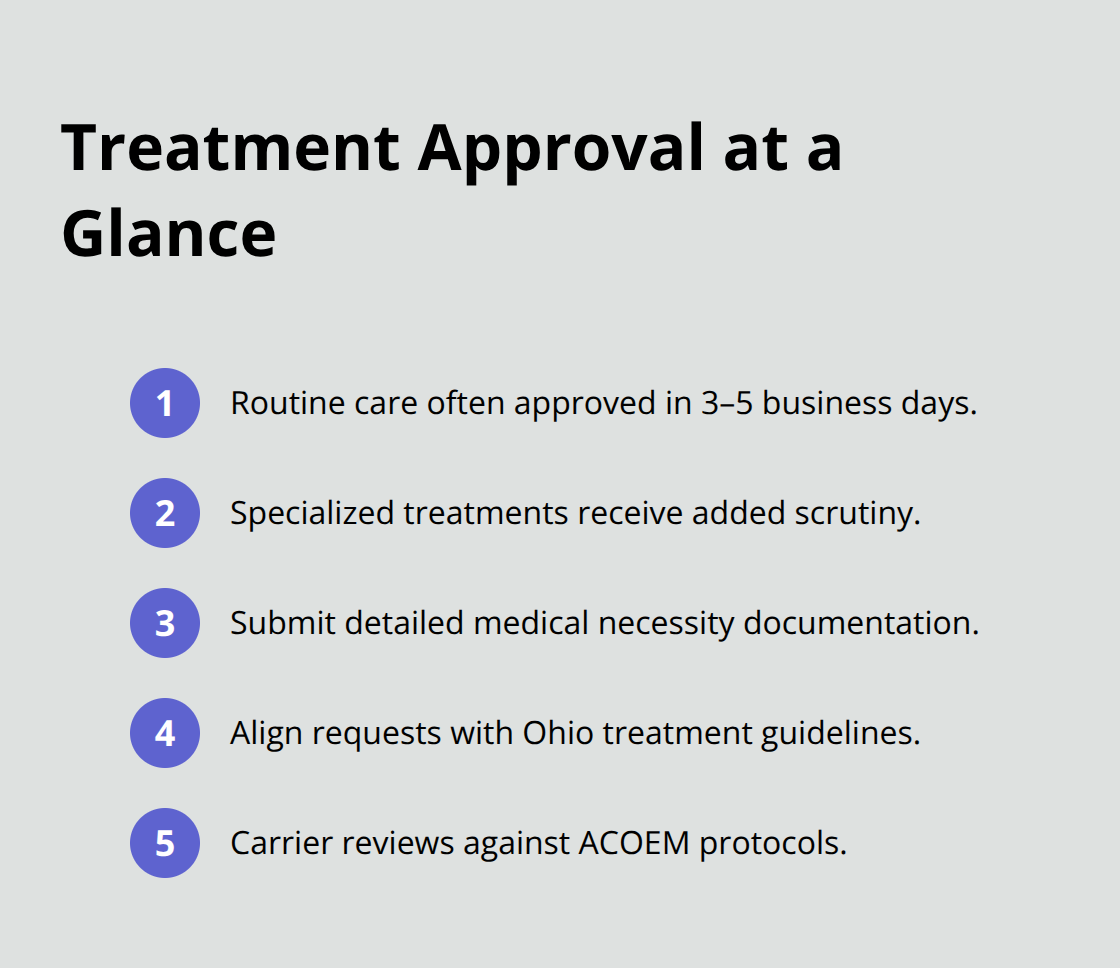
The insurance carrier reviews this documentation against Ohio’s treatment guidelines, which follow evidence-based protocols established by the American College of Occupational and Environmental Medicine.
Taking Action During the Approval Process
If the carrier approves the treatment, you proceed immediately. If they request additional information, your doctor typically responds within days. The critical mistake injured workers make is waiting passively during this approval window instead of staying in contact with their physician’s office to track the request status. Call your doctor’s billing department on day three if you haven’t heard confirmation. Most denials stem from incomplete documentation, not from legitimate medical disputes, so proactive communication often resolves delays before they become formal rejections.
Appealing Denied Treatment
When the insurance carrier denies treatment, you have the right to appeal that decision through the BWC’s dispute resolution process. Ohio processes approximately 200,000 workers’ compensation claims annually, and a meaningful percentage involve treatment disputes that reach the appeal stage. The appeal begins with a request for reconsideration, where your physician can submit additional medical evidence supporting the necessity of the denied treatment. This step takes 10 to 20 business days and frequently results in approval once the carrier reviews supplemental documentation. If reconsideration fails, you can request a hearing before an Ohio Industrial Commission hearing officer, which provides an opportunity to present medical testimony and challenge the carrier’s denial rationale.
Finding Certified Providers in Your Area
Finding authorized providers becomes simpler once you understand the system. The BWC’s online physician directory allows you to search by specialty, location, and certification status, and you can also contact the BWC directly at 1-800-644-6292 for provider referrals in your area. Some injured workers worry about limited provider availability in rural regions, but Ohio’s certification requirements apply statewide, and many certified physicians offer telehealth consultations for follow-up visits (expanding your practical access beyond geographic boundaries). Legal representation matters substantially when disputes escalate. An attorney coordinates with your treating physician to prepare testimony, obtains independent medical evaluations if the carrier’s denial appears medically unjustified, and navigates the procedural requirements that often determine hearing outcomes. With your treatment pathway established and approval processes understood, the next phase involves managing your care over the long term and protecting your medical records.
Keeping Your Medical Records and Treatment on Track
Build Your Personal Medical File
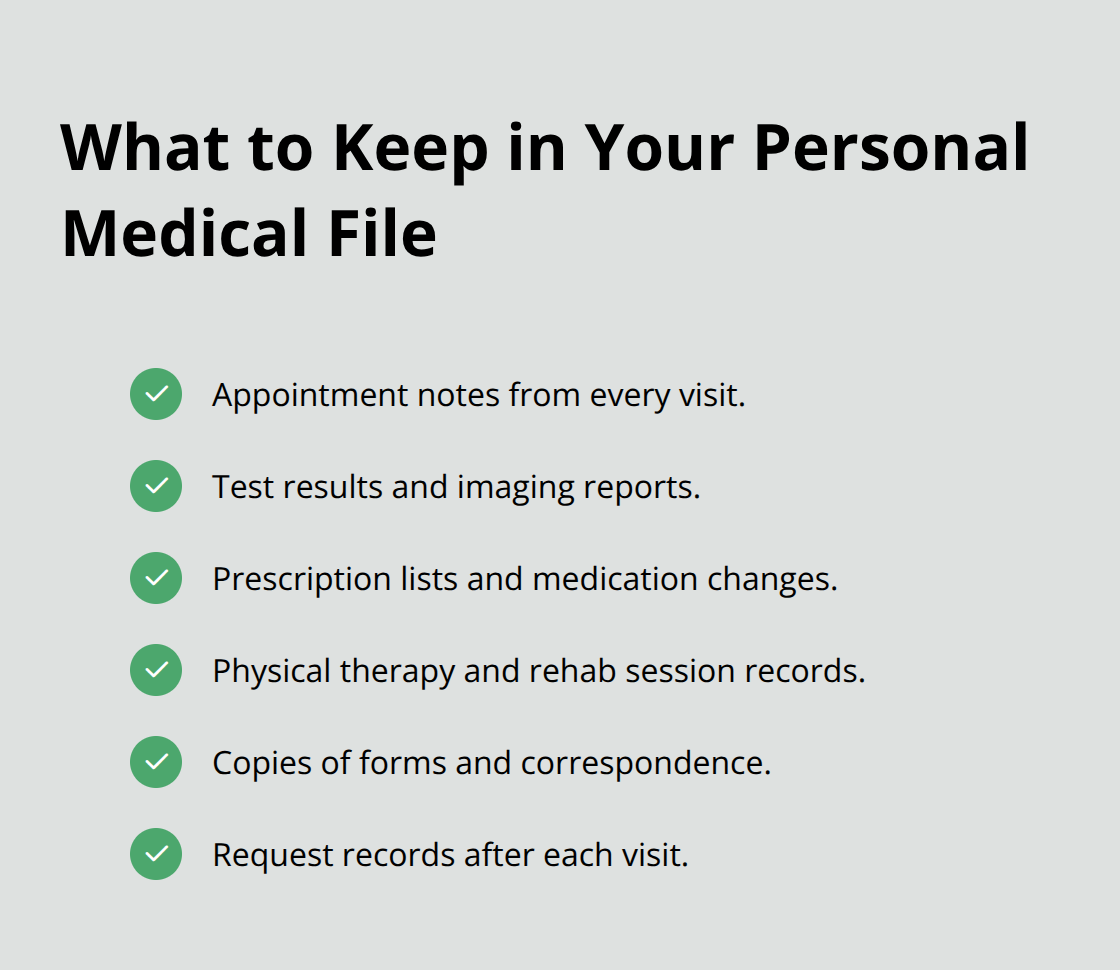
Your authorized treating physician controls your treatment plan, but you must actively monitor progress and maintain detailed records throughout recovery. Many injured workers assume their doctor’s office handles all documentation, only to discover later that critical information is missing or scattered across multiple providers. The Ohio Bureau of Workers’ Compensation requires medical records to establish causation, severity, and the necessity for ongoing care, so gaps in documentation directly weaken your claim. Create a personal file containing copies of every appointment note, test result, prescription, and therapy session record. Request these documents from your doctor’s office immediately after each visit rather than waiting until your case reaches a hearing.
Document Your Functional Status at Each Visit
Your treating physician should record your current condition at each visit, any functional limitations affecting your work capacity, and whether the treatment plan remains appropriate. If your condition improves faster than expected, your physician may recommend discharge from care, which is appropriate. However, if your condition plateaus or worsens, your doctor should adjust the treatment plan and clearly document why continued care is medically necessary. This documentation becomes essential if your employer or the insurance carrier later argues that your injuries have resolved.
Communicate Barriers and Deviations Proactively
Communication with your treating physician shapes your entire recovery narrative. If you experience side effects from medications, cannot tolerate a recommended therapy, or face barriers accessing treatment due to transportation or scheduling, inform your physician immediately and document these conversations. Courts and the Industrial Commission understand that perfect compliance with medical advice rarely occurs, but significant gaps or unexplained deviations from your doctor’s recommendations give insurance carriers ammunition to argue your injuries are less severe than claimed. If cost prevents you from pursuing a recommended treatment, tell your physician and your attorney so they can address the constraint in your claim rather than allowing silence to suggest you ignored medical advice.
Coordinate Medical Evidence with Legal Representation
An experienced workers’ compensation attorney coordinates with your treating physician to ensure medical records reflect your current functional status, arranges independent medical examinations if the carrier questions your physician’s recommendations, and presents medical evidence strategically during appeals or hearings. We at Robin J Peterson Company, LLC represent injured workers throughout the Cleveland, Akron, and Canton regions and work to clarify treatment plans and ensure your medical documentation supports your claim effectively.
Final Thoughts
Your medical treatment rights in Ohio protect your recovery and your financial security after a workplace injury. The system grants you the power to select your own certified physician, access necessary care without unreasonable delays, and maintain detailed records that support your claim. These rights only work when you actively exercise them through verification, proactive follow-up, and clear communication with your doctor.
Insurance carriers employ experienced professionals to minimize payouts, and treatment disputes can derail your recovery if you handle them alone. Denials often reverse through reconsideration when your physician submits complete medical evidence, but navigating appeals and hearings requires understanding both medical and legal dimensions of your case. When disputes arise, the BWC ultimately decides treatment questions, not your employer, and formal pathways exist to challenge carrier decisions that contradict sound medical judgment.
Robin J Peterson Company, LLC represents injured workers throughout Cleveland, Akron, and Canton, coordinating with your treating physician to ensure your medical records support your claim and fighting carrier denials that prevent appropriate care. Your recovery deserves professional advocacy from someone who understands the complexities of medical treatment rights Ohio workers face.